
On the wooden terrace of Kiyomizudera in Kyoto, the maples spread below you in reds and oranges, and everyone around you seems to be reaching for a sleeve or a scarf as they lean on the rail. That moment is where the packing question comes up. For Japan in fall, bring light layers that come on and off through the day, and add a proper coat only if your route reaches Hokkaido.
What should you pack for Japan in fall?
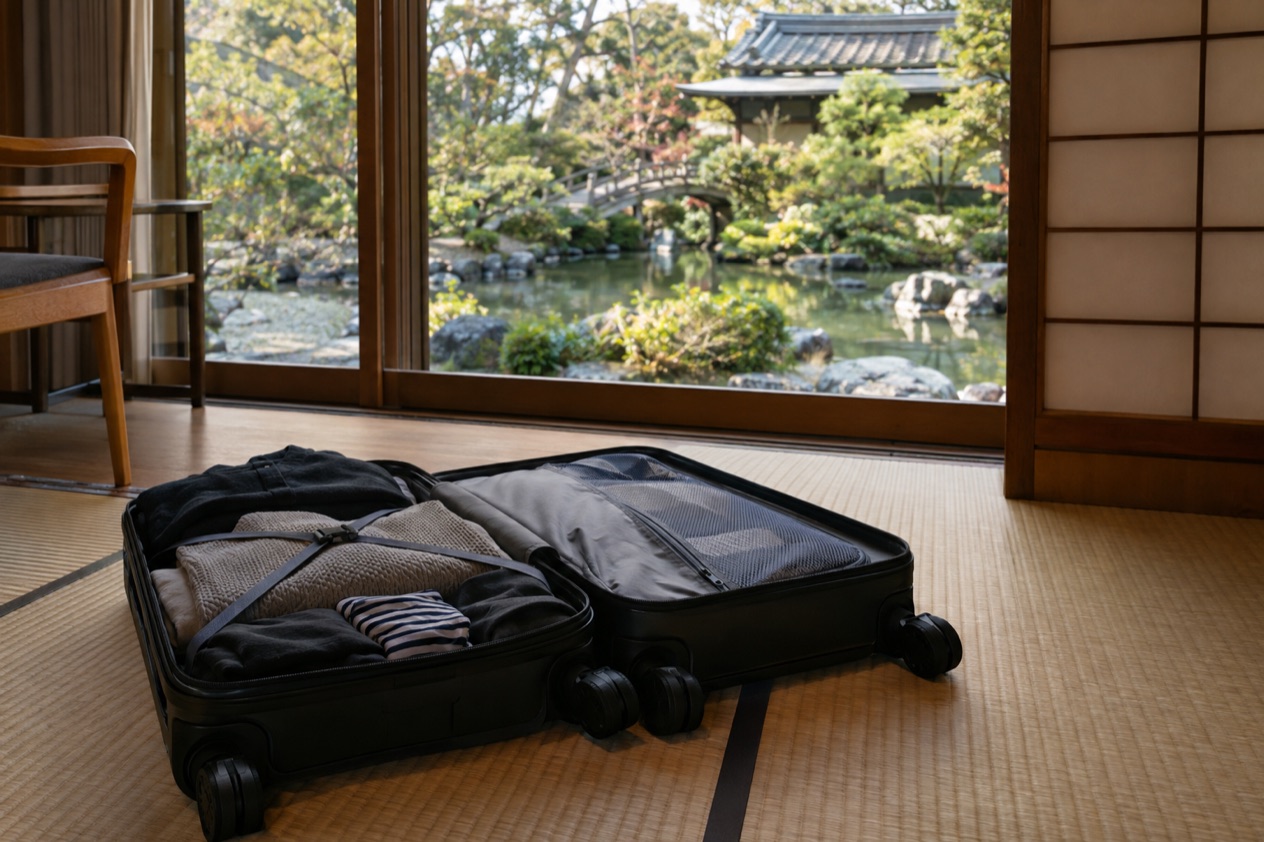
Pack a flexible set of light layers, a warmer coat if Hokkaido is on your route, and shoes made for a lot of walking. Autumn in Japan is the season when the country gradually becomes milder after summer, and the temperatures are moderate enough that walking is a pleasure rather than a chore. A suitcase built around pieces you can mix, rather than one heavy outfit, suits that kind of weather.
The trip itself shapes the list. A week of temples and gardens in Kyoto asks for different things than a night beside a lake at the foot of Mount Fuji, and both differ from a trip north. Think in terms of where you will stand still outdoors, because that is when a light shirt stops being enough.
Layers for Honshu and Kyushu
The islands of Honshu and Kyushu enjoy pleasant temperatures in October and November. That puts Tokyo, Kyoto, Nara, Osaka and Nagasaki in the same packing category: a mix of short and long sleeves, a light sweater or cardigan, and one thin jacket that folds small. Cotton shirts, a knit layer and a light shell cover most of what a day can bring.
Trousers or a skirt you can walk in all day are worth more than anything dressy. Garden paths, temple steps and station corridors add up, and you will spend much of the trip on foot. A scarf takes almost no space and is the quickest way to adjust when you stop at a viewpoint or wait at a festival.
A coat for Hokkaido
On the island of Hokkaido, a coat is comfortable for much of the autumn season. If the northern island is on your itinerary, this is the one place where a real coat earns its room in the bag, rather than a jacket you carry around.
Pair it with the same layers you bring for the rest of the country. A sweater under the coat gives you range, and you can take the coat off indoors, where you will often want to. If your trip splits between Hokkaido and the south, wear the coat on the way and keep the lighter pieces for the rest of the route.
Shoes and small things for temples and gardens
Shoes come off at the entrance of a ryokan, and many temple halls and traditional rooms ask the same, so shoes that slip on and off, and socks without holes, are a sensible habit. Choose a pair that is comfortable for hours of walking on gravel, stone and wooden floors, since gardens such as Rikugien in Tokyo are made for strolling.
A small daypack keeps your layers within reach as you move between sights. Add a camera or a phone with room for photos, because the maples, the gardens and the lit-up evenings are the reason many travelers come in this season. A compact umbrella is a reasonable habit for any trip, and it fits in the same bag.
Extras for illuminations and festivals
Illuminations are a feature of the season. At Rikugien Garden in Tokyo they run from mid-November to early December, and at Huis Ten Bosch on Kyushu the Kingdom of Light brings a spectacular display to a theme park that recreates the Netherlands, with seasonal illuminations available throughout the year. Standing in a garden or a park to watch lights is slow, so a warm layer and a scarf make the visit more comfortable.
Festivals add their own reasons to dress for time outdoors. The Nagasaki Kunchi, created in 1634 to celebrate the autumn harvest, is held in early October. In Kyoto, the Jidai Matsuri takes place later in October and commemorates the founding of the Heian Jingu Shrine and the 1100th anniversary of the capital’s relocation to Heian. Bring comfortable shoes and a layer for watching processions from the sidelines.
What is the weather like?
Fall weather in Japan is mild and moderate, a gradual cooling after summer that makes it a good season for walking. That is the broad picture, and it matters more for your packing than any single daily reading, because the season is a slope: early October feels different from late November, and the north feels different from the south.
The season also has its own calendar of color. From mid-November to early December, trees display brilliant colors ranging from red to yellow and orange. If your trip lands in that window, expect to be outdoors a lot, in gardens, at temples and along lake shores, and dress for standing and walking rather than for the stretch between one train and the next.
Honshu and Kyushu in October and November
The islands of Honshu and Kyushu enjoy pleasant temperatures in October and November, which is why these two months are the center of a fall trip. Cities like Tokyo, Kyoto and Nagasaki ask for a light jacket and a layer rather than anything heavy, and the days are suited to long outings on foot.
At Kiyomizudera in Kyoto, the temple offers stunning landscapes in autumn, and in Tokyo the Rikugien Garden, a traditional Japanese garden, is radiant with beauty in this season. Both are places where you walk slowly and stop often, so plan on layers you can adjust without opening your bag.
Hokkaido: where a coat makes sense
Hokkaido stands apart from the rest of the country. A coat is comfortable there for much of the autumn season, so the weather you pack for in the north is clearly cooler than what you pack for in Honshu or Kyushu. If you are splitting a trip between the two, treat them as two different wardrobes.
That difference is also a reminder not to assume the whole country behaves the same way. A single outfit that works in Kyoto may feel thin in Hokkaido, and a coat chosen for Hokkaido will feel like too much once you are back in Tokyo.
Mount Fuji and the lakes
Spending a night at Lake Kawaguchiko at the foot of Mount Fuji allows visitors to admire Mount Fuji’s reflection on calm waters, framed by purple trees. It is a trip built around looking, which means long moments standing at the edge of the water with a camera in your hands.
A sweater and a jacket you can zip are the sensible companions for a stop like this, along with shoes that handle a lakeside walk. Keep them in your daypack, so you can add a layer when you stop to take in the view and take it off when you start walking again.
What can you leave at home?
You can leave behind the heavy winter gear, the extra outfits and anything that only makes sense in full summer heat or deep cold. Fall is a season of moderate temperatures, so a bag packed around a few layers beats one packed for extremes. The idea is to carry less and wear more of it in combination.
Heavy winter clothing, unless you are going north
A thick winter parka is the clearest item to skip if your route stays on Honshu and Kyushu, where October and November bring pleasant temperatures. A mid-weight jacket and a sweater do the job, and they take far less room than a bulky coat.
The exception is Hokkaido, where a coat is comfortable for much of the autumn season. If you go there, bring the coat. If you do not, leave it at home and pack the layers instead. The same bag can then hold an extra shirt or a pair of walking shoes.
Too many outfits and too many shoes
A trip built around gardens, temples and festivals asks for comfortable clothes, not a different outfit for every day. Pieces that mix, in colors that go together, let you repeat without anyone noticing, and a thin layer can change the look of a shirt you wore the day before.
Shoes are the same story. One pair broken in for long walks, and perhaps one lighter pair for evenings, is plenty. Since shoes come off at the entrance of many ryokan and traditional rooms, a pair that is easy to take off will serve you better than three that look alike.
Formal dress for festivals and illuminations
Festivals like the Nagasaki Kunchi and the Jidai Matsuri in Kyoto are things you watch and take part in as a spectator, so there is no reason to carry formal clothes. The Kobe Marathon in mid-November, which welcomes nearly 20,000 runners and more than 600,000 supporters and spectators, is a day of standing along the course, where comfortable shoes and a warm layer matter more than anything dressy.
The same holds for evenings in a garden. At Rikugien in Tokyo or at Huis Ten Bosch on Kyushu, the lights are the draw, and the outfit that suits you is the one you can stand in comfortably. Leave the heels and the stiff jacket at home and bring the scarf.
Good to know before you go
Fall is a season when travelers spend long hours outdoors, in gardens, on temple grounds and at festivals, so the habits that matter are practical ones: dress in layers, keep a small bag for the ones you take off, and wear shoes that suit the walking. Foliage in mid-November to early December and the illuminations that go with it add evening outings to the day, which is another reason to keep a warm layer within reach. Leave a little space in the bag for what you pick up along the way.
Sources
- Japan National Tourism Organization, autumn in Japan (https://www.japan.travel/en/guide/autumn-guide/), checked October 11, 2026
To plan your stay
- Best Time to Visit Japan: Cherry Blossoms, Autumn Colors, Weather and Festivals
- Things to Do in Japan: Kyoto Temples, Onsen, Street Food and Day Trips
- Where to Stay in Japan: Ryokan, Temple Stays, Capsule Hotels and the Best Cities to Base In
- Sending Luggage from the Airport in Japan: Hands-Free Travel, Hotel Delivery and Coin Lockers