
You are standing at a ticket machine in a station, a line of commuters behind you, wondering whether the card in your wallet will do the job or whether you should have stopped at a cash machine first. The question comes up again at a ramen counter, a small shrine shop and a corner stall. The short answer: international cards work across Japan, and a little cash and a Suica or Pasmo card cover the gaps.
Are credit cards accepted in Japan?
Yes, international credit, debit and prepaid cards are generally accepted throughout Japan, so a card from home is a normal way to pay for much of a trip. The major names are American Express, JCB, Mastercard, Visa, Discover and Diners Club, and the Japan National Tourism Organization points travelers to each of these companies.
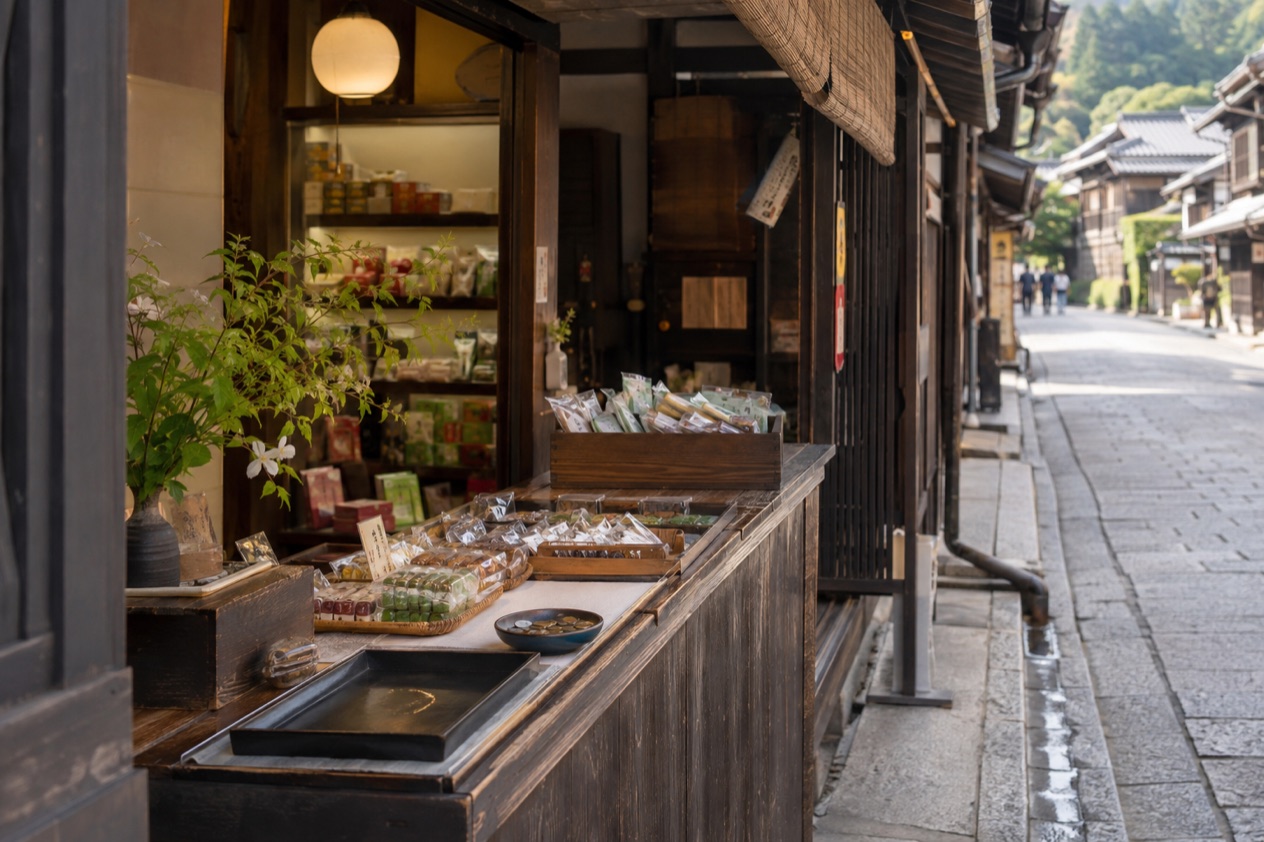
The one thing to keep in mind is that shops do not always show which cards they take. Some stores display no card symbols at all, even when they accept cards. The simple habit is to ask the seller before the food is cooked or the item is wrapped, and to have a second way to pay ready if the answer is no.
Long-distance trains
Cards are accepted for Narita Express (JR) and shinkansen (JR) tickets. That means the big rail journeys of a trip, the ride in from the airport on the Narita Express and the bullet trains that link the cities, can be paid for with the same card you used to book your hotel.
Tickets for these trains are a purchase that you make once or twice a day at most, so it makes sense to put them on a card and keep your cash for smaller things. The shinkansen is the line travelers use to move between cities such as Tokyo, Kyoto and Osaka, and paying by card keeps the receipts together when you tally the trip later.
Short rides and subways
Short-distance trains and subways are different. It is not always possible to use a card to pay for those tickets, so a fare machine at a small station may ask for coins or notes rather than a card.
This is where a rechargeable transit card earns its place. Travelers who do not want to carry a large amount of cash can buy a Suica or Pasmo card, and then tap through the gates instead of counting out coins at the machine. These cards work for train tickets and also on many other public transportation options, which makes a day of hopping between lines feel much less fiddly.
Suica and Pasmo beyond the station
A Suica or Pasmo card is not only for trains. It can be used in convenience stores and in a growing number of shops and restaurants, so the same card that opens the ticket gate also pays for a bottle of tea, a rice ball or a quick snack on the way to the platform.
They cannot be used everywhere, though. Think of them as a useful alternative to cash rather than a replacement for a bank card: good for small, everyday purchases, and one more option when a counter will not take your Visa or Mastercard.
Where do you still need cash?
You still need cash in the places that do not take cards, and the clearest case is short-distance train and subway tickets, which cannot always be paid for by card.
A sensible plan is to carry some notes and coins for those moments, and to use a Suica or Pasmo card for the small purchases that fall in between. That way a ticket machine, a little counter or a shop without a card sign is a minor detail rather than a stop in your day.
Getting yen from an ATM
Travelers can withdraw money at Japan Post Bank and Seven Bank ATMs. These are the machines to look for when your pocket money runs low, and they let you take out only what you need rather than changing a large sum at the start of the trip.
Withdrawing in small, regular amounts fits the way Japan works for a visitor: cards cover trains between cities, hotels and many shops, and a modest supply of cash covers whatever is left. If you also hold a Suica or Pasmo card, you can top it up with notes and spend it down on transit and small purchases.
A small cash cushion, and a transit card
Rather than carrying a thick fold of bills, the lighter approach is to let a transit card do part of the work.
Keep the card for what it does well, and keep a few notes for the places where it does not. When a seller says no to your credit card and no to your transit card, cash is the answer, and that is what the ATM stop is for.
If a card goes missing
If you lose your credit card, contact the issuer directly to have it replaced. It is advised to keep a list of the issuer’s toll-free numbers and not to store that list with your cards, so that a lost wallet does not take your way of reaching the bank with it.
A note on your phone or in a separate bag is enough. Having the numbers in a different place from the cards means one phone call, rather than a scramble, when something goes wrong in the middle of a trip.
What about foreign transaction fees?
The fees that apply to a card used in Japan are set by the company that issued it, and the Japan National Tourism Organization points travelers to the major card companies (American Express, JCB, Mastercard, Visa, Discover and Diners Club) for their own terms. Nothing in the Japanese sources sets a single fee for foreign cards, so the answer sits with your bank.
Before you leave, it is worth reading what your card issuer says about charges abroad, since that is the source for any cost on a purchase or a withdrawal. The same goes for the ATM step: Japan Post Bank and Seven Bank machines are where travelers can take out cash, and your own bank decides what that withdrawal costs you.
Reading your card issuer’s terms
The six companies named above each have a page for travelers, and those pages are the place to find how a card behaves overseas. Because a Visa, a Mastercard and a JCB can all be accepted in Japan, the practical difference between them comes down to what your issuer charges and which one a shop will take.
If a seller does not display card symbols, asking which cards are accepted saves you from guessing. Having two different cards in your wallet gives you a second chance at the counter without any extra effort.
Ways to spend less on small purchases
A Suica or Pasmo card is one way to avoid paying by card for every small item. You load it once, and it covers train tickets, many other public transportation options, convenience stores and a growing number of shops and restaurants.
Used that way, the transit card handles the coffee and the snack, the bank card handles the shinkansen ticket and the hotel, and the ATM supplies cash for the rest. Each tool has its own job, and none of them has to do everything.
Good to know before you go
Pack a card or two from different networks, a few notes and coins for the ticket machines that do not take plastic, and a Suica or Pasmo card for everyday tapping. Keep the issuer’s toll-free numbers apart from the cards themselves, so a lost wallet is a short phone call and not a problem. When a counter shows no card symbol, a polite question settles it, and a cash machine at Japan Post Bank or Seven Bank is the way to top up your yen.
Sources
- Japan National Tourism Organization, credit cards and cash, where cards are accepted (https://www.japan.travel/en/plan/credit-cards/), checked October 11, 2026
To plan your stay
- Best Time to Visit Japan: Cherry Blossoms, Autumn Colors, Weather and Festivals
- Where to Stay in Japan: Ryokan, Temple Stays, Capsule Hotels and the Best Cities to Base In
- Sending Luggage from the Airport in Japan: Hands-Free Travel, Hotel Delivery and Coin Lockers
- Know Before You Go to Japan: Entry, Money, Etiquette and Getting Around