
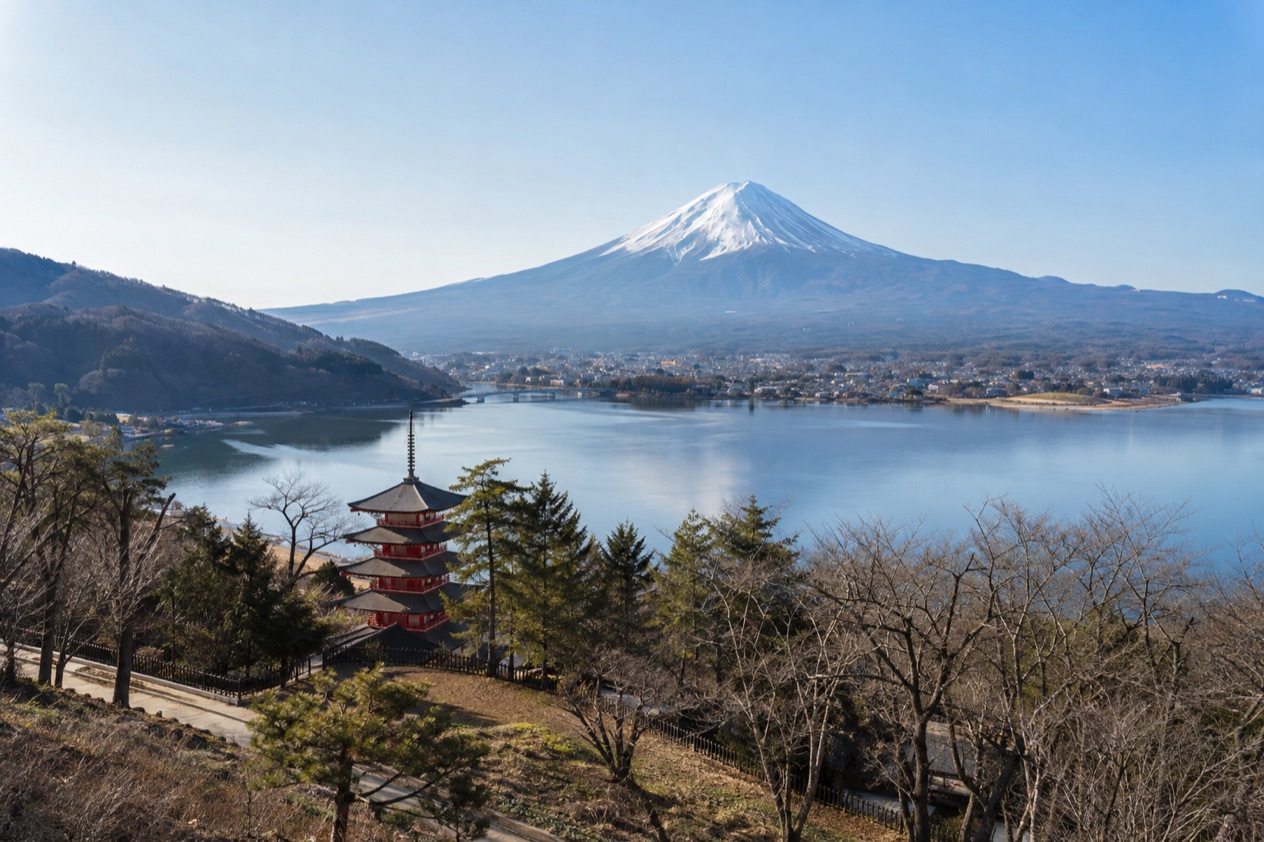
On the first days of January, families in coats and scarves line up at shrine gates for the year’s first visit, and the air smells of grilled rice cakes and sweet sake. Farther north the snow keeps falling on Hokkaido, while in Okinawa the days stay mild enough for a light sweater. January in Japan is the month of New Year customs, deep snow in the north and mountains, and bright winter days on the Pacific side, with the first plum blossoms starting to open.
What is the weather like in Japan in January?
January is cold and often dry in Tokyo, Kyoto, Osaka and Hiroshima, snowy and gray along the coast at Kanazawa, deeply wintry in Sapporo, and mild in subtropical Okinawa.
| Place | Average high (°F) | Average low (°F) | Precipitation (in) | Daylight on the 15th (hours and minutes) |
|---|---|---|---|---|
| Tokyo | 49.6 | 34.2 | 2.35 | 9 h 59 min |
| Kyoto | 48.4 | 34.7 | 2.10 | 10 h 02 min |
| Osaka | 49.5 | 37.4 | 1.85 | 10 h 04 min |
| Sapporo | 31.3 | 20.5 | 4.27 | 9 h 20 min |
| Okinawa (Naha) | 67.6 | 58.8 | 4.00 | 10 h 40 min |
| Fukuoka | 50.4 | 39.0 | 2.93 | 10 h 09 min |
| Kanazawa | 44.8 | 34.2 | 10.08 | 9 h 55 min |
| Hiroshima | 49.8 | 35.6 | 1.82 | 10 h 05 min |
Tokyo has the sunniest January of the big cities, with 193 hours of sunshine, and rain or snow touches only a handful of days. Snow in the capital is a rare event, a dusting that melts quickly.
Kyoto is a little cooler in the afternoon and far grayer, with sleet or snow falling on more than half the days of the month, though little of it settles. Osaka sits between the two, with milder nights than its neighbors.
The real contrasts come at the edges. Sapporo stays below freezing in the afternoon and gets snow or sleet on nearly every day of the month, about 54 inches of it in total.
Kanazawa is the wettest place on the list, with precipitation on most days and only 62 hours of sun all month. At Naha, Okinawa, afternoons reach the high 60s and the sea sits in the low 70s. Fukuoka and Hiroshima fall in between, mostly cold and bright with occasional flurries.
Where to go in Japan in January
Tokyo and the Kanto region
Tokyo in January offers crisp, clear days with long stretches of sun, ideal for walking between museums, department stores, shrine grounds and the lanes of old neighborhoods. The first days of the month are the exception: many restaurants and attractions close for the New Year holidays, and the city slows down in a way it does at no other time of year.
Once the holidays end, Tokyo is a good city for winter food: steaming bowls of ramen, oden simmering in convenience stores and izakaya, hot pots shared at low tables. Daylight is short, so plan outdoor sights for the middle of the day and keep evenings for indoor neighborhoods such as Shinjuku or Asakusa. The city suits travelers who want urban Japan without snow logistics.
Kyoto, Osaka and the Kansai region
Kyoto’s temples in winter are a study in bare branches, gray tile roofs and the occasional white dusting. Places such as Kinkaku-ji and Fushimi Inari look different under a thin cover of snow, though snow that stays on the ground is not the norm in the city itself. Cold seeps into the wooden halls, so temple visits mix well with tea breaks and long lunches of kaiseki or tofu dishes.
Osaka is the place to eat through the cold, with takoyaki, okonomiyaki and kushikatsu cooked in front of you. Its winters are milder at night than Kyoto’s, and rain is not frequent. Pair the two cities: temples by day in Kyoto, dinner in Osaka. Nara and Kobe round out the region for those with more days.
Sapporo and Hokkaido
Hokkaido is where Japan’s winter shows its full strength. Heavy snow regularly covers the mountains and the northern regions, and the ski season, which opens in December and runs into April, reaches its peak in January and February when snowfall is most frequent. Sapporo itself is a city of snowbanks, steaming breath and warm underground passages, with miso ramen and grilled seafood as natural answers to the cold.
This is the region for skiers, snowboarders and anyone who wants a true snow landscape. Resorts such as Sahoro are among those recommended for winter sports. Days are short, and with a sky that is gray most of the month, the pleasures are indoors as much as out: hot springs, markets, long dinners.
Okinawa
Okinawa is the January escape for those who do not want to wear a heavy coat. Days are mild, though rain visits often and the sky can stay cloudy for stretches. The sea is warm enough to look at with pleasure, but beach time here is more about walking the shore than planning on a swim.
In Naha you can spend the day in the market streets with their pork, tropical fruit and Okinawan noodles, and in the evening settle in at a small restaurant for awamori, the local spirit. It suits travelers who want to pair a city trip with a gentler, subtropical week.
Kanazawa and the snowy coast
Kanazawa is January’s picture of wet winter: snow or sleet falls on most days, and the sun is scarce. That makes it a city of gardens under snow, teahouse streets and warm indoor rooms. Kenrokuen garden is the place where the season is part of the scenery, and the city’s museums and craft workshops give you shelter when the weather turns.
Pack for slush and plan for slower days. Seafood in winter is a pleasure here, and the stays are best chosen around the idea of warmth: a hot bath, a hot meal, a view of the snow.
What to do in Japan in January
New Year traditions
The Japanese New Year falls on January 1, a date set since 1873 by the Gregorian calendar, and it is the most important family holiday of the year. Homes serve osechi, a selection of small dishes packed in tiered boxes, and many people head to a shrine or temple for the first visit of the year, a custom known as hatsumode.
As a traveler, you see this in the entrance decorations of pine and bamboo, in shrine grounds with food stalls, and in the hush of business districts. Many restaurants and attractions close during the New Year holidays, so the first days reward a flexible plan built around shrines, parks and department store food halls.
Snow sports and snow scenes
January is the peak of the ski season in Hokkaido and in the high mountains of Nagano, where snowfall is most frequent. Japan is described as an ideal winter sports destination for the quality of its snow, its infrastructure and its accommodations. Shiga Kogen in Nagano Prefecture is the largest ski resort complex in the country, and Zao Onsen in Yamagata is the largest single resort.
If skiing is not your plan, snow still shapes the month: Sapporo’s streets, Kanazawa’s gardens and the occasional white morning in Kyoto. Warm up afterward with an onsen, a hot spring bath, one of the pleasures that comes with winter travel in Japan.
First plum blossoms
Plum trees (ume) flower from January into late February, which makes them the first blossoms of the year, well ahead of the cherry trees that announce spring. Parks and shrine gardens are where you find them, a splash of white and pink against a winter sky. They are a quieter pleasure than the cherry season, suited to travelers who like small details on a walk.
Is Japan busy in January?
The first days of January are the busiest in the sense that the country itself is on holiday, and the rest of the month is shaped mostly by the ski season.
During the New Year holidays, many restaurants and attractions close, so the challenge is less crowds than finding places that are open. Shrines are the exception, since they are the destination for the year’s first visit. Once the holidays end, city life returns to its usual rhythm, with urban shops generally open every day, while rural shops often close earlier, sometimes as early as 6:00 p.m.
The resorts of Hokkaido and Nagano are in peak season in January and February, so snow country is the part of Japan most oriented to visitors this month. Cities such as Tokyo, Kyoto and Osaka offer their usual sights, with the plum blossoms as a small seasonal bonus.
What to pack for Japan in January
Packing depends on the region: warm layers for the main island cities, serious snow gear for Hokkaido and the mountains, and light clothes for Okinawa.
- A warm coat and layers, for cold afternoons in Tokyo, Kyoto and Osaka.
- Waterproof boots with good grip, for snow and slush in Sapporo and Kanazawa.
- Gloves, a hat and a scarf, for the chill of temple grounds and the northern cold.
- An umbrella or a light rain shell, for the wet days in Kanazawa and Okinawa.
- Easy slip-off shoes and warm socks, since shoes come off at the entrance of ryokan and many temples.
- Sunglasses, for bright snow and clear winter skies.
Good to know before you go
January falls outside the rainy and typhoon seasons, so the weather questions are about cold and snow rather than storms. The big practical point is the New Year closure period, when many restaurants and attractions are shut.
Daylight is short, a little over nine hours in Sapporo and about ten in much of the south, so sightseeing days end early. Public holidays that fall on a Sunday move to the next working day, which can shift closures.
Is January a good time to visit Japan?
January is a good time for travelers who want snow, hot springs and winter food, and the best region depends on what you want: Hokkaido and the Nagano mountains for skiing, Tokyo and Kyoto for crisp city days, Okinawa for mildness.
Compared with December, afternoons in Tokyo and Kyoto are a few degrees colder, and Sapporo is a little drier. February is slightly milder in Tokyo, wetter in Kyoto and lighter on precipitation in Sapporo, so January sits at the coldest point of the winter in most of the cities. What sets the month apart is its mix of the old year’s end and the new year’s beginning: osechi on the table, the first shrine visit, snow on the north, and plum buds opening on a bare branch.
Sources
- Japan Meteorological Agency (JMA), Normal values 1991-2020, monthly (https://www.data.jma.go.jp/stats/etrn/view/nml_sfc_ym.php?prec_no=44&block_no=47662), station Tokyo, elevation 25 m, checked October 11, 2026
- Computed from the date and the latitude of the place (sunrise equation, solar elevation -0.833 degrees), October 11, 2026
- Japan Meteorological Agency (JMA), Normal values 1991-2020, monthly (https://www.data.jma.go.jp/stats/etrn/view/nml_sfc_ym.php?prec_no=61&block_no=47759), station Kyoto, elevation 41 m, checked October 11, 2026
- Japan Meteorological Agency (JMA), Normal values 1991-2020, monthly (https://www.data.jma.go.jp/stats/etrn/view/nml_sfc_ym.php?prec_no=62&block_no=47772), station Osaka, elevation 23 m, checked October 11, 2026
- Japan Meteorological Agency (JMA), Normal values 1991-2020, monthly (https://www.data.jma.go.jp/stats/etrn/view/nml_sfc_ym.php?prec_no=14&block_no=47412), station Sapporo, elevation 17 m, checked October 11, 2026
- Japan Meteorological Agency (JMA), Normal values 1991-2020, monthly (https://www.data.jma.go.jp/stats/etrn/view/nml_sfc_ym.php?prec_no=91&block_no=47936), station Naha, elevation 28 m, checked October 11, 2026
- Open-Meteo Marine API, average 2015-2024, checked October 11, 2026
- Japan Meteorological Agency (JMA), Normal values 1991-2020, monthly (https://www.data.jma.go.jp/stats/etrn/view/nml_sfc_ym.php?prec_no=82&block_no=47807), station Fukuoka, elevation 2 m, checked October 11, 2026
- Japan Meteorological Agency (JMA), Normal values 1991-2020, monthly (https://www.data.jma.go.jp/stats/etrn/view/nml_sfc_ym.php?prec_no=56&block_no=47605), station Kanazawa, elevation 6 m, checked October 11, 2026
- Japan Meteorological Agency (JMA), Normal values 1991-2020, monthly (https://www.data.jma.go.jp/stats/etrn/view/nml_sfc_ym.php?prec_no=67&block_no=47765), station Hiroshima, elevation 4 m, checked October 11, 2026
- Japan National Tourism Organization, shop and attraction hours, national holidays (https://www.japan.travel/en/plan/business-hours-and-holidays/), checked October 11, 2026
- Wikipedia, Japanese New Year (https://en.wikipedia.org/wiki/Japanese_New_Year), checked October 11, 2026
- Wikipedia, Public holidays in Japan (https://en.wikipedia.org/wiki/Public_holidays_in_Japan), checked October 11, 2026
- Japan National Tourism Organization, winter in Japan (https://www.japan.travel/en/guide/winter-guide/), checked October 11, 2026
- Japan National Tourism Organization, skiing and snowboarding in Japan: regions, resorts, seasons (https://www.japan.travel/en/sports/snow/), checked October 11, 2026
- Wikipedia, Climate of Japan (https://en.wikipedia.org/wiki/Climate_of_Japan), checked October 11, 2026
- Japan National Tourism Organization, weather and seasons in Japan (https://www.japan.travel/en/plan/weather/), checked October 11, 2026
- Japan National Tourism Organization, skiing guide (https://www.japan.travel/en/guide/skiing/), checked October 11, 2026
- Wikipedia, List of ski areas and resorts in Japan (https://en.wikipedia.org/wiki/List_of_ski_areas_and_resorts_in_Japan), checked October 11, 2026
- Japan National Tourism Organization, flowers by season: cherry blossom, plum, wisteria, hydrangea, where and when (https://www.japan.travel/en/see-and-do/flowers/), checked October 11, 2026
- Wikipedia, Prunus mume (https://en.wikipedia.org/wiki/Prunus_mume), checked October 11, 2026
To plan your stay
- Things to Do in Japan: Kyoto Temples, Onsen, Street Food and Day Trips
- Where to Stay in Japan: Ryokan, Temple Stays, Capsule Hotels and the Best Cities to Base In
- Sending Luggage from the Airport in Japan: Hands-Free Travel, Hotel Delivery and Coin Lockers
- Know Before You Go to Japan: Entry, Money, Etiquette and Getting Around