
Somewhere between booking a flight to Osaka and typing the airport code, travelers notice that two airports carry the city’s name, and the one with the odd little code is not the one the long-haul jets use. Itami is the city’s domestic airport, a compact field used for hops within Japan. Itami is a compact airport dedicated to flights within Japan.
What is Itami Airport?
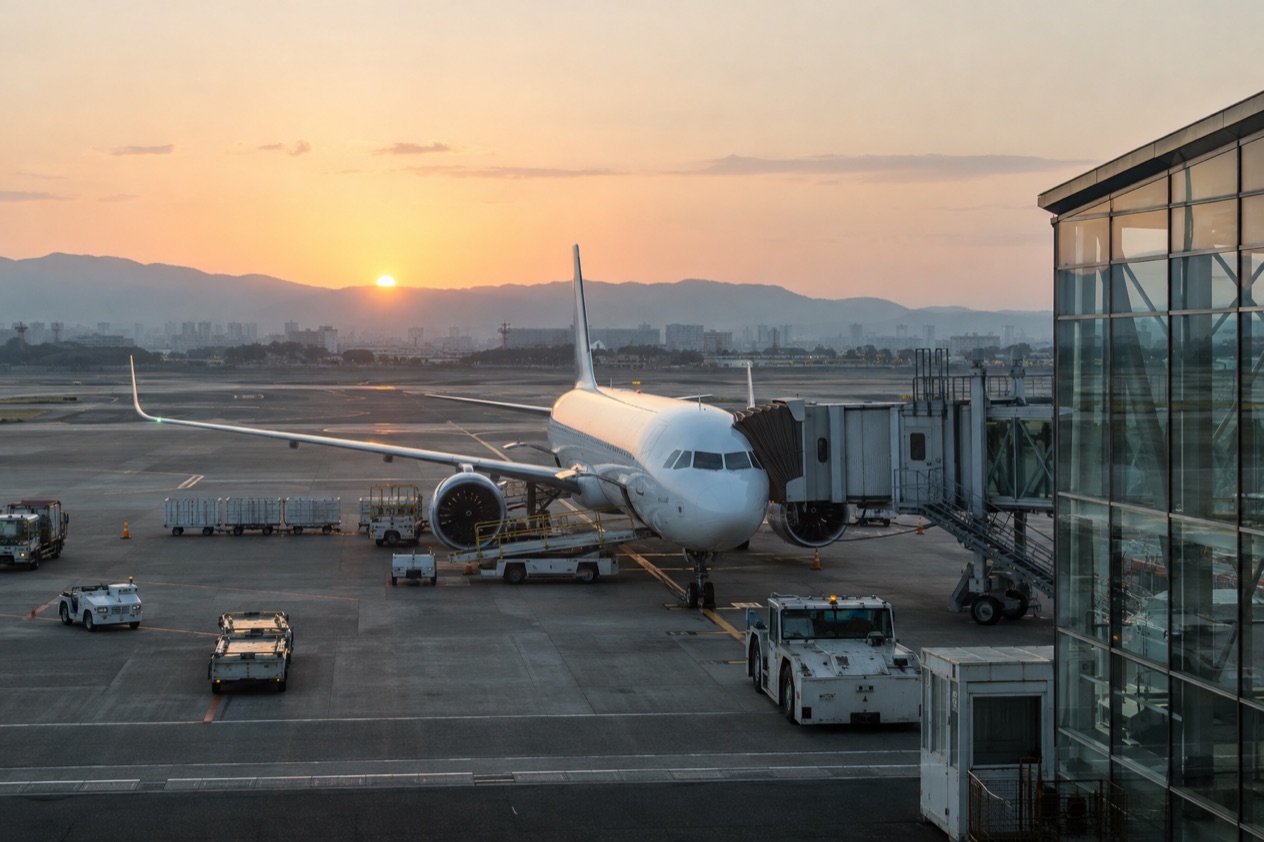
Osaka Itami Airport (ITM) is Osaka’s domestic airport, and it caters exclusively to flights within Japan. It has a single terminal building with 21 gates, and the site is a modest one, covering 311 hectares (768 acres).
The name has changed recently. On January 30, 2025, the airport’s English name and signs were officially changed to Osaka Itami Airport, so older guidebooks and booking sites may still show the previous English wording. The airport has been run by Kansai Airports since April 1, 2016, the same operator that manages Kansai International Airport (KIX), the airport that lets visitors enter Japan without going through Tokyo.
Inside the terminal: North and South
The single building is split into two sides. The North Terminal is used by JAL and Amakusa Airlines, and the South Terminal by ANA and IBEX. When you book, the airline on your ticket tells you which side to head for, and it is worth noting before you leave the hotel, since the two sides are named for the carriers that use them.
With 21 gates under one roof, the layout is simple to read. Signs follow the English name adopted in 2025, so the lettering overhead should match what appears on your boarding pass and booking confirmation.
A small airport with a busy runway
Itami can handle only 18 landings per hour and 370 landings per day. That ceiling explains why the airport stays strictly domestic and why it feels like a regional field wedged into a large metropolitan area rather than an international gateway.
For a traveler, the practical meaning is a clear division of labor in the Osaka area. Itami serves flights within the country, while Kansai International Airport serves visitors arriving from abroad. Keeping that split in mind avoids the common mix-up of booking a domestic connection into the wrong airport.
Which flights use it?
Only domestic flights use Itami, and four carriers share the terminal: JAL and Amakusa Airlines on the North side, ANA and IBEX on the South side. No international service operates here, so a flight from the United States will never land at Itami, and your arrival from abroad will come through a different airport.
Japan’s airport network makes the domestic routes useful. Most Japanese prefectures have at least one airport, and low-cost carriers make it possible to reach almost anywhere in the country at a reasonable price. Itami is Osaka’s door into that web, which suits a trip that stitches several regions together by air rather than by rail.
Where you might be coming from
Haneda serves international destinations and is one of Tokyo’s airports. Narita, the other airport serving the capital, handles both international and domestic destinations, so it is another place where a traveler may start a trip toward Itami.
Other cities connect through their own airports. Fukuoka Airport is very central, and after collecting your baggage you can reach Hakata, in the heart of Fukuoka, by train in five minutes. Nagoya’s Central Japan International Airport, or Centrair, is the hub for flights to and from cities in Asia and Japan.
Islands and the far north
Some destinations are reached by air alone. The airplane is the only option to reach the subtropical island of Okinawa from major Japanese cities, which makes a domestic flight the way to add a beach stretch to an Osaka stay.
Hokkaido is accessible via several airports, and most domestic flights from the main island land at Chitose Airport, located in southern Hokkaido. Whichever direction you head, the terminal you use at Itami depends on the airline, so match your carrier to the North or South side before you set out.
How do you get to Osaka?
From Itami, you reach central Osaka by car or bus in 25 to 30 minutes, and the airport also has one direct rail link, the Osaka Monorail. Airports in major Japanese cities are well served by express trains, buses and taxis, and generally have car rental services, and Itami follows that pattern with road and rail choices on offer.
| Destination | By car or bus |
|---|---|
| Central Osaka | 25 to 30 minutes |
| Central Kobe | 40 minutes |
| Central Kyoto | 55 minutes |
By monorail
The Osaka Monorail is the only direct railway connection to the airport, and it serves the northern suburbs of Osaka. It is the rail option when you want to ride straight from the terminal rather than take a road vehicle, though it runs through the suburbs rather than directly into the center of the city.
The Osaka Monorail serves Osaka’s northern suburbs rather than the city center. Plan the onward leg with that in mind if your hotel sits outside the northern suburbs.
By bus, taxi or rental car
Central Osaka lies within 25 to 30 minutes by car or bus, central Kobe within 40 minutes, and central Kyoto within 55 minutes. Kyoto Station itself is 22 miles (22 mi) southwest of the airport’s position in the Kyoto direction as measured on the map, a straight-line figure that differs from road time.
Taxis and rental cars are among the options at Japanese airports in major cities. For a stay built around Osaka, Kobe and Kyoto, the airport’s position makes all three reachable on the same day from a single base.
Good to know before you go
Because Itami handles no international flights, a trip from the United States will land elsewhere first, with Kansai International Airport the Osaka-area option for arriving visitors. Before you leave the hotel, confirm whether your airline uses the North or South Terminal, since the two sides serve different carriers.
Sources
- Japan National Tourism Organization, how to reach the city from each international airport (https://www.japan.travel/en/plan/airport-access/), checked October 11, 2026
- Wikipedia, Osaka International Airport (https://en.wikipedia.org/wiki/Osaka_International_Airport), checked October 11, 2026
To plan your stay
- Best Time to Visit Japan: Cherry Blossoms, Autumn Colors, Weather and Festivals
- Things to Do in Japan: Kyoto Temples, Onsen, Street Food and Day Trips
- Where to Stay in Japan: Ryokan, Temple Stays, Capsule Hotels and the Best Cities to Base In
- Know Before You Go to Japan: Entry, Money, Etiquette and Getting Around