
You step out of arrivals at Fukuoka Airport and the city is already close, with the towers of Hakata sitting just beyond the runway fence. Ramen shops, yatai food stalls and the big station that everything in Kyushu seems to pass through are all within reach. Which way you go depends on one thing first: whether you landed at the domestic terminal or the international one.
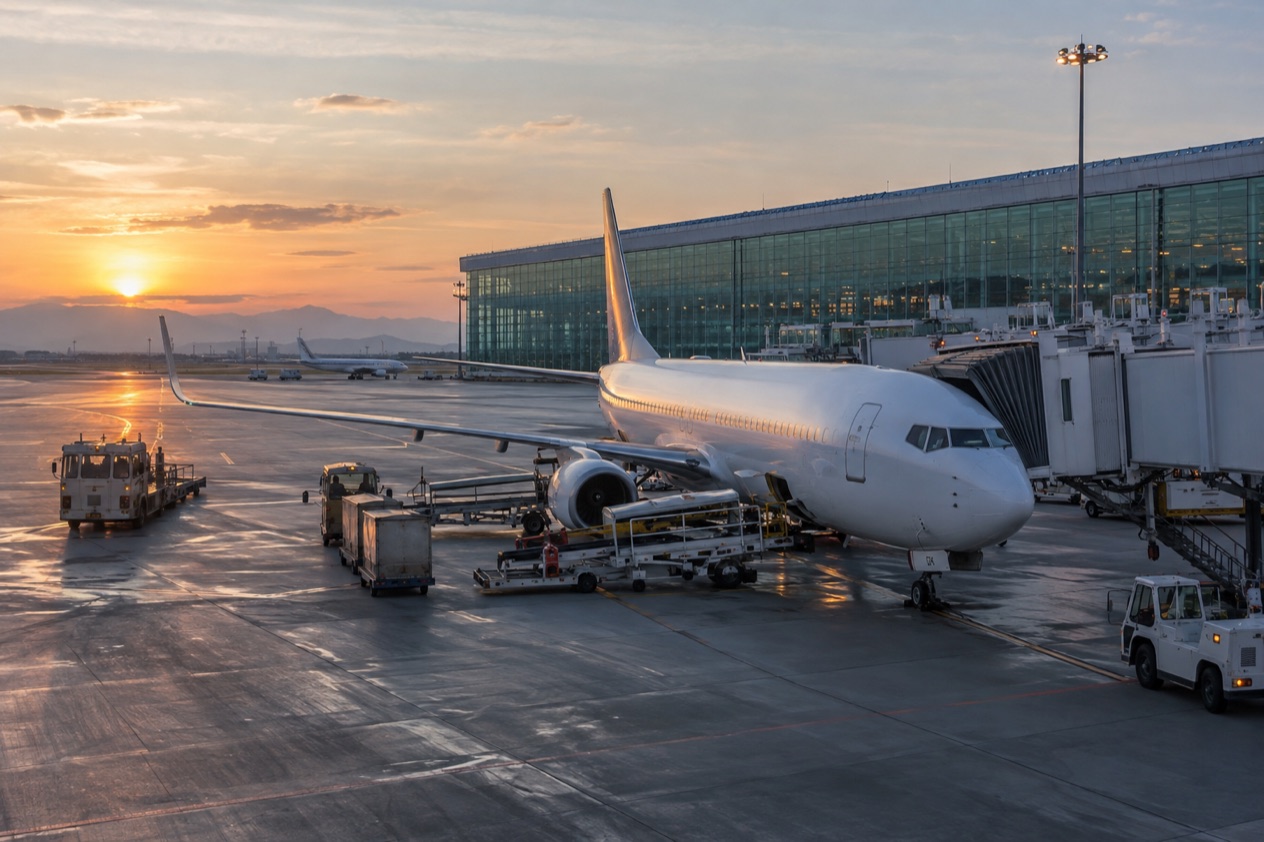
How do you get from the airport to Fukuoka?
From the domestic terminal, the Fukuoka City Subway is the link to town, and a ride to the business district takes about ten minutes. From the international terminal, scheduled buses run to Hakata Station and the Tenjin area, and other buses connect the terminal to the domestic terminal and its subway station. Taxis and rental cars are listed as options too.
The airport sits close to the center. It is 1.8 miles east of Hakata Station, in Hakata-ku, the ward where the station stands. That closeness is the whole appeal of arriving here: you spend your first hour in the city rather than on a long transfer, and you can be eating lunch in Hakata while travelers landing at many other airports are still on the road.
What decides the choice is mostly the terminal you land at, then the rest of your situation. A solo traveler with a single bag will think differently from a family with several suitcases.
Where you are sleeping matters as well: Hakata Station and Tenjin are the two areas the airport buses name, and either one makes a natural base for a first visit. The hour of your arrival counts too, because the airport observes a night curfew that shapes when flights land.
Hakata Station is worth knowing before you arrive, since it is where most routes end up. It is the largest and busiest railway terminal in Kyushu, and the Shinkansen from Osaka ends here. JR Kyushu, JR West and the Fukuoka City Subway all operate at the station. For many visitors it is both the first destination and the springboard for the rest of the island.
Your options from the airport
The Fukuoka City Subway from the domestic terminal
The domestic terminal is connected directly to the Fukuoka City Subway, so you walk from the building to the station rather than outside to a stop. The ride to the business district takes about ten minutes, which is why the subway is the link people talk about when they describe how close Fukuoka Airport is to its city.
The subway suits anyone who lands at the domestic terminal and is heading for the center. Since the station at Hakata is operated in part by the Fukuoka City Subway, the line fits a first stop at the main station.
The Nanakuma Line extension, which began running to Hakata Station on March 27, 2023, is part of the same network. An IC card (more on those below) can be tapped in at the gates, which saves you from working out a ticket machine with a suitcase beside you.
Scheduled buses from the international terminal
The international terminal can be reached only by road, so buses are the way out. A scheduled service runs to Hakata Station and to the Tenjin area, the two districts where many visitors stay, shop and eat. A second scheduled service links the terminal with the domestic terminal and its subway station.
The inter-terminal shuttle takes 10 minutes between the two buildings. That matters for one practical reason: if the bus to your district is not what you want, you can switch to the subway at the domestic side. The cargo terminal sits next to the international terminal, so the area around it is working airport rather than anything to explore.
Taxis and rental cars
Taxis and rental cars appear among the transport options the airport lists, alongside the subway, the bus and the shuttle. A taxi brings the door-to-door appeal to a hotel in Hakata or Tenjin, and it suits a group that would rather not carry bags through a station. A rental car makes sense mainly if your plans lead beyond the city, since from Fukuoka Airport travelers can reach all of Kyushu.
The airport also has parking facilities, including for bicycles and motorcycles. Inside the city itself you will find that the subway, buses and the station network cover most of what a visitor wants, and the car is a choice for the island beyond.
Airport transfer options compared
| Option | Terminal | Where it goes |
|---|---|---|
| Fukuoka City Subway | Domestic | The business district, and Hakata Station on the same network |
| Scheduled bus | International | Hakata Station and the Tenjin area |
| Inter-terminal bus | International | The domestic terminal and the subway station |
| Inter-terminal shuttle | Between terminals | The other terminal |
| Taxi | Airport | Listed as a transport option |
| Rental car | Airport | Listed as a transport option, with access to all of Kyushu |
The trade-offs come down to where you land and where you sleep. The subway is the most direct line to town for domestic arrivals, with a station inside the building. For international arrivals the bus replaces it, and the destinations it names, Hakata Station and Tenjin, cover the districts where a first night is most often spent.
If your hotel is somewhere else in the city, the subway network and the station give you a way to continue from either of those points. Taxis and rental cars sit outside this pattern. They remove the question of connections, and the car in particular opens the whole island, so it belongs to the traveler whose trip is built around Kyushu rather than around the city center.
Arriving at the airport
Fukuoka Airport has two terminals, domestic and international, and they are not alike when you walk out. The domestic terminal has the subway connection. The international terminal is reached only by road, which is why the buses from there matter. An inter-terminal shuttle runs between the two buildings.
A mandatory curfew applies from 22:00 every night until 07:00 the next morning, at the request of local residents. Late evening is therefore the end of the airport’s day, and the hours after landing are when you are most likely to be heading into town while the city is still awake. Fukuoka’s food stalls open in the evening, so even a late arrival can end beside a bowl of ramen.
A second runway opened on March 20, 2025, and it serves international departures only. Because it sits so close to the first runway, both cannot be used at the same time. For an arriving traveler this changes nothing at the curb, but it explains the layout of an airport that covers 345 hectares and has grown into the fourth busiest passenger airport in Japan.
The official airport website is available in Japanese, English, Simplified Chinese, Traditional Chinese and Korean. It carries Today’s Flight Information and the schedules for tomorrow and beyond, plus boarding procedures for each terminal. Skytrax placed the airport 26th among its World’s Top 100 Airports for 2024.
If you ever need an alternative, Kitakyushu Airport is open 24 hours a day and lies 38 miles from Fukuoka Airport. Most travelers will never need it, but it is the airport the sources name as the backup.
Good to know before you go
IC cards, the rechargeable tap-in cards sold under regional names such as Suica, Pasmo and ICOCA, work on trains, buses and boats, in vending machines and convenience stores, and in some taxis. Cards from one region can be used throughout Japan, so a card you already carry from another city is not a problem here.
Fukuoka is a port city on the north coast of Kyushu, and it rewards a first evening out: the yatai stalls of Hakata earned a place in a New York Times list of places to visit, and Lonely Planet named the city in its food category. In July the city fills with Hakata Gion Yamakasa, a big summer festival. Whatever the month, the walk from your hotel to dinner is the real start of the trip.
Sources
- Wikipedia, Fukuoka Airport (https://en.wikipedia.org/wiki/Fukuoka_Airport), checked October 11, 2026
- Wikipedia, Hakata Station (https://en.wikipedia.org/wiki/Hakata_Station), checked October 11, 2026
- Fukuoka Airport, Access (https://www.fukuoka-airport.jp/en/access/), checked October 11, 2026
- Japan National Tourism Organization, Fukuoka (https://www.japan.travel/en/destinations/kyushu/fukuoka/fukuoka-city/), checked October 11, 2026
- Fukuoka City official tourist guide (https://yokanavi.com/en/), checked October 11, 2026
- Japan National Tourism Organization, IC cards, Suica, Pasmo, ICOCA, how to use (https://www.japan.travel/en/plan/ic-card/), checked October 11, 2026