
In February, bags of roasted soybeans fly through doorways and shrine courtyards while people shout “Oni wa soto! Fuku wa uchi!” to chase out the devils and let fortune in.
Up in Hokkaido, giant snow sculptures rise in the middle of Sapporo, and farther south the first plum trees open their blossoms against gray winter skies. Japan in February is a month of snow country and early spring at the same time, and the trip you plan depends on which end of the country you choose.
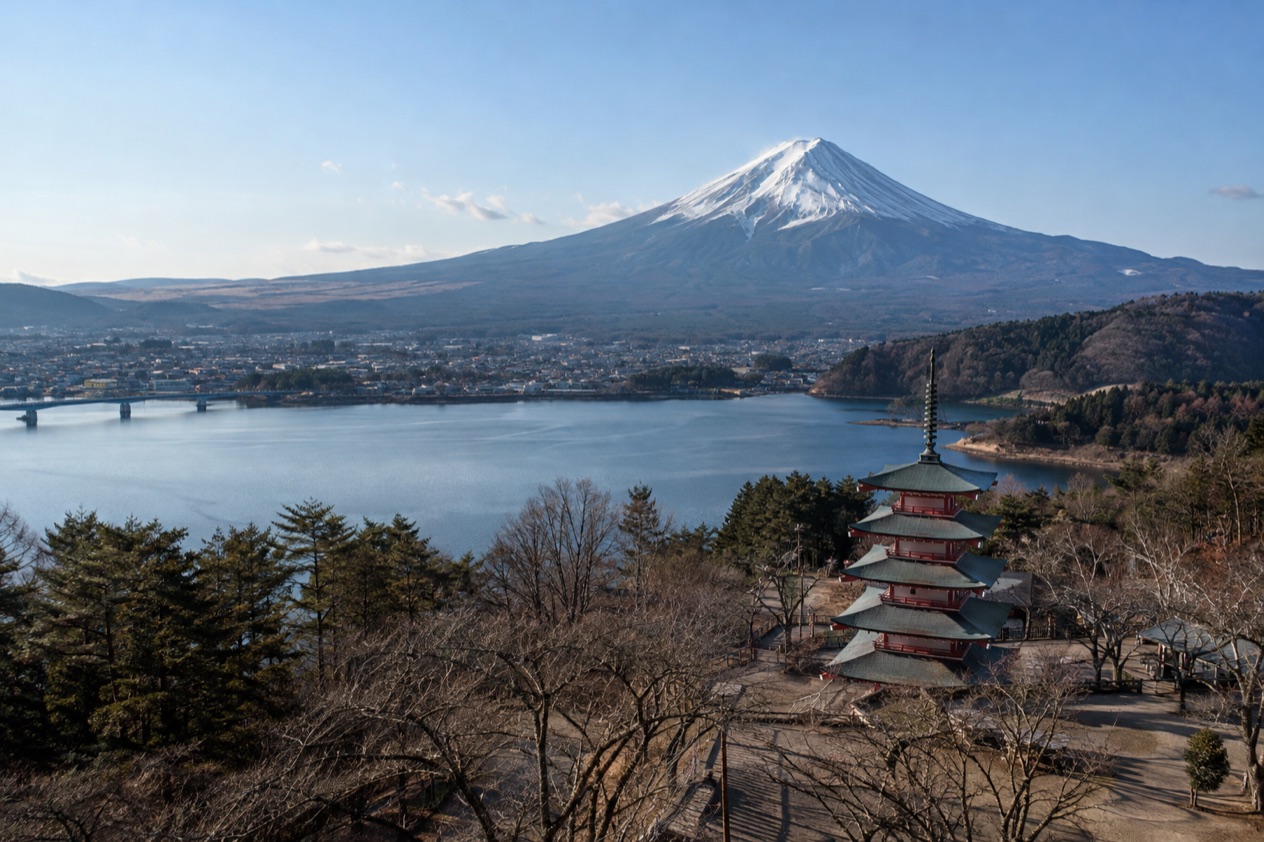
What is the weather like in Japan in February?
February is cold across most of the country, freezing and snowy in Hokkaido and along the Sea of Japan side, chilly but often bright around Tokyo, and mild in Okinawa. Japan is not one climate, so the place matters more than the month.
| Place | Average high (°F) | Average low (°F) | Precipitation (in) | Daylight on the 15th (hours and minutes) |
|---|---|---|---|---|
| Tokyo | 51.6 | 35.8 | 2.22 | 10 h 52 min |
| Kyoto | 50.0 | 34.9 | 2.56 | 10 h 54 min |
| Osaka | 50.9 | 37.8 | 2.38 | 10 h 55 min |
| Sapporo | 32.7 | 20.8 | 3.62 | 10 h 30 min |
| Okinawa (Naha) | 68.4 | 59.2 | 4.51 | 11 h 16 min |
| Fukuoka | 52.9 | 39.9 | 2.75 | 10 h 58 min |
| Kanazawa | 46.0 | 33.8 | 6.40 | 10 h 50 min |
| Hiroshima | 51.6 | 36.3 | 2.52 | 10 h 56 min |
Tokyo is the brightest of the big cities, with around 170 hours of sunshine and only a handful of days with precipitation, so winter afternoons are often crisp and clear. Kyoto and Osaka feel similar in temperature, but Kyoto sees more gray days and snow or sleet on a good share of the month, usually in light amounts. Fukuoka and Hiroshima sit a little milder, with highs in the low 50s.
The extremes are Sapporo and Kanazawa. Sapporo stays below freezing in the daytime, with snow or sleet on most days of the month. Kanazawa is the wettest of the group, with precipitation on more than half the days and a lot of snow. Naha in Okinawa, with highs near 68°F and a sea around 71°F, is the one place where a light jacket is enough, though it is often cloudy and damp.
Where to go in Japan in February
Tokyo and the Kanto region
Tokyo in February is cold but dry for much of the month, with long stretches of sunshine and only a little snow or sleet now and then. It suits museum days, neighborhood walks, ramen and hot-pot dinners, and evenings in a warm izakaya (a casual pub serving small plates).
Setsubun, the bean-throwing festival that marks the turn toward spring, is the cultural moment of the month. Households throw roasted soybeans out the front door, and people eat one bean for each year of their age plus one extra for luck. Nearby in Ibaraki, the Mito Plum Blossom Festival runs from February into March.
Kyoto and the Kansai region
Kyoto is cold, gray at times and often dusted with snow or sleet, which suits temples and gardens best on the days the sky opens. Its temples and shrines look stark against bare trees, and plum trees are the first sign of color. Prunus mume, the plum, typically flowers from January until late February in East Asia, so a shrine garden with early blossoms is a realistic find.
Osaka, a short stay away on the map but a different mood, is about food: takoyaki, okonomiyaki and steaming bowls of noodles taste better in the cold. Hiroshima and Fukuoka, a little milder, add oysters, ramen and market streets for a winter trip west.
Hokkaido and Sapporo
Hokkaido is the reason to come for snow. Sapporo gets deep snowfall in February, with highs just above freezing and snow or sleet on most days. Hokkaido has long, very cold winters, and the peak ski season there falls in January and February, when snowfall is most frequent. Sahoro Ski Resort is one of the ski resorts recommended in Japan.
The Sapporo Snow Festival fills Odori Park in the center of the city, along with Susukino and Tsudome, with snow and ice sculptures. After dark, miso ramen, grilled seafood and hot sake are the natural answers to the cold.
Okinawa
Okinawa is where you go to leave winter behind. Naha is mild, with highs near 68°F and lows near 59°F, and the sea is around 71°F, though the month can be damp, with rain on about ten days and fewer hours of sun than Tokyo. It suits slow days of castle ruins, market lunches of Okinawan noodles and pork, and a coastal drive.
Kanazawa and the Sea of Japan coast
Kanazawa is the snowy, moody choice. Rain, sleet and snow fall on most days, and the garden and old streets look their most graphic under a white layer. It suits travelers who like winter atmosphere over sunshine, with seafood and warm teahouse breaks in between.
What to do in Japan in February
Setsubun and the bean-throwing ritual
Setsubun is the big folk tradition of the month. The main ritual is mamemaki, where roasted soybeans called fukumame are thrown out the front door or at a family member wearing an oni (demon) mask, with the shout of “Devils out! Fortune in!”
Afterward comes the eating: one bean for each year of your life, plus one for luck in the coming year, counted in the traditional way of reckoning age. Shrines and temples hold their own bean-throwing events, and it is a fun, noisy ritual to catch as a visitor.
Sapporo Snow Festival
The Sapporo Snow Festival is held every February in Sapporo over seven days. It has three sites: Odori, in Odori Park in the center of the city, plus Susukino and Tsudome. Walking among sculptures with a hot drink in hand is the whole idea, and the cold is part of the experience.
Plum blossoms, skiing and winter onsen
February is plum season. The Mito Plum Blossom Festival in Ibaraki runs from February to March, and plum trees in gardens elsewhere flower through late February. Cherry blossoms come later, with the famous Hirosaki festival (2,600 trees, some over 300 years old) belonging to spring rather than this month.
For snow, Japan’s ski season generally runs from December to April. Hokkaido and the high mountains of Nagano reach their peak in January and February. Yamagata Zao Onsen Ski Resort is the largest single ski resort in Japan. A hot bath after a day in the cold is a classic winter pairing.
Is Japan busy in February?
Japan in February is busiest where the festivals and snow are, and calmer in most of the cities that do not have a big event. The Sapporo Snow Festival draws crowds to central Sapporo for its seven days, and ski areas in Hokkaido and Nagano are at their peak in the month.
Plum blossom gardens, such as the Mito festival grounds, also pull visitors for weekend outings. The long New Year closures, when many restaurants and attractions shut, are behind you by now. Quieter choices include the cold, gray days in Kyoto temple gardens, the Sea of Japan coast and Okinawa, where the weather is mild and few people go for beaches this time of year.
What to pack for Japan in February
Packing changes with the region: heavy winter gear for Hokkaido and the snowy west coast, layers for Tokyo, Kyoto and Osaka, and light clothes for Okinawa.
- A warm coat and layers, since highs hover near 50°F in the big cities and fall near freezing in Sapporo.
- Waterproof boots with good grip for snow and slush in Sapporo, Kanazawa and the mountains.
- Gloves, a hat and a scarf for cold mornings and evenings.
- A compact umbrella or rain shell for the gray, damp days in Kyoto, Kanazawa and Okinawa.
- Sunscreen and sunglasses, because snow glare and clear Tokyo days both call for them.
- A light jacket and swimwear option for Okinawa, where the sea is around 71°F.
Good to know before you go
February is a winter month, and the typhoon season is not the concern here. Snow is. Heavy snow regularly covers the mountains and northern regions, while most major cities rarely see snow. Days are nearly eleven hours long, so plan outdoor sightseeing around the afternoon light. The New Year closures, when many restaurants and attractions shut, are over, though a few places may still keep a slower rhythm.
Is February a good time to visit Japan?
February is a good time for snow, festivals and winter food, and Hokkaido is the best region of the month, with the Sapporo Snow Festival and peak ski conditions. For mild weather, Okinawa is the alternative, and for culture without heat or crowds, Kyoto and Tokyo reward those who dress warmly.
Compared with January, the cold is about the same, with Tokyo and Kyoto only slightly warmer and Sapporo only a little less cold. March brings a clear jump, with Tokyo highs near 58°F and more rain. February sits in between: still wintry, but with plum blossoms and Setsubun pointing at spring. What is special about February is that you can stand in snow and see plum buds in the same week, and start the year of luck with a handful of roasted soybeans.
Sources
- Japan Meteorological Agency (JMA), Normal values 1991-2020, monthly (https://www.data.jma.go.jp/stats/etrn/view/nml_sfc_ym.php?prec_no=44&block_no=47662), station Tokyo, elevation 25 m, checked October 11, 2026
- Computed from the date and the latitude of the place (sunrise equation, solar elevation -0.833 degrees), October 11, 2026
- Japan Meteorological Agency (JMA), Normal values 1991-2020, monthly (https://www.data.jma.go.jp/stats/etrn/view/nml_sfc_ym.php?prec_no=61&block_no=47759), station Kyoto, elevation 41 m, checked October 11, 2026
- Japan Meteorological Agency (JMA), Normal values 1991-2020, monthly (https://www.data.jma.go.jp/stats/etrn/view/nml_sfc_ym.php?prec_no=62&block_no=47772), station Osaka, elevation 23 m, checked October 11, 2026
- Japan Meteorological Agency (JMA), Normal values 1991-2020, monthly (https://www.data.jma.go.jp/stats/etrn/view/nml_sfc_ym.php?prec_no=14&block_no=47412), station Sapporo, elevation 17 m, checked October 11, 2026
- Japan Meteorological Agency (JMA), Normal values 1991-2020, monthly (https://www.data.jma.go.jp/stats/etrn/view/nml_sfc_ym.php?prec_no=91&block_no=47936), station Naha, elevation 28 m, checked October 11, 2026
- Open-Meteo Marine API, average 2015-2024, checked October 11, 2026
- Japan Meteorological Agency (JMA), Normal values 1991-2020, monthly (https://www.data.jma.go.jp/stats/etrn/view/nml_sfc_ym.php?prec_no=82&block_no=47807), station Fukuoka, elevation 2 m, checked October 11, 2026
- Japan Meteorological Agency (JMA), Normal values 1991-2020, monthly (https://www.data.jma.go.jp/stats/etrn/view/nml_sfc_ym.php?prec_no=56&block_no=47605), station Kanazawa, elevation 6 m, checked October 11, 2026
- Japan Meteorological Agency (JMA), Normal values 1991-2020, monthly (https://www.data.jma.go.jp/stats/etrn/view/nml_sfc_ym.php?prec_no=67&block_no=47765), station Hiroshima, elevation 4 m, checked October 11, 2026
- Wikipedia, Setsubun (https://en.wikipedia.org/wiki/Setsubun), checked October 11, 2026
- Japan National Tourism Organization, festivals and events (https://www.japan.travel/en/see-and-do/festivals-and-events/), checked October 11, 2026
- Sapporo Snow Festival official website (https://www.snowfes.com/english/), checked October 11, 2026
- Wikipedia, Sapporo Snow Festival (https://en.wikipedia.org/wiki/Sapporo_Snow_Festival), checked October 11, 2026
- Japan National Tourism Organization, winter in Japan (https://www.japan.travel/en/guide/winter-guide/), checked October 11, 2026
- Japan National Tourism Organization, skiing and snowboarding in Japan: regions, resorts, seasons (https://www.japan.travel/en/sports/snow/), checked October 11, 2026
- Wikipedia, Climate of Japan (https://en.wikipedia.org/wiki/Climate_of_Japan), checked October 11, 2026
- Japan National Tourism Organization, flowers by season: cherry blossom, plum, wisteria, hydrangea, where and when (https://www.japan.travel/en/see-and-do/flowers/), checked October 11, 2026
- Wikipedia, Prunus mume (https://en.wikipedia.org/wiki/Prunus_mume), checked October 11, 2026
- Japan National Tourism Organization, skiing guide (https://www.japan.travel/en/guide/skiing/), checked October 11, 2026
- Wikipedia, List of ski areas and resorts in Japan (https://en.wikipedia.org/wiki/List_of_ski_areas_and_resorts_in_Japan), checked October 11, 2026
To plan your stay
- Things to Do in Japan: Kyoto Temples, Onsen, Street Food and Day Trips
- Where to Stay in Japan: Ryokan, Temple Stays, Capsule Hotels and the Best Cities to Base In
- Sending Luggage from the Airport in Japan: Hands-Free Travel, Hotel Delivery and Coin Lockers
- Know Before You Go to Japan: Entry, Money, Etiquette and Getting Around