
In the old post towns of the Kiso Valley, the lanes of stone and timber still seem made for people walking with a pack on their back. Farther north, steep thatched roofs shed the winter snow in Shirakawa-go, and gardens in Kanazawa glow under lights after dark. Chubu is the middle of Honshu, a region of mountains, two coasts and castle towns, and it suits travelers who like to move between old streets and high country.
It rewards people who enjoy a changing landscape from one stop to the next, with a big city at one end and alpine villages at the other.
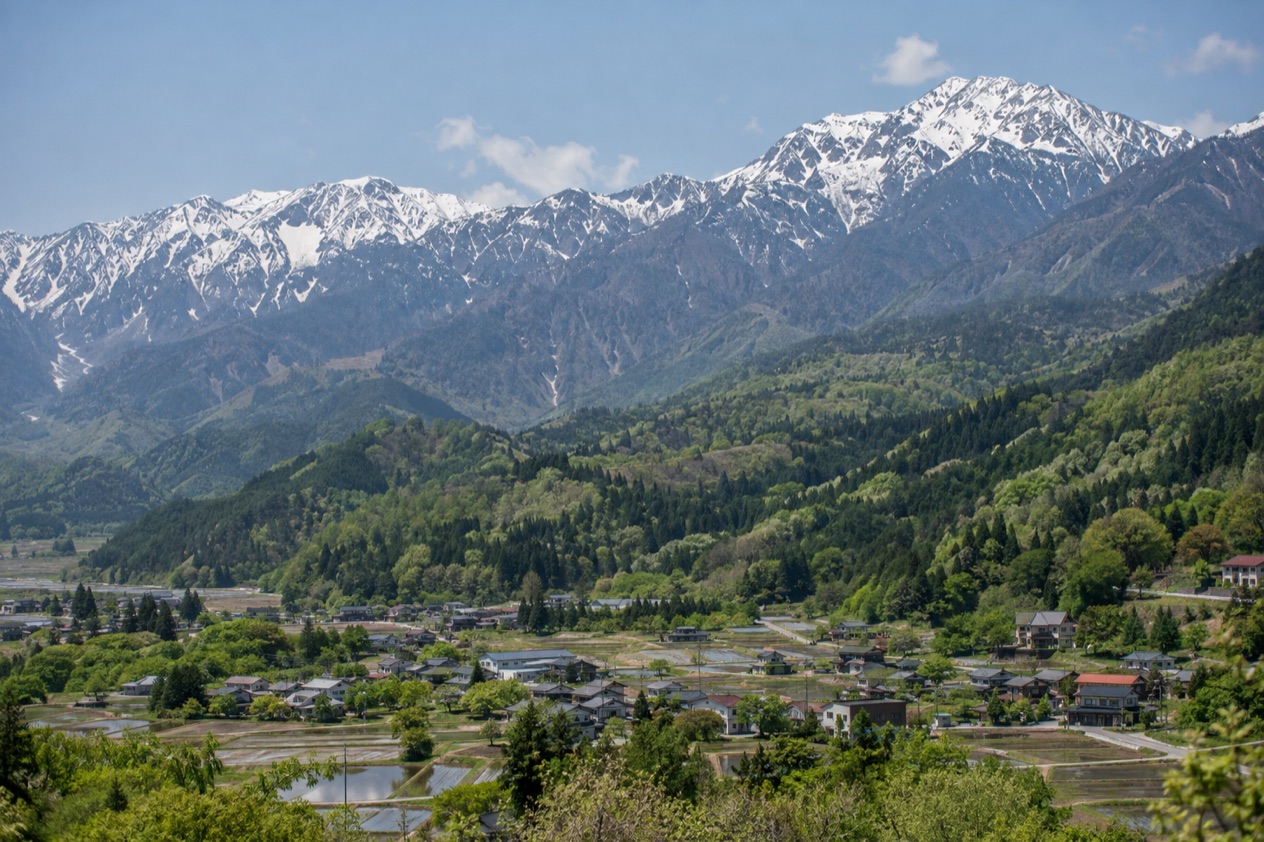
Where is the Chubu region and what is it like?
Chubu is the central region of Honshu, Japan’s main island, sitting at the border between West Japan and East Japan and lying directly between the Kanto region around Tokyo and the Kansai region around Kyoto and Osaka. It takes in nine prefectures: Aichi, Fukui, Gifu, Ishikawa, Nagano, Niigata, Shizuoka, Toyama and Yamanashi. It is large and varied, and it has both a Pacific Ocean coastline and a Sea of Japan coastline.
The region is usually read as three subregions. Tokai is the Pacific side, where Nagoya is the major city. Koshin’etsu is the mountain interior, with Nagano and Yamanashi, and Hokuriku is the Sea of Japan side, with Kanazawa and Toyama. Mount Fuji, the region’s most famous landmark, stands within Chubu, and the Japanese Alps run through the middle of it.
The character changes sharply from place to place. Nagoya is a large city, the center of a metropolitan area of about 10 million people.
Takayama, in Gifu Prefecture, is a city in the Japanese Alps whose well-preserved quarter of Edo-style streets has earned it the nickname Little Kyoto of Hida. Toyama sits between the sea and the mountains, and together with Fukui it offers a charming glimpse of rural Japan. Nagano is the one prefecture of the Hokuriku group with no coastline at all.
Chubu suits travelers who like to combine castles, gardens, mountain villages and the trains that link them. It is less a single destination than a chain of them, so those who want one base and no moving around may find it scattered.
What is there to do in the Chubu region?
Kanazawa: gardens and an old cultural center
Kanazawa is the capital of Ishikawa Prefecture, on a narrow strip of land along the Sea of Japan. During the Edo period it was one of the most important cultural and artistic centers in Japan, and it remains a significant destination for people who love art and culture.
Kenrokuen Garden is the centerpiece, and admission to it is free. Kanazawa Castle Park and Kenrokuen are both illuminated at night, which gives the evening walk a different mood.
The Hokuriku Shinkansen from Tokyo reaches Kanazawa, so it fits a trip that continues from the capital. It suits garden lovers, museum visitors and anyone who likes to wander old streets.
Takayama and Shirakawa-go: Alpine towns and thatched farmhouses
Takayama is in the heart of the Japanese Alps, and its old quarter of Edo-style streets is the reason to come. It is the largest city in Japan by area, which gives you a sense of how much mountain country surrounds the town.
Shirakawa-go can be reached within 50 minutes from Takayama since the opening of the Hida Tunnel, compared with an earlier three-hour drive. The farmhouses are built in the gassho style, a word meaning hands together as in prayer, which refers to the steep roofs that keep the snow off in winter. Shirakawa-go and Gokayama in Toyama are UNESCO World Heritage Sites together. This pairing suits photographers and anyone who enjoys rural architecture.
Nagano, Matsumoto and the ski country
Nagano and Niigata offer the best ski and snowboard slopes in Japan, which makes winter the season that draws many people to the Alps. Nagano city is the prefecture’s capital and its northernmost transportation hub, and at an altitude of 371.4 meters it is the highest prefectural capital in Japan. Matsumoto, also in Nagano Prefecture, makes a good second base in the mountains.
The Hokuriku Shinkansen links Tokyo to Nagano, so you can reach the mountains without a long transfer. Skiers, hikers and people who simply want mountain air will find the most to do here.
The Nakasendo and the Kiso Valley post towns
The Nakasendo is the old road that connects Tokyo and Kyoto, passing through Saitama, Gunma, Nagano, Gifu and Shiga prefectures, over a total distance of about 332 miles. Magome-juku, in the city of Nakatsugawa in Gifu Prefecture, is a restored Edo period post town along it. Walking a stretch of the road is a way to feel the region at the pace of the travelers who once used it, and it suits those who like history on foot.
How many days do you need in the Chubu region?
A week gives Chubu room to breathe, while a long weekend works only if you pick one corner of it. The region is large, so the useful question is which subregion you want, not how to see all of it.
A short stay fits a single base. Nagoya works for a city break, with the castle and the other major sights that the NAGOYA Sightseeing Pass covers, such as Chubu Electric Power MIRAI TOWER, Nagoya Port Aquarium and Higashiyama Zoo and Botanical Gardens.
Or you can spend the time in Kanazawa, where the castle park and Kenrokuen are close to each other and the garden is free to enter. Both cities suit a couple of days without feeling rushed.
With about five days, a line through the Alps opens up: Takayama for its old streets, a day trip to Shirakawa-go, then on to Matsumoto or Nagano. A week lets you add Kanazawa on the Sea of Japan side, and then Toyama, where the mountains come down close to the water.
If you have more time, walk a stretch of the Nakasendo between Magome-juku and its neighbors, or add Mount Fuji, which stands within the region. Winter trips built around skiing in Nagano or Niigata naturally take longer, since the snow country is a destination in itself. Because the Hokuriku Shinkansen links Tokyo to much of Hokuriku Shinetsu in 2 hours 30 minutes or less, you can also begin or end the trip in the capital without losing a day.
Where to stay in the Chubu region
Staying in a city makes sense when you want to move around by train. Nagoya is the big base on the Pacific side, in Aichi Prefecture, and it fits travelers who arrive by air or who want a large city with plenty of choice. Kanazawa is the base for the Sea of Japan coast and for those who want gardens and old districts close at hand.
Takayama is the natural choice for the Japanese Alps, because it puts you within reach of Shirakawa-go and keeps you in a town of preserved Edo-style streets. Matsumoto and Nagano city suit people who plan to ski or hike, since both are in Nagano Prefecture. Nagano city is the northernmost transportation hub of the prefecture, and Matsumoto can be reached from Nagoya Station in 2 hours by train.
Toyama is a quieter option on the coast, situated approximately two hours north of Tokyo, and it fits those who want to see rural Japan along with the sea and the mountains. For a stay in the old post towns, Magome-juku is the village on the Nakasendo, and it appeals to walkers who like to be on the road early.
A reasonable plan is to choose two bases at most and use trains for the rest, rather than changing hotels every night. The region rewards a slower pace, and a base like Takayama or Kanazawa can serve as home for several days.
How do you get to the Chubu region and get around?
Chubu Centrair International Airport (NGO) is the air gateway, located on an artificial island 30 minutes south of Nagoya. From there you continue by rail into Nagoya or beyond.
Most of the region is linked to Tokyo by shinkansen, the high-speed train. The Hokuriku Shinkansen reaches Nagano, Toyama, Kanazawa and Fukui from Tokyo. Nagano city is 1 hour 20 minutes from Tokyo without stopping, and the train connects Tokyo to much of Hokuriku Shinetsu in 2 hours 30 minutes or less. Matsumoto can be reached from Tokyo’s Shinjuku Station in 2 hours and 40 minutes by train.
From the Kansai side, the Thunderbird limited express train connects Osaka and Kyoto to Tsuruga, the terminus of the Hokuriku Shinkansen, so you can enter the region from the west as well. Between the sights themselves, the trains are the backbone, and Takayama and Shirakawa-go are linked in 50 minutes now that the Hida Tunnel is open.
Nagoya has its own sightseeing pass for the city’s major attractions. For the mountain villages and the old road, you will be on foot for much of the time once you arrive, so comfortable shoes matter.
When is the best time to visit the Chubu region?
Winter is the season for the Alps, because Nagano and Niigata offer the best ski and snowboard slopes in Japan. It is also when the steep gassho roofs of Shirakawa-go do the work they were built for, shedding the snow, so the village looks its most striking under a white cover.
For walking, the road through the Kiso Valley and the gardens of Kanazawa, spring and autumn bring the colors that people travel for. The region is spread over a wide area, so bloom and leaf dates differ from one city to another, and there is no single date for the whole of Chubu. Kenrokuen is lit up at night, so evenings in the garden add something to a visit in any season.
The Nagoya Castle Autumn Festival is a reason to be in the city in the fall, when the Honmaru Palace admission runs until 1 hour before gate closing. Summer and the rainy period bring humid weather to the lowlands, so those months suit the mountain towns better than the big cities.
Good to know before you go
Chubu is wide, and the weather differs from the Pacific coast to the Alps to the Sea of Japan, so pack for the area you are heading to rather than for the region as a whole. Winter in the mountains means snow, which is part of the appeal for skiers and for the thatched villages. On the Nakasendo and in the old towns, you will walk on stone lanes and uneven ground, and good shoes make the day easier.
Rail connections are the way most visitors link the stops, and the Hokuriku Shinkansen gives quick access from Tokyo. Kenrokuen Garden is free to enter, and the NAGOYA Sightseeing Pass covers Nagoya’s major attractions for those who plan to see several of them.
Sources
- Japan National Tourism Organization, the Chubu region (https://www.japan.travel/en/destinations/hokuriku-shinetsu/), checked October 11, 2026
- Wikipedia, Chūbu region (https://en.wikipedia.org/wiki/Ch%C5%ABbu_region), checked October 11, 2026
- Wikipedia, Regions of Japan (https://en.wikipedia.org/wiki/Regions_of_Japan), checked October 11, 2026
- Wikivoyage, Chubu (https://en.wikivoyage.org/wiki/Chubu), checked October 11, 2026
- Wikipedia, Nakasendō (https://en.wikipedia.org/wiki/Nakasend%C5%8D), checked October 11, 2026
- Wikipedia, Magome-juku (https://en.wikipedia.org/wiki/Magome-juku), checked October 11, 2026
- Visit Nagoya, the Nagoya city guide (https://www.nagoya-info.jp/en/), checked October 11, 2026
- Wikipedia, Nagoya (https://en.wikipedia.org/wiki/Nagoya), checked October 11, 2026
- Japan National Tourism Organization, Kanazawa (https://www.japan.travel/en/destinations/hokuriku-shinetsu/ishikawa/kanazawa-and-around/), checked October 11, 2026
- Kanazawa Tourist Information Guide (https://www.kanazawa-tourism.com/), checked October 11, 2026
- Wikipedia, Takayama, Gifu (https://en.wikipedia.org/wiki/Takayama,_Gifu), checked October 11, 2026
- Wikivoyage, Takayama (https://en.wikivoyage.org/wiki/Takayama), checked October 11, 2026
- Japan National Tourism Organization, Nagano (https://www.japan.travel/en/destinations/hokuriku-shinetsu/nagano/nagano-and-around/), checked October 11, 2026
- Wikipedia, Nagano (city) (https://en.wikipedia.org/wiki/Nagano_(city)), checked October 11, 2026
- Japan National Tourism Organization, Matsumoto (https://www.japan.travel/en/destinations/hokuriku-shinetsu/nagano/matsumoto-and-around/), checked October 11, 2026
- Wikipedia, Matsumoto, Nagano (https://en.wikipedia.org/wiki/Matsumoto,_Nagano), checked October 11, 2026
- Wikipedia, Shirakawa-gō (https://en.wikipedia.org/wiki/Shirakawa-g%C5%8D), checked October 11, 2026
- Wikivoyage, Shirakawa-go (https://en.wikivoyage.org/wiki/Shirakawa-go), checked October 11, 2026
- Japan National Tourism Organization, Toyama (https://www.japan.travel/en/destinations/hokuriku-shinetsu/toyama/toyama-and-around/), checked October 11, 2026
- Wikipedia, Toyama (city) (https://en.wikipedia.org/wiki/Toyama_(city)), checked October 11, 2026
- Japan National Tourism Organization, Mount Fuji guide (https://www.japan.travel/en/fuji-guide/), checked October 11, 2026
- Official website for Mt. Fuji climbing, about the climb (https://www.fujisan-climb.jp/en/about/), checked October 11, 2026
To plan your stay
- Best Time to Visit Japan: Cherry Blossoms, Autumn Colors, Weather and Festivals
- Where to Stay in Japan: Ryokan, Temple Stays, Capsule Hotels and the Best Cities to Base In
- Sending Luggage from the Airport in Japan: Hands-Free Travel, Hotel Delivery and Coin Lockers
- Know Before You Go to Japan: Entry, Money, Etiquette and Getting Around