
On a March morning at the Waimea Canyon lookouts, mist drifts up from the red walls and the first light turns the rock the color of rust and copper. Cool air smells of wet earth and forest, and somewhere in the trees the call of a native bird carries over the rim. March is a quiet, green, changeable month on the canyon rim and in Kokee, good for lookouts and unhurried walks among the ferns.
What is the weather like in Waimea Canyon in March?
| Month | Average high (°F) | Average low (°F) | Rain days |
|---|---|---|---|
| February | 65.1 | 47.2 | 9.4 |
| March | 65.4 | 49.2 | 10.1 |
| April | 67.0 | 51.3 | 8.1 |
Up on the canyon rim, March feels cool, damp and ever shifting, more like a gentle spring day in the mountains than the beach weather waiting down at the coast. The rim sits high above the sea, so the air is crisp in the morning and comfortable for walking by midday, with showers that come and go through the month.
Rain is a real part of the picture here. About a third of the days bring a shower, and a few of them bring a proper downpour.
Showers often blow in as clouds climb the canyon walls, so a view that is crystal clear at eight can be wrapped in fog an hour later, then open up again. Clouds tend to gather more in the afternoon, which makes the morning the best bet for wide views.
Evenings are properly chilly at Kokee, cold enough that a frost on the grass is a rare but not impossible sight. Days are a little over twelve hours long in mid-March, so there is time for a full outing.
Wear layers, bring a rain shell, and expect trails to be muddy and red clay to stain shoes. The coast below, on the dry leeward side, is far sunnier, which makes a rainy rim day easy to trade for a beach afternoon.
What to do in Waimea Canyon in March
March is a month for lookouts and forest walks, not for crowds or festivals. The rain has left the plateau at its greenest, waterfalls run fuller along the canyon walls, and the trails are quiet. The big events of Hawaii in this season are elsewhere on the islands, so here the pleasure is the landscape itself and the slower rhythm of the rim.
Humpback whales are still passing Kauai’s coasts in late winter, and from the shore down in Waimea town or along the south side you may spot spouts or breaches. Up on the rim you are too high and too far inland for that, so a whale-watching hour is best saved for a coastal stop on the same day.
The canyon lookouts
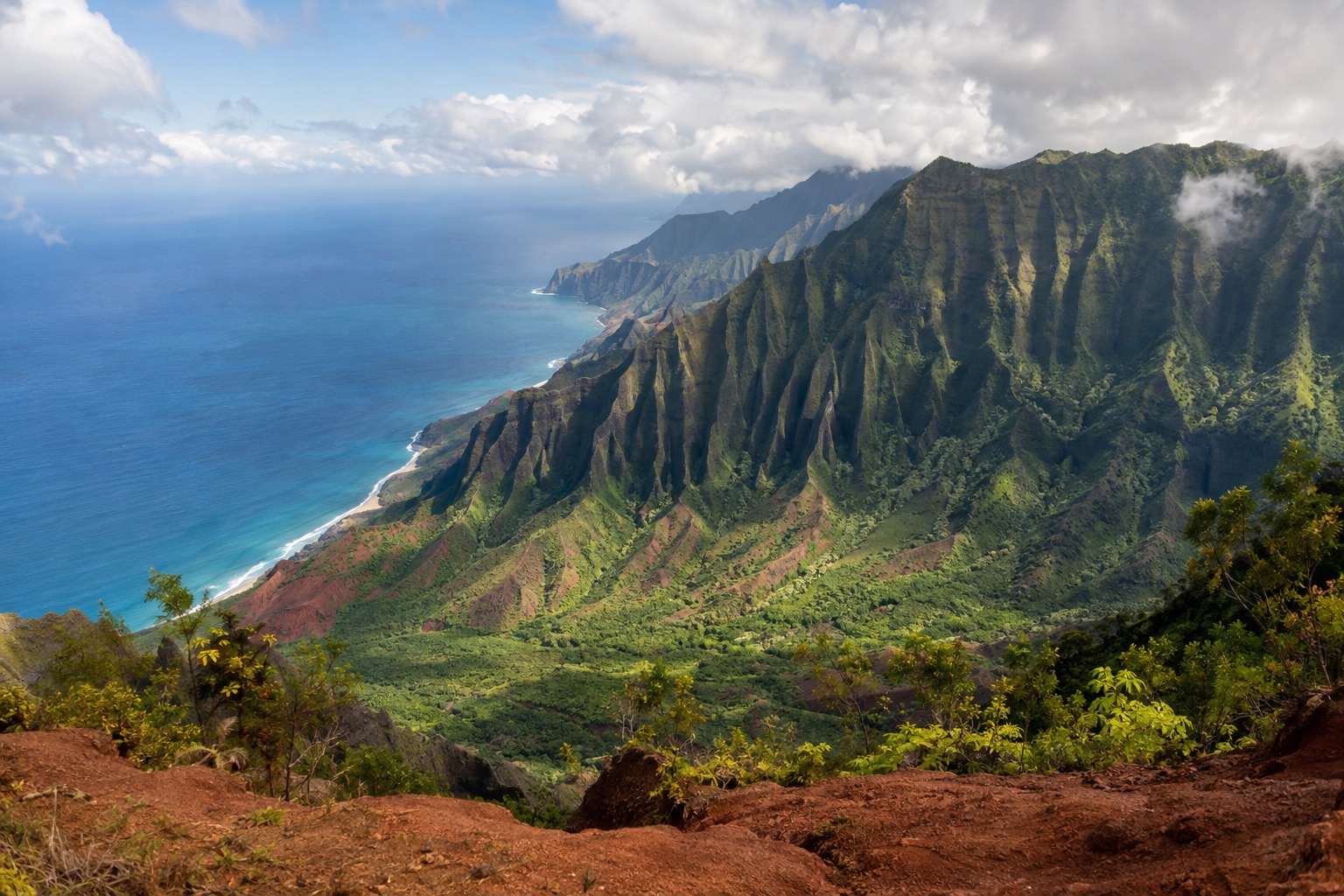
The Waimea Canyon lookouts are the reason most people drive up the winding highway from the coast. The canyon is often called the Grand Canyon of the Pacific, a long gorge of red, orange and green layers cut by the Waimea River. Pull-offs along the road give different angles, and the walls change color as clouds pass over them.
Go early when you can, because March clouds often build as the day goes on. If the canyon is socked in, wait a few minutes. Wind moves the fog quickly and a clear window can open without warning. Wild goats sometimes pick along the rim, and you may hear the whistle of tropicbirds drifting along the walls. It suits everyone, from families to photographers, and a light jacket is welcome even at midday.
Kokee State Park and its trails
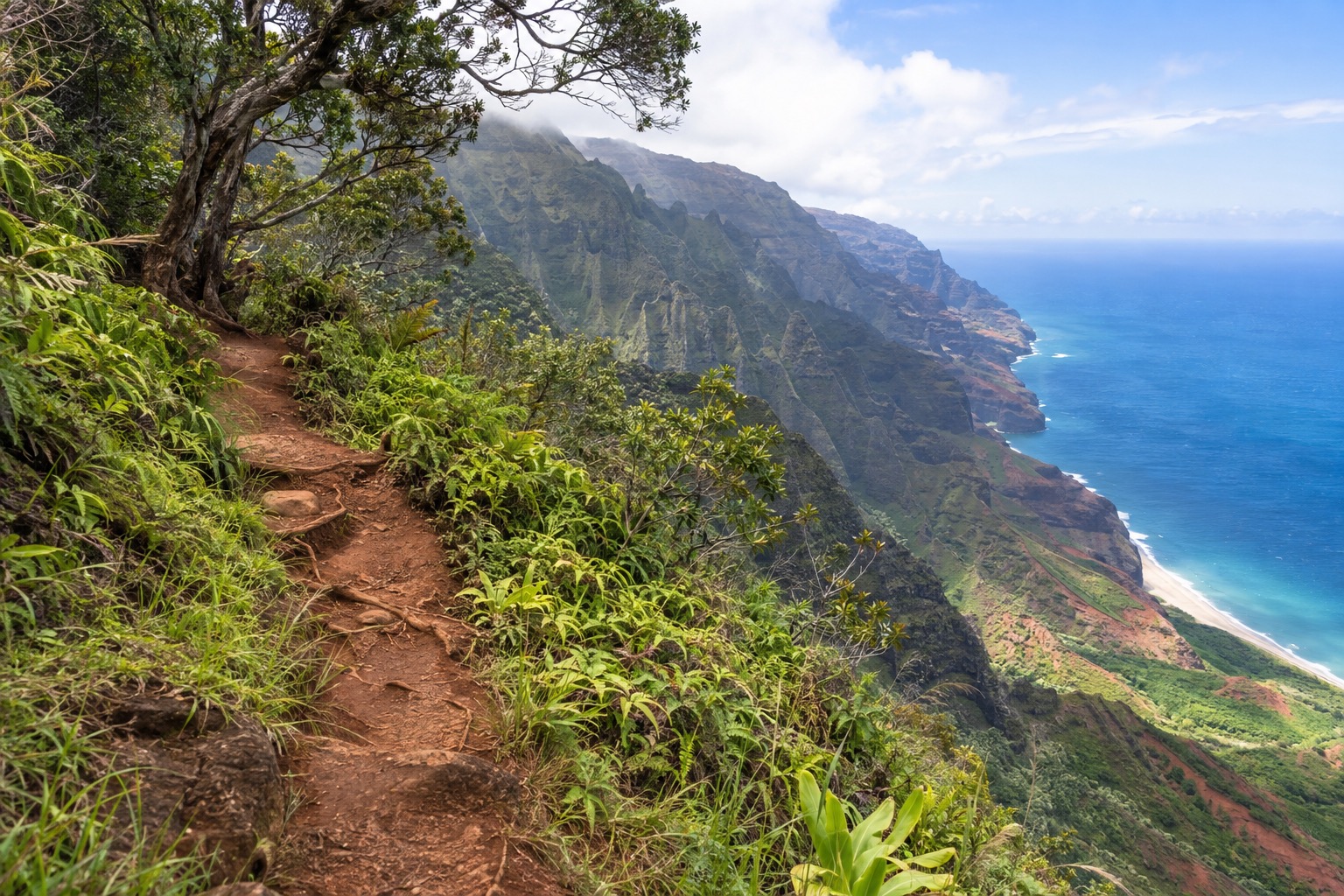
Beyond the last lookouts, the road climbs into Kokee, a cool forest of ohia, koa and ferns with a small museum and lodge at the center. The trails here wander through bogs, meadows and ridgelines, and some reach edges with sweeping views over the Kalalau side of the coast. In March, rain makes the ground soft and the forest dripping and bright.
Choose a short loop if showers are in the forecast, and a longer ridge walk when the morning looks clear. Boots with grip matter on the red clay, and a rain shell is more useful than an umbrella in the wind. Native forest birds live here, and quiet walkers have the best chance of hearing them. The plateau suits hikers and picnickers who like cool air.
Waimea town and the coast below
Back down the mountain, Waimea town sits on the dry leeward coast where the canyon river reaches the sea. A plate lunch, shave ice or fresh poke from a small shop is the usual reward after a day of cold air and lookouts. Nearby, the west-side beaches give a warm, sunny contrast to the rim.
In March the surf on many Kauai shores is still affected by winter swells, so the lifeguard and the beach signs decide where to swim, and you should treat any water with respect. Sunset along the west side is a favorite ritual, with the sun dropping toward the horizon and the sky turning orange over the water.
If rain closes in on the rim, the museum at Kokee and a hot drink at the nearby lodge or cafe make an easy indoor break. Treat the canyon as a place to be gentle with: stay on marked trails, keep off the edges and leave plants, stones and birds alone.
A two-day itinerary for Waimea Canyon in March
Day 1. Start early from the coast and drive up the canyon road, aiming to reach the main lookouts while the air is clear. Stop at several pull-offs along the way and let the colors shift as the light rises. By late morning the clouds often thicken, so continue into Kokee for a picnic lunch near the museum, where the forest keeps the wind off.
After lunch, walk a short forest loop and watch the weather. If showers arrive, wait them out in the museum or lodge. Drive back down in the late afternoon and pick a plate lunch or a casual dinner in Waimea town. The evening is for the sunset on the west side, then an early night after the cool mountain air.
Day 2. Spend the morning on a longer ridge trail in Kokee if the sky looks open, bringing layers, water and boots. The ridgelines give wide views over the Kalalau side, and the quiet of March means few other walkers. Take your time and turn around if fog sets in.
By midday head down to the coast for a warm change. Browse the small shops and stands of Waimea and Kekaha, then spend the afternoon on a west-side beach, watching the water from the sand and entering only where the lifeguard says it is fine. If the weather turns wet up high, switch the long hike for a slow day of coastal stops, shave ice and a sunset by the water.
Is Waimea Canyon busy in March?
No, the canyon is moderately busy in March, with a steady flow of visitors at the main lookouts but little of the crush of summer or the winter holidays. Mainland spring breaks bring families toward the end of the month, so lookouts can get busier at midday and parking fills at the most popular pull-offs.
Trails in Kokee stay quiet, especially on weekday mornings and in wet weather. Rooms and rental cars on Kauai are easiest to find early in the month, and tighter around spring break weeks, so book earlier for those and later for the calmer weeks. Restaurants in Waimea and nearby towns are small, so a table at dinner is easier with a bit of planning.
Most visitors come for a half day, so the lookouts are usually calmest very early or late in the afternoon. A rainy day can leave the rim almost empty, though views may be hidden. Kauai has reservation systems for some parks elsewhere on the island, so check the official notices for anything you plan to add to a canyon day.
What to pack for Waimea Canyon in March
The rim is cooler and wetter than the coast, so pack for a mountain day and a beach afternoon on the same trip.
- A light rain jacket, because showers pass through quickly and the wind is brisk.
- A warm layer or fleece for cold mornings and evenings on the plateau.
- Sturdy shoes with grip, since red clay turns slick when wet.
- Sunglasses and a hat for the bright breaks between clouds.
- Swimsuit and a towel for a west-side beach stop on the way back down.
- Mineral sunscreen for the sunny coast.
Good to know before you go
March falls outside the official hurricane season, which runs from June 1 to November 30. The main planning points are the weather on the rim, which can change fast, and the drive up the canyon road, which takes patience when clouds sit on the plateau. Fill the tank and bring snacks before climbing, since services up high are limited. Lodging carries state and county accommodation taxes on top of the room rate.
| Fee | Amount | Who pays |
|---|---|---|
| State Transient Accommodations Tax | 11.00% | Guests in short-term lodging |
| Kauai County Transient Accommodations Tax | 3% | Guests in short-term lodging |
Waimea Canyon in March vs February and April
Moving earlier to February gives you a slightly cooler and drier rim, with whales still passing the coast in good numbers and winter surf at its strongest on north shores. Evenings are a little colder, and the crowds are similar, with a lighter spring break presence. Choose February if you love crisp air and the winter whale season.
April brings warmer mornings and fewer rainy days, with the plateau drying out and trails becoming easier underfoot. Whale numbers thin as the season closes, and the sea along the south and west shores often feels more settled. Rooms can tighten around the Easter week, which moves each year.
If you want the greenest forest and a quiet trail, March works well. If you want more reliable views and drier walks, shift toward April. If whales are a priority, lean toward February.
Is March a good time to visit Waimea Canyon?
Yes, March is a good time for visitors who enjoy cool air, green landscapes and flexible plans, though it is less ideal for anyone who needs guaranteed clear skies. Hikers, photographers and travelers who like moody light will do well, and the coast below offers a sunny backup when the rim clouds over.
Those who want a dry, warm beach vacation may prefer another month or a stay mainly on the sunny coast with just a day trip up the mountain. On arrival, start with the lookouts on the first clear morning, because the canyon can be hidden by afternoon, then fit the rest of the plans around the weather. What stays with you from March here is the green: waterfalls threading down red walls, mist lifting off the forest, and a plateau that feels a world away from the beach.
Sources
- NOAA NCEI, monthly normals 1991-2020, station USC00513099, checked September 8, 2026
- sunrise-sunset.org, sunrise and sunset calculated for the 15th of the month, checked September 8, 2026
- Hawaii Department of Taxation, Tax Announcement No. 2025-03 (Transient Accommodations Tax Law Changes from 2025 Legislative Session), files.hawaii.gov/tax/news/announce/ann25-03.pdf, checked September 24, 2026
- County of Kauai, Department of Finance, Transient Accommodations Tax page, kauai.gov/Government/Departments-Agencies/Finance/Transient-Accommodations-Tax, checked September 25, 2026
- Hawaii Department of Taxation, County Surcharge on General Excise and Use Tax page, tax.hawaii.gov/geninfo/countysurcharge/, checked September 25, 2026
- NOAA NCEI, monthly normals 1991-2020, station USW00022536
- NWS Honolulu / Central Pacific Hurricane Center, « 2026 Central Pacific Hurricane Season Outlook », weather.gov/hfo/hurricaneOutlook2026, checked September 24, 2026
To plan your stay
- Best Time to Visit Waimea Canyon: Clear Mornings, Rainy Winters and Festival Months
- Waimea Canyon in February: Weather, Lookouts, Kokee Trails and a Two-Day Plan
- Waimea Canyon in April: Weather, Lookouts, Kokee Trails and a Two-Day Plan
- Waimea Canyon in January: Weather, Lookouts, Kokee Trails and Two Days Above the Canyon