
On a September evening in Kona, the coffee farms on the slopes catch the last light while surfers paddle out for one more wave and families linger on the seawall after a long beach day. School is back on the mainland, the summer crowds have thinned, and the ocean has soaked up months of sun. It is a month of warm water, easy beaches and a slower pace across all the islands.
What is the weather like in Hawaii in September?
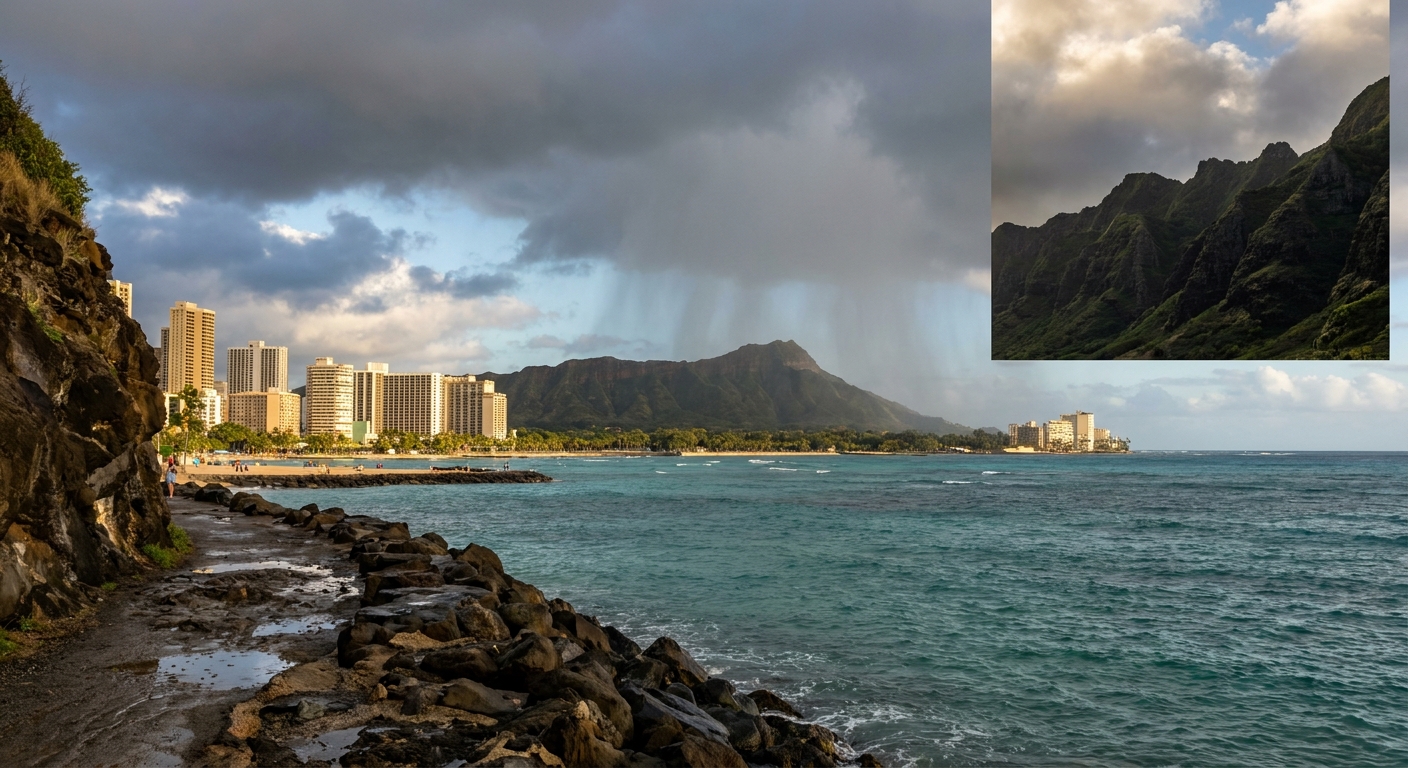
The leeward coasts are hot, bright, and dry, while the windward side of the Big Island is wet and green, and Kauai sits in between. The sea is at its warmest of the year around most of the islands, which makes long swims and snorkeling mornings the natural rhythm of the day.
| Place | Region | Average high (°F) | Average low (°F) | Rain (in) | Rain days | Sea (°F) |
|---|---|---|---|---|---|---|
| Honolulu | Oahu, south shore | 88.4 | 74.8 | 0.88 | 2.2 | 80.5 |
| Maui | Maui | 90.0 | 71.2 | 0.45 | 1.0 | 79.8 |
| Kauai | Kauai | 85.3 | 74.8 | 2.18 | 5.2 | 80.7 |
| Kona | Big Island, leeward | 86.9 | 75.1 | 0.54 | 1.4 | 81.7 |
| Hilo | Big Island, windward | 83.3 | 69.8 | 8.70 | 15.3 | 80.5 |
The contrast is greatest on the Big Island. Kona gets about half an inch of rain over the whole month, while Hilo collects nearly nine inches, with showers on more than half the days. A stay in Hilo means umbrellas and waterfalls at full volume, and a stay in Kona means dry afternoons under a strong sun.
Maui is the hottest of the group by day, and Honolulu stays warm into the night. Kauai gets rain on about one day in six, usually short showers that pass quickly, mostly on its northern side. Compared with August, Hilo is a little drier, and the other places barely change.
Where to go in Hawaii in September
Oahu and Maui: dry-side beaches
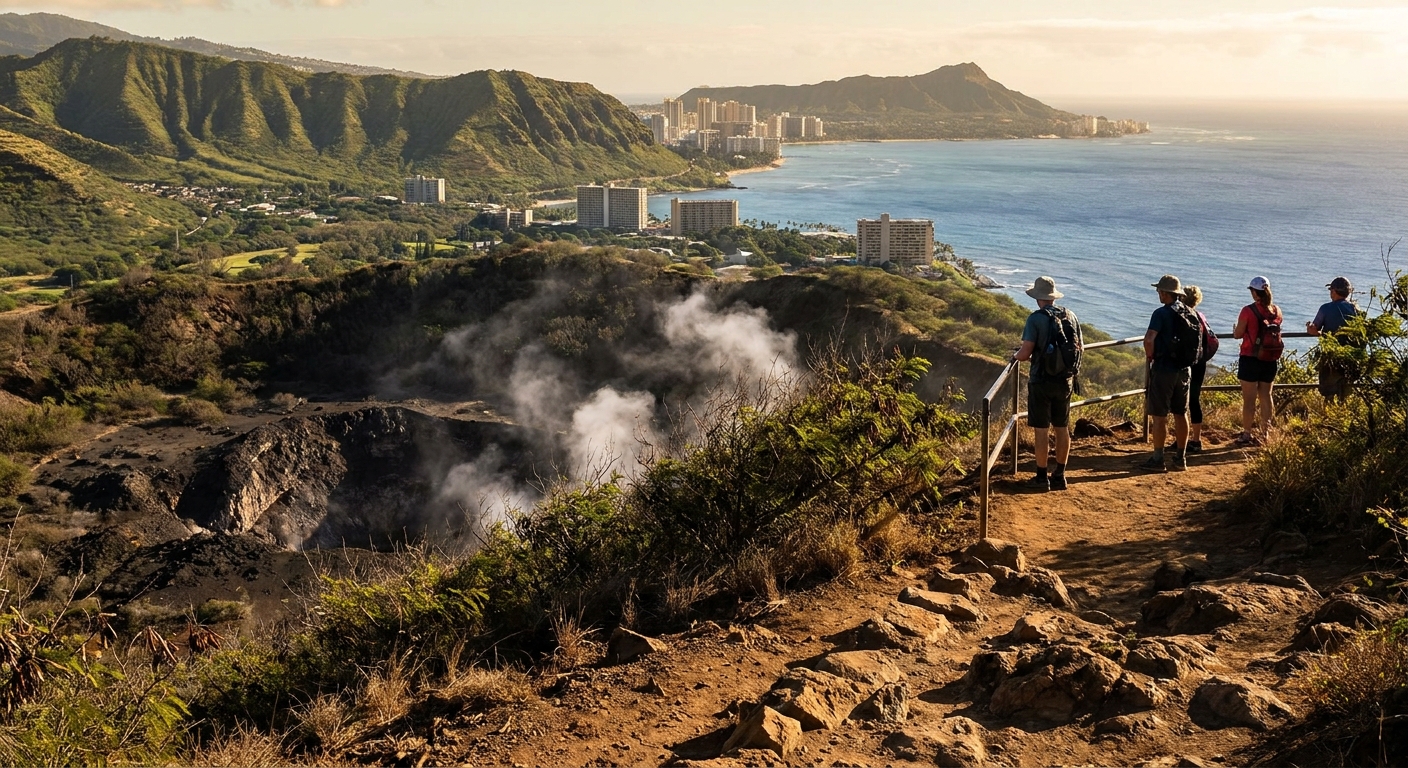
Honolulu and Waikiki are sunny and hot, with very little rain. Summer swells still reach the south shores, so surf lessons and long board rides on the gentle Waikiki breaks suit the month. Pearl Harbor and the Diamond Head trail are best early, before the heat settles in.
Maui’s resort coast at Kaanapali and Wailea is the driest and hottest corner of the state this month. Mornings suit snorkeling and afternoons suit the pool or a shaded beach bar. The summit of Haleakala is far cooler than the coast, so a sunrise there feels like a different climate.
These two islands suit beach-focused trips, couples and families whose children are in school and who travel on a flexible schedule. The Road to Hana crosses the wet windward side, so expect showers between the waterfalls.
Kauai: green cliffs and a quieter pace
With its Na Pali Coast cliffs and Waimea Canyon, Kauai remains a lush island, and in September it stays green while the heaviest rains stay away. Poipu is the easy pick for beach days, with its spot on the south shore, more sun, warm ocean water, and patio evenings.
Princeville and Hanalei on the north side are wetter and lusher, with showers drifting across the mountains. Those huge winter waves have not arrived yet, but ordinary surf and currents, along with signs posted for your safety, show you where swimming is safe, and only at places with a lifeguard on duty should you go in near one. Kauai suits hikers, photographers and anyone who prefers a slow island over a busy one.
The Big Island: sun in Kona, rain in Hilo
Kona is the sunny base, with warm water, coffee farm stops and snorkeling in the clear bays south of town. The sea runs warmer here than anywhere else in the table, and mornings are the calmest hours on the water.
Hilo is the rainy side, with waterfalls, tropical gardens and a farmers market that thrives in the wet. Volcanoes National Park sits in cooler air above, and rain and mist often hang over the crater rim, so bring a layer. Mauna Kea’s summit is cold at any time of year.
What to do in Hawaii in September
Beaches, snorkeling and surf
September is the month for being in the water. With the sea near its warmest, snorkeling at a reef, paddling a canoe or taking a first surf lesson on the south shores feels easy and unhurried. On each beach, residents review that day’s posted surf and current warnings prior to entering, go in only where a lifeguard is present, and stay off the reef because it is living.
The famous big waves of the North Shore belong to winter, so in September the north-facing beaches are generally calmer than they will be in a few months. Even so, conditions change by the day, and flags are worth a glance.
Parks, volcanoes and viewpoints
The big parks are open to enjoy without the summer crush. Fees are listed here for planning.
| Site | Admission |
|---|---|
| Haleakala National Park | $30 per private vehicle (three days), $25 per motorcycle, $15 on foot or bicycle, 15 and under free |
| Hawaii Volcanoes National Park | $30 per private vehicle, $25 per motorcycle (7 days), $15 on foot or bicycle, 15 and under free |
| Pearl Harbor National Memorial | Free, parking $7 per day by mobile app |
Haleakala at dawn needs a $1.00 sunrise reservation per vehicle on recreation.gov, bookable up to 60 days ahead and until 2 days before. You will also need to pay the entrance fee. Diamond Head asks people who are not residents to get a reservation covering entry and parking, and the trail is a brief, steep ascent to the crater rim for a view of Waikiki.
Respect matters in these places. For Native Hawaiians, a great deal of the land is holy, so keep to trails that are marked and do not touch stones or temple walls.
Is Hawaii busy in September?
No, September is one of the quieter months of the year. Mainland families are back at school, and visitor numbers fall well below the summer and year-end peaks.
Waikiki and the Maui resort strips still have their share of couples and travelers without school schedules, but beaches are roomier and restaurant tables are easier to find. Kauai and the Kona coast feel especially relaxed. Popular reservations such as Haleakala sunrise and Diamond Head are still worth arranging ahead.
What to pack for Hawaii in September
Pack for heat and sun on the coast, with a layer for the high country and a light rain shell if you are heading to Hilo, Kauai’s north shore or Hana.
- Light, breathable clothing and a hat for sunny days on the leeward side
- A warm fleece or jacket for Haleakala, Mauna Kea or the volcano rim
- A light rain jacket for windward showers
- Reef-friendly sunscreen and a rash guard
- Closed shoes with grip for muddy trails and the crater climb
Good to know before you go
September falls inside the Central Pacific hurricane season, which runs from June 1 to November 30. Every year hurricanes move through the central Pacific, yet Hawaii seldom sees them, and a 1993 NOAA survey conducted after Hurricane Iniki found just four that had struck the state since 1950. Still, a look at the forecast is sensible before flying between islands. Short flights connect them, and each island needs its own rental car.
Is September a good time to visit Hawaii?
Yes, especially for beach time on the dry coasts of Oahu, Maui and the Kona side, where sun is almost guaranteed and the water is warm.
Compared with August, the days are about the same and the crowds begin to thin. October is a touch cooler and wetter, with Hilo getting more rain than in September and the first hints of the winter swell season coming closer. September sits in a pleasant middle, with summer conditions and a calmer mood. What makes it special is the feel of the islands after the rush: warm sea, long light evenings, and roads and trails with room to breathe.
Sources
- NOAA NCEI, monthly normals 1991-2020, station USW00022521, checked September 8, 2026
- Open-Meteo Marine API, average 2015-2024, checked September 8, 2026
- sunrise-sunset.org, sunrise and sunset calculated for the 15th of the month, checked September 8, 2026
- NOAA NCEI, monthly normals 1991-2020, station USW00022516, checked September 8, 2026
- NOAA NCEI, monthly normals 1991-2020, station USW00022536, checked September 8, 2026
- NOAA NCEI, monthly normals 1991-2020, station USW00021510, checked September 8, 2026
- NOAA NCEI, monthly normals 1991-2020, station USW00021504, checked September 8, 2026
- NWS Honolulu (HFO), « Climate of Hawaii » summary, weather.gov/hfo/climate_summary, checked September 24, 2026
- NWS Honolulu / Central Pacific Hurricane Center, « 2026 Central Pacific Hurricane Season Outlook », weather.gov/hfo/hurricaneOutlook2026, checked September 24, 2026
- NOAA/NWS, Natural Disaster Survey Report « Hurricane Iniki, September 6-13, 1992 », April 1993, weather.gov/media/publications/assessments/iniki1.pdf, checked September 24, 2026
- National Park Service, Haleakala « Fees & Passes », nps.gov/hale/planyourvisit/fees.htm, checked September 24, 2026
- National Park Service, Hawaii Volcanoes « Fees & Passes », nps.gov/havo/planyourvisit/fees.htm, checked September 24, 2026
- National Park Service, Pearl Harbor « Fees & Passes », nps.gov/perl/planyourvisit/fees.htm, checked September 24, 2026
- Hawaii DLNR Division of State Parks, « Diamond Head State Monument », dlnr.hawaii.gov/dsp, checked September 24, 2026
- DBEDT, press releases monthly July (blog/25-34), September (blog/25-42) and December 2025 (blog/26-04), checked September 24, 2026
To plan your stay
- Things to Do in Hawaii: Volcano Sunrises, Snorkeling Bays, Pearl Harbor and What to Eat
- Where to Stay in Hawaii: Choosing an Island, Oahu to Kauai Bases and the Hotel Tax
- Getting Around Hawaii: Interisland Flights, TheBus and Skyline, Rental Cars and Taxi Fares
- Know Before You Go to Hawaii: Agriculture Form, Sunscreen Law, Reservations and Taxes