
In November the first big swells begin to stack up off the North Shore of Oahu, and surfers start drifting north in their old pickups with boards on the roof. Down on the Kona coast the afternoons are still long and golden, and the lava-rock walls hold the day’s warmth after sunset. The summer crowds are gone, the water is still warm, and each island shows a different face depending on which side you are on.
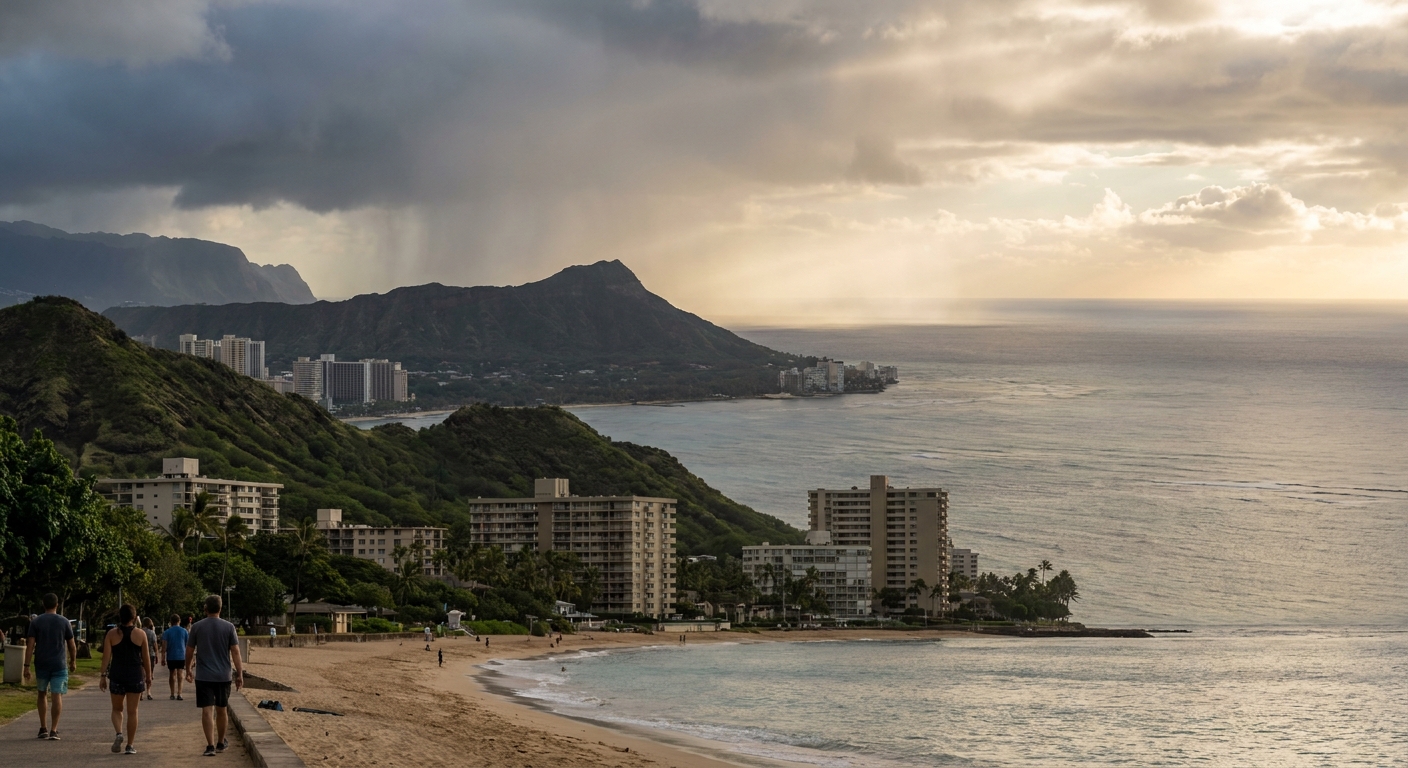
What is the weather like in Hawaii in November?
Warm almost everywhere, with sunshine on the leeward coasts and a good deal more rain on windward Hilo and on Kauai.
| Place | Region | Average high (°F) | Average low (°F) | Rain (in) | Rain days | Sea (°F) |
|---|---|---|---|---|---|---|
| Honolulu | Oahu, south shore | 84.1 | 71.8 | 2.25 | 2.9 | 79.0 |
| Maui | Maui | 85.8 | 68.4 | 1.81 | 3.0 | 78.6 |
| Kauai | Kauai | 81.2 | 71.3 | 4.03 | 6.8 | 79.6 |
| Kona | Big Island, leeward | 84.4 | 72.4 | 0.83 | 1.1 | 80.7 |
| Hilo | Big Island, windward | 80.3 | 67.6 | 14.39 | 17.3 | 79.4 |
The gap between Kona and Hilo says it all. Kona gets barely a shower in an average November, while Hilo is wet on most days, with rain that comes in heavy bursts between bright spells. Kauai sits in the middle, greener and showerier than Oahu or Maui, with north-shore rain that can settle in for a day.
Evenings stay mild in the lowlands, warm enough for dinner outside in a T-shirt. The sea is still comfortable for swimming in the mid- to upper 70s, a touch cooler than in October. Up on the summits the air is far colder than anything in this table.
Where to go in Hawaii in November
Oahu: Waikiki, Pearl Harbor and the North Shore
Oahu is the island with the most city life, and November suits it well. Honolulu is sunny and dry for the most part, so Waikiki days are easy to plan around the beach, shave ice and a sunset mai tai. In November the south shore tends to have gentler water, yet pick where you swim according to that day’s waves, currents and posted warnings, and enter near a lifeguard only while one is on duty.
The North Shore changes character as the swells arrive. Waimea Bay and Sunset Beach turn from sleepy summer coves into places where you stand on the sand and watch the waves. Food trucks, shrimp plates and the roadside fruit stands are the reward for the drive up.
History fills the rest of the island. Pearl Harbor National Memorial is a quiet, moving morning, and Diamond Head is the classic early hike for a view back over Waikiki. Both are easier in cooler morning light than at midday.
| Site | Admission |
|---|---|
| Diamond Head State Monument | $5 per non-resident, plus $10 per vehicle for parking; entry and parking reservation required |
| Pearl Harbor National Memorial | Free; parking $7 per day, paid by mobile app |
Maui: Haleakala, Hana and the resort beaches
Maui is mostly sunny and dry on its resort side. Kaanapali and Wailea have the long, easy beach days, with a warm evening breeze and whales beginning to show off the coast as the season gets going. The island suits couples and families who want a base with a pool and a good stretch of sand.
The Road to Hana is the other Maui, a day of curves, banana bread stands and rain forest on the wet windward side. Take it early, pack a rain jacket, and plan on a full day with plenty of stops. Wet stretches mean slick trails and swollen streams, so enjoy the waterfalls from the viewpoints.
Haleakala is the one to plan ahead for. The summit is cold well before dawn, and the sunrise draws a line of cars up the mountain in the dark. A sunrise reservation is required for each vehicle entering between 3:00 a.m. and 7:00 a.m.
| Site | Admission |
|---|---|
| Haleakala National Park | $30 per private vehicle (valid three days); $25 per motorcycle; $15 on foot or bicycle; 15 and under free |
| Haleakala sunrise reservation | $1.00 per vehicle on recreation.gov, on top of the entrance fee; bookable up to 60 days ahead and until 2 days before |
Kauai: green cliffs, Poipu and the north shore
Kauai is the greenest island and the quietest of the big four, and November rain is part of why. Showers pass over often, and the north shore at Princeville and Hanalei sees the most of it. Waterfalls spill off the ridges and the taro fields glow a deep green.
When the north turns gray, drive to Poipu on the sunnier south shore, where beach afternoons are likelier. Waimea Canyon and the Na Pali cliffs are the big scenery, and they look their best when the clouds lift in the morning. A helicopter or boat ride is how many visitors see the coast itself.
Winter surf starts to show on north-facing beaches, so Hanalei Bay can look very different from its summer self. This is an island for hiking, kayaking on calm rivers and slow days, not nightlife.
The Big Island: Kona sun, Hilo rain and the volcano
The Big Island splits in two. The Kona side is bright and dry, with coffee farms on the hillsides, snorkeling in clear bays and sunsets from the oceanfront in town. For a beach week with little rain, it is the surest bet in the state this month.
Hilo is the opposite, a rain-forest town with waterfalls, farmers markets and a damp, green feel. Plan indoor stops, such as the market and the small museums, around the showers. Rainbow Falls and the gardens along the coast are best on the drier mornings.
Hawaii Volcanoes National Park, which lies between those two, is cool, misty, and frequently rainy at the crater rim. Kilauea draws visitors at all hours, and the glow after dark is a highlight when the volcano is active. Bring layers, since the air at that elevation is much cooler than at the coast.
| Site | Admission |
|---|---|
| Hawaii Volcanoes National Park | $30 per private vehicle; $25 per motorcycle (valid 7 days); $15 on foot or bicycle; 15 and under free |
Lanai and Molokai, those small and peaceful islands, have hardly any hotels, light traffic, and no city. They suit travelers who want empty roads and unhurried days. You reach them by taking a brief inter-island flight, and each island calls for its own rental car.
What to do in Hawaii in November
Watching the first humpback whales
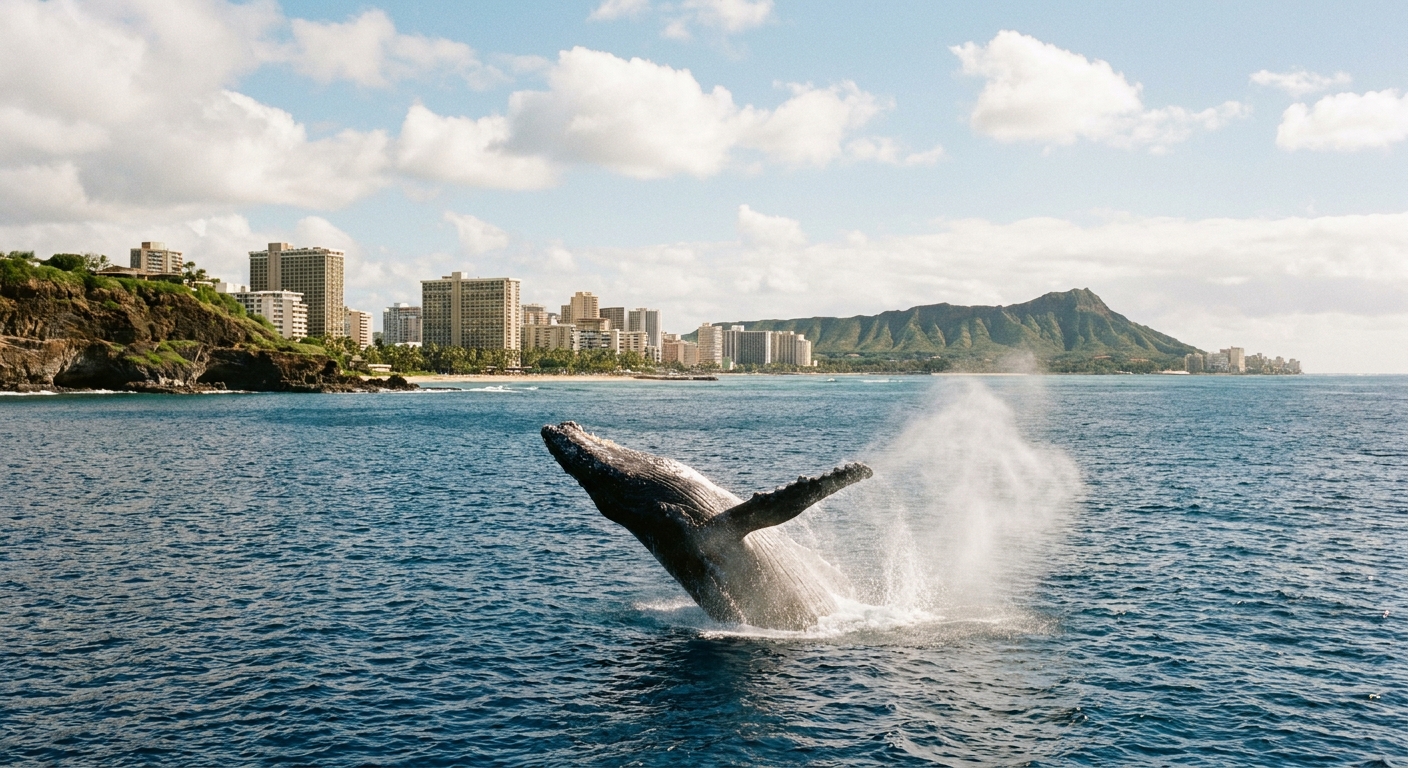
The humpbacks arrive from the north as the month goes on, and the season runs through spring, with the real show peaking from January through March. In November you may see only a tail slap or a distant blow, but that is part of the charm. Maui and the Kona coast are favorite spots to scan from shore.
A morning boat tour gives the best chance of a sighting. Boats, kayaks and swimmers must all keep at least 100 yards from a humpback, and vessels are asked to slow down during the season.
Surf season and slow food
The North Shore of Oahu is where winter surf is a spectator sport. Big swells build on north-facing shores from now on, so the beaches that were calm in July can be dramatic and dangerous. Watch from the sand, and leave the water to the experts.
Meanwhile the food scene runs all year. Think poke from a counter, plate lunches, shave ice and fresh fruit from roadside stands. Sunday farmers markets on every island are an easy way to taste local produce and meet the people who grow it.
Hikes, volcanoes and viewpoints
Cooler air makes November a good month for hiking. Diamond Head on Oahu is a short, steep morning walk, and Haleakala’s summit trails and the crater rim at Kilauea reward those who bring a warm layer. Go early, since cloud tends to build later in the day.
Keep to marked paths, stay off sacred stones and keep clear of the reef and protected wildlife such as sea turtles and monk seals. Much of the land holds deep meaning for Native Hawaiians, and quiet, respectful visitors are appreciated.
Is Hawaii busy in November?
Not especially, since November sits in the lull between the summer family season and the crush of the year-end holidays. Hotels in Waikiki, Kaanapali and Poipu are easier to book than in July or December, and the beaches have room to spread out.
Thanksgiving week is the exception, when mainland families fly in and rental cars and restaurant tables go quickly. Popular spots such as Haleakala at sunrise and Diamond Head fill up on any busy day. Molokai, Lanai and the Hana coast stay calm throughout.
What to pack for Hawaii in November
Beach clothes cover most of the trip, with a few layers for the summits and the wet side of each island.
- For Hilo, Hana and Kauai’s north shore, a lightweight rain shell.
- A warm fleece or sweatshirt for Haleakala and the Kilauea crater rim
- Sturdy sandals or hiking shoes with grip for wet trails
- Swimwear and reef-safe sun protection
- A light long-sleeve shirt for cool evenings
Good to know before you go
The Central Pacific hurricane season runs from June 1 to November 30, so November is its final month. Each year, hurricanes turn up in portions of the central Pacific, yet they do not regularly appear over Hawaii, and a federal survey completed after Hurricane Iniki found that just four had affected the state in the decades prior to 1993. Winter fronts can also bring a few gray, muggy days when the trade winds fade.
Is November a good time to visit Hawaii?
Compared with October, the air is a little cooler and the showers more frequent, and the ocean has shed a degree or two. December brings cooler days still, with bigger swells and the holiday crowds. November sits in the pleasant middle. What marks the month is the turning of the season: the first whales, the first big surf and the island quiet before the holidays arrive.
Sources
- NOAA NCEI, monthly normals 1991-2020, station USW00022521, checked September 8, 2026
- Open-Meteo Marine API, average 2015-2024, checked September 8, 2026
- sunrise-sunset.org, sunrise and sunset calculated for the 15th of the month, checked September 8, 2026
- NOAA NCEI, monthly normals 1991-2020, station USW00022516, checked September 8, 2026
- NOAA NCEI, monthly normals 1991-2020, station USW00022536, checked September 8, 2026
- NOAA NCEI, monthly normals 1991-2020, station USW00021510, checked September 8, 2026
- NOAA NCEI, monthly normals 1991-2020, station USW00021504, checked September 8, 2026
- NWS Honolulu (HFO), « Climate of Hawaii » summary, weather.gov/hfo/climate_summary, checked September 24, 2026
- NWS Honolulu / Central Pacific Hurricane Center, « 2026 Central Pacific Hurricane Season Outlook », weather.gov/hfo/hurricaneOutlook2026, checked September 24, 2026
- NOAA/NWS, Natural Disaster Survey Report « Hurricane Iniki, September 6-13, 1992 », April 1993, weather.gov/media/publications/assessments/iniki1.pdf, checked September 24, 2026
- Hawaiian Islands Humpback Whale National Marine Sanctuary (NOAA), pages « Boating Guide » and « About the Sanctuary », hawaiihumpbackwhale.noaa.gov, checked September 24, 2026
- Hawaiian Islands Humpback Whale NMS (NOAA), « Boating Guide », checked September 24, 2026
- National Park Service, Haleakala « Fees & Passes », nps.gov/hale/planyourvisit/fees.htm, checked September 24, 2026
- National Park Service, Hawaii Volcanoes « Fees & Passes », nps.gov/havo/planyourvisit/fees.htm, checked September 24, 2026
- National Park Service, Pearl Harbor « Fees & Passes », nps.gov/perl/planyourvisit/fees.htm, checked September 24, 2026
- Hawaii DLNR Division of State Parks, « Diamond Head State Monument », dlnr.hawaii.gov/dsp, checked September 24, 2026
- DBEDT, press releases monthly July (blog/25-34), September (blog/25-42) and December 2025 (blog/26-04), checked September 24, 2026
To plan your stay
- Things to Do in Hawaii: Volcano Sunrises, Snorkeling Bays, Pearl Harbor and What to Eat
- Where to Stay in Hawaii: Choosing an Island, Oahu to Kauai Bases and the Hotel Tax
- Getting Around Hawaii: Interisland Flights, TheBus and Skyline, Rental Cars and Taxi Fares
- Know Before You Go to Hawaii: Agriculture Form, Sunscreen Law, Reservations and Taxes