
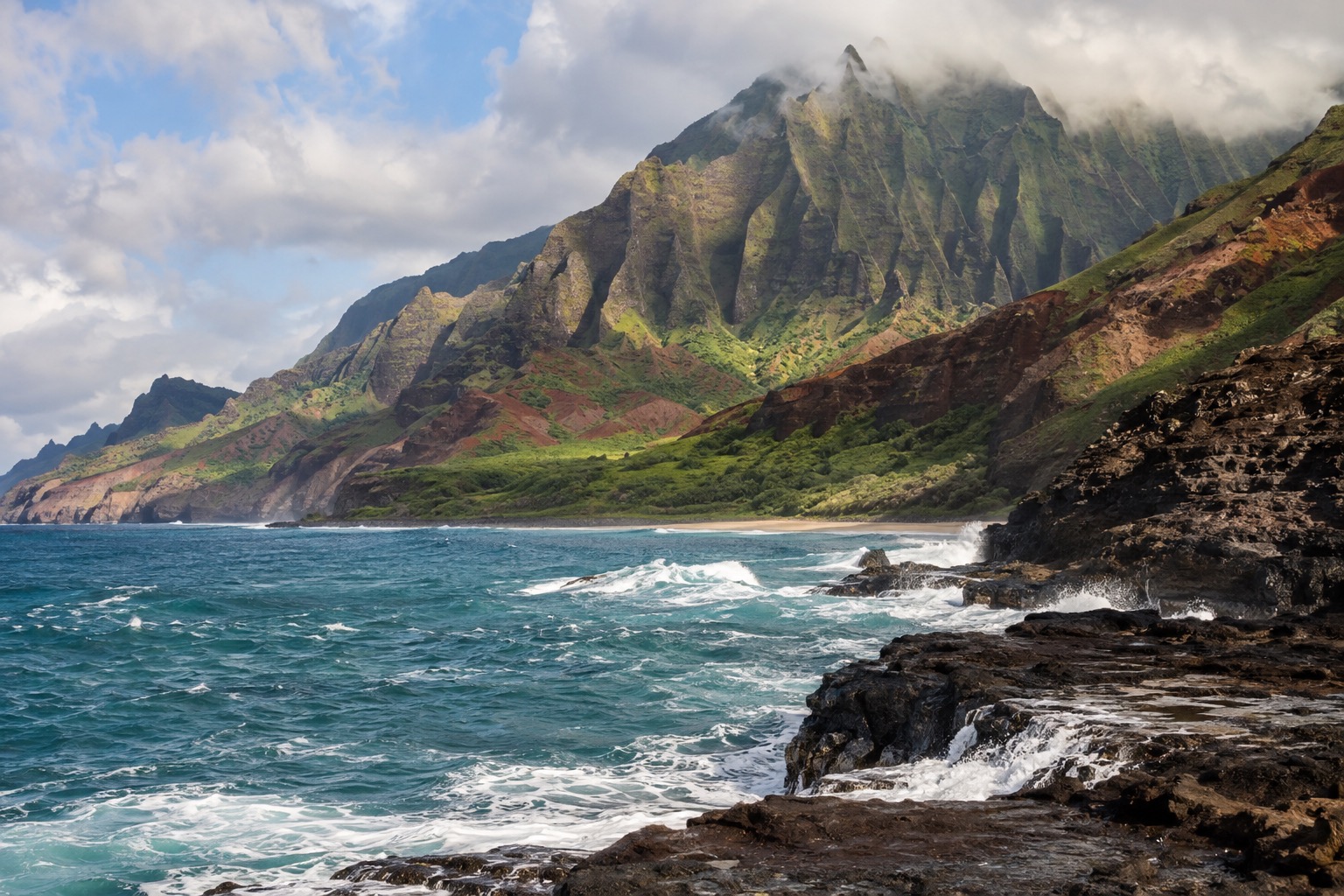
On a January morning on Kauai, the roosters of Kapaa are already crowing while low clouds slide off the green ridges and a long swell breaks white on the north shore. Waterfalls run full down the cliffs, the air is soft and warm, and the beach towels come out in the afternoon sun. It is the island’s wet, green season, a good month for hikers, waterfall chasers and anyone who likes their tropical vacation a little wild.
What is the weather like in Kauai in January?
January is warm but not hot, with mild days, cool nights and showers that come and go, so you can be in a T-shirt at noon and reaching for a light layer after dark.
| Month | Average high (°F) | Average low (°F) | Rain days | Sea (°F) |
|---|---|---|---|---|
| December | 79.1 | 68.6 | 6.9 | 78.5 |
| January | 78.6 | 66.0 | 4.4 | 76.9 |
| February | 78.1 | 66.2 | 5.4 | 75.5 |
The table comes from the Lihue side of the island, the east coast, where January is one of the lighter months for rain. Showers tend to be short and passing, often in the early morning or after dark, and they leave behind rainbows and a freshly washed look. Afternoons are usually the most pleasant stretch of the day for the beach or a coastal walk.
Where you stay matters a great deal. The north shore around Princeville gets roughly twice the rain of Lihue in January and its nights are cooler, so skies can stay gray for a day at a time.
The south coast near Poipu is usually the sunnier refuge. Up on the rim of Waimea Canyon and in Kokee State Park, it is truly cool and often wet, with nights that feel like early spring in the mountains.
Daylight lasts about eleven hours, so plan big outings for the morning and be off the trails before the light fades. Bring a light rain jacket, a sweatshirt for evenings and sunscreen for the clear spells, which can still burn.
Can you swim in Kauai in January?
Yes, the sea is warm enough for a comfortable swim, though January is the month when conditions depend more on the beach than on the water temperature.
Winter swells roll in from the north Pacific, so the north shore beaches such as Hanalei Bay, Tunnels and Anini often have big surf and strong currents. Many of them are for watching rather than swimming at this time of year. Look for the lifeguard towers, read the warning signs and follow the flags before you step in.
The south and the west sides usually offer gentler options. Poipu Beach Park, with its sheltered corner, is a favorite for families and for first-time snorkelers, and Salt Pond near Hanapepe is another spot locals use when the north is roaring.
Even on these shores, waves can pick up, so ask the lifeguard how the day looks. A thin rash guard or shorty wetsuit is welcome for long snorkeling sessions, since the water feels cooler once you stay in a while.
What to do in Kauai in January
January is the season of waterfalls, big waves and whales. Humpback whales spend the winter in Hawaiian waters, and from a cliff or a boat you may see a spout, a breaching body or a mother and calf.
Good lookout spots include the Kilauea Point area on the north side and the coastline near Poipu, and a morning boat tour from the west or south side is another way to try your luck. Sightings are a chance, never a promise.
The island is quiet on the culture side too. Hula halau practice for the spring competitions, farmers markets in Kapaa, Hanalei and Kalaheo sell papaya, citrus, avocado and fresh poke, and many restaurants serve plate lunches that suit a rainy afternoon: kalua pork, lomi salmon, rice and macaroni salad. Shave ice shops stay open, and a cold one tastes good even in a cool breeze.
The north shore and its waterfalls
The drive from Lihue to Hanalei passes one-lane bridges, taro fields and the green sweep of Hanalei Valley. Rain makes this stretch dramatic: streams swell and waterfalls appear on the cliffs where there are usually none. The town of Hanalei is a good base for a slow morning with coffee, a stroll on the pier and a look at the surfers.
In winter, the swell is the show. Walk to a lookout like Kilauea Point or the cliffs near Princeville and watch the sets thunder in.
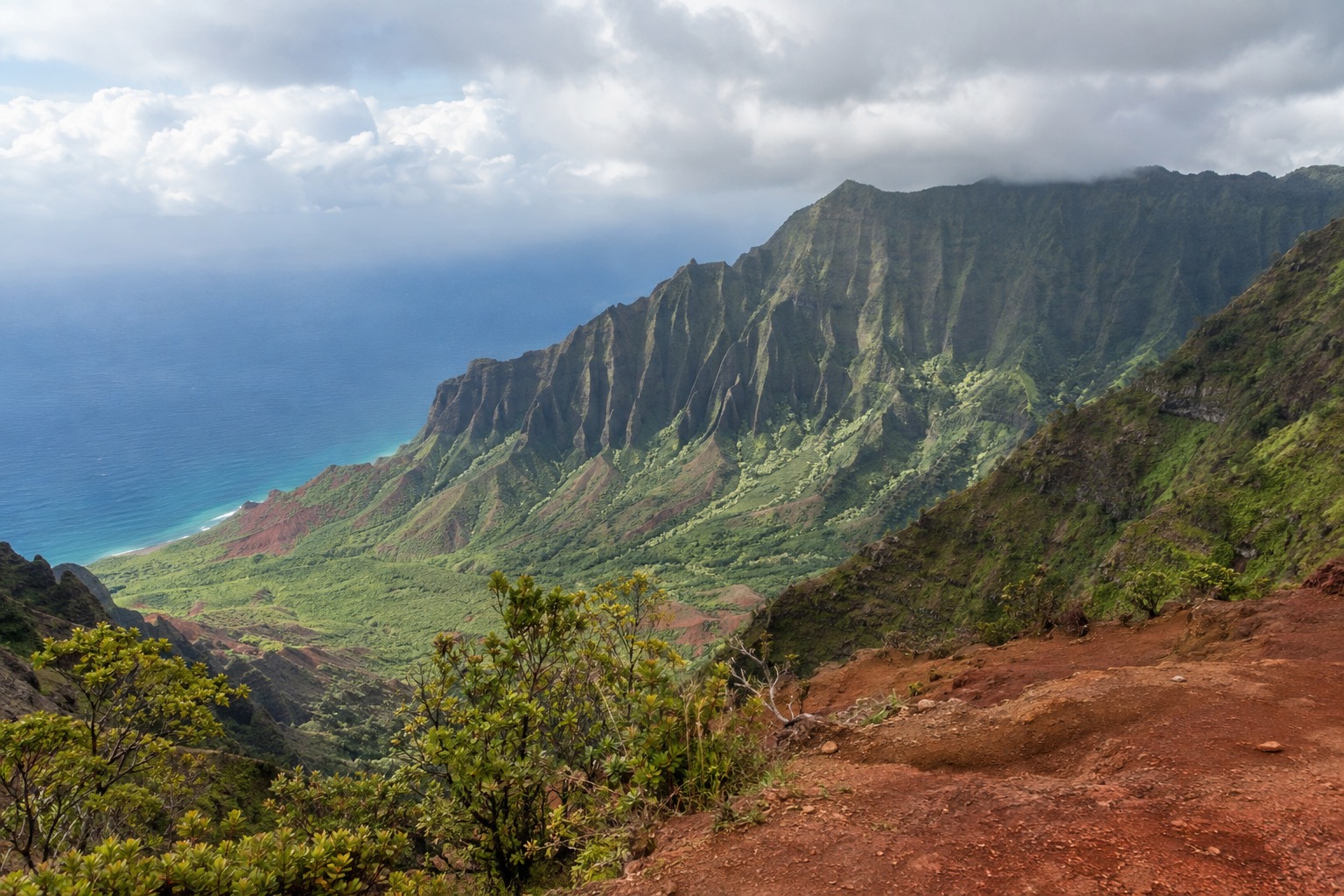
Hiking trails along the Na Pali coast can be muddy and slick after rain, so choose short walks and wear shoes with grip. Beaches here are for beachcombing and watching rather than swimming, and any park that needs a reservation, such as Haena State Park, should be arranged ahead of time according to the state park rules.
Waimea Canyon and Kokee
The canyon is a day of cool air and red earth, reached by climbing from the dry west side into the clouds. The overlooks show deep reds, greens and the thin white ribbon of Waipoo Falls. January is wetter and cooler up here, so views can come and go quickly as the mist moves, and the best plan is to start early and be patient at each pullout.
Kokee State Park has quiet forest trails and a small lodge-style cafe. Bring a warm layer, since the rim feels many degrees cooler than the beach. After the canyon, drop down to Waimea town or Hanapepe, with its art galleries and swinging bridge, for a late lunch at a local plate-lunch counter.
The south shore and Poipu
When the north is stormy, Poipu is the island’s sunny living room. Beaches are open to walkers and sunbathers, and the coastline trail near the Makawehi bluffs gives you a close look at the rocks and the waves. Monk seals sometimes haul out on the sand, and sea turtles feed near the shore. Keep well back from any of them and let the beach staff set the distance.
Nearby, the Spouting Horn blowhole throws water high after big swells, and the Tree Tunnel on the road down from Highway 50 is a pleasant stop. Evenings in Koloa bring open-air restaurants, ukulele music and a relaxed pace after a day outdoors.
A two-day itinerary for Kauai in January
Day 1 starts early on the north shore, when the light is soft and the clouds are still breaking. Have coffee in Kilauea, then stop at the lookout for the first swell of the day and look for whales in the offshore water.
Drive on to Hanalei for a long, easy lunch at a food truck or a casual cafe. If the sea is too rough, walk the town and the pier and visit a gallery.
In the afternoon, take a short, muddy-friendly walk where the road ends, or browse the shops, then head back along the coast before dark. Sunset comes early in January, so aim to be at a restaurant or a beach lookout by late afternoon. For a rainy-day alternative, spend the time in the galleries, bakeries and coffee shops around Kapaa.
Day 2 heads to the west and the south. Leave early for Waimea Canyon, stopping at the overlooks and at Kokee while the air is clear. Come down to Waimea or Hanapepe for a plate lunch, then spend the afternoon at Poipu.
Walk the bluffs, swim or snorkel if the lifeguard says the sea is mild, and finish with dinner in Koloa. If the weather turns, visit the Kauai Museum in Lihue or stay under a roof at a Koloa restaurant.
Is Kauai busy in January?
The first days of January are busy, then the island settles into a calmer pace for the rest of the month.
New Year’s week brings families on school breaks, so rooms and rental cars are in demand and popular restaurants fill their tables. Once the holiday crowd leaves, trails, beaches and viewpoints feel noticeably easier, and it is simpler to find a table or a place on a boat tour. Winter is also a favorite season for visitors escaping cold weather on the mainland, so the island never empties completely.
As a habit, book rooms and rental cars early if your trip includes the first week, and a little later for the quieter weeks that follow. Reservations matter at some of the best-known places, such as Haena State Park on the north shore, so arrange them before you land and follow the rules on the state park website. Boat trips and popular dinner spots are also worth securing a few days ahead.
What to pack for Kauai in January
Pack for a mix of beach, rain and cool mountain air, and keep it light.
- A light rain jacket, because showers pass through quickly, especially on the north side.
- A sweatshirt or fleece for evenings and for the cool rim of Waimea Canyon.
- Shoes with grip for muddy trails and wet lookouts.
- A rash guard or thin wetsuit top for longer snorkeling sessions.
- Mineral sunscreen and a hat for the sunny spells.
- Binoculars for watching whales from the cliffs.
Good to know before you go
January falls outside the official Central Pacific hurricane season, which runs from June 1 to November 30, but winter brings its own weather: high surf on north shores and rain that can make roads and trails slippery. The main road does not go all the way around the island. It stops short of the Na Pali coast, so some drives mean going back the way you came. Lodging taxes add to your bill, as shown here.
| Fee | Amount | Who pays |
|---|---|---|
| State Transient Accommodations Tax | 11.00% | Guests of hotels and rentals |
| Kauai County Transient Accommodations Tax | 3% | Guests of hotels and rentals |
| General Excise Tax pass-on (maximum) | 4.7120% | Customers of businesses |
Kauai in January vs December and February
Moving earlier to December brings a slightly warmer sea and air, but also more rain on the north side and the biggest holiday crowds, with higher demand for rooms and cars. Whales are arriving, and the festive mood in towns is strong. It suits those who want holiday atmosphere and do not mind planning ahead.
Going later to February keeps the whale season in full swing and the sea only a touch cooler, though showers return a little more often. The island is calmer once the holiday weeks are well behind, which suits couples and travelers who prefer quieter beaches and trails.
If you want the driest of the three months on the east side, January is a fine pick, especially after the first week. If you are chasing the warmest swimming or the full festive mood, shift to December. If you want the quietest weeks with whales still around, February is the better choice.
Is January a good time to visit Kauai?
Yes, for travelers who like green landscapes, waterfalls, whale watching and a relaxed pace, and who are happy to pick beaches by the season’s surf.
It suits hikers, photographers, couples and families who plan around the weather and stay flexible. It is less ideal for anyone set on swimming at the north shore beaches or wanting guaranteed dry skies every day. Those travelers may prefer the summer months.
On arrival, check the surf report and the weather for the side of the island you plan to visit first, then choose your beach and your trail accordingly. What sets January apart here is the sight of the north shore swell crashing below the green cliffs while a whale spouts offshore and a rainbow arcs over Hanalei Valley.
Sources
- NOAA NCEI, monthly normals 1991-2020, station USW00022536, checked September 8, 2026
- Open-Meteo Marine API, average 2015-2024, checked September 8, 2026
- sunrise-sunset.org, sunrise and sunset calculated for the 15th of the month, checked September 8, 2026
- Hawaii Department of Taxation, Tax Announcement No. 2025-03 (Transient Accommodations Tax Law Changes from 2025 Legislative Session), files.hawaii.gov/tax/news/announce/ann25-03.pdf, checked September 24, 2026
- County of Kauai, Department of Finance, Transient Accommodations Tax page, kauai.gov/Government/Departments-Agencies/Finance/Transient-Accommodations-Tax, checked September 25, 2026
- Hawaii Department of Taxation, County Surcharge on General Excise and Use Tax page, tax.hawaii.gov/geninfo/countysurcharge/, checked September 25, 2026
- NOAA NCEI, monthly normals 1991-2020, station USC00518165
- NOAA NCEI, monthly normals 1991-2020, station USC00513099
- NWS Honolulu / Central Pacific Hurricane Center, « 2026 Central Pacific Hurricane Season Outlook », weather.gov/hfo/hurricaneOutlook2026, checked September 24, 2026
To plan your stay
- Things to Do in Kauai: Na Pali Views, Waimea Canyon, North Shore Beaches and Local Food
- Where to Stay in Kauai: Poipu, Princeville, the Coconut Coast and the West Side
- Kauai vs Oahu: Beaches, Things to Do, Weather and Getting Around
- Day Trips from Kauai: Waimea Canyon, Haena and the Na Pali Coast, Wailua and Polihale