
On a late-summer evening in Hawaii, the trade winds die down, the air turns heavy, and somebody at the beach bar says what everyone is thinking: is a storm coming? Hurricane season runs through the warm months, but the islands are rarely hit directly, and most trips unfold without a single canceled day. What matters is knowing the dates, the odds and the few habits that keep a vacation on track.
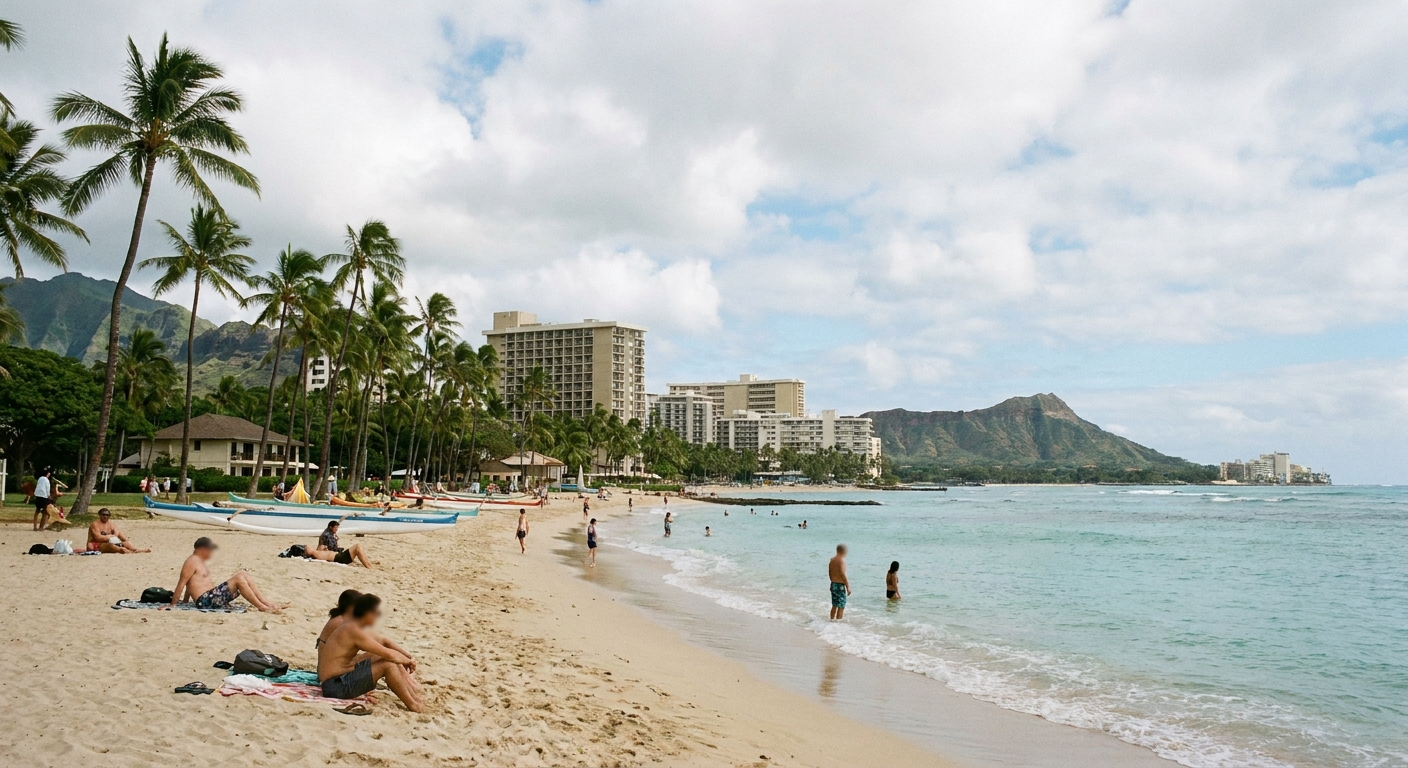
When is hurricane season in Hawaii?
The Central Pacific hurricane season runs from June 1 to November 30, which covers the whole of the drier, hotter half of the year and the first weeks of the wetter one. Those dates are the official window for tropical systems in the region, not a promise that anything will happen.
Hawaii itself has two seasons: a summer between May and October and a winter between October and April. The hurricane window straddles both, so a trip in July and a trip in November share the same official season while feeling very different on the ground.
Winter has its own troubles that are not hurricanes. The trade winds can be interrupted for days or weeks by fronts from the north and by Kona storms forming near the islands, which bring gray, damp stretches even outside the tropical-cyclone months.
How often do hurricanes hit Hawaii?
Rarely. Hurricanes appear in parts of the central Pacific every year, but they are not routinely found over Hawaii. NOAA’s survey of Hurricane Iniki, published in 1993, noted that only four had affected the state between 1950 and that report.
Rare does not mean never. Iniki struck across Kauai on the afternoon of September 11, 1992, with gusts measured to 143 mph near Port Allen on the south shore. Kauai and Oahu were the most affected, seven people were killed, and damage was about $1.8 billion.
More recently, Hurricane Lowell passed just west of Kauai on the night of September 7 to 8, 2026. The state called it a historic storm, and it damaged roads, trails and parks across the island. For current closures and reopenings, the Hawaii Division of State Parks posts every notice on its Important Park Notices page, and a state park reservation for a day the park is closed is refunded.
2026 Central Pacific hurricane season outlook
NOAA’s outlook for 2026 leaned busy: a 70% chance of an above-normal season, 20% near-normal and 10% below-normal. It called for 5 to 13 tropical cyclones, against the 4 or 5 of a near-normal year, with El Nino conditions expected through the season.
An outlook counts storms across a huge stretch of ocean. It says nothing about where or when one might reach land, so a busy forecast does not point at any particular island or week. Treat it as background, and let the forecasts issued in the days before you fly guide the real decisions.
Should you avoid Hawaii during hurricane season?
No, for most travelers. The season overlaps with some of the most popular months: July and December each drew roughly 870,000 visitors in 2025, while September was noticeably quieter at about 690,000. Trips in these months are an ordinary choice, and the weather is often at its sunniest.
The islands differ a great deal in August and September, and that has more to do with geography than with storms. Leeward spots such as Honolulu, Kona and Maui see only about one or two rainy days in a month, while Kauai sees around five and Hilo, on the windward side of the Big Island, well over a dozen.
| Place | August rain days | August rain (in) | September rain days | September rain (in) |
|---|---|---|---|---|
| Honolulu | 1.2 | 0.84 | 2.2 | 0.88 |
| Maui | 1.3 | 0.53 | 1.0 | 0.45 |
| Kona | 1.4 | 0.54 | 1.4 | 0.54 |
| Kauai | 5.3 | 2.33 | 5.2 | 2.18 |
| Hilo | 18.2 | 11.30 | 15.3 | 8.70 |
If you want the driest odds in the heart of the season, the leeward coasts are the safer bet for sunshine. Hilo and the Kauai side are green for a reason, and a rainy day there says little about any tropical system. A sensible habit is to watch the forecast in the week before you fly, and to look at the state parks notices page if hikes or beach parks are central to your plans, since closures after a storm can linger.
What to do if a hurricane threatens Hawaii during your trip
Start with the official county and state warnings, then check what your hotel or rental plans to do. Follow the instructions of county and state officials, and keep a phone charged and the forecast open.
Beyond that, the habits are simple. Stay out of the ocean and away from shorelines when surf is high, skip trails and waterfall hikes while the weather is turning, and keep your plans flexible for the days around a system. Rain and wind can arrive well before the center of a storm.
Afterward, expect that some roads, trails and parks may be closed while crews clear them. Park reservations for closed days are refunded, and the Important Park Notices page of the Hawaii Division of State Parks is the place to look for the latest status before heading out.
Good to know before you go
Hawaii drew about 9.6 million visitors in 2025, and travelers spent an average of $259 per person per day over a stay of nearly nine days. That is a lot of vacations that went smoothly, and the practical lesson is the same on every island: pick your side of the island for the weather you want, and keep a day or two of slack in the schedule.
Sources
- NWS Honolulu (HFO), « Climate of Hawaii » summary, weather.gov/hfo/climate_summary, checked September 24, 2026
- NWS Honolulu / Central Pacific Hurricane Center, « 2026 Central Pacific Hurricane Season Outlook », weather.gov/hfo/hurricaneOutlook2026, checked September 24, 2026
- NOAA/NWS, Natural Disaster Survey Report « Hurricane Iniki, September 6-13, 1992 », April 1993, weather.gov/media/publications/assessments/iniki1.pdf, checked September 24, 2026
- NOAA/NWS, Natural Disaster Survey Report « Hurricane Iniki », April 1993, Finding 1.1 and Executive Summary, checked September 24, 2026
- DBEDT (Hawaii Department of Business, Economic Development & Tourism), press release « Visitor Spending Increased in December 2025 », dbedt.hawaii.gov/blog/26-04, checked September 24, 2026
- DBEDT, press release December 2025, dbedt.hawaii.gov/blog/26-04, checked September 24, 2026
- DBEDT, press releases monthly July (blog/25-34), September (blog/25-42) and December 2025 (blog/26-04), checked September 24, 2026
- NOAA NCEI, monthly normals 1991-2020, station USW00022521, checked September 8, 2026
- NOAA NCEI, monthly normals 1991-2020, station USW00022516, checked September 8, 2026
- NOAA NCEI, monthly normals 1991-2020, station USW00022536, checked September 8, 2026
- NOAA NCEI, monthly normals 1991-2020, station USW00021510, checked September 8, 2026
- NOAA NCEI, monthly normals 1991-2020, station USW00021504, checked September 8, 2026
- County of Kauai, press release « Hurricane Lowell Update », September 8, 2026, kauai.gov ; DLNR news release of September 16, 2026
- Hawaii DLNR Division of State Parks, dlnr.hawaii.gov/dsp (home page, avis of October 5, 2026)
To plan your stay
- Things to Do in Hawaii: Volcano Sunrises, Snorkeling Bays, Pearl Harbor and What to Eat
- Where to Stay in Hawaii: Choosing an Island, Oahu to Kauai Bases and the Hotel Tax
- Getting Around Hawaii: Interisland Flights, TheBus and Skyline, Rental Cars and Taxi Fares
- Know Before You Go to Hawaii: Agriculture Form, Sunscreen Law, Reservations and Taxes