
On an August afternoon the trade winds drop to a whisper in Kona, the lava rock along the shore soaks up the heat, and families in rash guards drift between the snorkeling coves and the shave ice stands. Across the islands it is the heart of summer, with long light evenings, warm ocean water and school-break energy in the air. This is a month for beach days, for island hopping and for watching how the weather changes from one side of an island to the other.
What is the weather like in Hawaii in August?
On Oahu, Maui and the Big Island, August brings heat and dry weather to leeward coasts, while Kauai sees slightly more showers, and Hilo, on the Big Island’s windward side, is truly wet.
| Place | Region | Average high (°F) | Average low (°F) | Rain (in) | Rain days | Sea (°F) |
|---|---|---|---|---|---|---|
| Honolulu | Oahu, south shore | 88.8 | 75.6 | 0.84 | 1.2 | 79.6 |
| Maui | Maui, dry side | 89.9 | 72.3 | 0.53 | 1.3 | 79.3 |
| Kauai | Kauai | 85.2 | 75.2 | 2.33 | 5.3 | 80.0 |
| Kona | Big Island, leeward coast | 87.3 | 75.7 | 0.54 | 1.4 | 81.5 |
| Hilo | Big Island, windward coast | 82.9 | 70.4 | 11.30 | 18.2 | 80.2 |
The contrast is the whole story of the month. Honolulu and Kona see hardly a rainy day, so a morning at the beach almost never turns into a washout. Hilo, with 18.2 days of measurable rain, gets showers that come and go through the day, feeding the waterfalls and the rainforest, and its afternoons are cooler and softer than the sizzling coasts to the west.
Maui’s dry side runs the hottest, with Kauai a notch cooler and greener. The sea is warm everywhere, and Kona has the warmest water of the group. Nights stay mild at the shore and noticeably fresher in Hilo.
Where to go in Hawaii in August
Oahu: Honolulu, Waikiki and Diamond Head
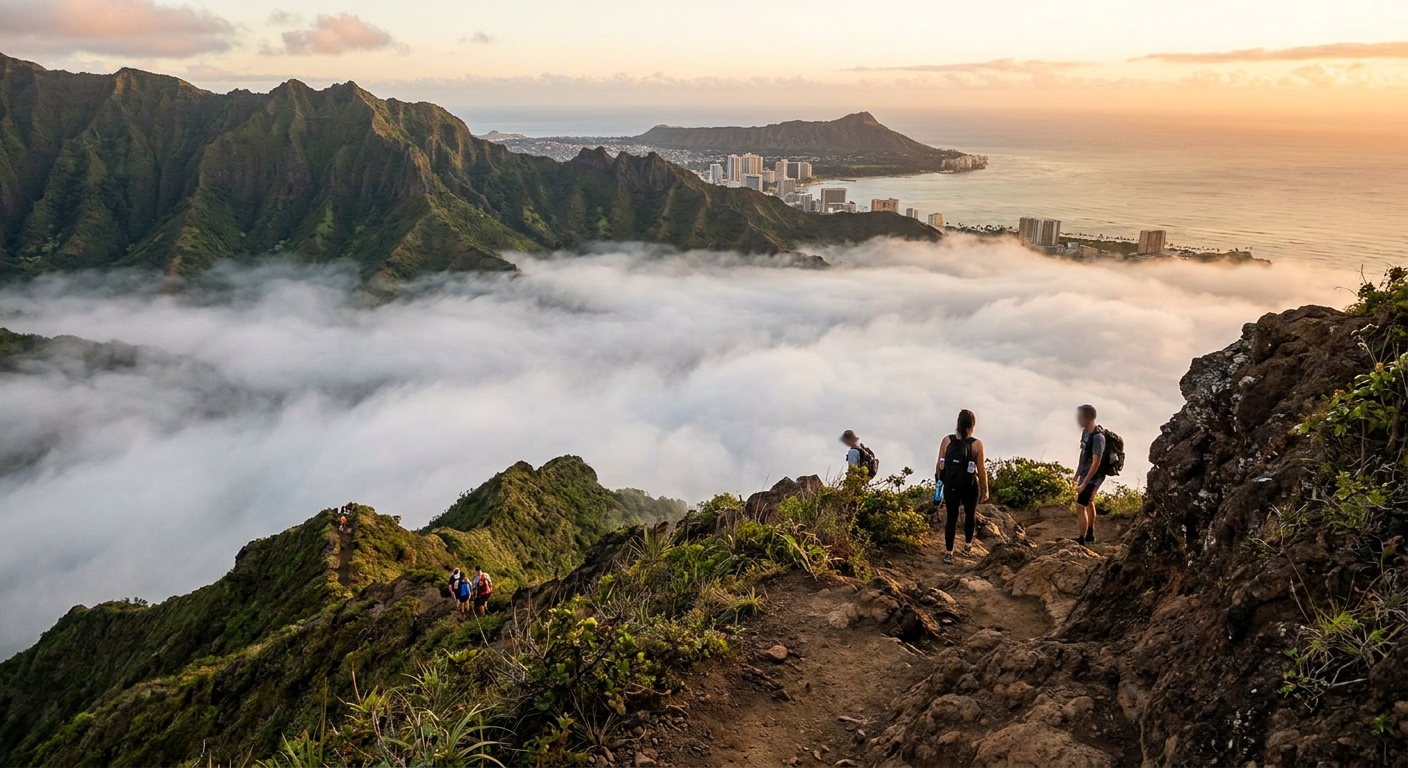
Summer swells arrive on the south shores, so Waikiki gets the kind of rolling waves that beginners paddle out to on longboards, while the North Shore goes quiet and its beaches turn broad and mellow. Mornings are the time for the Diamond Head trail, before the sun gets high, and afternoons suit the shade of a beachfront mai tai or a visit to Pearl Harbor. Anyone traveling from outside Hawaii must reserve a Diamond Head slot in advance through the state parks reservation website, and they are required to arrive within 30 minutes of that reserved time.
Honolulu is the island’s city, so evenings mean food trucks, plate lunches, poke counters and live music along the beachfront.
| Site | Open | Admission |
|---|---|---|
| Diamond Head State Monument | 6:00 a.m. to 6:00 p.m., last entry 4:30 p.m. | $5 entry and $10 per vehicle for parking, entry-and-parking reservation required for non-residents |
Maui: Wailea, Kaanapali and Haleakala
Maui’s dry side is the hottest place in the state this month, and the resort strands of Wailea and Kaanapali make the most of it. Days run on snorkel trips, sunset sails and long pool afternoons, with whales away for the summer and the water as warm as it gets.
For a change of scene, head up Haleakala, where the summit is a cold, otherworldly landscape far from the beaches. On the wet windward coast, the Road to Hana is even greener and more overcast, with brief showers feeding its waterfalls. Pair a hot beach day with a cooler upcountry day and the island feels like two places.
Kauai: Poipu, Hanalei and the north shore
Kauai is the one island where rain still crops up on a summer day, usually as a passing shower that makes the cliffs and ridges glow green. Poipu on the sunnier south shore suits long beach stretches, while Princeville and Hanalei on the north are lush and slower, with calmer summer seas than in winter.
Boat trips along the Na Pali Coast and drives out to Waimea Canyon fill the days between beach hours. The sea off the north shore changes with the swell, so check the flags before getting in.
The Big Island: Kona, Hilo and the volcano
Kona is the Big Island’s sunny side, coffee farms lie on the slopes above, and among all places in the table its water is warmest. Snorkeling over the reef and long evenings on the seawall are the rhythm here, and dry days are the rule.
Hilo is the opposite: rain almost daily, waterfalls at full strength, orchid nurseries and a relaxed, small-town feel. Volcanoes National Park sits between the two worlds, and the crater rim is cool and misty even in August. The summit of Mauna Kea is cold and thin-aired, a very different place from the shoreline.
| Site | Admission |
|---|---|
| Hawaii Volcanoes National Park | $30 per vehicle, $15 on foot or bicycle |
What to do in Hawaii in August
Summer water days
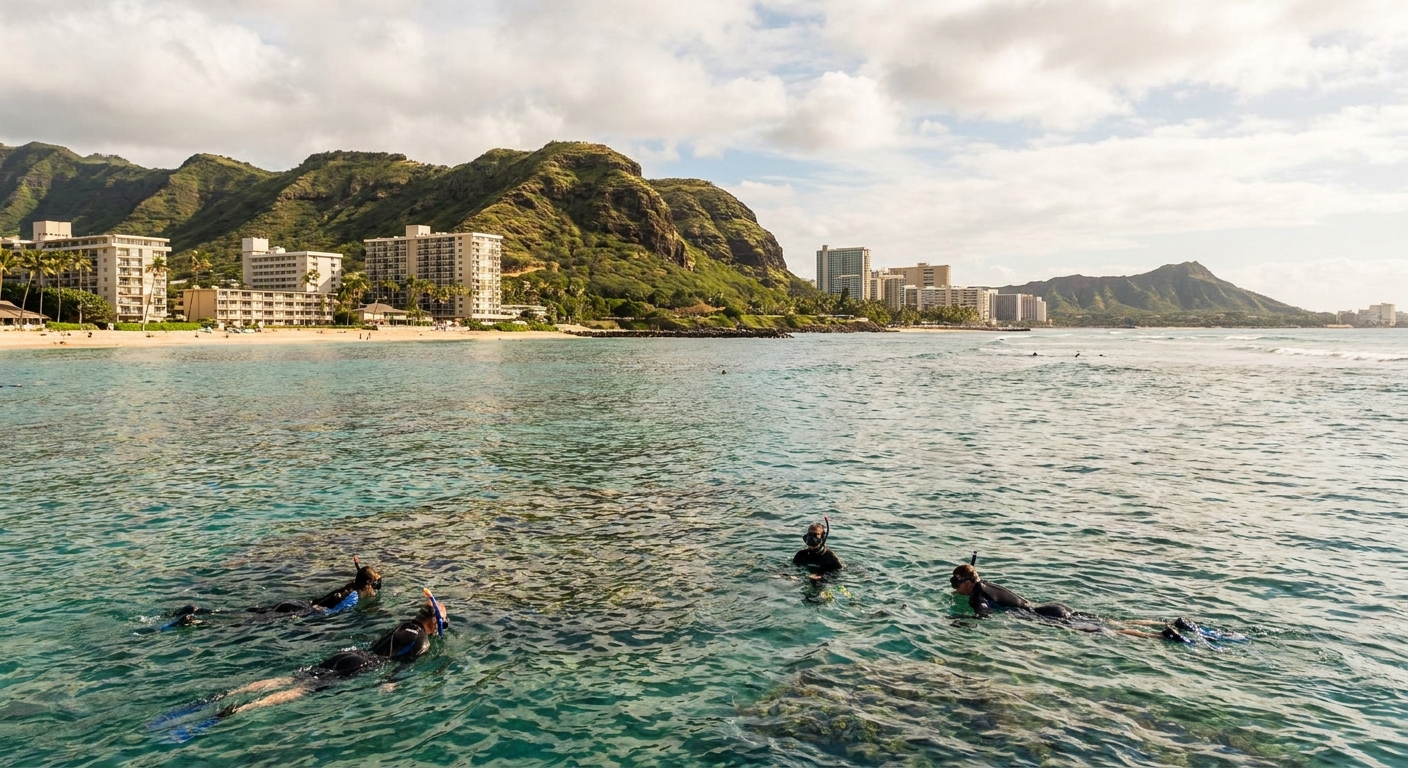
With south-facing shores catching the summer swell, this is the season for learning to surf at Waikiki, paddling outrigger canoes and trying stand-up paddleboards. Snorkeling is at its easiest on the leeward coasts of the Big Island and Maui, where water temperatures run in the low 80s and the sea is often gentle in the morning.
Sea turtles are a common sight near shore on several islands. Keep a respectful distance and never touch them, and stay off the reef so it stays alive for the next visitors.
Land and culture
August is a good month for cooler-hour hikes, farm visits and a luau on the beach at sunset. Kona coffee farms open their roasting sheds, Hilo’s farmers markets overflow with tropical fruit, and Honolulu’s museums and the Pearl Harbor sites offer shade on a hot day. Local summer festivals, hula performances and street fairs pop up in many towns over the month, and they are a good reason to wander the main street of a small town in the evening.
Is Hawaii busy in August?
Yes, August sits in the busy summer stretch, as mainland families squeeze in a last vacation before school starts. Arrivals in July were among the highest of the year, and September drops noticeably, so late August starts to ease.
Waikiki, Kihei, Kaanapali and Kona fill first, along with the popular snorkel boats and the best-known trailheads. Molokai and Lanai stay quiet, with few hotels and little traffic, and Hilo and the Kauai north shore feel relaxed compared with the resort strips.
What to pack for Hawaii in August
Light, quick-drying clothes cover the beaches, while a few warmer layers matter if you head to Hilo, a volcano rim or a high summit.
- Lightweight cotton shirts, shorts and a sun hat for the dry coasts
- Two swimsuits and a rash guard, since swimwear takes a while to dry in humid Hilo
- Mineral sunscreen that is gentle on the reef
- A fleece or sweatshirt for evenings up high
- A thin rain shell for windward showers
- Water shoes for rocky entries and tide pools
Good to know before you go
The Central Pacific hurricane season runs from June 1 to November 30, so August falls squarely inside it. In the central Pacific, hurricanes show up in certain areas annually, yet they usually do not cross the islands, and a NOAA survey done after Hurricane Iniki tallied just four that struck the state from 1950 through 1993. Keep an eye on forecasts when you travel. Flights between the islands are short, and because there is no car ferry, each island needs its own rental car.
Is August a good time to visit Hawaii?
Yes, for beach-minded travelers, with Kona and the dry side of Maui giving the most reliable sun and warm water. If you want greenery and waterfalls, Kauai and Hilo deliver, with a few more showers.
Compared with July, August is nearly identical in heat and rainfall, and the crowds are about the same. September is slightly less busy, with a bit more rain on Kauai-style days and a touch warmer sea. August is the month when the ocean is at its warmest, the evenings are long and summer in Hawaii feels in full swing.
Sources
- NOAA NCEI, monthly normals 1991-2020, station USW00022521, checked September 8, 2026
- Open-Meteo Marine API, average 2015-2024, checked September 8, 2026
- sunrise-sunset.org, sunrise and sunset calculated for the 15th of the month, checked September 8, 2026
- NOAA NCEI, monthly normals 1991-2020, station USW00022516, checked September 8, 2026
- NOAA NCEI, monthly normals 1991-2020, station USW00022536, checked September 8, 2026
- NOAA NCEI, monthly normals 1991-2020, station USW00021510, checked September 8, 2026
- NOAA NCEI, monthly normals 1991-2020, station USW00021504, checked September 8, 2026
- NWS Honolulu (HFO), « Climate of Hawaii » summary, weather.gov/hfo/climate_summary, checked September 24, 2026
- NWS Honolulu / Central Pacific Hurricane Center, « 2026 Central Pacific Hurricane Season Outlook », weather.gov/hfo/hurricaneOutlook2026, checked September 24, 2026
- NOAA/NWS, Natural Disaster Survey Report « Hurricane Iniki, September 6-13, 1992 », April 1993, weather.gov/media/publications/assessments/iniki1.pdf, checked September 24, 2026
- Hawaii DLNR Division of State Parks, « Diamond Head State Monument », dlnr.hawaii.gov/dsp, checked September 24, 2026
- DBEDT, press releases monthly July (blog/25-34), September (blog/25-42) and December 2025 (blog/26-04), checked September 24, 2026
To plan your stay
- Things to Do in Hawaii: Volcano Sunrises, Snorkeling Bays, Pearl Harbor and What to Eat
- Where to Stay in Hawaii: Choosing an Island, Oahu to Kauai Bases and the Hotel Tax
- Getting Around Hawaii: Interisland Flights, TheBus and Skyline, Rental Cars and Taxi Fares
- Know Before You Go to Hawaii: Agriculture Form, Sunscreen Law, Reservations and Taxes