
In April, the hula halls of Hilo fill with the sound of drums and chanting as dancers from every island gather for the Merrie Monarch festival, the week after Easter. Out on the leeward coasts the sun is steady, the mornings are soft, and the last humpback whales are still blowing offshore. It is a month of spring warmth across the islands, with dry beaches on the sunny sides and green, waterfall-streaked slopes on the wet ones.
What is the weather like in Hawaii in April?
April is warm and mostly sunny on the leeward sides of the islands, and wet and cloudy on the windward ones, with Hilo the rainy exception on the Big Island. The sea sits in the mid- to upper 70s everywhere, comfortable for a swim without a wetsuit for most people.
| Place | Region | Average high (°F) | Average low (°F) | Rain (in) | Rain days | Sea (°F) |
|---|---|---|---|---|---|---|
| Honolulu | Oahu, south shore | 83.1 | 70.1 | 0.77 | 1.9 | 76.7 |
| Maui | Maui | 84.5 | 66.6 | 1.32 | 2.5 | 76.1 |
| Kauai | Kauai | 79.8 | 69.5 | 2.03 | 5.4 | 76.3 |
| Kona | Big Island, leeward coast | 83.2 | 71.1 | 0.63 | 1.5 | 78.1 |
| Hilo | Big Island, windward coast | 79.0 | 66.1 | 9.40 | 17.2 | 75.6 |
The contrast that matters is Hilo against Kona. Hilo sees rain on most days of the month, usually in passing downpours that feed the waterfalls, while Kona, on the other side of the island, gets barely a handful of showery afternoons and long stretches of clear sky. Honolulu sits close to Kona in feel, dry and sunny, with a low rain count that makes planning beach days easy.
Kauai is greener and showerier than the other islands, with rain on several days, mostly on the north shore and in the uplands. Maui has the warmest afternoons of the group and the coolest nights, a reminder that the volcano’s slopes breathe cooler air.
April is also the tail end of winter, so the trade winds can be interrupted by fronts from the north or by Kona storms, bringing a few gray, humid days. Compared with March, Honolulu is noticeably drier and a little warmer, and Hilo, though still wet, eases off.
Where to go in Hawaii in April
Oahu: Honolulu, Waikiki and the North Shore
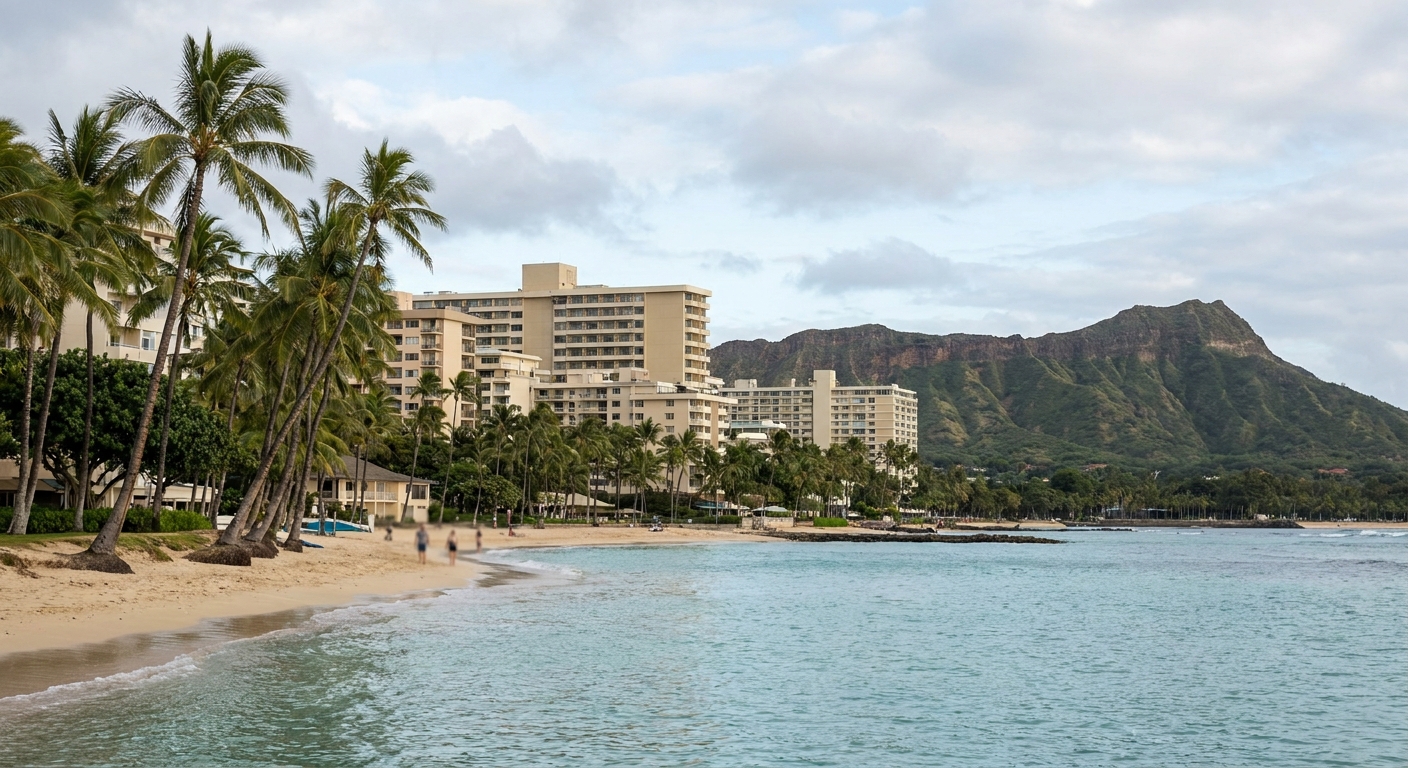
Honolulu is dry and bright in April, which suits a city-and-beach mix: a morning at Pearl Harbor, an afternoon on Waikiki’s sand, an evening of grilled fish or shave ice along Kalakaua Avenue. Diamond Head is a fine early-morning hike, and it requires a reservation for non-residents, so sort that before you fly.
The North Shore is easing out of its big-wave season. Swells are still possible early in the month, so watch the beach signs and the lifeguards before getting in, and enjoy the shrimp trucks, the surf shops of Haleiwa and the long walks at Waimea Bay. Oahu suits first-timers and anyone who wants city life next to the sea.
Maui: Haleakala, Wailea and the Road to Hana
Maui’s resort coasts of Wailea and Kaanapali are on the dry side, so April beach days are generally dependable, and humpback whales may still be seen from the shore or from boats near Lahaina. The summit of Haleakala is cold before dawn, so layers matter even when the beach below is warm.
The Road to Hana runs along the wet windward coast, with rainforest, stream crossings and roadside banana bread. Expect showers and a slow, winding drive. It rewards travelers who like a full day of stops over those who want to be on a beach by noon.
Kauai: Poipu, Hanalei and Na Pali
Kauai is the green island, and April’s showers keep it that way. Poipu on the sunnier south shore is the dependable base for beach time, while Princeville and Hanalei on the north are lush, wetter and quieter. Na Pali Coast cliffs and Waimea Canyon are best seen on clearer mornings, so keep your plans flexible.
If you come for the north shore, accept a few passing squalls as part of the scenery. Kauai suits couples, hikers and anyone happy to trade a little rain for a slower pace.
The Big Island: Kona, Hilo and the volcano
The Kona coast is the sunny, dry choice, with coffee farms on the hillside and warm, clear water for snorkeling. Hilo is the opposite: rain nearly every day, black-sand coves, botanical gardens and waterfalls that are at their fullest. At the crater rim of Hawaii Volcanoes National Park, expect cool air and frequent mist, so pack a jacket.
The summit of Mauna Kea is cold, and the island has so many climates that a single day can run from beach heat to chilly fog. Pair a Kona base with a day trip to Hilo and the volcano for the full range.
What to do in Hawaii in April
Merrie Monarch in Hilo
The week after Easter, Hilo hosts the Merrie Monarch hula festival, the most celebrated hula competition in the islands. Dancers and halau (hula schools) arrive from across Hawaii and beyond, and the town fills with craft fairs, music and lei sellers. Because Easter moves each year, the exact dates shift, so look at the calendar when you choose your week.
Rooms in and around Hilo tend to be hard to find then, and the event is as much a local gathering as a spectacle. Go for the free exhibitions and the street atmosphere even if you have no tickets to the main competition, and treat the dances with the respect due to a sacred tradition.
Last of the humpback whales
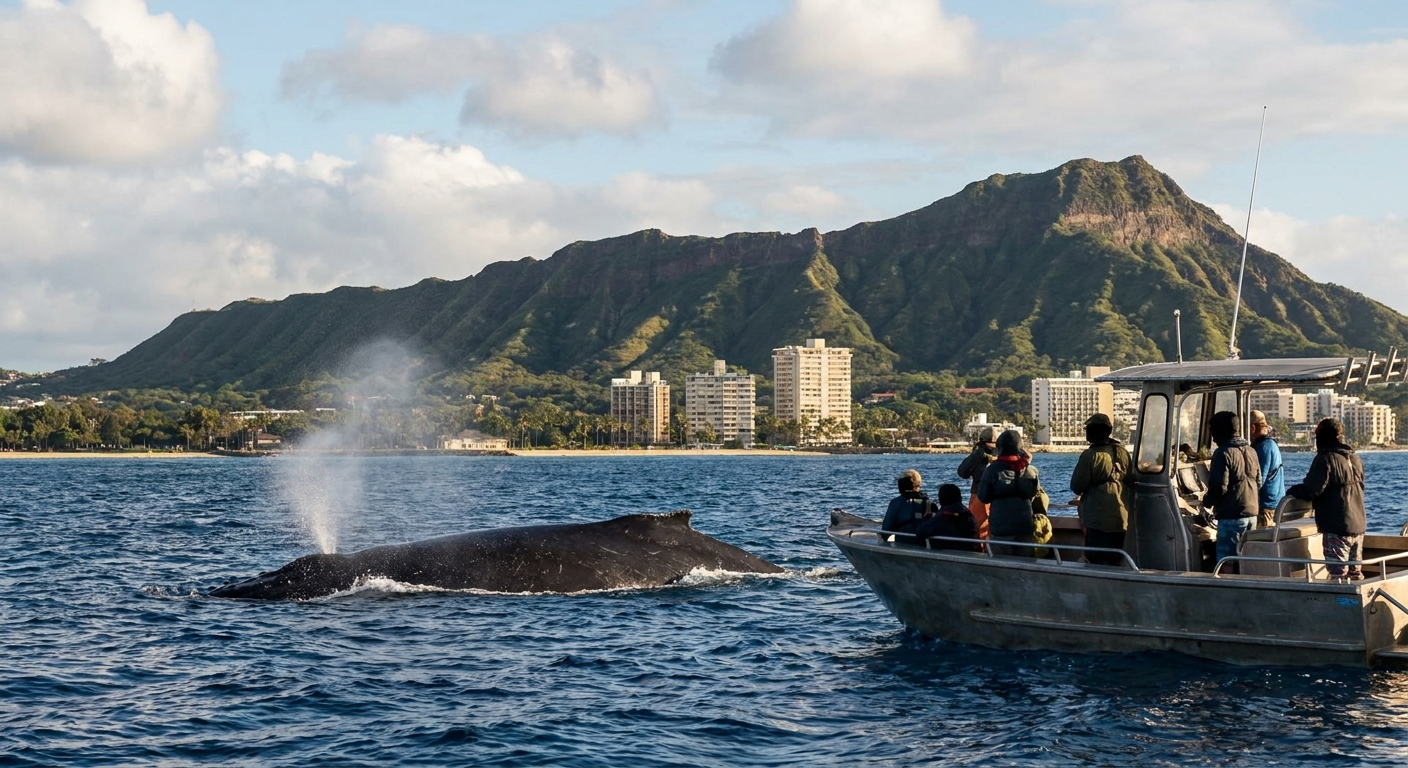
Humpback whale season generally runs from November through May, with the peak from January through March, so April is the tapering end. You may still see spouts and breaches from the shores of Maui, the Kona coast or Kauai, and boat trips are still running. Approaching a humpback within 100 yards is illegal, so you should rely on a reputable operator or watch from a headland with binoculars.
Beaches, hikes and the rest
With the sea in the mid-70s and the big winter surf fading, April is a good month for snorkeling and paddling on the south and west shores, though currents and waves still depend on the day, so ask the lifeguard. Diamond Head’s trail offers a city panorama for those with a reservation.
Inland, April greens the valleys: waterfall hikes on Kauai and the Big Island are best after rain. Evenings invite luaus, poke from a counter, and slow dinners outside, as the nights stay mild.
| Site | Open | Admission |
|---|---|---|
| Diamond Head State Monument | 6:00 a.m. to 6:00 p.m., last entry 4:30 p.m. for the 4:00 p.m. slot | $5 entry and $10 per vehicle for non-residents, reservation required |
Is Hawaii busy in April?
April is moderately busy: the spring break crowds thin out as the month goes on, and it sits between the winter high season and the family weeks of summer. Some mainland school breaks and Easter week bring a bump, especially to Oahu and Maui.
Oahu is always the busiest island, with Waikiki full most of the year. Maui’s resort coasts fill around Easter, and Hilo is crowded during Merrie Monarch week, when lodging gets tight. Kauai and the Big Island’s Kona side tend to feel more relaxed, and Lanai and Molokai stay quiet with few hotels and little traffic.
After the first part of the month, popular trailheads and beaches are easier to enjoy than in the busiest holiday periods. Summer and the year-end holidays remain the peak arrival months, so April offers a gentler pace. Since no car ferry links the islands, you will need a separate rental car on each one, so book your inter-island flights and cars as a single plan.
What to pack for Hawaii in April
Packing is mostly beachwear, with a few layers for the places that run cool or wet: the summit of Haleakala, the crater rim at the volcano, and the Hilo and north shore rainforests.
- A light rain jacket for Hilo, Kauai’s north shore and the Road to Hana.
- Pack something warm, like a fleece, for sunrise at Haleakala and for Hawaii Volcanoes National Park.
- Swimwear and a rash guard, with mineral sunscreen for the beach.
- When you tackle the muddy waterfall trails and climb Diamond Head, wear sturdy shoes with good grip.
- Sandals and light cotton clothes for evenings outdoors.
- Binoculars for the last whales of the season.
Good to know before you go
April falls before the Central Pacific hurricane season, which runs from June 1 to November 30. In late winter, northern fronts and Kona storms may still arrive, breaking the trade winds for days and bringing heavier showers under gray skies.
Since Hawaii belongs to the United States, you can skip any worries about a passport or visa and simply catch a flight from the mainland. On the beach, the lifeguard and the signs decide whether the water is fine that day.
Is April a good time to visit Hawaii?
Yes, April is an excellent time for most travelers, especially for those who base themselves on a leeward coast such as Kona, Wailea, Kaanapali or Poipu, or in Honolulu, where the days are warm, bright and mostly dry. Hilo and the windward sides are lush and wet, so choose them for waterfalls and gardens rather than beach time.
Compared with March, the month is drier and a touch warmer. Honolulu’s showers drop off and Hilo’s rain eases, while the sea holds steady in the mid-70s.
The big winter surf on the north shores quiets, so more beaches become inviting, and the last whales are still around. Compared with May, April is a little cooler and a little wetter, with a bit more of the winter’s changeable weather at the edges.
The crowds are also gentler than in summer or at year’s end, so rooms, trails and restaurant tables are easier to find outside the Easter and Merrie Monarch weeks. Families, couples and hikers all find their place, and the mix of green slopes and sunny coasts is prettiest. What is special about April is the combination: the final humpbacks offshore, hula dancers gathering in Hilo, and waterfalls still full from the wet winter, all under warm, settled skies on the sunny coasts.
Sources
- NOAA NCEI, monthly normals 1991-2020, station USW00022521, checked September 8, 2026
- Open-Meteo Marine API, average 2015-2024, checked September 8, 2026
- sunrise-sunset.org, sunrise and sunset calculated for the 15th of the month, checked September 8, 2026
- NOAA NCEI, monthly normals 1991-2020, station USW00022516, checked September 8, 2026
- NOAA NCEI, monthly normals 1991-2020, station USW00022536, checked September 8, 2026
- NOAA NCEI, monthly normals 1991-2020, station USW00021510, checked September 8, 2026
- NOAA NCEI, monthly normals 1991-2020, station USW00021504, checked September 8, 2026
- NWS Honolulu (HFO), « Climate of Hawaii » summary, weather.gov/hfo/climate_summary, checked September 24, 2026
- NWS Honolulu / Central Pacific Hurricane Center, « 2026 Central Pacific Hurricane Season Outlook », weather.gov/hfo/hurricaneOutlook2026, checked September 24, 2026
- Hawaiian Islands Humpback Whale National Marine Sanctuary (NOAA), pages « Boating Guide » and « About the Sanctuary », hawaiihumpbackwhale.noaa.gov, checked September 24, 2026
- Hawaiian Islands Humpback Whale NMS (NOAA), « Boating Guide », checked September 24, 2026
- Hawaii DLNR Division of State Parks, « Diamond Head State Monument », dlnr.hawaii.gov/dsp, checked September 24, 2026
- DBEDT, press releases monthly July (blog/25-34), September (blog/25-42) and December 2025 (blog/26-04), checked September 24, 2026
To plan your stay
- Things to Do in Hawaii: Volcano Sunrises, Snorkeling Bays, Pearl Harbor and What to Eat
- Where to Stay in Hawaii: Choosing an Island, Oahu to Kauai Bases and the Hotel Tax
- Getting Around Hawaii: Interisland Flights, TheBus and Skyline, Rental Cars and Taxi Fares
- Know Before You Go to Hawaii: Agriculture Form, Sunscreen Law, Reservations and Taxes