
Naxos is the best pick for most families, and Paros is a close second and the better choice with toddlers. Both have shallow, calm water, walkable towns and good food. From there, add Antiparos for quiet or Crete for resort comfort.
Which Greek island is best overall for families?
Naxos. It has broad sandy beaches, good food, fair prices and plenty to explore away from the shore, so it works well for toddlers and older kids alike.
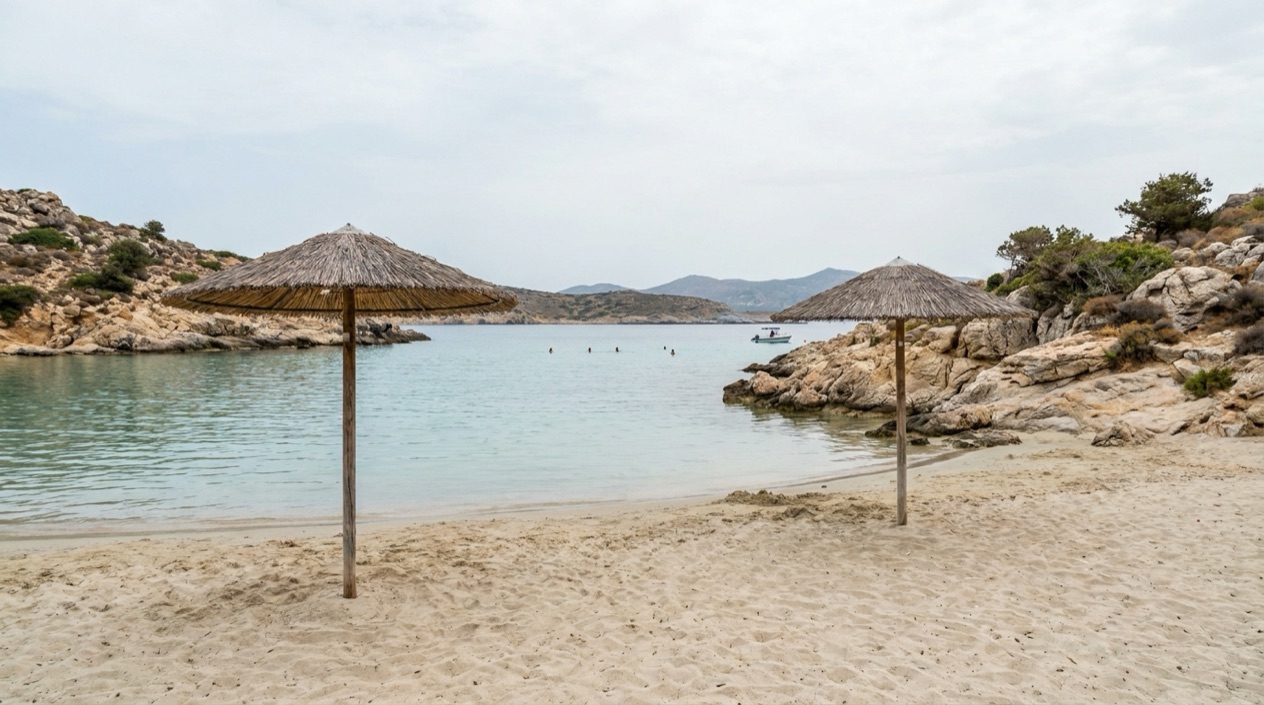
Its best family beach is Agios Georgios, a five-minute walk from Naxos Town. The sand is fine, the sea bottom is sandy too, and the water stays around knee height even far from shore. Paros sits just across the water and shelters this stretch of coast from waves, so the sea is as calm as a swimming pool. Sunbeds and umbrellas are easy to rent along the sand, and some spots bring food and drinks right to your lounger. Galaxy Hotel and Nissaki Beach Hotel both sit directly on the beach.
In Naxos Town or near Agios Georgios, you can easily spend a few days on foot, then pick up a rental car for a day or two to reach the interior and the more distant beaches. Even in July, one of the island's busiest months, Naxos rarely feels packed. You can still find a sunbed and book a restaurant table the same day or a day ahead.
What are the best islands for families, one by one?
Naxos
South of town, Agios Prokopios and Agia Anna rank among the finest beaches in Greece, and the coast gets quieter the farther south you go, all the way to Plaka. Plaka is beautiful and calm, though the sea gets deep after just a step or two, so it suits confident swimmers more than toddlers.
Older kids have plenty to do. Wander the winding alleys of the Old Town, then walk the causeway out to the Portara at sunset. With a rental car, drive up to the mountain villages of Halki and Filoti and stop for lunch at a traditional taverna. Hike toward Mount Zas, visit the Temple of Demeter, or look for one of the huge ancient Kouros statues lying in a field.
From Athens, you can fly to Naxos in about 40 minutes or take a ferry, which runs roughly 3 to 6 hours depending on the boat.
Paros
Paros is the best match for toddlers and younger children. The towns are walkable, the beaches are gentle, and restaurants welcome kids at any hour. Santa Maria is long, calm and shallow, with a beach taverna and easy parking. Golden Beach and Monastiri have soft sand and shallow water, and Golden Beach is best in the morning, before the meltemi wind picks up. At Kolymbithres, kids love the sculpted rock formations.
In the evening, head to Naoussa, where harbor-front restaurants and gelato shops line the water and children wander between tables. By day, take a village walk in Lefkes, where bougainvillea spills over the houses. You can drive coast to coast in about 20 minutes, yet the island has proper supermarkets and a good hospital.
Stay near Naoussa for easy evenings out, or on the more relaxed southeast coast, where the beach becomes your backyard.
Antiparos
Under 20 minutes by boat from Paros, Antiparos is smaller and slower. Antiparos has no chain hotels and very few cars, and its main village is small enough to cross on foot in roughly ten minutes. The beaches are calm and uncrowded and the restaurants are relaxed. You give up choice: fewer restaurants, fewer beaches within reach without a car, and almost no nightlife. Families with young children who don't need constant activity tend to love it, and it also makes an easy day trip from Paros.
Sifnos
Sifnos is one of the quietest islands, made for slowing down. Its sandy, calm beaches suit young children, especially Faros, and Vathi is a car-free town that works nicely with kids. The island is known for pottery workshops, farm visits, cooking classes and wonderful food. With nearly 100 km (about 62 miles) of marked trails, it is also great for walking, from short strolls to scenic trails between villages that older kids can handle.
Crete
Crete is the pick for a big resort. Around Elounda, on the northeast coast, large resorts have kids' clubs, multiple pools and organized activities, so logistics mostly disappear, and teens get good programming too. A big resort can feel less Greek, though, and the island is huge, so plan on a car and a base in one region. In the west, base near Chania for the beaches at Elafonisi and Falassarna, and take the boat from Kissamos to Balos Lagoon, the easiest way to visit with children. For a more local feel, spend time in smaller villages like Archanes or in southern Crete.
Patmos
Patmos is peaceful and small, and school-age children tend to enjoy it most. Most beaches are pebbly, but clean and calm, so pack water shoes. Agriolivadi and Kambos have clear water and easy swimming. Chora has alleys to wander with a stop for sweets, and the Cave of the Apocalypse is nearby. You can also rent a boat for a day on the water.
Zakynthos
Zakynthos is for outdoorsy older children and teens. Zakynthos is mostly explored by boat, which makes it a tougher pick with little ones. Look for turtles at Marathonisi, take a boat to the Blue Caves, or snorkel in the clear water. Kalamaki is a long sandy stretch lined with beach bars and tavernas, while Alykes and Gerakas offer sand and gentle water. One side of Gerakas is a nudist area, so it helps to know that before choosing where to lay your towels.
What about Santorini, Mykonos and Ios?
Santorini is hard work with small children. The clifftop villages are tough with strollers and many hotels are set up for couples. With teens and pre-teens, it shines. Walk the caldera path from village to village, join a catamaran trip to the volcano with a dip in the hot springs, and head down the steps to Ammoudi Bay for seafood right by the water. Oia gets very crowded in the half hour before sunset, while early mornings, before the cruise ships come in, feel much calmer. Skip Santorini for beaches, since the volcanic sand is darker and coarser and can get very hot. Prices run high, so a village within walking distance of Oia, such as Finikia, can be a more realistic family base.
Mykonos is expensive and busy, so it is rarely the first island to pick for kids. Its party scene is easy to avoid, and Ornos is a good family beach area, with protected water and hotels and restaurants close by.
Ios suits families with children 10 and up, especially teens. Nightlife centers on the hilltop town, which makes evenings awkward with toddlers. Mylopotas Beach is long, sandy and calm, with a quieter northern end away from the party scene, and some sunbeds there come with a minimum spend in place of a set fee. The area around Mylopotas is a great place for families to stay.
Which Greek island is best for toddlers, kids or teens?
- Toddlers and under-5s: Paros or Antiparos, for calm water and an easy pace.
- School-age kids: Paros is a strong all-rounder, and Crete works for families who want a big resort with activities.
- Teens: Santorini, Naxos, Ios or Zakynthos, with Zakynthos best for boat trips and snorkeling.
- Big groups or resort lovers: Crete.
How many Greek islands should you visit with kids?
For a week that includes Athens, pick Athens plus one island. With 10 to 14 days, two islands usually work well, and three can work if the ferry hops are short. Add nights before you add islands, because a move usually takes longer than the sailing time once you count packing, getting to the port, boarding and checking in. With toddlers, stay longer in fewer places.
When is the best time to visit the Greek islands with kids?
June and September are the sweet spot, with warm weather, good swimming and lighter crowds. September brings warmer sea water, while June offers longer days. July and August are hotter, busier and pricier, and strong meltemi winds in the Cyclades can make high-speed ferries rough. If anyone gets seasick, choose a large conventional ferry, which is slower but more stable. May and October are better for sightseeing and hiking than for a beach trip, since the sea is cooler and ferry schedules thin out. If school dates box you in, late June beats late July and early August.
What do Americans need to know before booking a family trip to Greece?
The U.S. State Department says U.S. citizens can enter Greece without a visa for up to 90 days for tourism, and passports should have at least three months of validity beyond your planned departure date. A passport reported lost or stolen will not get you into Greece. Be ready to show proof of sufficient funds and a return ticket if asked, and carry a passport or photo ID at all times.
Greece is generally safe, but petty crime is common at popular sights and on public transportation, especially the Athens metro. Thieves also break into rental cars to steal passports, valuables and luggage, so it is wise to keep those with you. Greek law requires drivers to carry a valid U.S. license, and insurance companies may require an international driver’s permit. According to the U.S. State Department, most care providers in Greece only accept cash payments, and private hospitals usually ask for proof of adequate insurance or cash before admitting a patient. Strikes can shut down ferries, ports and airports, so build some slack into your plans.
Book family rooms, connecting rooms and pool or beachfront hotels 6 to 9 months ahead for July and August. Book summer ferries once your hotels are set, and earlier if you are bringing a car, since car-deck space sells out before seats. Save your mobile boarding pass on your phone before heading out, and plan to reach the port at least 45 minutes ahead, or about an hour with a car. After a long-haul flight, spend a night in Athens before any ferry, and reserve a child seat or booster with your rental car in advance.
Sources
- finduslost.com (https://finduslost.com/family-friendly-islands-greece-guide/), checked October 18, 2026
- tripomom.com (https://www.tripomom.com/greek-islands-with-kids/), checked October 18, 2026
- mummytravels.com (https://www.mummytravels.com/greek-islands-with-kids-hop/), checked October 18, 2026
- santorinidave.com (https://santorinidave.com/greece-with-kids), checked October 18, 2026
- theboujist.com (https://theboujist.com/articles/best-greek-islands-for-families), checked October 18, 2026
- U.S. Department of State (https://travel.state.gov/content/travel/en/international-travel/International-Travel-Country-Information-Pages/Greece.html), checked October 15, 2026
- U.S. Department of State (https://travel.state.gov/content/tsg_aem/us/en/home/international-travel/travel-advisories/destination.grc.html), checked October 15, 2026
To plan your stay
- Best Time to Visit Greece: September and Late May to Early June
- Arachova: Parnassus Mountain Town, Formaela Cheese, Ski Season and Saint George's Day
- American Airlines Flights to Greece: U.S. Cities, Athens Arrivals and Onward Island Flights
- Greece on a Budget: Cash Machines, Cards, Beaches and Ferries