
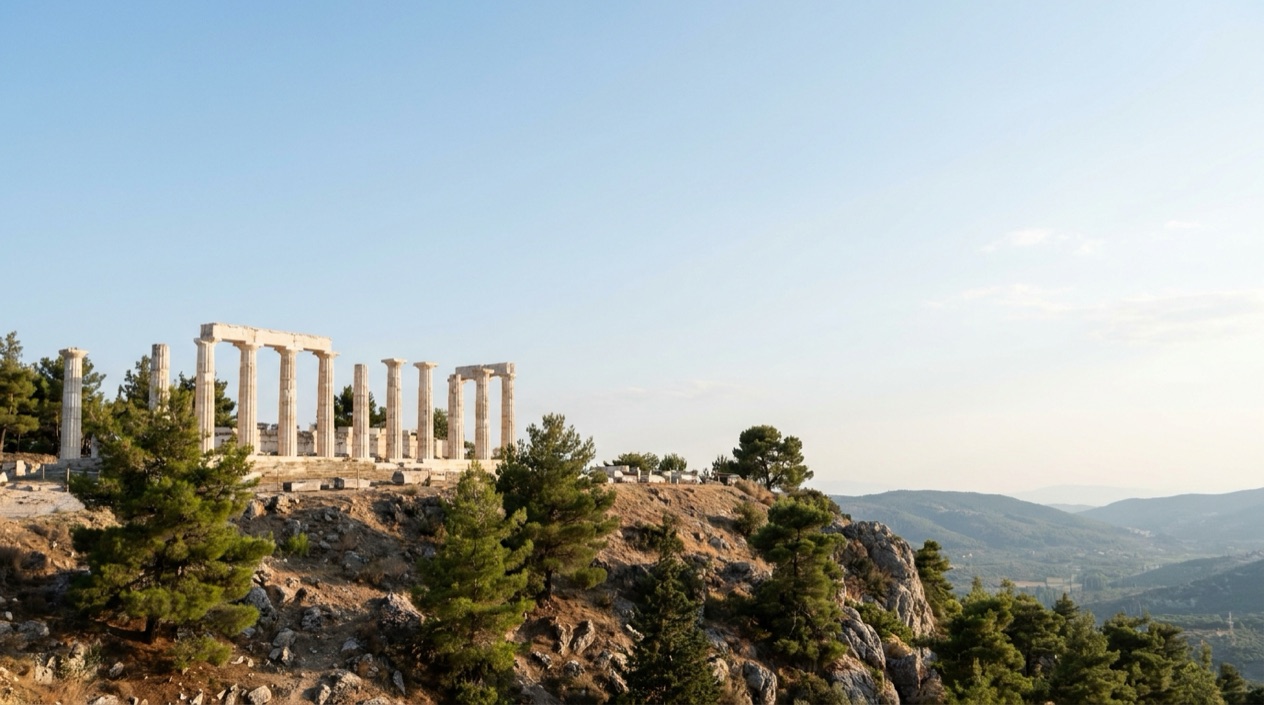
Stone steps wind up the slope of Mount Parnassus, past ruined treasuries and fallen column drums, while olive trees spill down the valley toward the Gulf of Corinth. In the evening the village below fills with the smell of grilled meat and the scrape of chairs on terrace floors.
What are the best things to do in Delphi?
The best things to do in Delphi are walking the sanctuary where the oracle of Apollo once spoke, seeing the finds in the museum, and then slowing down in the village, in the hills and at the table. Everything else is built around those anchors.
- Walk the archaeological site, the sacred precinct on the southwestern slope of Mount Parnassus where the most important oracle of ancient Greece gave its answers.
- Visit the Delphi Archaeological Museum, one of the principal museums of Greece, to see what the excavations brought out of the ground.
- Stroll the two streets of the modern town, lined with small houses, hotels and tavernas, and pick a terrace for dinner.
- Hike or cycle the surrounding hills in spring or fall, when the heat is kinder, and ask at a hostel about renting a bike.
- Browse Polytropon Art, a ceramic workshop that makes museum copies of Greek pottery, for a souvenir with some craft behind it.
- Take a day trip to Hosios Loukas, a walled monastery near Distomo that is a UNESCO World Heritage Site.
- Come in winter for the Parnassos ski resort, which sits very close by.
The pages that follow take each of these in turn, with the places, the flavors and the evenings that make a stay here more than a single visit to the ruins.
Sights and landmarks in Delphi
The sights of Delphi are the sanctuary, the museum and the town that grew beside them, and together they tell one story from three angles. Ancient Greeks regarded this place as the navel of the Earth, a spiritual meeting place where people came with questions about war, colonies, marriages and harvests. Standing on the slope today, you can still feel why they believed the world had a center and that it was here.
The archaeological site
The sanctuary is an ancient sacred precinct set on the southwestern slope of Mount Parnassus, in Phocis, central Greece. UNESCO designated it a World Heritage Site in 1987, and the site is open to the public for a fee. The path rises in switchbacks along the Sacred Way, past the bases of monuments that Greek cities raised to thank Apollo for victories and favors.
Above the Sacred Way you reach the sanctuary of Apollo, where the oracle was consulted, and the upper parts of the precinct hold the theater and the stadium. Lower down, by the road, is the sanctuary of Athena Pronoia, a place of round and rectangular foundations among trees. The excavators of the 1890s cleared away vast quantities of soil to reveal all of this, along with thousands of objects, inscriptions and sculptures, so what you walk through is the result of a very deliberate uncovering.
In summer the whole site gets hot, because the slope offers little shade in the open stretches. Wear sturdy shoes for the stone paths and bring water. Spring and fall are kinder seasons for the walk, and the surrounding landscape is greener then.
The Delphi Archaeological Museum
The museum is one of the principal museums of Greece and one of the most visited, run by the Greek Ministry of Culture through the Ephorate of Antiquities of Phocis. It holds the objects the digs unearthed, which means you can match what you saw outdoors with the sculptures, offerings and fragments that once stood among those ruins.
Visit the museum either before or after the site, and the two feed each other. If you go first, you arrive on the hillside already picturing what stood where. If you go after, the galleries answer the questions the empty bases raised. Look for the bronze charioteer, the Sphinx of Naxos and the stone known as the omphalos, which stands for the navel of the world.
The modern town and its two streets
The modern town lies very close to the archaeological site and stretches along two streets lined with traditional small houses, hotels and tavernas. It was created after buildings were removed from the sacred precinct to allow excavation. Before that, a village called Kastri stood on top of the ruins. After an earthquake damaged it, the villagers were offered a completely new village in exchange for the old site.
That history gives the town a quiet interest of its own. You can walk from your hotel to a taverna, from the taverna to a viewpoint over the valley, and back again without needing a plan. Souvenir shops and small cafés fill the stretch between the sights, and it is a pleasant place to sit with a coffee and think about what you have just seen.
Smaller things worth a look
Polytropon Art, a ceramic workshop that has been established in Delphi since 1986, specializes in museum copies of Greek pottery. It is a good place to see how the shapes and painted scenes you met in the museum are made today, and to take home a piece with a clear link to the place. The Castalian Spring, beside the road below the sanctuary, is another quiet stop for anyone interested in the rituals that came before a visit to the oracle.
Outdoor things to do in Delphi
Outdoors, Delphi means hiking and cycling in the hills around the sanctuary, a look at the Parnassos landscape and, in winter, snow. The mountain that gave the oracle its backdrop is still the main stage for anything you do outside the ruins.
Hiking and cycling in spring and fall
Hiking and cycling around Delphi are nicest in spring and fall, because summer is really hot. In those seasons the slopes above the village are open for long walks among olive groves, scrub and rock, with the valley opening out beneath you and the gulf glinting in the distance.
Some hostels in Delphi rent bikes, which gives you a way to roam the roads around the village at your own pace. Pack a hat, plenty of water and shoes with a good grip, and plan to start well before the day warms up if you travel late in spring or early in fall. Photographers will want the olive terraces and the long views over the valley, which change color as the sun moves.
Winter on Mount Parnassus
In winter, Delphi draws travelers who want to ski, because the Parnassos ski resort is located very close by. That gives the town a second life in the cold months, when the mountain that watched over the oracle becomes a place for snow sports rather than ruins.
Ski days pair well with an evening in the village, where a hot meal and a table by the window are the natural end to a day on the slopes. If you do not ski, the same season lets you see the sanctuary with a snow-dusted Parnassos behind it, a very different picture from the dry summer slope.
Views and slow walks in the village
Even without a hike, the village has its own outdoor rhythm. Terraces and balconies look over the valley of olive trees toward the Gulf of Corinth, which was once called the Krisaean Gulf. A walk along the two streets takes you past small houses, hotel entrances and tavernas, and offers glimpses down the slope between buildings.
In summer, the town teems with visitors who spend a few hours before or after the archaeological site. If you want the surroundings to feel less hurried, plan an overnight stay and let the evening hours belong to the village rather than to tour schedules.
Day trips from Delphi
Day trips from Delphi go to Hosios Loukas monastery, up to the Parnassos ski resort and around the valley and gulf nearby.
Hosios Loukas monastery
Hosios Loukas is a historic walled monastery located near the town of Distomo, in Boeotia. It has been listed as a UNESCO World Heritage Site since 1990, along with the monasteries of Nea Moni and Daphnion. It makes a natural pairing with Delphi, because it shifts the story from the ancient sanctuary to the Orthodox Church and the Byzantine world.
A walled monastery means courtyards, stone buildings and a church interior that rewards a slow look at its decoration. Travelers who have spent a morning among Delphi’s ruins often find the contrast refreshing, since the monastery is a living religious place rather than an excavated one.
The Parnassos ski resort
The Parnassos ski resort is located very close to Delphi, which makes it a ready excursion in winter for anyone who wants snow after the stones. The mountain is the same one that rises behind the sanctuary, so the day trip feels like turning around and walking into the backdrop.
Skiers come from the village to spend the day on the slopes and return for dinner at a taverna. Non-skiers can still go up to see the snow and the long views, though the resort is clearly built around winter sport. Outside the cold months, the area is better known for its hiking and cycling.
Villages and harbor towns around the gulf
The valley below Delphi runs toward the Gulf of Corinth, and the towns around it, such as Itea and Galaxidi, are the places visitors turn to for a seaside lunch or a stroll along a harbor. Arachova, a mountain village on the road that travelers pass through, is another stop for browsing local products and for a coffee with a view.
These towns give a different tone from the sanctuary: boats, fish tavernas and the sound of the sea in place of tour groups and stone. Pair one of them with your time at Delphi and you get a fuller picture of Phocis, from mountain to coast.
What to eat in Delphi
Eating in Delphi means tavernas, and the town’s two streets are lined with them, serving the grilled meats, vegetable dishes and shared plates of mountain Greece. The menus lean on what grows and grazes around the slopes, and a meal on a terrace over the valley is part of the experience.
Taverna classics
A taverna table usually starts with meze, small plates meant for sharing: tzatziki with cucumber and garlic, fried zucchini, olives, a Greek salad with a slab of feta over tomatoes and onions. Bread arrives with olive oil, and the table fills with dishes passed from hand to hand.
Mains often include souvlaki, skewers of grilled meat, and moussaka, the baked dish of eggplant, spiced meat and creamy béchamel. Lamb and goat, roasted or grilled, suit mountain country, and a plate of fried potatoes or seasonal greens alongside rounds it out. Gyros, meat shaved from a spit and wrapped in pita, is a quick option between sights.
Drinks and sweets
Ouzo, the anise-flavored spirit, turns cloudy when water is added and is usually sipped slowly with meze. Local wine, often poured from a carafe, is the easy partner for grilled meat. After a meal, a small glass of tsipouro or a coffee brings the evening to its natural close.
For something sweet, look for yogurt with honey and nuts, or a slice of a syrupy pastry such as baklava. Cafés in the village serve Greek coffee, thick and strong in a small cup, and it makes a good break between the museum and the ruins.
Eating before or after the site
Because the town lies very close to the archaeological site, you can plan lunch or dinner around your visit without going far. In summer, when the village teems with visitors, tavernas fill with people spending a few hours on either side of the sanctuary.
A good approach is to choose a terrace with a view of the valley and let the meal stretch. The setting is part of what you pay attention to: the light across the olive groves, the sound of cutlery and conversation, the slow end of the day on the slope of Parnassus.
Things to do in Delphi at night
Evenings in Delphi are about dinner, a drink and a walk through the village, not clubs or late-night crowds. The town is small, so nightlife means terraces, tavernas and a conversation that runs long over a carafe of wine.
Dinner on a terrace
The tavernas that line the two streets of the modern town are the heart of the evening. Terraces look over the valley, and you can sit with a plate of grilled meat, a salad and bread while the view fades into dusk. Dishes come in the Greek way, shared and unhurried.
The streets feel like a small mountain town, with hotel lights, café chairs and the occasional local on a stroll.
A quiet drink and a walk
After dinner, a coffee, a glass of ouzo or a small pour of tsipouro keeps the evening going without effort. Cafés and bars in the village are modest in scale, places to sit and talk rather than dance. The walk back to your hotel along the two streets takes you past shuttered souvenir shops and lit windows.
In winter, evenings gather skiers fresh from Parnassos, who bring a bit of energy to the tavernas. Warm dishes and a table by the window are the mood of the cold season, and the mountain feels close even in the dark.
Thinking about the oracle after dark
There is a particular pleasure in spending the evening with what you saw by day. Over dinner, you can piece together the story: the oracle consulted since early times, the sanctuary destroyed and buried, the village of Kastri built on top, the French excavators who removed the soil, and the new village created so the ruins could be uncovered.
That chain of events is a good conversation for a taverna table. It explains why the town sits where it does, and why the sanctuary appears so clearly laid out on the slope above.
Things to do in Delphi with kids
With children, Delphi works best as a place for stories, stones and open air, built around the sanctuary, the museum and some time in the village. The ancient site is full of things for young imaginations, from the idea of an oracle to the tales of Apollo.
Turning the site into a story
Children often respond to a good story, and Delphi has one. Ancient Greeks believed this was the navel of the Earth, and that a priestess called the Pythia gave answers from the god Apollo. Telling the tale before you go in turns the walk along the Sacred Way into a quest, with monuments as clues.
The theater and the stadium give a sense of scale and purpose, and children tend to enjoy finding the places where people once gathered to watch. Keep in mind that the path is stone and it rises along the slope, so shoes with grip matter. In summer the heat is really strong, so bring water and hats, and take breaks where the site allows.
The museum as a treasure hunt
The Delphi Archaeological Museum is one of the principal museums of Greece, and its objects make a good hunt for children. Ask them to find the bronze charioteer, the Sphinx of Naxos and the omphalos, then match each with the part of the site where it might have stood.
Short museum visits with a clear goal tend to hold attention better than a slow walk through every gallery. Visiting the museum after the site lets the finds answer questions the ruins raised.
Pottery, snow and a table to rest at
Polytropon Art, the ceramic workshop in town, makes museum copies of Greek pottery, and seeing painted vases in the making can bring the museum to life. Older children may enjoy picking a small piece as a souvenir of a place they learned about.
In winter, the Parnassos ski resort sits very close by, a draw for families who want snow. The rest of the time, the village offers tavernas where meze, bread and grilled dishes suit shared eating. Because the modern town lies close to the site, you can step away from the ruins to rest without losing the thread of the day.
Good to know before you go
Delphi is a small place, and the modern town sits very close to the archaeological site, so the village and the sights are never far apart. The archaeological site is open to the public for a fee, and summer is really hot, which makes spring and fall the seasons for hiking and cycling.
Some hostels rent bikes, and in winter the Parnassos ski resort, very close by, draws skiers to the area. In high summer the village teems with visitors, so plan your meals and your walks with that in mind.
Sources
- Visit Greece (GNTO), Delphi (https://www.visitgreece.gr/mainland/central-greece/delphi/), checked October 12, 2026
- Wikipedia, Delphi (https://en.wikipedia.org/wiki/Delphi), checked October 12, 2026
- Wikivoyage, Delphi (https://en.wikivoyage.org/wiki/Delphi), checked October 12, 2026
- Wikipedia, Hosios Loukas (https://en.wikipedia.org/wiki/Hosios_Loukas), checked October 12, 2026