
Naxos, Milos, Paros and Crete are the safest bets for beaches, and Naxos and Milos add an easygoing, real-Greece feel. Santorini is for sunsets and romance, Mykonos is for parties, and the smaller islands reward anyone who wants quiet.
Which Greek island is best for beaches?
Start with the Cyclades, where Naxos, Milos and Paros all deliver.
Naxos
Naxos is the largest of the Cyclades, and that matters. There are crowds in early July, but the island is big enough that there's plenty to do without worrying about them. The southwest coast is strung with pristine beaches. Plaka is long and golden with powdery sand, sunbeds, tavernas and windsurfing, yet it still feels relaxed. Alyko is quieter, a cove ringed by cedar trees and protected dunes. The beaches can get windy, which is exactly why kitesurfers flock here.
It's a good pick for families, and for anyone who cares about food, since many Greek specialties are grown right on the island. Inland, the villages reward a wander: Naxos Town, Apiranthos and Filoti.
Milos
Milos looks like another planet. Sarakiniko is a lunar landscape of white volcanic rock carved by sea and wind, with smooth surfaces for lounging and jumping into bright blue water. Firiplaka has more of that bright blue water. For a classic beach day, try Papafragas, a narrow inlet under towering cliffs, or Tsigrado, a secluded sandy cove reached by a slightly sketchy wooden ladder.
The big day out is a boat trip to Kleftiko Bay, with its rock formations, cliffs and aquamarine water, which is usually reached by sea. Milos is quite spread out, and an ATV or quad bike is a handy way to get around. There isn't much to do away from the beach, and that's part of the charm. There are no large resorts, and villas and hotels run noticeably cheaper than on Santorini or Mykonos. It suits couples, friends and families alike.
Paros
Paros is the balanced one, with charming villages, lively harbor towns and a coastline that suits both adventurers and those after a calm escape. Kolymbithres has granite rock formations that form natural swimming coves, great for snorkeling and poking around. Piso Livadi is the calm alternative, with golden sand and quiet water beside a fishing village.
Crete
Crete is the largest Greek island, and it sits at the southern edge of the country, so sunshine and moderate temperatures last much of the year. Elafonissi is the star, with shimmering pink sand and shallow turquoise water stretching to the horizon. Balos Lagoon has crystal-clear water and a mountain backdrop. Preveli is for the adventurous, a freshwater river meeting the sea among palm trees.
Away from the sand, there's the Minoan palace of Knossos, deep gorges, Venetian and Turkish castles, and Loutro, a harbor you reach by boat, where whitewashed buildings hug the base of the mountain. Direct flights come into Heraklion or Chania. With three weeks, you could give Crete at least a week.
Rhodes
Rhodes, the largest of the Dodecanese, suits travelers who want beaches alongside history, from its medieval Old Town to its ancient ruins. Lindos Beach sits right below the village of Lindos and its hilltop acropolis, with soft sand and calm swimming. Prasonisi, where the Aegean and Mediterranean meet, has wind and waves that windsurfers and kiteboarders love.
Which islands are best for a quiet, local feel?
Start in the Small Cyclades. Koufonisia is small and walkable, with relatively few tourists, only a handful of roads and usually a slow pace. Many beaches are within walking or biking distance of the main town. Pori has soft sand and impossibly blue water, and Gala is a natural swimming hole cut into the rocks. A water taxi from the port to the east coast gets you to coves like Fanos and Italida. Neighboring Schinoussa is just as peaceful.
Syros is a quiet favorite, mostly visited by Greek tourists. It's close to Mykonos yet stays off the beaten path. Ermoupoli has neoclassical mansions built for wealthy shipowners, some now boutique hotels, and Ano Syros is a maze of alleys where grandmothers watch the world from their doorsteps. Kini is a splendid beach village. Syros is getting more popular, so go soon.
Folegandros is a short high-speed ferry from Santorini and feels like another era. Farmers use donkeys, octopus dries outside the tavernas, and the Chora is full of traffic-free squares. Days are for boat trips and swims, evenings for a zigzag walk up to the main church to watch the sunset.
Symi, in the Dodecanese, has colorful Venetian-style houses climbing the hillside, tiny coves with crystal clear water (many reachable by boat), and fresh seafood in small tavernas. Thassos is a green, unspoiled island in the far north of Greece, and getting there means a short ferry ride after flying into Kavala on the mainland.
What about Santorini and Mykonos?
Santorini
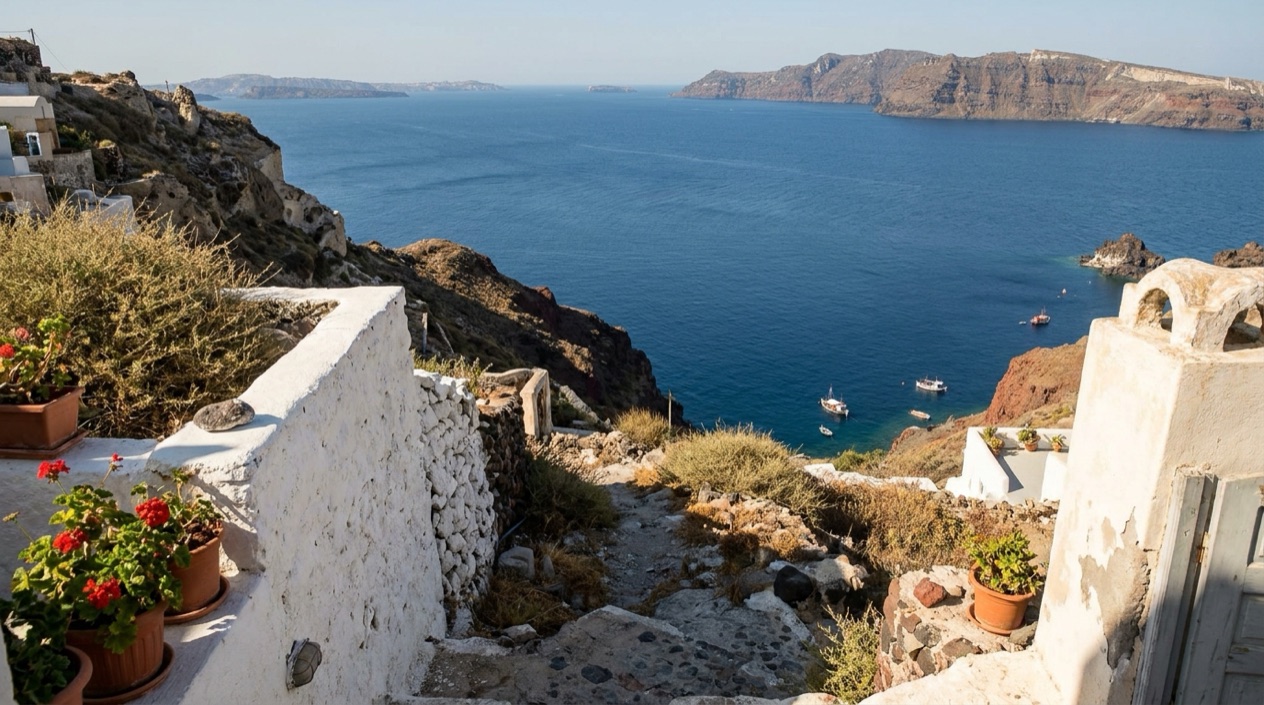
Santorini is as pretty as the postcards: whitewashed buildings, blue-domed churches, cave hotels, and golden sunsets over the caldera. It suits couples and girls' trips. It's also busy, with a cruise port, high prices and hundreds of people craning for the same sunset photo. Its beaches are volcanic, black or red sand, and not the reason to come. Spend your days at the Minoan site of Akrotiri, walk up the volcano, or book a catamaran outing. Go outside the main season if you can.
Mykonos
Expect crowds, expensive drinks and a good time, especially in peak season. It does have quieter sides: Platis Gialos on the south coast is family-friendly with soft sand and calm water, and Psarou has a relaxed vibe and good waterfront dining. Mykonos Town is charming for shopping, and day trips run to ancient Delos. As a major ferry and air hub, it's also an easy island to pass through for a night or two.
Are the Ionian Islands worth considering?
Yes, if landscapes and beaches matter more than whitewashed villages. These islands are larger and greener than the Cyclades, so even peak season feels less packed, and the water is that famous Ionian blue.
Lefkada is joined to the mainland by a causeway, so you can drive there. Porto Katsiki and Egremni are framed by sheer cliffs and reached by winding paths, and Mylos is just as picture perfect. Kefalonia, the largest Ionian island, has Myrtos, a crescent of white pebbles under limestone cliffs and among the most photographed beaches in Greece. Its villages, like Assos and Fiskardo, were rebuilt in pastel colors after a 1953 earthquake.
Zakynthos has Navagio, the Shipwreck Beach, a secluded cove with a rusting wreck, white cliffs and electric-blue water, usually reached by boat. Gerakas is a protected nesting site for loggerhead turtles. Some towns on Zakynthos draw a rowdy partying crowd.
Paxos is a small island with lush greenery, cliffs and turquoise beaches, about an hour by ferry from Corfu's main port. A day trip to Antipaxos brings you to Voutoumi Bay, perhaps the best beach in the Ionians. Corfu is the busiest and most developed of the main Ionian islands, popular with British and German visitors. Its beaches are well regarded, though some visitors find them less striking than Lefkada's or Kefalonia's.
Which island is right for me?
- Beaches and good food: Naxos
- Wild scenery and adventure: Milos
- Variety, history and a long beach season: Crete
- Beaches with history: Rhodes
- Romance and sunsets: Santorini
- Parties: Mykonos
- Quiet and small: Koufonisia, Schinoussa, Folegandros
- Dramatic scenery: Kefalonia, Lefkada
When is the best time to visit the Greek islands?
Shoulder seasons are the sweet spot. Late April to early June and mid-September to the end of October keep the crowds down while tavernas stay open. Spring brings the fewest tourists, but the sea is still cold. Autumn water is warmer, though the weather can be more changeable. High season runs from late June to the end of August, when prices climb and the islands can feel packed with visitors and cruise ships.
At the edges of the season, timing matters. On Ios, tavernas and other businesses start opening in mid-May, weather permitting, before the crowds arrive. The Cyclades close for the season by mid-November, while Crete's southern position keeps its beach season going longer.
How do you get between Greek islands?
By ferry, and many travelers use FerryHopper.com to book. Stay within one island group if you can, since direct journeys between groups, such as the Cyclades and the Ionians, aren't possible. Within a group, several islands are a short ferry ride apart, so pairing a big island with a small one works well in a single trip. Strikes can disrupt ferries and seaports, so leave some slack before your flight home.
On the islands themselves, a car or scooter makes life easier. Greek law requires a valid U.S. driver's license, and insurance companies may require an international driver’s permit. Motorcyclists must wear a helmet, and talking or texting while driving is illegal. Take care on the roads, since Greece has one of the EU's highest traffic fatality rates.
What do Americans need to know before visiting Greece?
U.S. citizens can enter Greece without a visa for up to 90 days, and a passport should have at least three months of validity beyond your planned departure date. Be ready to show proof of sufficient funds and a return ticket if asked. Greece is generally safe, but petty crime is common in popular tourist spots. Forest fires are common in dry summers and occasionally close roads. Thieves in Greece are known to break into rental cars to steal passports, valuables and luggage, so it's wise to keep those items with you.
Sources
- rtwin30days.com (https://rtwin30days.com/best-greek-islands-for-beaches/), checked October 18, 2026
- theblondeabroad.com (https://www.theblondeabroad.com/greek-islands-for-every-type-of-traveler/), checked October 18, 2026
- johnnyafrica.com (https://johnnyafrica.com/best-ionian-island-greece/), checked October 18, 2026
- community.ricksteves.com (https://community.ricksteves.com/travel-forum/greece/islands-10b75b2c-1cdf-4492-9223-3e5dbda571b7), checked October 18, 2026
- suitcasesandsandcastles.com (https://suitcasesandsandcastles.com/beautiful-greek-islands-for-your-bucket-list/), checked October 18, 2026
- U.S. Department of State (https://travel.state.gov/content/travel/en/international-travel/International-Travel-Country-Information-Pages/Greece.html), checked October 15, 2026
- U.S. Department of State (https://travel.state.gov/content/tsg_aem/us/en/home/international-travel/travel-advisories/destination.grc.html), checked October 15, 2026
To plan your stay
- Best Time to Visit Greece: September and Late May to Early June
- Arachova: Parnassus Mountain Town, Formaela Cheese, Ski Season and Saint George's Day
- American Airlines Flights to Greece: U.S. Cities, Athens Arrivals and Onward Island Flights
- Greece on a Budget: Cash Machines, Cards, Beaches and Ferries