
You reach the water of Kalogria Beach with the smell of pine resin still in your nose, and the shoreline opens out in front of you with nothing much in the way. This is a beach in Achaea, on the northwest side of the Peloponnese, where the Ionian coast feels wide and unhurried. It is a visit built around a long stretch of shore, the woods that run behind it and a day of doing very little.
Is visiting Kalogria Beach worth it?
It is a place for laying out a towel, walking along the water’s edge, swimming if the sea invites you, and eating a late lunch at a taverna afterward.
What sets it apart from similar places nearby is the setting more than any single attraction. The coast of Achaea is not a string of postcard coves with ferries pulling in beside them.
It is a long Ionian shoreline backed by pine forest and wetland, a landscape that feels more like open country meeting the sea than a resort village. Visitors who expect a Cycladic island scene, with small harbors and stacked houses, will find something different here: broader, greener and less staged.
One practical note on the name. Kalogria is a common Greek place name, and the same word turns up for a beach in West Mani in Messenia, a village in Chalkidiki, a bay in the Gulf of Euboea, and the Greek name of Kallurga in Northern Cyprus.
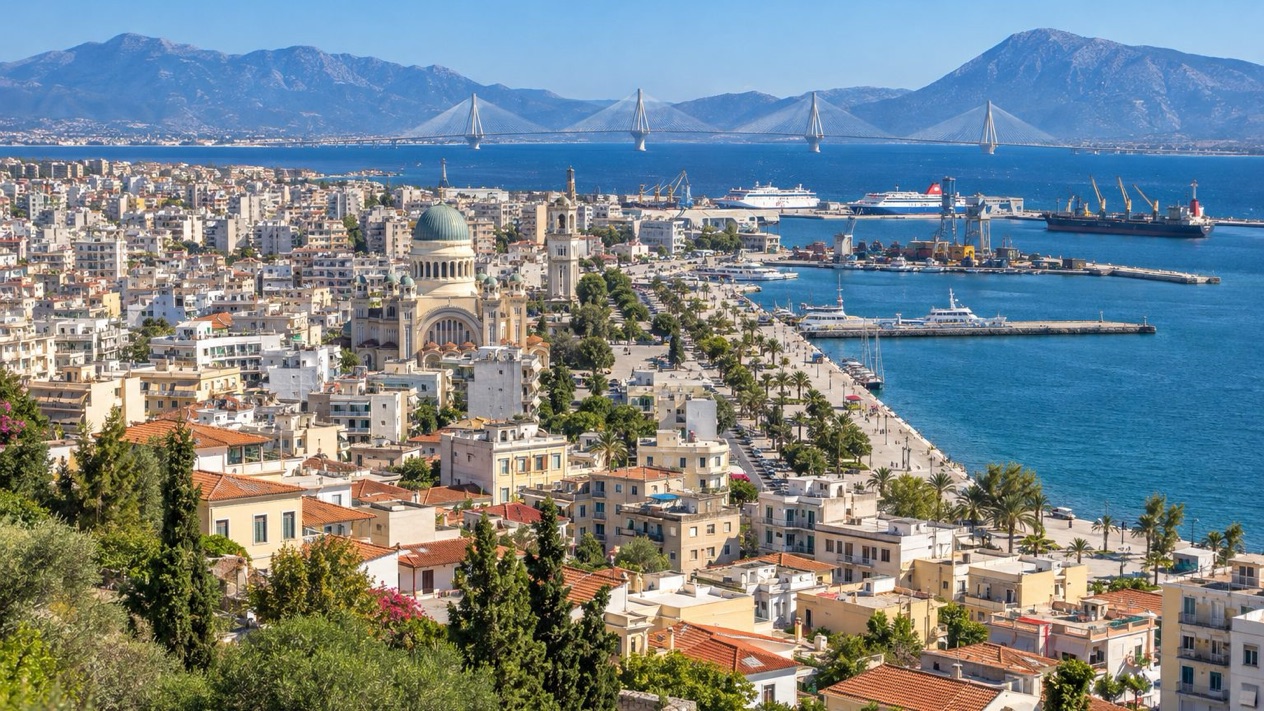
Patras gives the visit its backdrop. It is the third largest city in Greece and one of the largest ports in the Mediterranean, so a beach day here can be paired with a city that has a castle, a carnival and ferry lines to Italy and the Ionian islands. That mix of long open shore and a working port city is the real reason to come.
What to see at Kalogria Beach
The beach is the main event, but the stretch of coast and the places a short trip away from it give the day more shape. These are the parts of a visit worth knowing about.
The shoreline itself
Kalogria Beach lies in Achaea, in the northwest Peloponnese, and what you notice first is the sense of length. The shore runs on, with the Ionian Sea in front and green land behind, and there is room to walk a long way in either direction without running into a harbor wall or a row of hotels.
Spend time looking at the edge of the water, the line of driftwood and dried seagrass the sea leaves behind, and the way the shoreline meets the trees. It is a place for slow walking, for reading under a hat, and for watching the light change over the water. Bring swim gear and a towel, and let the day set its own pace.
The Strofylia forest and wetland behind the shore
Behind the beach, the pine woods and wetlands of Strofylia stretch along this coast. It is a mix of trees, reeds and shallow water, the kind of landscape that draws birdwatchers and walkers, and it gives the beach a character that sets it apart from the rocky coves of the islands.
If you look closely, you may spot wading birds in the wet ground and hear cicadas in the pines in the warm months. The smell of resin and salt together is one of the things people remember about this coast. Wildlife is a chance, never a promise, so treat any sighting as a bonus.
The Upper Town and castle of Patras
Part of Patras is built on a hill crowned by a castle, and this is the Upper Town. Climbing through its streets gives you a different view of the city from the waterfront, with the port and the Gulf of Patras laid out below. It makes a good change of scene after a day by the sea.
The old quarter has the feel of a lived-in Greek city rather than a museum. Cafés, small squares and neighborhood tavernas mix with the stone and the slopes, and the castle walls give the whole hillside its character. It pairs well with a beach day, since the contrast between open shore and old stone is part of the pleasure.
Walking the Rio-Antirrio Bridge
The Rio-Antirrio Bridge connects Rio, Patras’s easternmost suburb, to the town of Antirrio, linking the Peloponnese peninsula with mainland Greece. Visitors can walk across it for free, which turns a piece of modern engineering into an outing with a view over the water.
Seen from the bridge, the gulf opens out on both sides and the hills of the mainland rise on the far shore.
When to visit Kalogria Beach
A beach is a warm-weather pleasure, so the months when the sea invites a swim are the natural choice for a day at Kalogria. Summer brings the long, bright days that suit lying on the shore and walking the water’s edge. Outside the warm months, the beach changes character and becomes a place for coastal walks and for looking at the forest and the wetland rather than for swimming.
Beyond the beach season, the calendar of Patras is the other thing to plan around. The city hosts the largest carnival in Greece every year, filling its streets with music, colors and energy, with floats, costumes and dancing. Carnival falls in the weeks before Lent, so it belongs to the cooler part of the year, when the beach is not the draw and the city is.
That makes two different trips to Achaea. One is a warm-weather escape built around the water, the pine woods and long lunches. The other is a cold-season visit built around Patras, its carnival, the Upper Town and the castle, with a walk along the shore thrown in for the sea air.
A third rhythm comes from the port. Patras is linked by ferry to the Italian ports of Brindisi, Bari, Ancona and Venice, with numerous sailings daily year-round, and the port also has daily routes to the Ionian islands Kerkyra and Kefallonia and to Igoumenitsa. Travelers arriving from Italy or heading on to the islands can slot a beach stop into a ferry connection in any month.
If your dates are flexible, think about what you want from the coast. For swimming and long days outdoors, aim for the warm months. For a city with energy and costumes in the streets, aim for carnival. For a mix of walking, forest, castle and bridge with fewer beach plans, the months in between suit the shape of the landscape well.
Tips for your visit
Pack for a beach day and for a stroll in the pines: swim gear, a towel, a hat, something to read and a bag for the afternoon’s finds. Because the beach sits in open country with forest behind it, comfortable shoes are useful for walking along the shore and into the trees.
Think of Kalogria as the center of a day built around the coast and the city. A good pairing is the beach followed by Patras: swim and walk by the sea, then head into the city for the Upper Town and the castle, and finish with dinner at a taverna. Patras has the places to eat and stay, and the beach gives the trip its slow side.
If you have more time, add the Rio-Antirrio Bridge. Walking across it is free for visitors, and it gives a view of the gulf and the meeting of the Peloponnese with the mainland. It fits well on a day when you want movement and a bit of engineering after the stillness of the shore.
Travelers arriving by sea can use the port of Patras as a base. The new port in the southern section of the city went into operation in 2011, and ferries to Italy now dock there. From the port you can set out for the beach, the Upper Town or the bridge, and it connects you onward to Kerkyra, Kefallonia and Igoumenitsa on daily routes.
Families and travelers who prefer a gentler pace can build the day around the shoreline and the woods, with Patras as an optional add-on. For football fans, the city also hosts the Panachaiki soccer team, which plays at the Pampeloponnisiako Stadium, a way to feel the local rhythm if your dates match a game.
A last word on the name: with several Kalogrias scattered around Greece and Cyprus, confirm that you are heading to the beach in Achaea before you set off.
Good to know before you go
Greece uses the euro, and the city of Patras is the place to sort out money, supplies and a meal before or after the beach. Treat the shore the way you would any open coast: take your belongings with you, and leave the dunes, pines and wetland as you found them, since the landscape here is part of what you came to see.
The Blue Flag is a certification by the Foundation for Environmental Education that a beach, marina or sustainable boating operator meets its standards, and it is a useful label to know when comparing beaches across Greece. Plan the rest around the ferry port, the Upper Town and the long walk along the Achaea shore.
Sources
- Wikipedia, Kalogria (https://en.wikipedia.org/wiki/Kalogria), checked October 12, 2026
- Visit Greece (GNTO), Patras (https://www.visitgreece.gr/mainland/peloponnese/patras/), checked October 12, 2026
- Wikipedia, Patras (https://en.wikipedia.org/wiki/Patras), checked October 12, 2026
- Wikivoyage, Patras (https://en.wikivoyage.org/wiki/Patras), checked October 12, 2026
- Wikipedia, Blue Flag beach (https://en.wikipedia.org/wiki/Blue_Flag_beach), checked October 12, 2026
To plan your stay
- Agia Marina Beach near Chania: Setting, Seasons and the Old Town Next Door
- The Beaches of Antiparos: Sandy Shores, Nudist Coves, the Cave and Despotiko
- Agios Gordios Beach on Corfu: Ai Gordis Village, the Pink Palace, Weather by Season and Tips
- Agios Prokopios Beach: Naxos Setting, Seasons, Food and Nearby Sights