
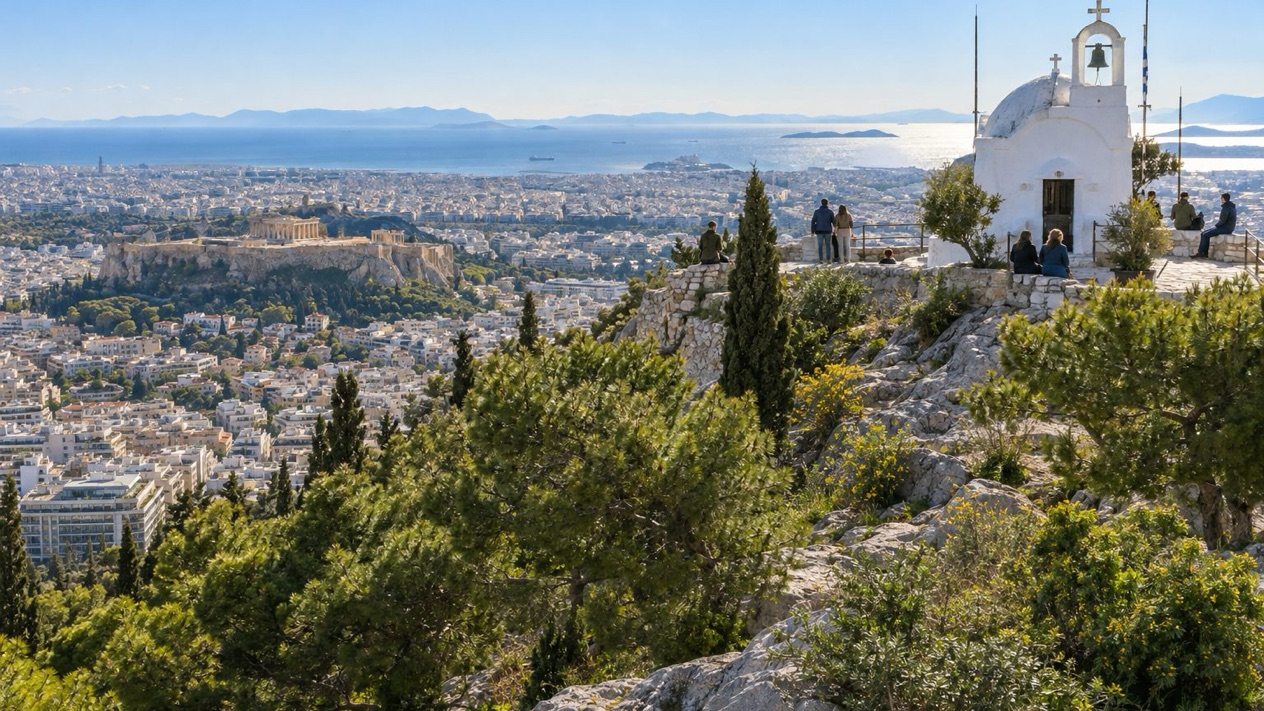
On Fridays the streets of Koukaki fill with stalls of tomatoes, wild greens, lemons and herbs for the weekly vegetable market, and shoppers stop at corner cafés for a frappé before heading home with full bags. Elsewhere in the neighborhood, the glass-fronted Acropolis Museum draws a different crowd, strolling along the pedestrian walkway that links the ancient monuments. Koukaki is one neighborhood of Athens, but where you sleep inside it, from the museum side to the edge along Syngrou Avenue, shapes how your days feel.
What is the best area to stay in Koukaki?
Beach days are not part of Koukaki’s picture at all. It is a city neighborhood in southeast Athens, and anyone planning swims is looking at a separate outing.
A first visit works well around the museum. The Acropolis Museum and the pedestrian walkway that links Athens’ ancient monuments are what make Koukaki fashionable, and sleeping near them means your first and last impression of the day is the old city rather than a ring road. Cafés, bakeries and small tavernas line the streets around, so breakfast, a coffee break and dinner can all happen without leaving the neighborhood.
For travelers who care most about the ancient sites, the same streets are the answer, and the northern edge adds another option. Koukaki borders Makrygianni and the historical district of Plaka, so the northern blocks put you at the threshold of the old center. Plaka itself is a top attraction with picturesque streets, historic landmarks and lively shops, but it also gets crowded, which is part of why some visitors prefer to sleep just outside it and visit by day.
Budget travelers often look toward the Syngrou Avenue side, where the neighborhood meets Neos Kosmos and the streets feel more like everyday Athens. Guesthouses and apartments are the kinds of lodging people usually look for in a neighborhood like this one, and the two metro stations and the tram stops give you ways across the city without a car. Families can use the same logic: an apartment with a kitchen pairs well with the Friday market, where fruit and vegetables are sold in quantity.
Nightlife is a matter of temperament. Koukaki’s cafés and tavernas give evenings a sociable, unhurried character, with long meze dinners, ouzo or wine and conversation spilling onto the sidewalk. Travelers who want a crowded, loud night out will find that Plaka’s lively streets lie at the northern border, and that the metro, which runs later on Friday and Saturday nights, brings you back.
The areas differ less by distance than by what is on your doorstep. The museum side gives you the walkway, the monuments and the polished cafés. The Plaka border gives you the old center’s lanes and its crowds.
The Syngrou–Fix side gives you transit, bigger streets and a more local rhythm, with the avenue running along the line where Koukaki meets Neos Kosmos. The market, the metro stations and the tram stops tie them all together.
The best areas to stay in Koukaki
Koukaki is not large, but it has four distinct corners. Each one gives you a different morning: a museum stroll, a Plaka lane, a tram platform or a market stall.
Around the Acropolis Museum and the walkway
This is the part of Koukaki that made the neighborhood fashionable. You wake up among small apartment buildings, balconies with potted herbs and espresso machines already humming. The Akropoli metro station sits in this part of the neighborhood.
Lodging here tends toward boutique hotels, small guesthouses and furnished apartments in older buildings, many with balconies. It suits first-time visitors, couples and anyone whose plan is built around the museum and the ancient sites. A breakfast of Greek yogurt with honey, or a warm bougatsa pastry from a bakery, is a natural way to start the day. For getting around, the metro at Akropoli is your link to the rest of the city.
The Makrygianni and Plaka border
On its northern side, Koukaki borders Makrygianni and the historical district of Plaka. Staying here means the old center is at your door, with its picturesque streets, historic landmarks and lively shops. Plaka gets crowded, so the border blocks give you a foot in both worlds: the bustle when you want it, and a bed on the less busy side of the line.
Lodging in this stretch leans toward guesthouses and apartments tucked into older buildings, with the occasional small hotel.
For transport, the Akropoli station remains the nearest of the neighborhood’s two metro stations to this edge, and the tram stops connect you farther afield. A good habit is to browse the shops and sit over a coffee before the crowds build.
The Syngrou–Fix side and Syngrou Avenue
Along the borderline between Koukaki and Neos Kosmos stands Andrea Syngrou Avenue, a broad artery that gives this side of the neighborhood a more urban, everyday feel. The Syngrou–Fix metro station lies here, and the Fix tram stop is part of the same corner. You come out of the station into a part of Athens where people are heading to work, not to the Acropolis.
The metro and the tram make this side a good base for day trips across the city.
Since November 19, 2020, the tram has returned to Syntagma, which adds a ride toward the center. Streets near the avenue carry traffic, so a room on an inner street is a sensible thing to ask for.
The tram side at L. Vouliagmenis and Fix
Koukaki is also served by the Athens Tram at the L. Vouliagmenis and Fix stops, and the streets near these stops form a fourth corner for anyone who prefers rails to the metro. Here the neighborhood feels residential, with bakeries, kiosks, small grocers and the daily comings and goings of people who live in Koukaki rather than visit it.
Lodging in this part tends toward apartments and simple guesthouses, a good fit for longer stays, families who want a kitchen and travelers who like to shop like locals. The Friday market is a neighborhood event that fits this kind of stay, with crates of produce for a picnic or a home-cooked meal. Remember that the bus rule in Athens bars passengers from using the front door.
Koukaki areas compared
| Area | Best for | Feel | Getting around |
|---|---|---|---|
| Acropolis Museum and walkway | First visit, ancient sites | Fashionable, cafés and tavernas | Akropoli metro station |
| Makrygianni and Plaka border | Old-center atmosphere, evenings out | Picturesque streets and lively shops, with Plaka crowds nearby | Akropoli metro station, tram stops |
| Syngrou–Fix and Syngrou Avenue | Transit, longer stays | Urban, everyday, on the edge with Neos Kosmos | Syngrou–Fix metro station, Fix tram stop |
| Tram side (L. Vouliagmenis and Fix) | Families, apartment stays | Residential, close to the Friday market | L. Vouliagmenis and Fix tram stops |
The main trade-off in Koukaki is between the polished streets of the museum and the plain practicality of the avenue. Near the Acropolis Museum, you pay in attention to the setting: more cafés, more visitors, a neighborhood that has grown fashionable.
The second trade-off is energy. The Plaka border puts you beside lively shops and landmarks, with the crowds that come with them, while the inner streets of Koukaki keep a more neighborly mood.
A traveler who plans to be out until late can use the metro, which runs from 5:30 a.m. to 00:30 a.m., with lines 2 and 3 open later on Friday and Saturday nights. Someone who wants a calm place to return to may prefer the tram side.
Last, think about your days. If they revolve around the museum and the monuments, stay by the walkway. If you will cross the city repeatedly, stay near a station. If you are cooking for a family, stay near the market. Koukaki lets you choose, because its two metro stations and two tram stops are spread across the neighborhood.
How to choose your hotel in Koukaki
Choose a boutique hotel or guesthouse if you want to be near the museum and the walkway, and an apartment if you want space and a kitchen. Koukaki’s older buildings hold many small properties rather than large resorts, so the choice is mostly between a room with a daily breakfast and a flat where you set your own rhythm. Balconies, when you get one, are a pleasure in a neighborhood of cafés and market streets.
A hotel or guesthouse suits short stays and first visits. You get a front desk, a place to leave a bag, and often a breakfast of yogurt, honey, fruit, bread and coffee.
Staff in small properties are a good source for taverna ideas and for what is on at the market. For an apartment, the logic is the opposite: you give up the desk and gain a kitchen, which pairs well with the Friday vegetable market and the neighborhood’s bakeries.
Think about how you will move. Koukaki has two metro stations, Akropoli and Syngrou–Fix, and two tram stops, L. Vouliagmenis and Fix. A room near a station saves effort on days when you leave the neighborhood. If your days are built around the museum and the Acropolis, the position of the station matters less than the walkway itself.
Families will usually want an apartment with room to spread out, and a location near a station or tram stop. A kitchen helps with breakfasts and simple dinners, and the market helps with supplies. Travelers with mobility needs should ask about stairs, elevators and the street outside, because older buildings and sloping side streets are part of Koukaki’s character.
If you are staying near Syngrou Avenue, ask for a room facing an inner street, since the avenue is a broad thoroughfare. If you are staying near the Plaka border, the other consideration is crowds: Plaka gets crowded, and a room a little way off the main lanes gives you the neighborhood’s calmer side while keeping the old center within reach.
Finally, think about what you will eat. Koukaki’s cafés, bakeries and tavernas offer the everyday Athenian table: souvlaki and gyros in pita, meze plates of feta, olives and grilled vegetables, moussaka, and sweets alongside strong Greek coffee. If you like to cook, an apartment makes the market a daily pleasure.
Good to know before you go
The airport section of Athens Metro line 3 has trains every 30 minutes, and Koukaki is served by the Akropoli and Syngrou–Fix stations. This is Athens is the city’s official tourism guide and a useful companion for planning. On buses, passengers cannot use the front door to get on or off. Plan on euros for cafés, bakeries and the Friday market stalls.
Sources
- Wikipedia, Koukaki (https://en.wikipedia.org/wiki/Koukaki), checked October 12, 2026
- OASA, Athens urban transport (https://www.oasa.gr/en/), checked October 12, 2026
- Athens Transport, public transport guide (https://www.athenstransport.com/english/), checked October 12, 2026
- This is Athens, the official Athens tourism site (https://www.thisisathens.org/), checked October 12, 2026