
A morning in Kolonaki starts at a café table on a sloping street, with a frappé sweating beside a plate of toast and the pine-covered mass of Lycabettus rising behind the rooftops. By evening the same streets belong to people dressed for dinner, drifting between wine bars, bookshops and boutiques. Kolonaki is an upscale neighborhood in central Athens, and where you sleep in it, or just beside it, decides whether your days lean toward museums and cafés or toward the old stones of Plaka and Koukaki.
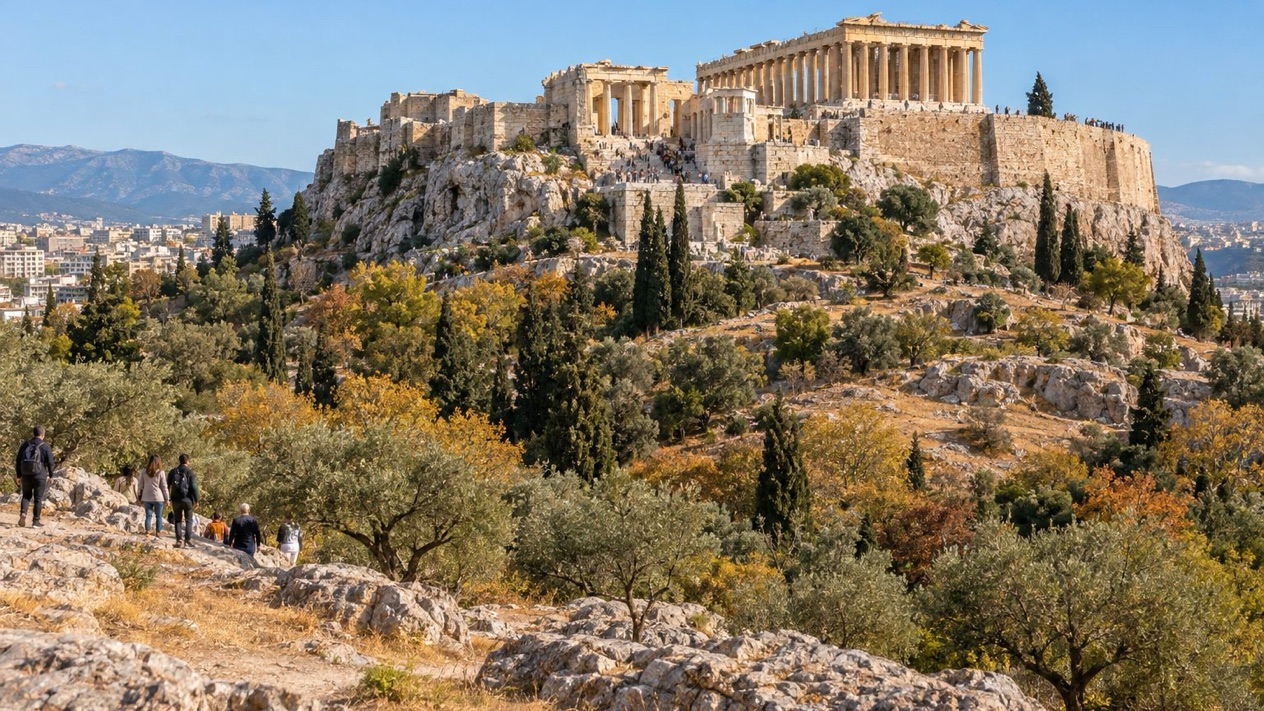
What is the best area to stay in Kolonaki?
For a first visit built around museums, good coffee and an upscale Athenian atmosphere, the heart of Kolonaki on the southern slopes of Mount Lycabettus is the right base. It is the place to be if your idea of a good day is a gallery in the morning, a long lunch and an evening stroll among shop windows.
If ancient sites are the point of your trip, the picture changes. Koukaki is the neighborhood where the Acropolis Museum and a pedestrian walkway link the ancient monuments, and it has a fashionable reputation of its own. Plaka is the other obvious candidate, with picturesque streets, historic landmarks and lively shops, though it gets crowded. Both are separate neighborhoods from Kolonaki, and each gives a very different feel to your mornings.
Beaches are not part of this conversation. Kolonaki is a city neighborhood, and a stay here is about urban Athens, so travelers who want swimming usually plan that part of the trip elsewhere and treat Kolonaki as the city base. The same goes for families and budget travelers: the neighborhood is upscale, and what suits you depends on how much you want to be in the middle of the polished, café-lined streets.
Nightlife in Kolonaki leans toward the evening drink rather than the all-night club. Wine bars and cocktail rooms fill the streets around the main square, and people linger at tables outside. If late dancing is what you want, you would think about the lively streets of Plaka instead, where the shops and the energy are what the neighborhood is known for.
Museums are the strongest argument for Kolonaki. The Benaki Museum occupies a preserved neoclassical manor house, the Goulandris Museum of Cycladic Art is here too, and the National Gallery of Greece stands on Vasileos Konstantinou Avenue. The Byzantine and Christian Museum sits across the street from Vasilissis Sofias Avenue. Few neighborhoods in the city put so many of these within one stretch of streets.
Getting around is the other argument. Kolonaki is served by Evangelismos station on Line 3 of the Athens Metro, so the rest of the city, and the airport, are on the same line as your hotel. That makes the neighborhood a practical base even for visitors who plan to spend most of their days elsewhere.
The difference between the areas comes down to mood. Kolonaki is polished, with the hillside above it and the museum avenues below. Plaka is a place of lanes and historic landmarks that draws crowds. Koukaki is the fashionable neighborhood beside the Acropolis Museum. You are choosing between a stylish residential-and-café feel, a historic lanes feel and a monument-side feel, and none of them is a wrong choice.
Sleeping in Kolonaki also means waking up to Athens as Athenians use it. Neighbors stop at the same café every day, kiosks sell newspapers on the corner, and shop owners open their doors onto the sidewalk.
The best areas to stay in Kolonaki
The slopes of Lycabettus, the heart of Kolonaki
This is Kolonaki as people picture it, an upscale neighborhood on the southern slopes of Mount Lycabettus. Streets climb and bend around the main square, and cafés spill onto the sidewalks from breakfast until late. The pine-dark hill is always at the edge of the view, and boutiques, galleries and small restaurants share the same blocks.
Lodging here is a matter of looking for boutique hotels and apartments in the side streets, which suit couples and solo travelers who like to be among cafés and shops. The metro is Evangelismos station on Line 3, which connects you to the rest of Athens and to the airport line. A good tip is to look at the map before booking, since the slope means that a pin near the square and a pin higher up feel quite different on foot.
Museum row along Vasilissis Sofias and Vasileos Konstantinou
The lower edge of Kolonaki is where its big institutions stand. The National Gallery of Greece is on Vasileos Konstantinou Avenue, and the Byzantine and Christian Museum sits across the street from Vasilissis Sofias Avenue. The Benaki Museum, in its preserved neoclassical manor house, and the Goulandris Museum of Cycladic Art are in the neighborhood too.
Staying here suits travelers who plan to spend whole days with art and who prefer wide avenues to the narrow lanes above. Hotels and apartments on this side tend to be what you find on a city avenue, with a more urban feel than the café streets. Evangelismos station on Line 3 anchors the area, and the metro runs from early morning until after midnight, later on Friday and Saturday nights.
Plaka, for historic lanes and shops
Plaka is a different neighborhood from Kolonaki, and it belongs in this comparison because visitors weigh the two against each other. It is a top attraction in Athens, with picturesque streets, historic landmarks and lively shops, and it also gets crowded. Staying here puts you inside that atmosphere rather than visiting it.
It suits first-time visitors who want the old Athens around the front door and who do not mind sharing the lanes with others. Lodging here tends to mean guesthouses and small hotels in older buildings, and a look at the room and its street before booking is worthwhile. Kolonaki, by comparison, offers more polish and fewer visitors on the sidewalk.
Koukaki, beside the Acropolis Museum
Koukaki is the fashionable neighborhood around the Acropolis Museum, where a pedestrian walkway links the ancient monuments. A stay here puts you next to the museum and the walkway, with a residential-neighborhood feel and cafés and restaurants of its own.
Apartments and small hotels are the kinds of lodging to search for. Compared with Kolonaki, Koukaki trades the hillside café-and-museum mood for a stay organized around the ancient sites. Travelers split the difference by choosing one for the first nights and the other for the last.
Kolonaki areas compared
| Area | Best for | Feel |
|---|---|---|
| Slopes of Lycabettus (Kolonaki) | Cafés, boutiques, an upscale base | Upscale neighborhood on the southern slopes of Mount Lycabettus |
| Museum row (Kolonaki) | Benaki, Cycladic Art, National Gallery, Byzantine and Christian Museum | Avenues with neoclassical and museum buildings |
| Plaka | Historic landmarks and lively shops | Picturesque streets, but it gets crowded |
| Koukaki | Acropolis Museum and the pedestrian walkway to ancient monuments | Fashionable neighborhood |
The main trade-off is between polish and old Athens. Kolonaki gives you an upscale hillside with cafés, galleries and Evangelismos station on Line 3. Plaka gives you historic lanes and shops, with the understanding that it gets crowded. Koukaki puts you by the Acropolis Museum and its walkway, in a neighborhood that has become fashionable in its own right.
Within Kolonaki itself, the choice is between the slopes and the avenues. Up on the hill, the streets are made for lingering at tables, and the mood is that of a neighborhood with its own regulars. Down by the museums, the scale is larger and the buildings are institutions. If you plan to spend whole days inside galleries, the lower side is the logical choice.
Evenings differ too. Kolonaki is an evening of dressing up, a drink and a dinner. Plaka is an evening of lively streets and shops under historic landmarks. Koukaki is an evening in a neighborhood that locals and visitors both enjoy. None of these is about being the loudest, and for travelers the real question is which atmosphere they want to come home to after a day on their feet.
A final consideration is how much of Athens you plan to see beyond the center. With Kolonaki on the metro, you are connected to the wider city without depending on anything else. If you plan most of your days around ancient monuments, Koukaki or Plaka puts you closer to the theme of your trip, while Kolonaki rewards those who are willing to let the museums and cafés be the theme.
How to choose your hotel in Kolonaki
Start with the kind of trip you are taking. If it is a first visit to Athens with museums on the list, a hotel or apartment in Kolonaki puts four museums within the neighborhood: the Benaki Museum, the Goulandris Museum of Cycladic Art, the National Gallery of Greece and the Byzantine and Christian Museum. That is a strong reason to stay put rather than commute.
Next, think about hotel versus apartment. A hotel gives you a front desk, breakfast and the sense of being looked after, which suits short stays and solo travelers. An apartment gives you space and a kitchen, and a neighborhood like Kolonaki, with its cafés and small shops, makes it pleasant to live a little like a local for a week.
A guesthouse or a small boutique hotel is the third option, and it fits a neighborhood of this scale. Look at the street the building is on rather than just the pin, because Kolonaki sits on the southern slopes of Mount Lycabettus and the streets climb. A room higher up will feel different from one near the avenues below, in the approach as much as the view.
Transport should shape the decision. Evangelismos station on Line 3 of the Athens Metro serves Kolonaki, and the metro runs from 5:30 a.m. to 00:30 a.m., with lines 2 and 3 open later on Friday and Saturday nights.
A hotel near the station keeps those hours in reach for late dinners and early departures. Buses are an option too, but passengers cannot use the front door to get on or off.
Families and anyone with limited mobility should think about the hill. Because Kolonaki is on slopes, the distance between a hotel and the station, or the main square, is something to look at on a map before choosing, and a room on the lower side near the avenues and the metro keeps things simpler. Families with children may also like having museums on the doorstep for a day when the weather turns.
Finally, weigh Kolonaki against its neighbors. If you want to sleep among historic landmarks and lively shops, and can accept the crowds, Plaka is the alternative. If you want the Acropolis Museum and its pedestrian walkway next door, Koukaki is the one. If you want an upscale, café-lined base with great museums, a stay in Kolonaki gives you exactly that.
Think about how you like to start a day, too. In Kolonaki, breakfast is a table on a sloping street and a coffee that lasts as long as you want it to. In Plaka the morning begins among shops and landmarks, and in Koukaki beside the museum.
Good to know before you go
Line 3 of the Athens Metro serves both the airport and Evangelismos station in Kolonaki, and the section between the Airport and Douk. Plakentias has trains running every 30 minutes. The metro operates from 5:30 a.m. to 00:30 a.m., and lines 2 and 3 stay open later on Friday and Saturday nights. On buses, passengers cannot use the front door to get on or off.
Sources
- Wikipedia, Kolonaki (https://en.wikipedia.org/wiki/Kolonaki), checked October 12, 2026
- OASA, Athens urban transport (https://www.oasa.gr/en/), checked October 12, 2026
- Athens Transport, public transport guide (https://www.athenstransport.com/english/), checked October 12, 2026
- This is Athens, the official Athens tourism site (https://www.thisisathens.org/), checked October 12, 2026