
On the fifth or sixth evening, the pace of the trip has usually changed. You are sitting at a taverna table on a Cycladic island with a plate of grilled fish and a bowl of salad, watching the ferry lights slide out of the harbor, and the Athens traffic already feels far away. This route starts in the capital, then moves island by island through the central Cyclades and finishes at the volcano of Santorini.
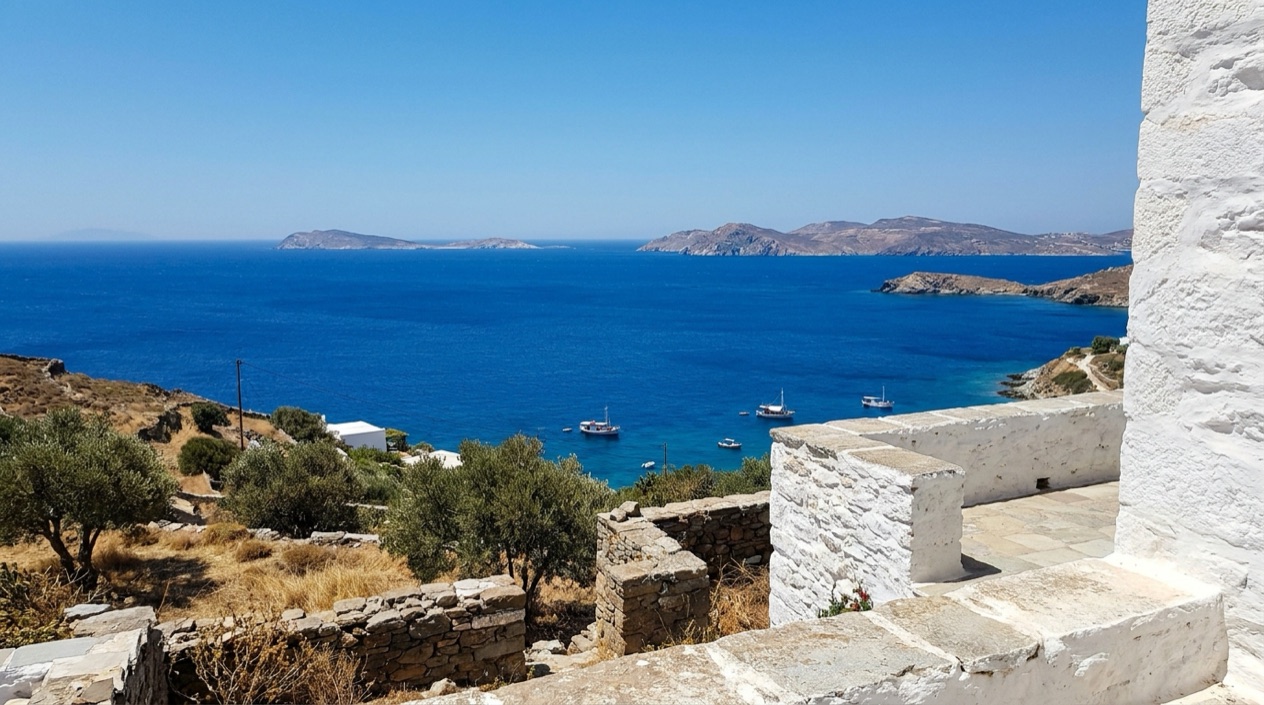
Is 10 Days enough for Greece?
Ten days is enough for one well-chosen slice of Greece: the capital and four Cycladic islands, with time to sit down at each stop. It is not enough for the whole country, and the route does not try. It leaves out Crete, the Ionian islands, Meteora, Delphi and the Peloponnese, each of which deserves a trip of its own.
The plan begins in Athens, where the ancient and the everyday sit side by side. From there you travel by sea to Paros, which sits in the center of the Cyclades. Naxos comes next, then Mykonos, then Santorini, the southernmost of the group. Each island has a different character, so the days do not blur into one another.
Paros is known for its marble, which was used in sculpture and architecture during the classical period, including for Praxiteles’ Hermes and the Venus de Milo. Naxos is the largest and most fertile island of the Cyclades, and Zas, its highest mountain, is the highest in the whole group.
Mykonos goes by the nickname island of the winds. Santorini was known in ancient times as Thera and has an active volcano, with a caldera where visitors can stay.
The trade-off is simple. Four islands in ten days means several sea crossings, and each one takes a slice of the day. If you would rather unpack once and stay put, cut the route down to Athens and two islands and let the days breathe. The section on adapting the route shows how.
The route also suits the autumn. The best time to visit Mykonos is mid-May through June or September through mid-October, while July and August are extremely crowded there. That makes this itinerary a natural fit for early fall, when the days are still warm and the islands are not at full summer volume.
For first-timers, this is the classic shape of a Greek vacation: one big city of ancient stones, then the islands for the sea, the food and the long lunches. You come home with a feel for how different the Aegean places can be. You also come home with a list of what to see on the next trip.
The itinerary stage by stage
Days 1 to 3: Athens
Three days is the right measure for Athens. Spend the first on the ancient center, with the Acropolis and the Parthenon above the city and the Agora spread out below. Spend the second on the museums and the old streets. Keep the third for a slower look at the neighborhoods, with coffee at a kafenio (a traditional Greek coffee house) and a long lunch.
The Plaka neighborhood is a top attraction, with picturesque streets, historic landmarks and lively shops, but it gets crowded. Walk it, eat a souvlaki (grilled meat on a skewer) or a gyros (meat shaved from a spit and wrapped in pita), and then move on to the quieter corners of the city. Evenings suit a taverna dinner of meze, the small shared plates that make up a Greek meal, with a glass of ouzo or local wine.
Sleep in the center, where you can reach the sights and the metro on foot. The Athens Metro runs from early morning until just after midnight, and lines 2 and 3 stay open later on Friday and Saturday nights. On the city buses, passengers cannot use the front door to get on or off. At the end of day three you travel from Piraeus, the port of Athens, to the islands.
Days 4 and 5: Paros
Paros is in the center of the Cyclades and is one of the most popular holiday destinations in Greece. It lies about 93 miles southeast of Piraeus, and ferries and highspeed catamaran services run daily from Athens to the island. Arrive, drop your bags and walk down to the harbor town for a first dinner of grilled octopus, tomatoes and feta.
Wander the lanes of the old town, look for the marble that made the island’s name, and stop at a bakery for something sweet and honeyed. The island has many beaches along its coast. Pick one for a swim and a long lunch under a canopy at a seaside taverna.
Stay in the main harbor town or in a village near a beach. Paros is one of the largest islands of the Cyclades, with a coastline long enough to give you plenty of choice. On the morning of day six you continue by sea to Naxos.
Days 6 and 7: Naxos
Naxos is the largest island in the Cyclades, with an area of 170 square miles, and also the most fertile. That shows on the table: potatoes, cheeses, olives, citron liqueur and meat from local farms all appear on menus. The port at Chora is too small for cruise ships, which keeps the arrival simple and the town in scale.
Spend day six in Chora, the island’s main town, with its old lanes, its harbor front and its waterfront restaurants. Order a meze spread and let the afternoon pass over coffee. In the evening, stroll the harbor and look for a table where the grill is going and the plates come out in no hurry.
On day seven, leave the town and look at the island itself. Zas is the highest mountain of the Cyclades, and the interior of Naxos, with its villages and farmland, is a different world from the coast. Choose between a drive through the villages and a beach day, and keep the evening free to pack for the next crossing.
Day 8: Mykonos
Mykonos lies in the heart of the Cyclades, between Tinos, Syros, Paros and Naxos, and is nicknamed the island of the winds. For a single day, the plan is simple: reach the island by sea, drop your bags, and spend the hours in the main town and on one beach. The town is a maze of lanes that reward wandering without a map.
Eat seafood at the waterfront, then walk the lanes to the shops and galleries. Mykonos is known for its nightlife, and a drink at sunset suits the island well, although you can just as easily skip the bars and have dinner early. The island rises to a high point of 1,119 feet, and from its ridges you see how the Aegean opens out in every direction.
In early fall the island is calmer than in the summer months, when July and August are extremely crowded. That is part of the reason this itinerary is built for autumn. Spend the night, then continue by sea to Santorini the next morning.
Days 9 and 10: Santorini
Santorini is the southernmost of the Cyclades and the largest island of a small, circular archipelago formed by the caldera. It lies about 120 miles southeast of the mainland. Its volcano is a wild natural wonder, and visitors can stay on the caldera rim, where the rooms face the open water and the crater.
Spend day nine looking at the caldera from the villages along its edge, and take a walk along the rim. Order local dishes such as fava (a puree of yellow split peas), small tomato fritters and fresh fish. Later, sit down for dinner with a glass of the island’s wine, which is grown in volcanic soil.
On day ten, go to the volcano itself if you want to see the crater up close, or take a last slow walk in the villages and shop for a bottle of wine or a jar of capers. Your departure depends on your onward plans, so leave the last hours loose. The ancient name of the island was Thera, and it still appears on signs and maps around Santorini.
Getting between stops
| Leg | How |
|---|---|
| Athens (Piraeus) to Paros | Ferry or highspeed catamaran |
| Paros to Naxos | By sea |
| Naxos to Mykonos | By sea |
| Mykonos to Santorini | By sea |
The sea is the thread of this route. Paros is served by ferries and highspeed catamarans from Piraeus, and the island also has links with other Cyclades and with Heraklion on Crete. The other legs of the trip are written simply by sea, since they join islands that lie close together in the middle of the Aegean.
Several companies work these waters. Blue Star Ferries provides services between the Greek mainland and the Aegean islands and serves more than 20 destinations in Greece. Golden Star Ferries, headquartered in Andros, operates from the mainland to the Cyclades. ANEK Lines runs mainly on the Piraeus to Crete and Adriatic routes, so it matters for a later trip to Crete rather than for this one.
In Athens itself, you will use the metro and your feet. The metro reaches much of the city, and it runs later on Friday and Saturday nights on lines 2 and 3. On the islands, each stage of the route is built around the town where you sleep and the beaches or villages near it.
The route runs in one direction, from the capital out through the Cyclades and down to Santorini. That keeps each leg simple and gives every island its own full stay. Your last day depends on where you fly or sail next, so check it against your onward ticket before you settle the rest of the plan.
What to book before your 10 Days in Greece
Start with the sea legs, since the whole route depends on them: Paros has ferries and highspeed catamaran services from Piraeus, and the other islands are joined by sea in turn. Then settle your rooms in Athens and Santorini, where you want to sleep in a particular area, such as the center of the capital or the caldera. If you travel in July or August, remember that Mykonos is extremely crowded, so that stop is the one to plan most carefully.
Adapting the route
The route bends to the season. The Athens figures show how the weather changes through the year, and they apply to Athens only, not to the islands.
| Month | Average high (°F) | Average low (°F) | Precipitation (in) | Days with rain |
|---|---|---|---|---|
| January | 56.3 | 44.4 | 2.17 | 7.5 |
| April | 68.4 | 53.2 | 1.10 | 5.5 |
| July | 91.8 | 74.1 | 0.28 | 1.6 |
| October | 75.2 | 61.0 | 1.09 | 3.9 |
By season
That makes it a good moment for the city’s open-air sights, and the islands are in their calmer weeks. Mykonos in particular is best from September through mid-October, and the same window opens again from mid-May through June.
July in Athens is hot, with very little rain. Pack sun protection, and plan the outdoor sights of the capital with the heat in mind. On the islands, July and August bring crowds, and Mykonos is extremely crowded at that time.
In January, Athens is cool and wetter than in summer, so a rain jacket and warm layers belong in the bag. April sits between the two, with mild highs and a few rainy days. In the cooler months, spend more of the trip in Athens and the museums and less on the islands.
Shorter, longer or slower
For a shorter trip, drop Mykonos and give the days to Naxos and Santorini. The route then reads as Athens, Paros, Naxos and Santorini, with one fewer crossing and one more evening at each stop. You lose the town of Mykonos, but you gain time.
For a slower trip, cut it down further to Athens and two islands, for example Paros and Naxos. These are large enough to fill several days, since Naxos covers a wide area and Paros has a long coastline. You unpack twice instead of five times, and the island days stop feeling like a schedule.
With more time, the route extends naturally to Crete, the largest Greek island, which lies at the southern edge of the Aegean. Ferries run to Crete from Piraeus, and Paros also has a link with Heraklion. Keep Crete for a trip of its own rather than squeezing it onto this one.
With children and for families
With children, the sea legs are the part that needs thought, so give each island at least two nights where you can. Paros and Naxos, with their beaches and their harbor towns, suit the pace of a family trip, and a beach day is built into each. In Athens, split the sights across the days rather than packing them together.
Santorini works as the finale with older children, who will enjoy the volcano. Save it for the end and keep the last day loose. Meals are easy to share, since meze plates come to the table for everyone to pick from.
Good to know before you go
The euro is the money of Greece, and the cities and islands on this route work in it. Athens is the place to buy anything you forgot, so pack your sun protection and your rain jacket before you leave. In the Cyclades, the island of the winds is not the only place where the breeze can change the feel of a day, so keep a light layer within reach on the ferry decks.
Sources
- Wikipedia, Ancient Greece (https://en.wikipedia.org/wiki/Ancient_Greece), checked October 12, 2026
- Wikipedia, ANEK Lines (https://en.wikipedia.org/wiki/ANEK_Lines), checked October 12, 2026
- Wikipedia, Blue Star Ferries (https://en.wikipedia.org/wiki/Blue_Star_Ferries), checked October 12, 2026
- Wikipedia, Fast Ferries (https://en.wikipedia.org/wiki/Fast_Ferries), checked October 12, 2026
- Wikipedia, Golden Star Ferries (https://en.wikipedia.org/wiki/Golden_Star_Ferries), checked October 12, 2026
- Wikipedia, Greek islands (https://en.wikipedia.org/wiki/Greek_islands), checked October 12, 2026
- OASA, Athens urban transport (https://www.oasa.gr/en/), checked October 12, 2026
- Athens Transport, public transport guide (https://www.athenstransport.com/english/), checked October 12, 2026
- This is Athens, the official Athens tourism site (https://www.thisisathens.org/), checked October 12, 2026
- Santorini official guide (https://www.santorini.gr/), checked October 12, 2026
- Visit Greece (GNTO), Santorini (https://www.visitgreece.gr/islands/cyclades/santorini/), checked October 12, 2026
- Wikipedia, Santorini (https://en.wikipedia.org/wiki/Santorini), checked October 12, 2026
- Visit Greece (GNTO), Mykonos (https://www.visitgreece.gr/islands/cyclades/mykonos/), checked October 12, 2026
- Wikipedia, Mykonos (https://en.wikipedia.org/wiki/Mykonos), checked October 12, 2026
- Wikivoyage, Mykonos (https://en.wikivoyage.org/wiki/Mykonos), checked October 12, 2026
- Visit Greece (GNTO), Naxos (https://www.visitgreece.gr/islands/cyclades/naxos/), checked October 12, 2026
- Wikipedia, Naxos (https://en.wikipedia.org/wiki/Naxos), checked October 12, 2026
- Wikivoyage, Naxos (https://en.wikivoyage.org/wiki/Naxos), checked October 12, 2026
- Visit Greece (GNTO), Paros (https://www.visitgreece.gr/islands/cyclades/paros/), checked October 12, 2026
- Wikipedia, Paros (https://en.wikipedia.org/wiki/Paros), checked October 12, 2026
- Wikivoyage, Paros (https://en.wikivoyage.org/wiki/Paros), checked October 12, 2026
- Hellenic National Meteorological Service (HNMS), climatological normals 1991-2020 for Elliniko station (https://www.emy.gr/climatic-data), monthly mean daily maximum and minimum; rain from the ECMWF ERA5 reanalysis, 1991-2020, grid cell of Athens (Open-Meteo), checked October 12, 2026
- ECMWF ERA5 reanalysis 1991-2020, grid cell of Athens (Open-Meteo), checked October 12, 2026
- Plan de the (duree choisie by the redaction)