
ORLANDO · FEBRUARY · THE MONTH-BY-MONTH FILE
February is the month Orlando stops arguing with you. Afternoons average 74.9 °F, dawns 52.4 °F, and the rain gauge at the airport collects barely two inches across four weeks. The parks still run their full machinery, the springs north of the city still push out water in the mid-70s, and nobody is queuing in a heat index.
What the month takes away is evening warmth and long light: the sun is down by 6:16 p.m. in mid-February, and the thermometer starts falling toward the low 50s while you are still walking to dinner. What it hands back is the winter manatee season at the springs and a calendar sitting entirely outside the Atlantic hurricane season.
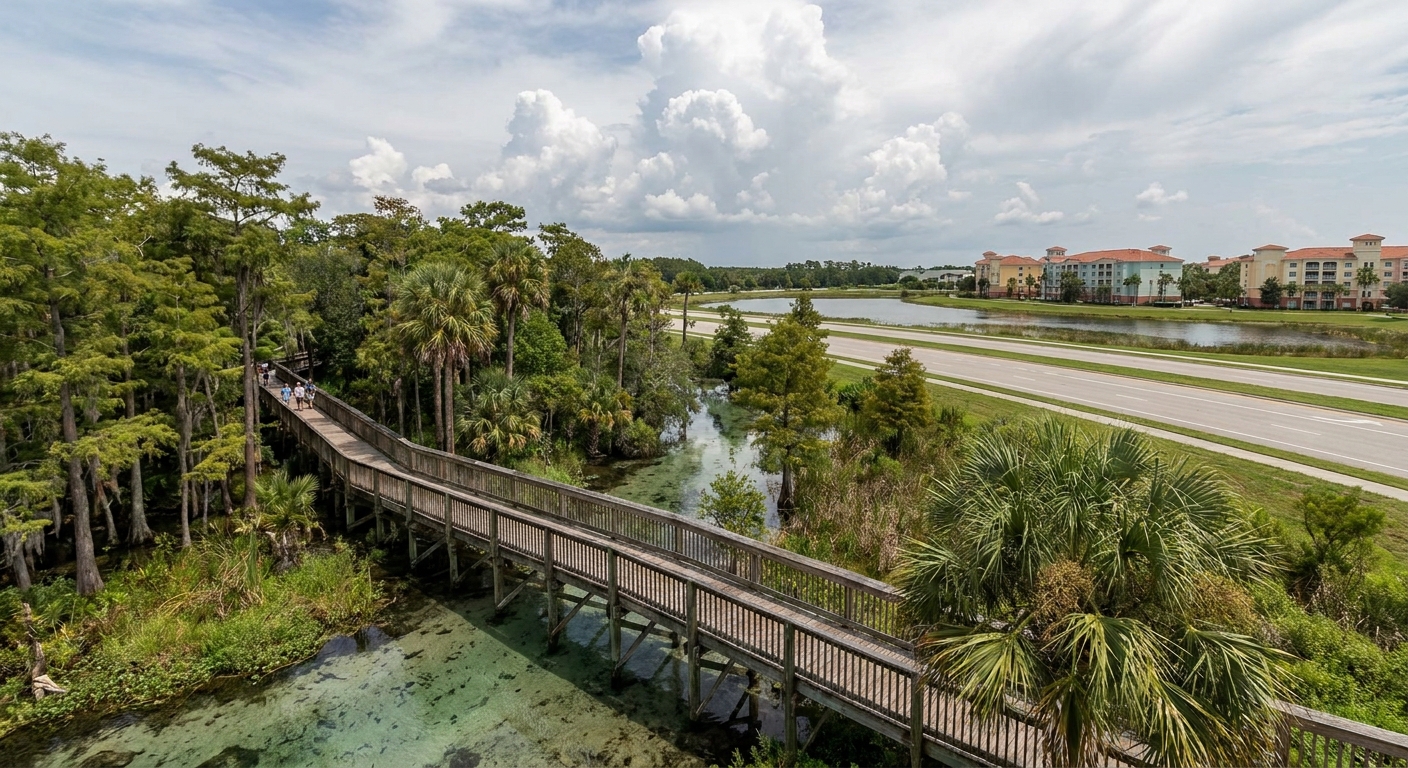
FEBRUARY AT A GLANCE · ORLANDO
February is Orlando’s cool, dry slot: 74.9 °F afternoons, 52.4 °F dawns, 3.8 rain days, manatees at the springs, and none of March’s school-holiday crush inside the parks.
NOAA 1991-2020 NORMALS · STATION USW00012815 AT MCO · OUTSIDE HURRICANE SEASON
Go for: spring mornings with the water at 75.6 °F (USGS, Sep 11, 2026), park queues without heat, 11 hours 14 minutes of daylight, and a month outside hurricane season.
Think twice before: counting on pool weather or warm evenings: dawns average 52.4 °F and the sun sets at 6:16 p.m. on February 15.
Climate: NOAA NCEI 1991-2020, station USW00012815 · Springs: USGS NWIS · Tax: Florida DOR DR-15TDT · full sources at the end
On this page
- Orlando weather in February74.9 °F highs, 2.04 in of rain, 3.8 rain days
- How cold do February nights get?52.4 °F lows, 0.2 freezing nights
- Crowds and prices in February12% on the room, LYNX at $2.00, March’s holidays
- Things to do in Orlando in FebruaryWekiwa, Rock Springs, Blue Spring, Silver Springs
- A two-day plan for FebruarySunrise 7:02 a.m., sunset 6:16 p.m.
- February vs January and March71.8 °F, 74.9 °F, 78.9 °F side by side
- Is February a good time to visit?Yes for springs and walking, no for pool swimming
Every figure here is either a 1991-2020 normal from the NOAA gauge at Orlando International Airport or a dated instrument reading, and both kinds are named where they appear. No theme-park ticket amount is printed anywhere: Disney and Universal price by date, so that number belongs to the operator on the day you book. For the wider calendar, Florida month by month sets February inside the dry season, and January and March have pages of their own.
Orlando weather in February: average highs, lows and rain days
| February at Orlando International | Normal, 1991-2020 |
|---|---|
| Average high | 74.9 °F (23.8 °C) |
| Average low | 52.4 °F (11.3 °C) |
| Precipitation | 2.04 in |
| Days with 0.10 in or more | 3.8 |
| Days with 1 in or more | 0.5 |
| Nights at 32 °F or below | 0.2 |
| Daylight on February 15 | 11 hr 14 min |
Those normals come from station USW00012815, the NOAA thermometer at Orlando International Airport, in NCEI’s 1991-2020 monthly series: average high 74.9 °F, average low 52.4 °F, 2.04 inches of precipitation across the month. A station normal is a real instrument standing on the southeast side of the metro, not a reanalysis grid cell smoothed across a hundred miles, and the difference shows up when another site quotes you a different low for the same city. February also sits well outside the Atlantic hurricane season, which NOAA’s National Hurricane Center dates June 1 to November 30.
Measurable rain reaches the gauge on 3.8 days in an average February, roughly one day in eight, and it seldom takes the whole day with it. An inch or more in twenty-four hours shows up 0.5 times a month, so about one February in two gets a genuine soaking at all. Plan the indoor hour, not the indoor day.
22.5 °F separate the average afternoon from the average dawn, and that spread is what the suitcase has to answer. A fleece or a light jacket covers the 7 a.m. queue and the walk back after dark, short sleeves handle 2 p.m., and a heavy coat stays home unless 52 °F genuinely bothers you. In a park line a rain shell beats an umbrella.
On February 15 Orlando gets 11 hours 14 minutes of daylight, sunrise at 7:02 a.m. and sunset at 6:16 p.m. Eastern time, the zone the city keeps because it sits east of the Apalachicola River. With the light gone by a quarter past six, the springs run on a morning and early-afternoon schedule, and the evening goes to whatever has floodlights.
How warm is Orlando in February? Day 74.9 °F, night 52.4 °F
74.9 °F by day, 52.4 °F by night, 22.5 °F between them: that is the month in three numbers, and all three are thirty-year averages rather than a forecast for your week. A cold front can hold an afternoon near the average dawn figure, and a run of southerly air can do the reverse. Normals describe the shape of February, not the day your flight lands.
Mornings dress like a different city than afternoons. At 7 a.m., 52 °F and damp air want long sleeves and something with a zipper, and by early afternoon the same body is carrying that layer in a bag. Pack layers that compress, and add water shoes if a spring is on the list: Wekiwa Springs has 325 parking spaces and one designated swimming area, so the swim is a single stretch of water, not a shoreline to roam.
Freezing is close to a rounding error, at 0.2 nights per average February at or below 32 °F, which works out to one such night about every five years at the airport gauge. Frost is not the February problem in Orlando. A hotel pool temperature is something we cannot give you, because no gauge publishes one: the instrument readings we hold are from springs, and they are named further on.
How busy is Orlando in February? Crowds, the 12% lodging tax and March’s school holidays
February falls between two crowd events it does not belong to: the winter holidays behind it, and March, when family school holidays fill the Orlando theme parks while college spring break lands mostly on the beach towns instead. There is no single spring break week, since university calendars spread across the month. Our sources hold no monthly room-rate series for Orlando, so February gets no crown here as the year’s cheapest month.
Booking behavior in Orlando follows the parks rather than the weather, so the pressure sits on park days and hotel nights inside the resort bubbles. Four to six weeks of lead time (est.) is the working figure we use for a February park week, and it is editorial, not measured. Coming up from South Florida, Brightline covers the 235 miles from Miami to Orlando in about three and a half hours, with departures roughly every two hours and fares that move by date and class, so no amount appears here. Transfers and rental logic live in getting around Florida.
Orange County, which contains both the city and the parks, levies a 6.0% transient rental tax, filed and paid alongside the 6% state sales tax on the Florida Department of Revenue’s DR-15TDT form. The two together put 12% on the room rate before any resort fee or parking line reaches the folio. Ticket prices for Disney and Universal are deliberately absent from our sources: both price dynamically by date, and a figure written in September is wrong by February. Budget shape for the wider state sits in what a Florida trip costs.
Wheels are the one line where spending more changes the month. A single LYNX ride costs $2.00, or $1.00 at the discount fare, a transfer is free, and the All-Day Pass is $4.50 and runs from 4:00 a.m. on the day of issue until 3:00 a.m. the next morning, but LYNX prints it in capitals: ask the operator for the pass before any money goes into the farebox. The network serves Orange, Seminole and Osceola counties. SunRail’s own schedule page names no airport station and no park station, so a cold-morning run to a spring means a car or a rideshare.
Things to do in Orlando in February: springs, manatees and boardwalks
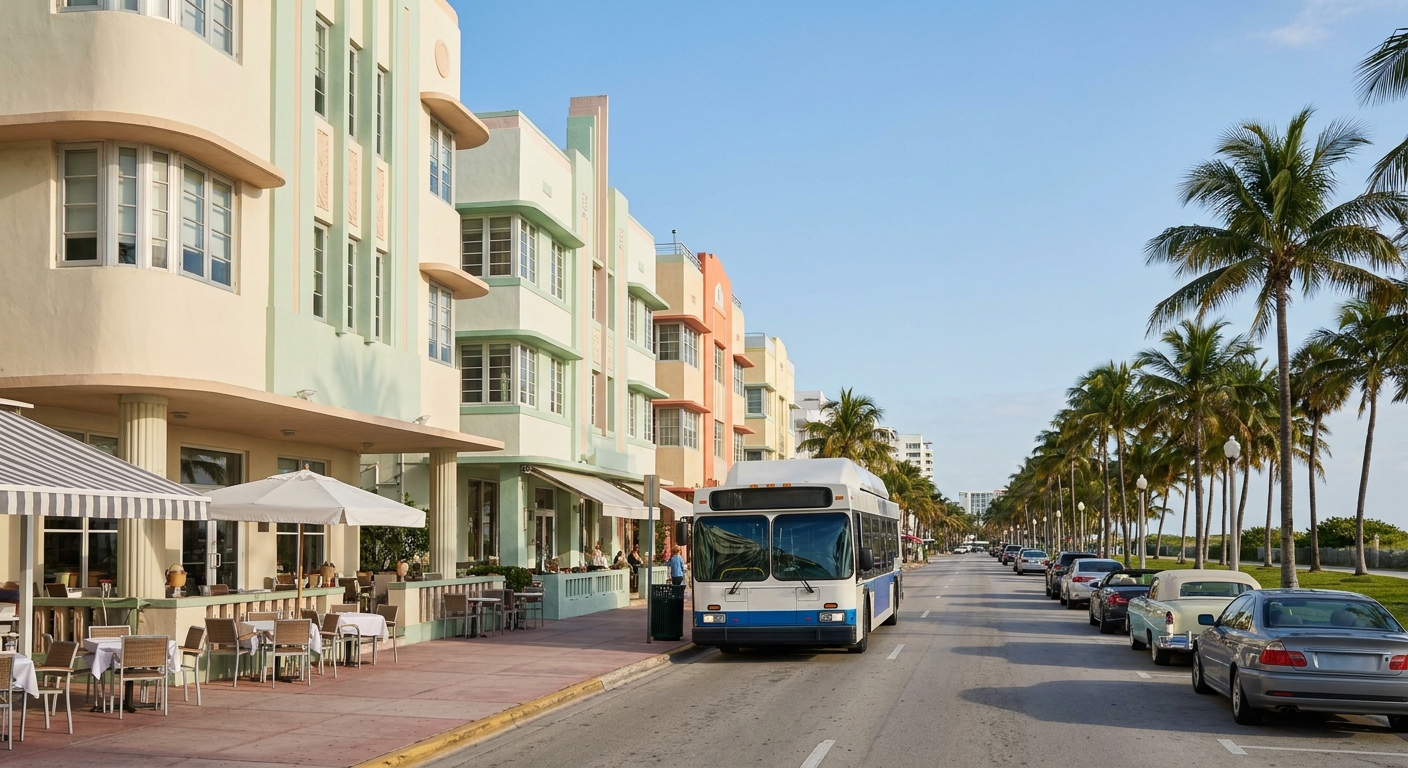
Manatees are the February argument. They crowd into and around the springs in the winter months because water discharging from the Upper Floridan aquifer stays relatively warm, a mechanism the Southwest Florida Water Management District spells out in its springs hydrology report: the spring has not warmed, the river around it has cooled. We verified no manatee count for any individual spring, so no number of animals is promised here. If the animals are the reason for the trip, the manatee guide handles the how.
Blue Spring State Park, the winter manatee spring, counts 187 parking spaces, 3,050 feet of boardwalk, three observation platforms and six cabins, and that boardwalk is the longest at any Florida spring park in the state’s 2024 facilities inventory. Wekiwa Springs State Park, the closest spring to the city, has 325 parking spaces, one designated swimming area, one canoe, kayak and tube launch, 15.9 miles of paddling trail, 13.7 miles of hiking trail and 1,435 feet of boardwalk. Rock Springs at Kelly Park runs the tubing north of Orlando. Silver Springs, the glass-bottom-boat park, dwarfs all of them at 1,686 spaces and three launches.
The USGS gauge at Wekiwa Springs read 75.6 °F on September 11, 2026, with Rock Springs at 75.0 °F the same day and Blue Spring at 74.3 °F and 168 cubic feet per second, and those readings hold their level whatever the month. February’s average afternoon is 74.9 °F, which puts the spring a shade above the air at its daily best and about 23 °F above the 52.4 °F dawn. That gap is the whole season: in August the swim is relief, in February it is the warmest water available at 8 a.m.
Free things are thin in our sources for this month, and inventing them is worse than saying so. The one free line we hold is the LYNX transfer, which costs nothing between buses. State park entrance fees and opening hours we could not read at all: floridastateparks.org returns a 403 to our requests and fees vary by park and season, so check the amount with the park before you drive out.
Orlando in February: two-day itinerary and daylight hours
Day one starts at a spring. Sunrise is 7:02 a.m. in mid-February and Wekiwa’s 325 spaces fill on clear weekends, so aim to be parked by 9 with the fleece you will stop wearing around 11. Swim first, then paddle a piece of the 15.9-mile trail, then eat late. Early afternoon is the warmest slice of a 74.9 °F day, the right window for downtown on foot or a first park afternoon, with the light gone at 6:16 p.m.
Day two belongs to the parks, and the gate is the cold part: a 7 a.m. opening at 52 °F needs the jacket that will live in a bag by lunch. If the sky turns, and 3.8 days in an average February bring measurable rain, move the spring plan rather than the park plan, since a covered queue beats a boardwalk in a squall. Blue Spring’s 3,050 feet of boardwalk and three observation platforms still work in drizzle. So does Wekiwa’s 1,435-foot boardwalk, with the swim postponed. Families can cross-check the ages and the pacing in Florida with kids.
Orlando in February vs January and March
| Normal, 1991-2020 | January | February | March |
|---|---|---|---|
| Average high | 71.8 °F | 74.9 °F | 78.9 °F |
| Average low | 49.5 °F | 52.4 °F | 55.8 °F |
| Precipitation | 2.48 in | 2.04 in | 3.03 in |
| Days with 0.10 in or more | 4.0 | 3.8 | 4.0 |
Across the three months the gauge at Orlando International climbs steadily: 71.8 °F highs in January, 74.9 in February, 78.9 in March, with lows at 49.5, 52.4 and 55.8. February is the driest of the trio at 2.04 inches against January’s 2.48 and March’s 3.03, and it logs 3.8 days of measurable rain against 4.0 in each neighbor. Spring water does not join the trend: Wekiwa’s 75.6 °F reading of September 11, 2026 is the same number in any of these months, so what changes over the winter is the air you step out into.
Shift four weeks later and you buy 4.0 °F on the afternoon and 3.4 °F on the night, paying for it with nearly an inch more rain and the family school holidays that March puts inside the Orlando parks. Shift four weeks earlier and January hands back 3.1 °F of afternoon warmth while adding 0.44 inch of rain, a trade that loses on both counts. The full neighbor files are Orlando in January and Orlando in March.
Is February a good time to visit Orlando?
For a trip built on walking, queuing and spring water, February works: 74.9 °F afternoons, 3.8 rain days, a calendar outside hurricane season, and manatees gathered at the springs. It is the wrong month for travelers who want a hotel pool to feel like July, or who plan their days around warm evenings, because the light quits at 6:16 p.m. and the thermometer heads for 52.4 °F after that.
When that verdict lands on the wrong side, March is the month to take instead, at 78.9 °F highs and 55.8 °F lows, on condition you accept 3.03 inches of rain and school-holiday families inside the parks. Anyone with no school calendar to obey should keep February and leave March to the crowd it already has.
No other month in this trio puts a 74.9 °F afternoon, a 75.6 °F spring and a hurricane-free week in the same trip before the March holidays land.
The last word
Book February for the springs and keep the parks as your indoor option, in that order, and the month delivers what it has. One number to settle the arrival: MCO boarded 27,859,783 passengers in calendar year 2024, the busiest airport in Florida, ahead of Miami, while Sanford’s SFB boarded 1.4 million. Cheap fares often land at the smaller one, and we will not tell you how far it sits from the parks, because its own site blocks our connections and the mileage would be a guess. Ask your rental desk for the drive time before you book that flight.
Sources & data for this guide
- February, January and March normals, rain days, freeze nights · NOAA NCEI monthly normals 1991-2020, station USW00012815, Orlando International Airport · checked Sep 11, 2026
- Daylight, sunrise and sunset on February 15 (12:02 and 23:16 UTC, converted to America/New_York) · sunrise-sunset.org · checked Sep 11, 2026
- Atlantic hurricane season dates and September 10 peak · NOAA National Hurricane Center · checked Sep 11, 2026
- 6.0% Orange County transient rental tax with the 6% state sales tax · Florida Department of Revenue, form DR-15TDT · checked Sep 11, 2026
- LYNX fares, free transfer, All-Day Pass rule and validity, three-county coverage · LYNX Fares & Passes · checked Sep 11, 2026
- SunRail station list with no airport or park stop, and no fare printed on the operator’s page · sunrail.com · checked Sep 11, 2026
- Parking spaces, boardwalk lengths, launches and trail mileage at Wekiwa, Blue Spring and Silver Springs · Florida DEP Recreational Facilities Inventory, 2024 annual report · checked Sep 11, 2026
- Spring water readings of September 11, 2026 (Wekiwa 75.6 °F, Rock Springs 75.0 °F, Blue Spring 74.3 °F and 168 cfs) · USGS NWIS stations 02234600, 02234610, 02235500 · checked Sep 11, 2026
- Why manatees gather at springs in winter · Southwest Florida Water Management District, The Hydrology and Water Quality of Select Springs, 2001, revised 2011 · checked Sep 11, 2026
- MCO 27,859,783 and SFB 1.4 million boardings, CY2024 · Federal Aviation Administration · checked Sep 11, 2026
- Miami to Orlando run, 235 miles in about three and a half hours, departures roughly every two hours · gobrightline.com · checked Sep 11, 2026
- Editorial reserves: no theme-park ticket price is quoted because both operators price by date; state park hours and entrance fees could not be read (floridastateparks.org returns 403); no per-spring manatee count was verified; no mileage from SFB to the parks is given because the airport site blocks our connections · noted Sep 11, 2026