
CLEARWATER · FEBRUARY · 27.9° N
Clearwater’s February normals read 73.3°F by day and 55.1°F at night, with 2.38 inches of rain across the whole month. That is shirt sleeves at two in the afternoon and a jacket on the sand at six, on a stretch of Gulf coast where winter visitors outnumber sunburns.
The catch sits offshore. The Gulf averages 65.2°F this month against 73.1°F in March, so a February beach day here is a walking day far more often than a swimming one. Two or three nights is the natural stay, and the rest of this month’s case comes down to numbers you can check before you book.
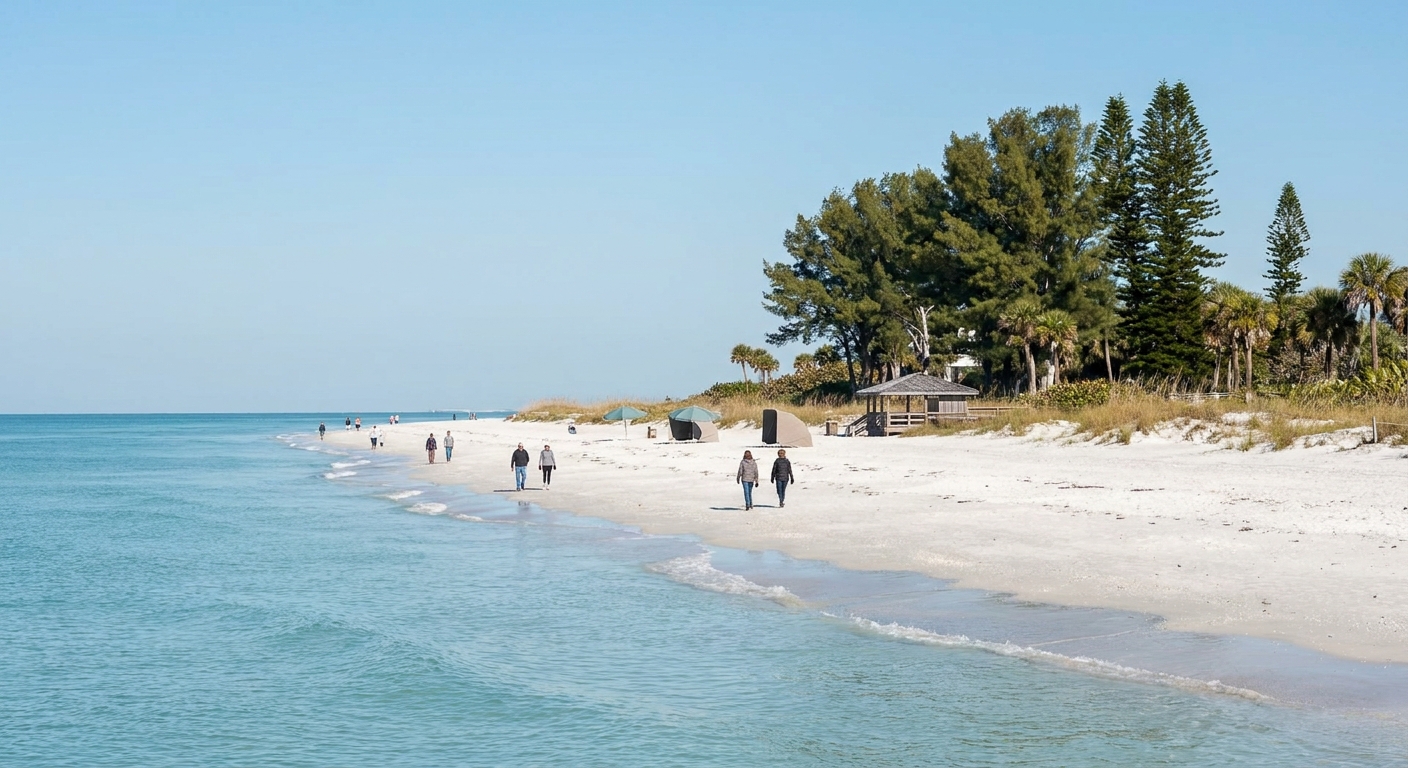
THE MONTH AT A GLANCE · CLEARWATER · FEBRUARY
February is Clearwater’s walking-beach month: 73.3°F afternoons, 3.2 wet days in an average February, and a Gulf at 65.2°F that suits waders better than swimmers.
DRY SEASON · 73.3°F DAYS · SEA 65.2°F · 11H15 OF DAYLIGHT
Go for: long exposed walking on Honeymoon Island’s 4 miles of beach and 3.4 miles of trail, 2.38 inches of rain for the month, and a 6:23 pm sunset with no afternoon storm in the way.
Think twice before: booking a swim-first trip. The Gulf averages 65.2°F in February and 73.1°F four weeks later in March.
Air normals: NOAA NCEI station USW00012873 (PIE) · Sea: Open-Meteo Marine · Parks: Florida DEP 2024 inventory
On this page
- Clearwater weather in February73.3°F days, 55.1°F nights, 3.2 wet days
- Can you swim in the Gulf in February?65.2°F, and what that reading hides
- Crowds, lodging tax and booking lead timeThe 12% on your nightly rate
- Things to do on a February beach dayHoneymoon Island, Caladesi, Anclote Key
- A two-day plan around 11h15 of daylightDay one and day two, hour by hour
- February vs January and MarchAir, rain and water for the three months
- Is February a good time to visit Clearwater?Who it suits, who should shift dates
- Clearwater in January or March insteadThe neighboring month pages
Clearwater works as a two- or three-night beach base in winter, and the parts of the trip that do not move with the calendar live on other pages: beds in the Florida lodging guide, budgets in what a Florida trip costs, flights and airports in the flights guide, and the twelve-month view in when to visit Florida. The months on either side have their own pages: January and March.
Clearwater weather in February: average highs, lows and rain days
| Measure | February |
|---|---|
| Average high | 73.3°F |
| Average low | 55.1°F |
| Precipitation | 2.38 in |
| Days with 0.10 in or more | 3.2 |
| Days with 1 in or more | 0.5 |
| Sea surface (mean of daily maxima) | 65.2°F |
| Daylight, February 15 | 11h 15m |
Every figure here comes from one thermometer rather than a model grid cell: NOAA NCEI’s 1991-2020 monthly normals for station USW00012873, listed as ST PETERSBURG INTL AP. The gauge sits at PIE, between St. Petersburg and Clearwater, on the bay side rather than the Gulf. Clearwater Beach gets a sea breeze the airport never feels, so the difference lands on the afternoon maximum and barely touches the overnight 55.1°F. Read 73.3°F as the inland reading and expect the beach afternoon to sit slightly off it when the breeze is on.
Rain arrives on 3.2 days in an average February, counting days of 0.10 inch or more: measurable wet about one day in nine. Days of a full inch or more run at 0.5, so a genuine soaking shows up in roughly one February out of two. The month’s total is 2.38 inches. What that means at ground level is a wet morning or a wet hour rather than a lost day, and the sand at Honeymoon Island stays walkable between the showers.
Between the 73.3°F afternoon and the 55.1°F night sits 18.2 degrees of swing, and it falls across the two hours most people want to be outdoors: first light and sunset. Pack for both ends. A long-sleeve layer and a windbreaker for the 7 am walk and the evening on the sand, closed shoes for 3.4 miles of trail, swimwear you accept may stay dry, and nothing heavier. Bay-side mornings can feel cooler than the beach until the sun is up.
February 15 brings 11 hours 15 minutes of daylight, sunrise at 7:07 am and sunset at 6:23 pm Eastern, converted from the 12:07 and 23:23 UTC times published by sunrise-sunset.org. Dark comes quickly afterward. Ferry returns, trail loops and the drive back over the causeway all want to be finished by six, and a 7 pm dinner reservation is an indoor dinner reservation this month.
Can you swim in Clearwater in February? Sea temperature and what it feels like
Sea surface off Clearwater averages 65.2°F in February in the Open-Meteo Marine record for 2015-2024. One caveat travels with that number: it is a mean of daily maxima, so it reads a shade warmer than a true 24-hour average of the same water. It also comes from a different source and a different period than the air normals above, a marine model rather than the thermometer at PIE, and the two should not be quoted as one dataset.
At 65°F the Gulf is swimmable for people who swim cold at home and uncomfortable for almost everyone else. Adults go in, shout, and come out. Children last less. Most February visitors wade, chase shells along the waterline, and save the real swim for a heated pool, so ask the property whether the pool is heated before you book rather than after you arrive. A rash guard or a thin neoprene top changes the calculation more than willpower does.
Wind and swell for February off Clearwater are not in the data we were able to read, so no figure goes here. Check a marine forecast the morning you go, especially before committing to a boat crossing. The same gap covers ferry and bus fares around the bay: operator pages either returned errors or rendered only in a browser when we tried them on September 11, 2026.
How busy is Clearwater in February? Crowds, lodging tax and when to book
February sits squarely inside Florida’s dry season, November through April, the stretch that fills Gulf beach towns with winter visitors and snowbird plates. Where we stop is the price ranking: no monthly occupancy or room-rate series for Pinellas County was readable, so nothing here calls February the cheapest or the dearest month. One calendar fact does apply: the spring-break wave that defines March on these beaches has not yet landed.
Book the room before the flight. Gulf-front inventory in a beach town of this size is thin in winter, and weekends move first, so four to eight weeks out (est.) is a sane target for a February Friday and Saturday. Midweek nights hold longer. If the trip includes a Caladesi crossing, confirm the ferry schedule the same week you confirm the room, because the boat, not the beach, sets that day’s shape.
Pinellas County levies a 6.0% transient rental tax on every night booked, collected alongside the 6% state sales tax. That is 12% on top of the nightly rate you were quoted, and it arrives before any resort fee. A resort fee is set by the property itself and is not a tax, so it stacks separately. Park entrance fees and bus fares are the one line we could not verify at all, and we name no amount rather than print a guess.
Only one upgrade genuinely changes February here, and it is the Gulf-side room with a west-facing balcony. With the water at 65.2°F, the sea does less of the work than it will in March at 73.1°F, and the 6:23 pm sunset takes over as the event of the day. Paying more for a heated pool sits second on the list. Paying more for a bigger room changes nothing about the month.
Things to do in Clearwater in February: Honeymoon Island, Caladesi and Anclote Key
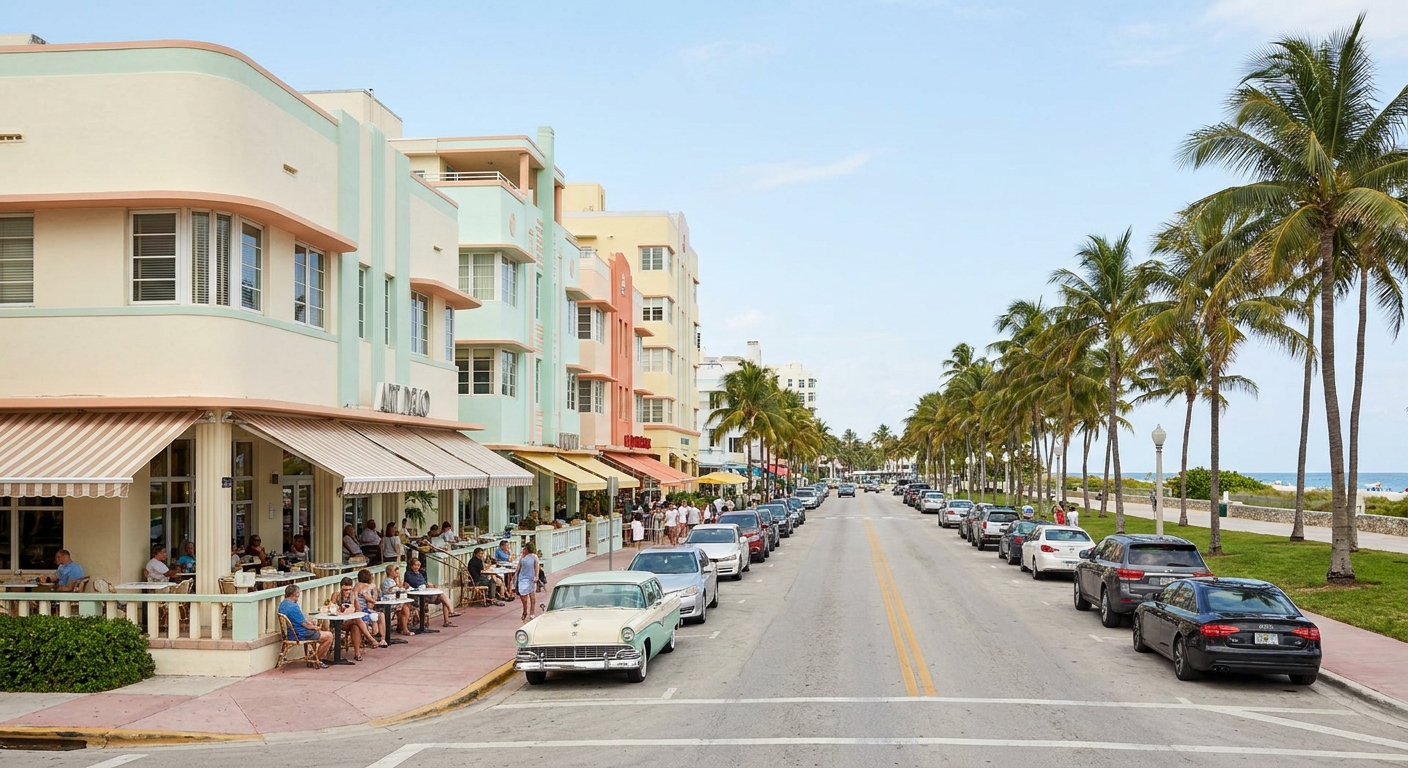
Afternoons at 73.3°F and rain on 3.2 days make February the month for the long exposed stuff: miles of open sand, unshaded trail, boardwalk over dune scrub, all of it done between breakfast and dark without a heat break. Florida’s wet season, May through October, hands the same walks a daily thunderstorm and a heat index nobody enjoys. Winter here trades the swim for the range.
Florida’s 2024 state inventory counts Honeymoon Island State Park at 2,021 parking spaces, 4 miles of beach, 3.4 miles of hiking trail, 1,671 feet of boardwalk and one designated swimming area. That is the largest parking count of any state park in the report, and it is why a clear Saturday still finds room there. Caladesi Island State Park has 3 miles of beach, 2.5 miles of trail, one kayak launch and no parking space at all: it is reached by ferry or your own boat. Anclote Key Preserve adds 6.7 miles of beach and 1,408 feet of boardwalk, also boat-only.
Those measurements hold all year. The air is the variable: 73.3°F now against 77.0°F in March, with the marine record putting the Gulf at 65.2°F this month and 73.1°F four weeks on. February therefore pushes the day onto the boardwalks, the trails and the shell line instead of into the water. A February crossing to Caladesi is three miles of sand walked in a windbreaker with the beach largely to yourself.
Entrance fees and opening hours are the piece we could not confirm, because the park pages refused to load for us on September 11, 2026, so no dollar figure and no gate time appears here. Nothing on this coast is free by default. Sunset at 6:23 pm needs no reservation, the shelling along the waterline needs no gear, and the rest wants a phone call: check fees and ferry times with the parks directly before you build a day around Caladesi.
Clearwater in February: a two-day itinerary
Day one stays on Clearwater Beach. Sunrise at 7:07 am arrives close to the 55.1°F overnight low, so the first hour wants sleeves. Walk the sand from eight to ten while it is empty and the air climbs toward 73.3°F, then eat late. Give the middle of the day to the waterline rather than the water. Drive out to Honeymoon Island by two, park among the 2,021 spaces, and take the 3.4 miles of trail while the light lasts. Be back on the beach by six for the 6:23 pm sunset.
Day two belongs to Caladesi, timed to the ferry rather than the sun, with the return boat booked well before dark: 3 miles of beach, 2.5 miles of trail, no car anywhere on the island. If the forecast turns, remember the month only carries 3.2 days at 0.10 inch or more. Swap the crossing for an indoor afternoon in St. Petersburg, the Dalí museum being the obvious one, and keep the second Gulf evening. Wet here usually means wet for a few hours.
Clearwater in February vs January and March
| Measure | January | February | March |
|---|---|---|---|
| Average high | 70.6°F | 73.3°F | 77.0°F |
| Average low | 52.5°F | 55.1°F | 59.2°F |
| Precipitation | 2.62 in | 2.38 in | 2.43 in |
| Days with 0.10 in or more | 4.5 | 3.2 | 3.2 |
| Sea surface | 61.7°F | 65.2°F | 73.1°F |
All three sets of air normals come from the same NOAA station at PIE over 1991-2020, so they compare cleanly: 70.6°F in January, 73.3°F in February, 77.0°F in March by day, with nights rising from 52.5°F to 59.2°F across the same span. Rain barely separates them, 2.62, 2.38 and 2.43 inches, though wet days fall from 4.5 in January to 3.2 in both later months. Water is where they part company. The marine record gives 61.7°F, 65.2°F and 73.1°F, a jump of 7.9 degrees in those last four weeks.
Move four weeks forward into March and you gain 3.7 degrees of afternoon air and water most people will actually swim in, and you take on Florida’s spring-break peak on the same sand. Move four weeks back into January and you give up 2.7 degrees by day and 3.5 in the sea, plus 1.3 extra wet days, in exchange for a quieter beach and a shorter afternoon.
Is February a good time to visit Clearwater?
Yes for walkers, birders, shell hunters, snowbirds and families happy with sand, a heated pool and a 73.3°F afternoon. No for anyone whose trip depends on going in the Gulf: 65.2°F as a mean of daily maxima is not the beach vacation on the brochure, and no amount of planning warms it up. Teenagers in particular will say so out loud by day two.
If the swim is the point, take March: 77.0°F air, 73.1°F water, the same 3.2 wet days, and the price of admission is the spring-break crowd described in our twelve-month Florida view. If what you want is empty sand and cool, dry walking, January costs you only 2.7 degrees by day. February is the compromise between the two, not a lesser version of either.
Nothing else in the calendar pairs afternoons under 75°F with only 3.2 wet days, which is exactly what makes the 3.4 miles of trail at Honeymoon Island a comfortable walk this month and a sweaty one later.
The last word
Book two nights, put the swimming ambitions on the March page, and spend the 11 hours 15 minutes of February daylight on beaches you can either drive to or reach by boat. One number for the arrival: PIE boarded 1,228,048 passengers in calendar year 2024, a small hub in FAA terms, sitting between St. Petersburg and Clearwater and closer to the sand than Tampa’s larger airport. That is a short transfer at the end of a winter flight, and in February it drops you straight into the walking weather.
Sources & data for this guide
- February air normals (73.3°F / 55.1°F, 2.38 in, 3.2 days at 0.10 in, 0.5 day at 1 in) · NOAA NCEI monthly normals 1991-2020, station USW00012873 “ST PETERSBURG INTL AP” · checked Sep 13, 2026
- January and March normals used in the comparison table · same NOAA NCEI series and station, 1991-2020 · checked Sep 13, 2026
- Sea surface 65.2°F for February, 61.7°F for January, 73.1°F for March, each a mean of daily maxima over 2015-2024 · Open-Meteo Marine API · checked Sep 13, 2026
- Daylight, sunrise and sunset for February 15, converted from UTC to Eastern time · sunrise-sunset.org · checked Sep 13, 2026
- Parking spaces, beach miles, trail miles and boardwalk lengths at Honeymoon Island, Caladesi Island and Anclote Key · Florida Department of Environmental Protection, Recreational Facilities Inventory, 2024 annual report · checked Sep 13, 2026
- Transient rental tax 6.0% for Pinellas County, alongside 6% state sales tax · Florida Department of Revenue, form DR-15TDT, revision 03/25 · checked Sep 13, 2026
- PIE passenger boardings, calendar year 2024 · Federal Aviation Administration · checked Sep 13, 2026
- What we could not read, and did not invent: bus and ferry fares, park entrance fees and opening hours around Clearwater. The operator pages returned errors or rendered only in a browser on Sep 11, 2026. No monthly hotel-rate series was available either, so this page ranks no month on price.