
Out past the last channel markers from Belize City, the water turns from tea-brown to glass green, and a low line of mangrove appears where the horizon should be. That is Turneffe Atoll, a ring of reef, creeks and tiny islands that belongs more to herons and rays than to people. It suits travelers who come for the water itself, with a mask, a rod or simple curiosity.
Where is Turneffe Atoll and what is it like?
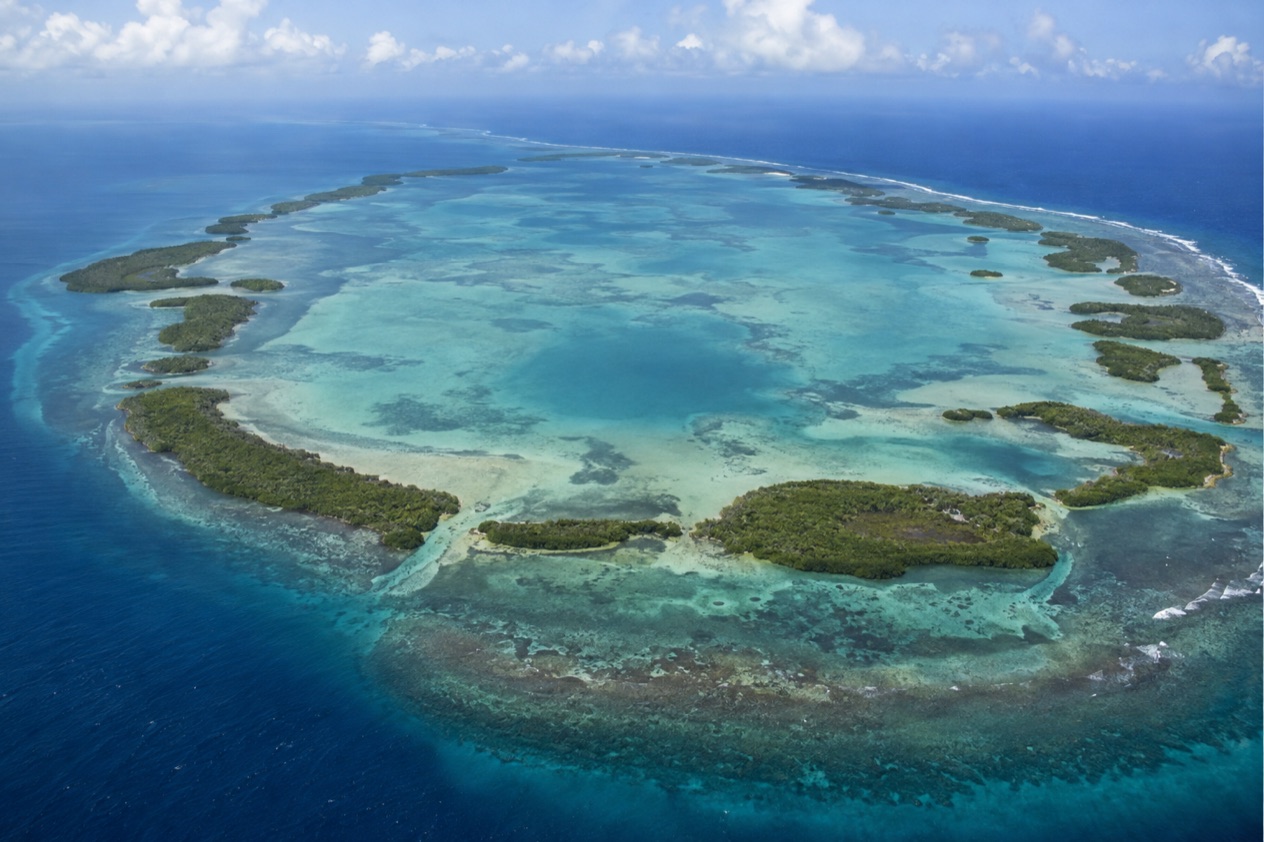
Turneffe Atoll sits off the coast of Belize in Central America, southeast of Ambergris Caye and Caye Caulker and directly east of Belize City, which makes it the nearest of the country’s three atolls to the mainland. It is the largest coral atoll in Belize and in the Mesoamerican Barrier Reef System, a wide oval of reef enclosing a shallow lagoon.
Do not expect a town. The atoll is a network of flats, creeks and lagoons dotted by more than 150 mangrove islands, with a few higher cayes where savanna and littoral forest grow. The reef, back reef flats, seagrass beds and mangroves all sit within one marine reserve, declared in 2012 and described as Belize’s largest and most biologically diverse marine reserve in the Western Hemisphere.
The pace here is set by tides and light. Days are built around the water: a morning on the reef, a slow drift along a mangrove channel, a dinner where the only sound is the wind in the palms. Anglers, divers, snorkelers, birders and anyone who likes to be far from crowds will feel at home.
It may not suit travelers who want shops, nightlife or a boardwalk of bars. Turneffe offers the opposite: space, quiet and a great deal of open sea. The Great Blue Hole sits out on Lighthouse Reef, another of the three atolls, and is its own destination.
What is there to do in Turneffe Atoll?
Nearly everything at Turneffe happens in or on the water. The atoll is part of the Belize Barrier Reef, a system that shelters 70 hard coral species, 36 soft coral species and 500 species of fish, so a mask and a patient eye go a long way.
Reef and wall life
The ocean side of the atoll is where the reef drops away and the coral formations are most varied. Sponges, sea fans, parrotfish, angelfish and the occasional turtle drift through the scene, and the sheer variety of coral is what keeps visitors coming back to the Belize reef.
Diving and snorkeling here are matters for the resorts and operators that work the atoll, who know which sites to visit on which day. Ask them what the water has been doing recently, and let them choose the spot. The reef is the headline, and the marine reserve status means the area is actively looked after by the Turneffe Atoll Sustainability Association, which co-manages it day to day.
Flats, creeks and mangroves
Inside the ring, the scenery changes completely. Shallow flats, winding creeks and lagoons stretch between mangrove islands, a quiet landscape of green roots and pale sand. This is the kind of terrain that draws fly fishermen, and also anyone who simply enjoys gliding slowly past wading birds.
The mangroves are more than scenery. They are the nursery of the atoll, sheltering young fish and other marine life that later move out to the reef. Looking down from a boat into the tangled roots, you may spot small fish, rays or a heron stalking the edge, though wildlife is always a chance rather than a promise.
Cayes and coastal forest
The higher cayes carry savanna and littoral forest, a different texture again from the mangrove.
Together, the three habitats explain what makes Turneffe different from its neighbors. Ambergris Caye and Caye Caulker are lived-in islands with streets and villages. Turneffe is a protected reserve, wilder and emptier, and it rewards people who like to look closely at nature.
How many days do you need in Turneffe Atoll?
A long weekend is enough to get a real taste of Turneffe, and a week lets you settle into its rhythm. Because the atoll is the nearest of the three to Belize City, it fits neatly onto a trip that also includes the mainland or the northern cayes.
With a few days, the plan is simple: spend them on and in the water. Mix a reef outing with time among the flats and mangroves, and leave room for doing nothing on a dock at dusk. Trying to cram in too many activities misses the point of the place.
A longer stay allows you to repeat favorite spots under different light and tides, and to try a second kind of outing, such as a day on the flats after a few on the reef. The three habitats of the atoll, reef, lagoon and forested caye, each reward a separate day.
Add other places by looking at the map. Ambergris Caye and Caye Caulker lie northwest of the atoll and make easy companions for a trip focused on the sea. Lighthouse Reef, another of Belize’s atolls, is home to the Great Blue Hole, made famous by Jacques Cousteau in 1970. Belize City, with its Swing Bridge, the only functioning, manually operated swing bridge in the world, is worth a short look before or after.
Where to stay in Turneffe Atoll
Accommodation on Turneffe means being on the atoll itself, on one of its cayes, since this is a reserve of mangroves, flats and reef rather than a town with neighborhoods.
The practical choice is between the atoll and the mainland. Staying on the atoll puts you at the reef’s edge, with the quiet that comes from being surrounded by water and mangrove. It suits divers, snorkelers, anglers and nature lovers who want to wake up already where the day’s activity begins.
Staying in Belize City or on Ambergris Caye or Caye Caulker, by contrast, puts you in a place with restaurants, shops and a steady flow of people, with Turneffe as an outing from there. That suits travelers who like a mix of settings or who are building a longer trip across several places.
Since the whole atoll is a marine reserve, the stay itself tends to be shaped by the surroundings: boats rather than cars, birdsong rather than traffic, and evenings that end early under a very dark sky. Anyone who needs a lively evening scene should look to the northern cayes instead.
How do you get to Turneffe Atoll and get around?
Turneffe Atoll is reached by sea from Belize City, which lies 20 miles to the west on the mainland coast. Belize City is the country’s principal port and its largest city, and it is the natural starting point for the crossing.
The atoll is roughly 30 miles long and 10 miles wide, so once you are there, getting around means going by boat. The lagoon, creeks and reef edge are all reached from the water, which is also how fishing, snorkeling and diving outings are run.
How do you get to Turneffe Atoll and get around? Many travelers pass through it on the way to the cayes and atolls, and it is the mainland gateway to Turneffe.
For a trip that combines the atoll with other cayes, remember that Turneffe lies southeast of Ambergris Caye and Caye Caulker, while Lighthouse Reef and Glover’s Reef are the two other atolls of the barrier reef system. Each is its own destination on the water.
When is the best time to visit Turneffe Atoll?
The atoll can be visited year-round, and its character shifts gently with the seasons. In Belize City, January highs average about 83°F with nights near 68°F, a comfortable, slightly cooler stretch that suits long days on the water.
July is hotter, with highs near 89°F in Belize City and warm nights around 77°F. Rain is part of the picture in both seasons, with about ten rain days in an average January and nearly twelve in July, so a shower is always possible on any trip.
The Atlantic hurricane season runs from June 1 to November 30, which covers the middle and later part of the year. Travelers planning in those months should keep it in mind when choosing dates. The drier-feeling, cooler winter months, from January onward, are the ones to look at first for a comfortable stay.
Good to know before you go
The U.S. State Department rates Belize Level 2, “Exercise increased caution”, because of crime, and says the south side of Belize City has historically had the highest concentration of violent crime.
Turneffe is a marine reserve, co-managed since October 2013 by the Turneffe Atoll Sustainability Association, so the atoll’s reef, mangroves and flats are protected places to be treated gently. Use reef-friendly habits in the water and follow what your operator tells you.
Most travelers begin in Belize City, the country’s largest city, and pass through it on the way to the water. Plan the mainland leg of the trip with the same care as the atoll itself, and keep the hurricane season, from June 1 to November 30, in mind when choosing your dates.
Sources
- Wikipedia, Turneffe Atoll (https://en.wikipedia.org/wiki/Turneffe_Atoll), checked October 11, 2026
- Belize Fisheries Department, Turneffe Atoll Marine Reserve (https://fisheries.gov.bz/tamr/), checked October 11, 2026
- Wikipedia, Belize Barrier Reef (https://en.wikipedia.org/wiki/Belize_Barrier_Reef), checked October 11, 2026
- Wikipedia, Belize City (https://en.wikipedia.org/wiki/Belize_City), checked October 11, 2026
- Wikipedia, Climate of Belize (https://en.wikipedia.org/wiki/Climate_of_Belize), checked October 11, 2026
- NOAA NCEI, GHCN-Daily station BHM00078583 (Philip S. W. Goldson International Airport, Belize City), normals 1991-2020 computed from the daily record (https://www.ncei.noaa.gov/access/services/data/v1?dataset=daily-summaries&stations=BHM00078583), checked October 11, 2026
- U.S. Department of State, Belize Travel Advisory, Level 2, March 11, 2026 (https://travel.state.gov/), checked October 11, 2026
- NOAA National Hurricane Center, Climatology (https://www.nhc.noaa.gov/climo/), checked October 11, 2026