
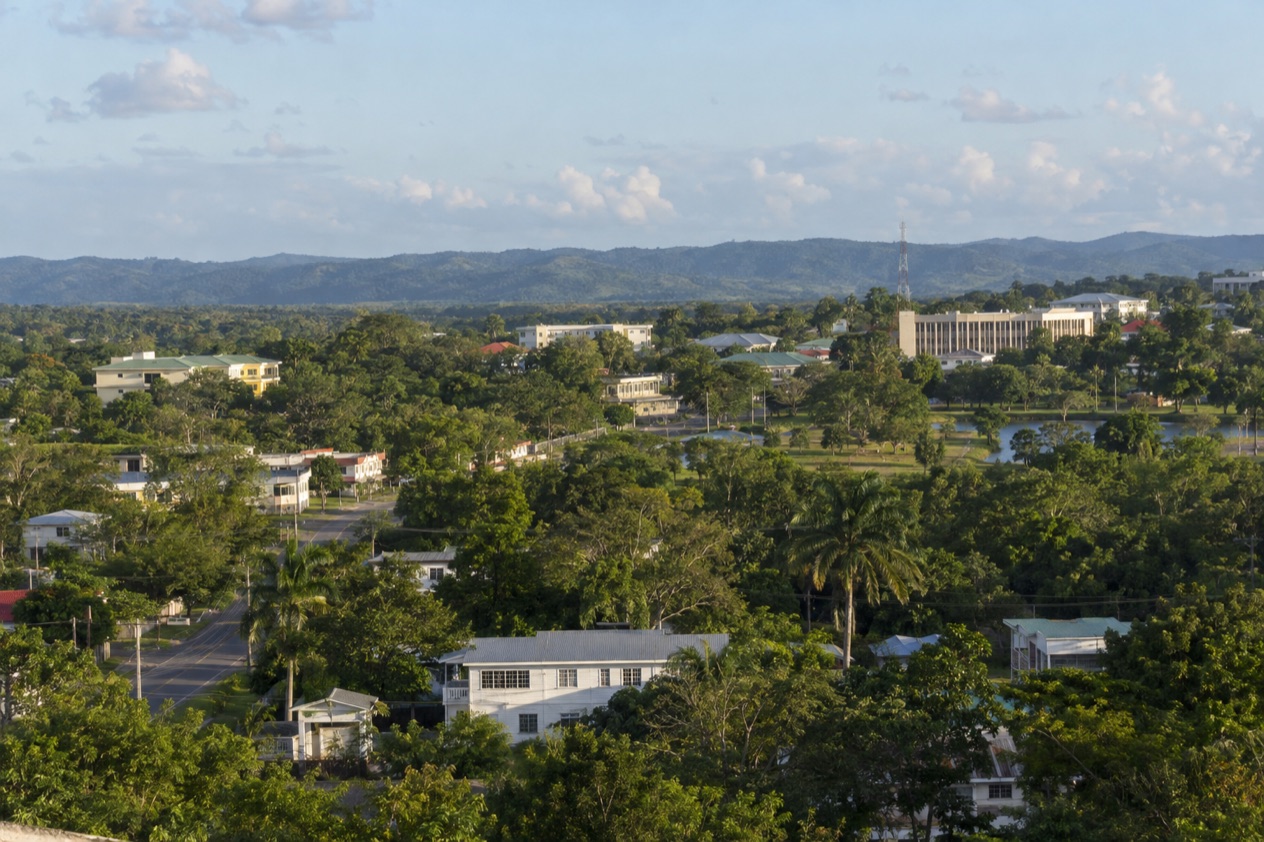
Early in the morning in Belmopan, government workers cross the wide lawns of the capital with coffee in hand, and the chatter of birds from the surrounding trees carries over the low buildings. A market stall stacks mangoes and plantains while a bus pulls out toward the west. It is a small, green, planned city, and it suits travelers who want a quiet base with caves, jungle pools and Maya ruins in reach.
What are the best things to do in Belmopan?
The best things to do in Belmopan are a mix of a few town stops and a large number of outings in the Cayo District, because the capital itself is compact and most of its pleasure lies in the forest and the hills around it. You can spend an hour with the odd architecture of a city built from scratch, then spend the rest of your stay in caves, rivers and ruins.
Think of Belmopan as a doorway. In town you see how a young country governs itself, eat Belizean home cooking in the market, and sleep somewhere quiet. Beyond town, the Hummingbird Highway runs through citrus country and forested hills, and the roads west lead to some of the most important Maya sites in the country.
- Look at the National Assembly Building, designed to echo a Pre-Columbian Maya temple, and walk the government campus around it.
- Visit St. Herman’s Blue Hole National Park for forest, caves and a jungle pool with a vivid blue color.
- Take a day to the Maya sites of the Cayo District, from Xunantunich and Cahal Pech to the deep-forest city of Caracol.
- Spend time in San Ignacio, the district capital, for its town atmosphere and its river valley.
- Eat stew chicken, rice and beans, fry jacks and Garifuna dishes in the market and in small local restaurants.
- Go to Belize City for the Museum of Belize, housed in a former prison, and for a look at the old capital.
- Learn the story of Hurricane Hattie, the storm that led to a new capital being built inland.
Each of these is developed below, with the town first, then the outdoors, then the longer trips, followed by food, evenings and the places children tend to enjoy.
Sights and landmarks in Belmopan
Belmopan’s sights are the sights of a capital that was designed on paper: broad lawns, low civic buildings, wide roads and a government campus at the center. There are no colonial cathedrals or crowded old quarters here. What you find instead is a city with a clear story, and a few buildings that reward an unhurried look.
The city sits nearer the geographic center of the country than Belize City, which is exactly why it was chosen. Its name joins Belize with the Mopan River, one of the major rivers of the Cayo District, and you feel that river country in the greenery that wraps around every block.
The National Assembly Building and the government campus
The National Assembly Building is the landmark of the city. It was designed to resemble a Pre-Columbian Maya temple, with stepped, massive lines that look more like a ceremonial platform than an office block. Seen across the open lawn in the morning light, it gives the capital a sense of place that the plain surrounding buildings do not.
Around it spreads the government campus, a cluster of ministries and offices connected by wide paths and roads. The Belmopan Bus Terminal stands toward the southwest corner of the campus, at the corner of Constitution Drive and Bliss Parade, so a walk from the terminal brings you straight into the civic heart of town.
This is a place for photographs and a slow stroll rather than an interior visit. Look for the contrast between the monumental temple lines and the small human scenes in front of them: office workers on a lunch break, students in school uniforms, vendors with coolers of cold drinks.
A capital built after a hurricane
The reason Belmopan exists is Hurricane Hattie. The storm arrived in 1961 as a Category 5 hurricane at its peak and struck Belize City, then the capital of what was British Honduras, with strong winds and a powerful storm surge. More than 70% of the buildings there were damaged and over 10,000 people were left homeless.
In the aftermath the government proposed a new capital on higher ground, inland and away from the coast. Belmopan sits about fifty miles from Belize City at an elevation of 249 feet, a modest height, but it was the idea of distance from the sea that mattered. Walking the empty-feeling avenues, you are walking through the result of that decision.
The hurricane story echoes across the country. In Stann Creek, now Dangriga, more than three quarters of the population fled to safer places before the storm struck, and the offshore reef took heavy damage, though it recovered. If you want a deeper picture of that history, the Museum of Belize in Belize City is the place to continue it.
Markets, plazas and everyday corners
Beyond the campus, Belmopan’s everyday life happens around the market and the bus terminal area. Here you see farmers selling produce, cooks serving lunch plates, and travelers changing buses on their way across the country. English is the official language of Belize, so conversation with vendors and drivers is straightforward for visitors from the United States, although you will also hear Spanish, Belizean Kriol and Maya languages.
Walk a few blocks off the main roads and you reach residential streets with small shops, church halls and schoolyards. They make a quiet portrait of a small capital. Late in the day, people gather in front of shops and on porches, and the town takes on a relaxed, neighborly feel.
Outdoor things to do in Belmopan
Outdoors, Belmopan’s great asset is its setting. The city sits among forested hills, with rivers, caves and rainforest reserves in every direction. The dry season typically lasts from February to May and the rainy season runs through November, so the green of the landscape and the feel of the trails change with the calendar.
St. Herman’s Blue Hole National Park
St. Herman’s Blue Hole National Park lies twelve miles southeast of Belmopan, on the right side of the Hummingbird Highway. It covers about 575 acres of forest rich in wildlife, and it holds two cave systems, St. Herman’s and Crystal, along with a jungle pool called the Blue Hole for its vivid color. It was first declared a national park in 1986, and the name was changed in 2005 to avoid confusion with the Blue Hole Natural Monument at sea.
The setting is the draw. Tall trees close in over the paths, the air smells of wet leaves, and the blue of the pool stands out against the green. Listen for birds in the canopy and for the drip of water in the cave mouths. The Belize Audubon Society manages the park for the Forest Department, which tells you it is a protected place meant to be seen with care.
| Site | Open |
|---|---|
| St. Herman’s Blue Hole National Park | 8:00am to 4:30pm |
Rivers and river valleys
The Cayo District is a land of rivers. The Macal River and the Mopan River are the two major ones, and their valleys shape the scenery and the settlements of the whole west of the country. The Mopan gave Belmopan half its name, and a glimpse of its green banks is a good way to understand why this region is so fertile.
Rather than a single sight, think of the rivers as a backdrop to your drives. Bridges, riverside farms and stretches of forest line the roads, and many travelers stop for photographs where the road crosses the water. In San Ignacio, the district capital, the Macal valley sits right at the edge of town.
Birds, trees and slow walks around town
Belmopan’s planned layout leaves a lot of open green space, which makes the town a quiet place for early walks. Birds appear in the trees along the roads and around the lawns, and flowering trees add color in the warmer months. You do not need a destination: an hour of walking at sunrise gives you the town at its calmest.
If you carry binoculars, bring them. Tropical birds such as parrots, tanagers and flycatchers are the kind of thing you often glimpse in this part of Belize, though sightings are never guaranteed. Walk slowly, keep an eye on the treetops, and let the town’s low skyline leave plenty of sky to watch.
Day trips from Belmopan
The day trips from Belmopan are really the heart of a stay here. The Cayo District contains several pre-Columbian Maya ruins and sites, including Caracol, Xunantunich, Cahal Pech, Baking Pot, Lower Dover and El Pilar, and the district borders Guatemala to the west. From a base in the capital you can reach into this whole western region.
San Ignacio and the Cayo Maya sites
San Ignacio is the capital of the Cayo District and the natural starting point for the western ruins. The town sits in a river valley, with a market, restaurants and a lively street life, and it is a good place to eat before or after a visit to the sites. Cahal Pech, a Maya site, stands on a hill above town, and Xunantunich lies in the same part of the district.
Xunantunich and Cahal Pech show different sides of Maya life: ceremonial plazas, stone temples and the broad views that came with building on high ground. Walk the plazas and imagine the ceremonies held around them. The stone, the grass and the jungle edge combine into a quiet scene that photographs well in morning or late-afternoon light.
This outing suits travelers who like history and open air. Wear shoes for uneven stone, bring water and a hat, and allow yourself to linger. San Ignacio is the place to sit down afterward with a cold drink and a plate of local food.
Caracol and the deep-forest ruins
Caracol is the great Maya city of the Cayo District, set in forest far from the main towns. The site rises out of the trees with tall temple pyramids and broad plazas, and it carries a sense of remoteness that many visitors remember long after the trip. It rewards those who want a deeper encounter with the Maya world than the nearer sites offer.
The setting is as much a part of the visit as the stone. Forest birds call from the canopy, and with luck you may spot wildlife along the way. Because Caracol is deep in the forest, plan the outing around the sites rather than around other stops, and let the day belong to it.
Caracol is for travelers who value ruins with few distractions. Pair it with your reading on Maya history beforehand, so the carved monuments and plazas make sense in context.
Belize City and the Museum of Belize
Belize City lies about fifty miles from Belmopan and is the former capital, a port town on the coast. It is the place to feel the contrast with the inland capital: the harbor air, the old wooden buildings, the sea in every direction. The city’s story and Belmopan’s story are two halves of the same tale, because one was damaged by Hurricane Hattie and the other was built to replace it.
The Museum of Belize is an art and history museum, established in 2002 in a building that served as the Belize City Prison until 1993. When the prisoners were moved to Hattieville Prison, the old jail was restored and renovated into the national museum. The walls themselves tell a story, and the collections inside present the history and art of the country.
Choose this trip if you like museums and city atmosphere. The State Department notes that the south side of Belize City has historically had the highest concentration of violent crime, so plan your time in the city around the central, visitor-oriented stops such as the museum.
Smaller Maya sites and other stops
Beyond the headline ruins, the Cayo District holds Baking Pot, Lower Dover and El Pilar, three more Maya sites for travelers who want to go beyond the well-known names. They offer a quieter, more rural experience, with grass-covered mounds, forest edges and a feeling of discovery.
You can also fold a stop at St. Herman’s Blue Hole National Park into a longer day along the Hummingbird Highway, pairing a forest walk with a meal on the road. Mixing a ruin and a natural site in a single day gives a fuller picture of the region.
What to eat in Belmopan
Eating in Belmopan means eating Belizean home cooking, which blends Creole, Maya, Garifuna, Mestizo and Mennonite traditions into a table of simple, generous food. The capital draws people from every corner of the country, so you find dishes from every region in small restaurants and market stalls.
The everyday plate
The core of Belizean eating is rice and beans, often cooked with coconut milk, served beside stewed chicken in a dark, savory sauce. Add fried plantains and a spoonful of potato salad or coleslaw, and you have the plate that fills lunch counters across the country. It is filling, flavorful and comforting, and it tastes best in a modest dining room with a ceiling fan turning overhead.
Breakfast brings fry jacks, puffy triangles of fried dough served with beans, eggs, cheese or jam. Johnnycakes, a type of dense bread, appear beside coffee, and panades, small fried pockets of corn dough filled with beans or fish, are a favorite snack. Tamales wrapped in leaves also show up, especially around holidays.
At the market, look for fresh fruit and produce grown in the surrounding Cayo District. Mangoes, papayas, bananas, oranges and watermelon appear according to the season, and the citrus country along the Hummingbird Highway is a reminder of how much grows nearby.
Garifuna, Maya and Mestizo flavors
Garifuna cooking brings hudut, a fish stew with coconut broth served with mashed plantain, one of the great dishes of the Belizean coast. You may find it in restaurants that serve food from around the country. The coconut-rich flavors are mild and warming, and the pounded plantain gives the dish its character.
Mestizo and Maya influence appears in salbutes and garnaches, small fried tortillas topped with chicken or beans, cabbage and onion. Escabeche, an onion soup with chicken, brings a sharp, tangy note. Corn, in all its forms, ties these dishes together, and a hot sauce on the table lets each diner adjust the heat.
Drinks and the local table
Belikin is the national beer, served cold nearly everywhere. Fresh fruit juices and limeade suit the warm climate, and the country also produces rum and fruit wines, including cashew wine, which you may find in local shops. A cup of strong coffee or a glass of cold juice makes a good start to any market visit.
Belizean hot sauce, with its habanero bite, appears beside the salt on many tables, and a bottle makes a lasting souvenir. Ask what is fresh that day and let the cook guide you, since menus in small places often depend on what came in from the farms.
Things to do in Belmopan at night
Evenings in Belmopan are low-key. This is a government town, not a party town, so the night revolves around dinner, conversation and a drink rather than clubs and crowds. That calm is part of the appeal for travelers who spent the day on trails and at ruins and want an early, restful night.
Dinner and a drink
As the light fades, people head to restaurants and small bars serving the same dishes you ate at lunch, now with a cold Belikin or a rum drink alongside. Some places serve grilled meats and seafood, and others lean toward home-style Belizean plates. A relaxed meal with a ceiling fan overhead and music playing softly suits the town’s pace.
Street food and small stalls appear around town in the evening, offering fried snacks, grilled meat and drinks. Eating at a modest stand with a plate in your hand is one of the simplest ways to feel the local rhythm.
Music, sports and quiet evenings
Belizean music mixes Creole, Garifuna and Latin sounds, and you may hear punta, soca, reggae and Latin pop drifting from bars and passing cars. Garifuna drumming is a signature sound of the country, and if a performance is on, it is worth going to hear it. Football is also a passion, and a match on a television in a bar draws a lively crowd.
If you prefer quiet, your options are a porch, a book, and the sound of insects and frogs after dark.
For a livelier night, many travelers continue to San Ignacio, which has more restaurants and bars. Plan your return with your lodging in mind, and stay aware of your surroundings as you would in any unfamiliar town.
Things to do in Belmopan with kids
Children in Belmopan will enjoy nature, animals and a bit of adventure more than museums or monuments. The capital is quiet and green, and the best family experiences are in the forests, caves and historic sites nearby. Plan around the heat, the sun and the length of the trips so that everyone stays comfortable.
Forest, caves and wildlife
St. Herman’s Blue Hole National Park is a natural fit for curious children. The forest is thick with wildlife, the cave systems add a sense of adventure, and the jungle pool with its vivid blue color is a sight kids remember. Walk at a pace that suits the youngest, and stop often to look at birds, insects and plants.
The Belize Zoo is another stop families often have in mind in the country, a place to see native animals up close. Children who like animals will also enjoy simply watching for birds and butterflies in the trees around town, turning a walk into a game of spotting.
Ruins and stories
Maya sites such as Xunantunich and Cahal Pech give older children a hands-on feel for history. Big stone platforms, open plazas and views over the forest spark the imagination, and a little background reading about the Maya before you go makes the visit richer. Younger children may be happiest if you treat it as a game of finding carvings and steps.
The Museum of Belize in Belize City has a story kids tend to find striking, because the building was once a prison. The idea of a jail turned into a museum draws questions, and it opens a conversation about how a country remembers its past.
Keeping it comfortable
Belmopan sits at an elevation of 249 feet, so altitude is not a concern. Heat and sun are the main things to plan for: bring hats, sunscreen, water and light clothes, and build in time for shade and rest. The rainy season runs through November, so a light rain jacket is a sensible addition to the bag.
Distances between sights can be long, and kids tire quickly on the road. Mix one main outing with a relaxed meal and some quiet time at your lodging, rather than packing several stops into one day. A simple plate of rice and beans or fry jacks makes an easy meal for most children.
Good to know before you go
The U.S. State Department rates Belize Level 2, “Exercise increased caution”, because of crime, and says the south side of Belize City has historically had the highest concentration of violent crime.
Belmopan is the capital of Belize, and the Belmopan Bus Terminal at the corner of Constitution Drive and Bliss Parade, on the southwest side of the government campus, is a gateway for travel across the country. The currency is the Belize dollar, and English is the official language. Hurricane season runs from June 1 to November 30, so travelers in those months should keep an eye on forecasts.
The U.S. Embassy is in Belmopan, at #4 Floral Park Road, which is useful to know if you are a U.S. citizen traveling in the country.
Sources
- Wikipedia, Belmopan (https://en.wikipedia.org/wiki/Belmopan), checked October 11, 2026
- Wikivoyage, Belmopan (https://en.wikivoyage.org/wiki/Belmopan), checked October 11, 2026
- Wikipedia, Cayo District (https://en.wikipedia.org/wiki/Cayo_District), checked October 11, 2026
- Wikipedia, Hurricane Hattie (https://en.wikipedia.org/wiki/Hurricane_Hattie), checked October 11, 2026
- U.S. Embassy in Belize (https://bz.usembassy.gov/), checked October 11, 2026
- Belize Audubon Society, St. Herman's Blue Hole National Park (https://belizeaudubon.org/shbh/), checked October 11, 2026
- Wikipedia, St. Herman's Blue Hole National Park (https://en.wikipedia.org/wiki/Blue_Hole_National_Park), checked October 11, 2026
- Wikipedia, Museum of Belize (https://en.wikipedia.org/wiki/Museum_of_Belize), checked October 11, 2026
- Wikivoyage, Belize (https://en.wikivoyage.org/wiki/Belize), checked October 11, 2026
- Wikipedia, Tourism in Belize (https://en.wikipedia.org/wiki/Tourism_in_Belize), checked October 11, 2026
- U.S. Department of State, Belize Travel Advisory, Level 2, March 11, 2026 (https://travel.state.gov/), checked October 11, 2026
- NOAA National Hurricane Center, Climatology (https://www.nhc.noaa.gov/climo/), checked October 11, 2026
To plan your stay
- Best Time to Visit Belmopan: Dry Season, Weather by Month and Festivals
- Where to Stay in Belmopan: Government Campus, Floral Park Road and Cayo District Lodges
- Belmopan from Belize City: Bus, Rental Car, Airport Roadwork and Stops Along the Way
- Belmopan in January: George Price Day, Weather and Things to Do