
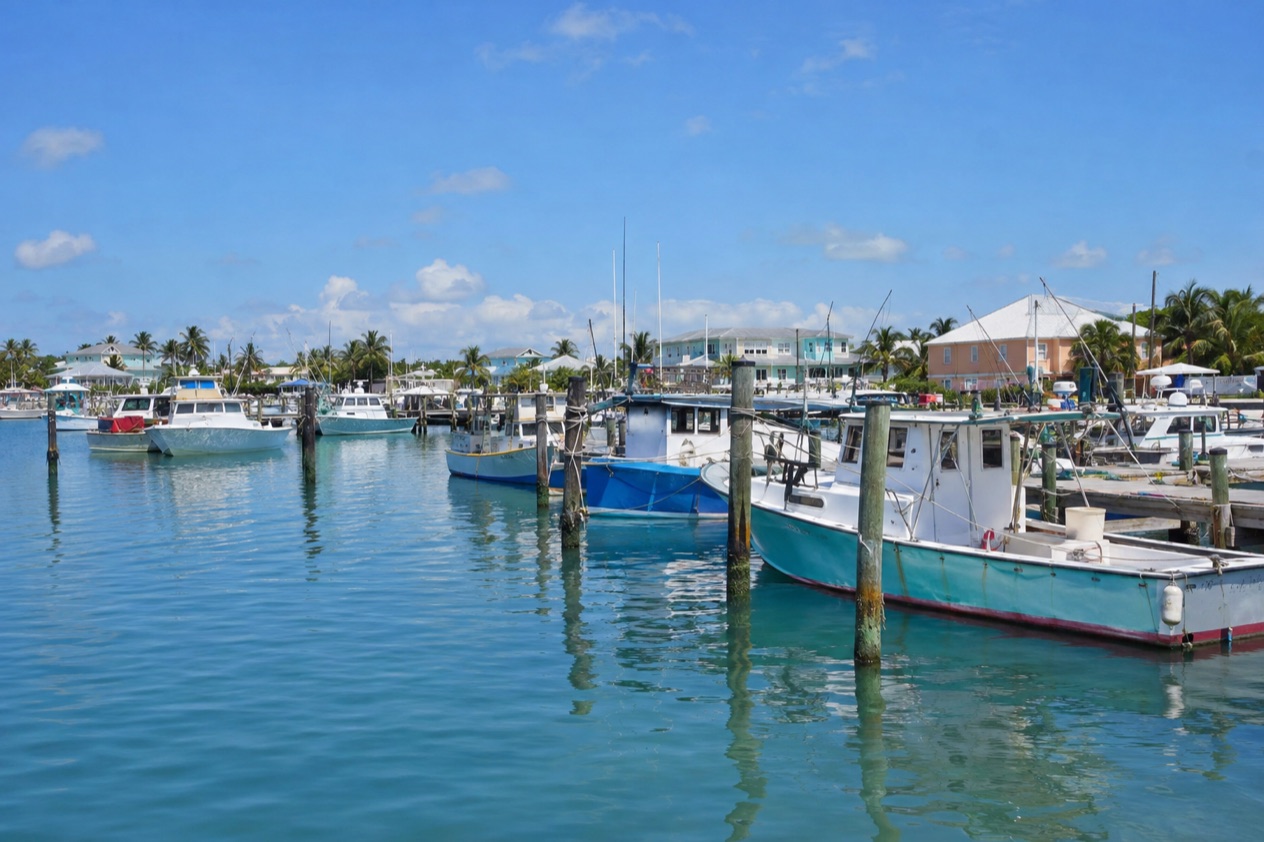
Early in the day, Spanish Wells smells of salt, diesel and fresh paint, and the harbor is busy with fishing boats heading out past the pastel houses. Golf carts hum along narrow lanes, neighbors wave without slowing down, and the beaches stay quiet long after breakfast. This is a small island community off the coast of Eleuthera, for travelers who like a working fishing town, soft sand and a slow pace.
Where is Spanish Wells and what is it like?
Spanish Wells is a small island in the Bahamas that belongs to Eleuthera, an outlying island served by North Eleuthera Airport, the same airstrip that serves the northernmost third of Eleuthera and Harbour Island. It is a tidy, close-knit fishing town where people know each other, boats matter more than cars and the day follows the tide and the catch.
The name goes back to the age of Spanish galleons, which stopped here to refill their water casks from wells dug for that purpose. Today the wells are a story told rather than a sight to tick off, but the name still frames the place as a harbor that has welcomed passing ships for centuries.
The community has a population of 1,608, which tells you most of what you need to know about the scale. You can feel the whole island in an afternoon, and by the second day shopkeepers and boat captains start to recognize you.
The island is joined by a bridge to Russell Island, an integral part of the community and 3.6 miles long. Between the two, the landscape is low, green and open to the wind, with houses in soft colors, small gardens, docks and the occasional church steeple.
Spanish Wells is known for white powdery beaches, tropical breezes, a laid-back atmosphere and friendly people, and that description holds up in everyday life. Locals are quick to say hello, and the fishing fleet, especially the lobster boats, gives the harbor its rhythm.
Who will love it? Travelers who want to unplug, walk a beach with almost no one on it, watch boats come in and eat seafood close to where it was caught.
Couples, families with small children and anyone who prefers a village to a resort strip will feel at home. Who may not? Visitors looking for nightlife, big hotels, shopping malls or a long list of organized attractions. Evenings here mean a porch, a harbor view and an early night, and that is exactly the appeal.
Spanish Wells also makes a good counterpoint to its better-known neighbors on Eleuthera. Pink sand and boutique glamour belong to Harbour Island, long drives and dramatic coastline belong to the main island, and Spanish Wells offers something plainer and more intimate: a working island where tourism sits alongside the fishing trade rather than replacing it.
What is there to do in Spanish Wells?
The things to do in Spanish Wells are simple and mostly outdoors: beach time, a slow ride around the island, harbor-watching and eating seafood. Nothing is built around a schedule, which is why the island suits people who like to improvise a day as it goes.
Spanish Wells Beach
Spanish Wells Beach is the one most visitors head for first. The sand is white, soft and powdery, and it is a lovely place for a stroll, even with a dog along. The water is mostly shallow for a good distance out, and small children can play near the shoreline, which makes the beach a natural choice for families who want a gentle afternoon of sandcastles and wading.
Plan the beach around the light. Morning brings pale color on the water and a breeze that keeps things comfortable, while late afternoon turns the sand golden and the harbor boats glide home. Bring a book, a hat and a picnic, and expect a beach that feels more like a neighborhood backyard than a resort strip.
Crossing the bridge to Russell Island
A bridge links Spanish Wells to Russell Island, and crossing it is the easiest outing on offer. Russell Island is part of the same community, so the ride feels like a continuation of the town rather than a separate excursion. You move from the harbor streets to quieter, more open land with sea views, scattered homes and the sort of silence that makes you slow down.
Many residents get around by golf cart because the island is so small, and the same easy pace fits a visitor who wants to look at gardens, docks, fishing gear stacked beside houses and the changing colors of the water. Stop whenever something catches your eye. A few unhurried hours of looking around is the point.
The harbor and the fishing life
The working waterfront is the heart of Spanish Wells. Fishing boats tie up along the docks, crews unload traps and coils of rope, and gulls and pelicans keep a close watch for scraps. Watching the harbor wake up, or settle down at the end of the day, tells you more about the island than any museum could.
This is also where the island’s character shows most clearly. The community has long lived from the sea, and that history explains the tidy boats, the self-reliant feel and the pride people take in their work. Seafood, conch and lobster in season are the natural things to order when you eat out, and a meal beside the water makes a fine ending to the day.
Reaching beyond the island
With more energy, Spanish Wells works as a base for exploring the rest of Eleuthera. The island has pink sand beaches and large outcrops of ancient coral reef, and its first national park, the Leon Levy Native Plant Preserve, is a 25-acre sanctuary for more than 171 species of native plants. Harbour Island, a five-minute ferry ride from Eleuthera, has a three-mile pink sand beach that travel magazines have often cited among the most beautiful in the world.
How many days do you need in Spanish Wells?
A long weekend is enough to see Spanish Wells at its own pace, and a week lets you settle into it properly. The island is compact, so you will not run out of time for sights. What you gain with more days is the feeling of belonging to the place.
With two or three days, you can spend a morning on the beach, cross the bridge to Russell Island in the afternoon and watch the harbor at day’s end. Add a seafood dinner, a walk along the quiet lanes and a lazy hour on a porch or dock, and you have covered the essentials without feeling rushed. Many visitors discover that the best moments are unplanned ones, a chat with a fisherman, a cart ride at sunset, a swim before breakfast.
A longer stay of four to seven days suits people who want to read, rest and let the days blur. You can return to the beach at different times, learn which corner of the harbor has the best light and take the afternoon off whenever the heat or the mood demands it. Children get time to play in the shallows without anyone checking a watch, and adults can do almost nothing, which is the whole idea.
If you have more time still, add a side trip. North Eleuthera Airport is close to the island’s northern end, and from there you can reach Harbour Island, with its pink sand beach and the five-minute ferry crossing from Eleuthera.
The wider island of Eleuthera has a long coastline, pink sand beaches and the Leon Levy Native Plant Preserve for a day among native plants. These outings pair well with a base in Spanish Wells, because you come home each evening to a quieter place.
A good rule is to give Spanish Wells at least a couple of nights of its own rather than treating it as a quick stop. The charm lies in its rhythm, and rhythm takes a day or so to catch.
Where to stay in Spanish Wells
Staying in Spanish Wells means choosing between the lanes of the main settlement and the more open stretches near the beaches and across the bridge. The island is small enough that none of these choices puts you far from anything, so the real question is what kind of mornings you want.
The main settlement suits travelers who like to be among people. Here you are close to the harbor, the boats and the daily comings and goings of the town, and you can walk to the water in a few steps.
It is a good fit for visitors who enjoy watching island life, striking up conversations and being near the places where locals eat and gather. Expect the sound of engines at dawn and a village atmosphere in the evening.
Near the beach, the mood changes. The sand is white and powdery, the breeze comes straight off the water and the pace is even slower. This part of the island appeals to families with small children, since the water is shallow for a good distance out, and to couples who want a quiet sunrise or sunset within reach. Pet owners will also like the soft sand for long strolls.
Across the bridge on Russell Island, you trade the harbor bustle for space and views. It is the place to pick if you want more room around you and do not mind crossing back to town for dinner. Because the island is small and many residents get around by golf cart, even this feels like a short hop within a single community.
Another option is to treat Spanish Wells as the quiet half of a wider Eleuthera trip. Some travelers stay here for the calm and take excursions to Harbour Island or the main island, while others do the reverse and visit Spanish Wells for a day or two. For questions about lodging and visiting the area, the Eleuthera Tourist Office can be reached at (242) 332-2142 or [email protected].
How do you get to Spanish Wells and get around?
You reach Spanish Wells through North Eleuthera Airport, which serves the island along with Harbour Island and the northernmost third of Eleuthera. The airport sits at only 13 feet above sea level, a reminder of how low and flat this part of the Bahamas is. Eleuthera has two other airports, Governor’s Harbour and Rock Sound, but North Eleuthera is the one that serves Spanish Wells.
Eleuthera lies east of Nassau, so many trips begin there before continuing on to the island. Once you arrive at the north end, you are on an island that is separate from the main stretch of Eleuthera, with its own small community and its own pace.
Getting around Spanish Wells is straightforward because the island is so small. Many residents use golf carts instead of full-sized cars, and the bridge to Russell Island means the whole community connects on one short route. Walking works well for the harbor and the nearby lanes, and you will often find yourself simply following the water.
If you plan to explore the rest of Eleuthera, keep in mind that the island has no public transport system, so visitors generally rent a car to cover the distance. Driving on Eleuthera is on the left-hand side of the road. Harbour Island is reachable only by boat or ferry, and the crossing from Eleuthera takes five minutes.
In practice, most visitors settle into a two-speed routine: slow and local in Spanish Wells itself, a little more planned when they venture off the island. The first needs nothing but comfortable shoes and an open mind.
When is the best time to visit Spanish Wells?
The best months for Spanish Wells are the cooler, drier ones from about December through April, when the days are warm without being heavy and evenings are pleasant for sitting outside. That is the stretch for long beach walks, harbor strolls and cart rides across the bridge, and it also coincides with the season when most visitors come to this part of the Bahamas.
The climate figures for Nassau, which lies west of Eleuthera, give a useful picture of the seasons in the region. In January, highs reach the upper 70s and rain falls on only a handful of days.
In July, highs climb to around 90 degrees and the rain comes on roughly a dozen days, usually as short, heavy afternoon showers. The sea follows the same pattern, pleasantly cool in winter and very warm in high summer, so beach days feel quite different from one season to the next.
Summer and early fall bring the heat and the humidity, and they overlap with the Atlantic hurricane season, which runs from June 1 to November 30. That does not make those months a poor choice, but it is a good reason to follow the forecast and stay flexible with plans. Shoulder months such as May and early June can offer a good balance of warm water and fewer people.
Spanish Wells has no big festival crowds to plan around, and that is part of its charm. Its calendar follows the fishing seasons and the rhythm of community life, so any month can feel peaceful. If your priority is comfortable weather for beach time and exploring Eleuthera, aim for winter and spring. If you want warm water and a slower, quieter island, summer has its own appeal.
Good to know before you go
The U.S. State Department rates the Bahamas Level 2, “Exercise increased caution”, and says most crime occurs in Nassau on New Providence and in Freeport on Grand Bahama.
Spanish Wells is a small place, so bring what you need for a quiet stay: sun protection, a hat, a swimsuit and light, comfortable clothes. Carry the essentials for your days on the island with you, and plan your meals around the harbor and local spots. Because the island is tiny and many residents use golf carts, travel here is calm and unhurried.
The hurricane season runs from June 1 to November 30, and storms are part of life in the Bahamas. Eleuthera was severely damaged by Hurricane Andrew in 1992, so it is wise to keep an eye on the forecast when you travel in those months. For local questions about the area, the Eleuthera Tourist Office can be reached at (242) 332-2142 or [email protected].
Sources
- Wikipedia, Spanish Wells (https://en.wikipedia.org/wiki/Spanish_Wells), checked October 10, 2026
- Bahamas Ministry of Tourism, Investments & Aviation (bahamas.com), Spanish Wells (https://www.bahamas.com/natural-wonders/spanish-wells), checked October 10, 2026
- Wikipedia, Eleuthera (https://en.wikipedia.org/wiki/Eleuthera), checked October 10, 2026
- Bahamas Ministry of Tourism, Investments & Aviation (bahamas.com), Eleuthera and Harbour Island (https://www.bahamas.com/islands/eleuthera-harbour-island), checked October 10, 2026
- Wikivoyage, Eleuthera travel guide (https://en.wikivoyage.org/wiki/Eleuthera), checked October 10, 2026
- Wikipedia, North Eleuthera Airport (https://en.wikipedia.org/wiki/North_Eleuthera_Airport), checked October 10, 2026
- Wikipedia, Geography of the Bahamas (https://en.wikipedia.org/wiki/Geography_of_the_Bahamas), checked October 10, 2026
- NOAA NCEI, GHCN-Daily station BF000078073 (Nassau Airport), normals 1991-2020 computed from the daily record (https://www.ncei.noaa.gov/access/services/data/v1?dataset=daily-summaries&stations=BF000078073), checked October 10, 2026
- Open-Meteo Marine API, average 2015-2024, checked October 10, 2026
- U.S. Department of State, The Bahamas Travel Advisory, Level 2 (https://travel.state.gov/), checked October 10, 2026
- NOAA National Hurricane Center, Climatology (https://www.nhc.noaa.gov/climo/), checked October 10, 2026
To plan your stay
- Best Time to Visit the Bahamas: Weather, Hurricane Season, Sea Temperatures and Junkanoo
- Where to Stay in the Bahamas: Best Islands, Resorts, Boutique Stays and How to Choose
- Getting Around the Bahamas: Flights, Ferries, Mailboats and Taxis in Nassau
- Know Before You Go to the Bahamas: Entry Rules, Money, Getting Around and Local Customs