
In Nassau, the evening air at Arawak Cay smells of fried conch and lime, and people crowd the plastic tables with a cup of sky juice while the shacks turn out plates of cracked conch. Across the water in Freeport, a band sets up in Count Basie Square at Port Lucaya Marketplace, and the dockside restaurants fill as the light drops over the marina. Both are real Bahamian evenings, but they belong to two very different islands, and this comparison sorts out which one fits the vacation you have in mind.
Which is better, Nassau or Freeport?
Nassau suits travelers who want history, street life, a walkable waterfront and a big resort scene, while Freeport suits those who want a quieter base with nature outings, diving and a marina-side evening. Neither is better in general. They differ in scale, in pace and in what sits right outside the hotel door.
Nassau is the capital, on New Providence, and it is the most populous island in the country. Its downtown on Bay Street runs on shopping, restaurants and nightlife, and a steady stream of cruise passengers walks its streets by day. Freeport, on Grand Bahama, is known as the second-largest city in the Bahamas, but it feels more spread out, with its tourism centered on Lucaya and the Port Lucaya Marketplace.
| Category | Nassau | Freeport |
|---|---|---|
| Beaches | Junkanoo Beach near downtown, plus resort beaches on Cable Beach and Paradise Island | Lucaya beachfront, plus beaches and shoreline tied to Lucayan National Park |
| Vibe | Capital city: colonial buildings, cruise-port bustle, Bay Street | Resort town: marinas, a marketplace, wide open spaces |
| Things to do | Queen’s Staircase, Fort Fincastle, Government House, Arawak Cay fish fry | Lucayan National Park, UNEXSO diving, Peterson Cay, Port Lucaya |
| Nightlife | Dining and dynamic nightlife on Bay Street | Live entertainment at Port Lucaya Marketplace |
| Weather | Nassau Airport figures: warm and drier in winter, hotter and wetter in summer | Hot, rainy season May through October, warm, dry season November through April |
| Getting there | Lynden Pindling International Airport with U.S. Border Preclearance | Grand Bahama, just off the Florida coast |
| Best for | First-time visitors, history, food, big resorts, cruise days | Nature, diving, a calmer base, families and couples at resorts |
Beaches and the sea
Nassau’s most convenient stretch of sand is Junkanoo Beach, just minutes from downtown, where cruise passengers and locals share the shoreline. It is a city beach in the best sense: beach bars, music, people on the sand and the port close at hand. Further afield, the resort beaches of Cable Beach and Paradise Island belong to the big hotels, and Paradise Island sits across the bridge over Nassau Harbour from the city.
Because Nassau’s beaches sit so close to the action, a beach day here is easily folded into a morning at the fort or an afternoon on Bay Street. You can have a sandy hour and still be at a conch stand before dinner. The trade-off is company, since the beaches nearest town belong to everybody.
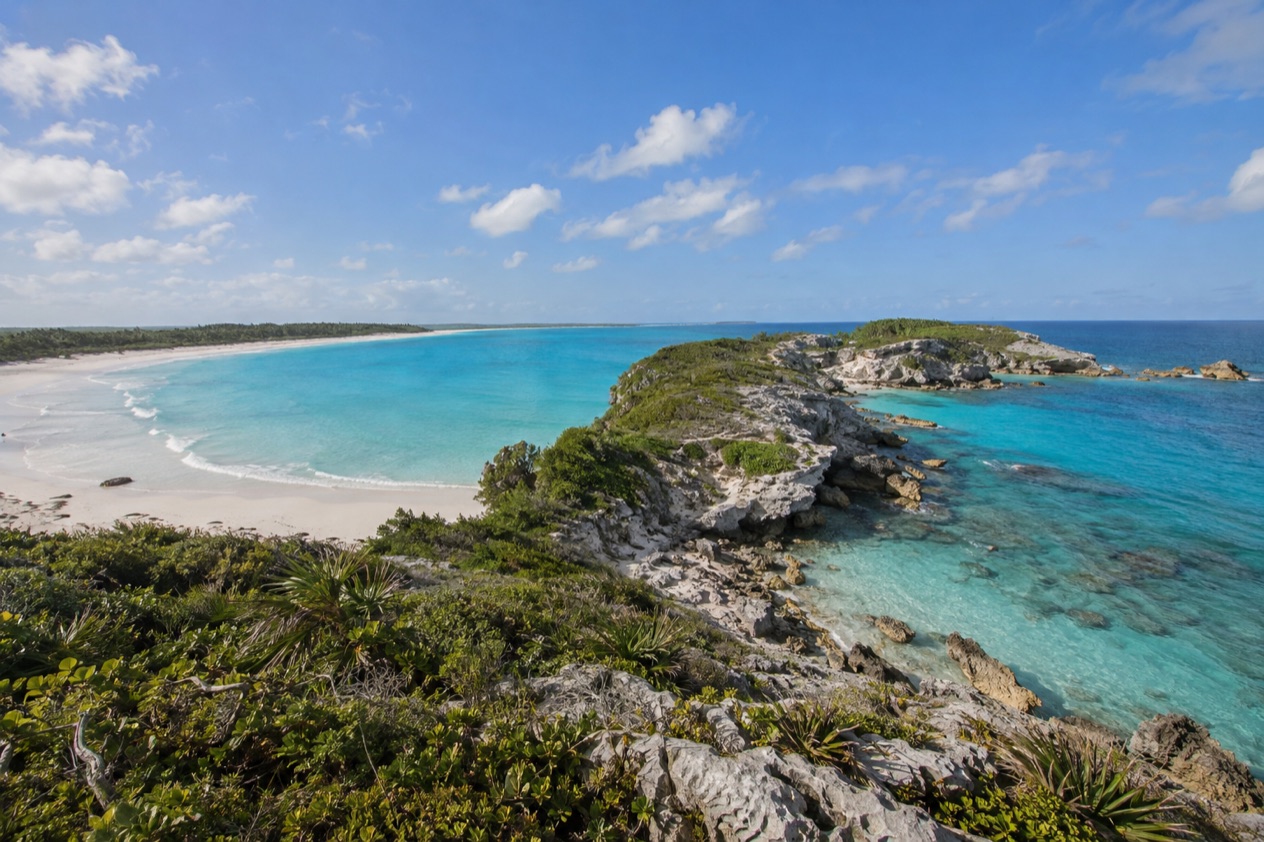
Freeport’s beach life stretches out along the Lucaya side, where the Our Lucaya resort, with its Radisson and Reef Village properties, anchors the waterfront. A short distance away, Lucayan National Park keeps a quieter shoreline, and Gold Rock Beach is the name travelers look for when they come for the park. The setting here is more open and less built up than Nassau’s, with more room between one group and the next.
Freeport also has a different kind of beach experience out on the water. Peterson Cay is a tiny national park just off the southern shore, reachable only by boat, and visitors anchor in the designated areas away from the coral reefs. It is a place for a boat outing rather than a casual stop, and it adds a sense of getting away that Nassau’s busy waterfront does not try to offer.
Who wins depends on what you want from a beach day. Nassau wins for convenience, because the sand is a few minutes from the shops, forts and food.
Freeport wins for space and for pairing the shoreline with a national park, a dive operation and a marina-side dinner. For the sea itself, conditions change from day to day and from coast to coast, so judge each beach when you arrive rather than on a promise.
Things to do
Nassau is the stronger choice for history and food. Its attractions are close together, and a day on foot can take in a staircase, a fort, a governor’s mansion and a fish fry. Freeport leans toward nature, with a national park, a boat-only cay and one of the best-known dive outfits in the islands.
Nassau: stairs, forts and the Fish Fry
The Queen’s Staircase, also called the 66 steps, is a limestone stairway carved by enslaved laborers over 16 years, and it gave soldiers quick access to a nearby fort. That fort is Fort Fincastle, which you can tour on a daily schedule, and the climb gives a view back over the rooftops and harbor. Government House, a pink and white colonial mansion on Duke Street atop Mount Fitzwilliam, is the Governor General’s official residence and a handsome sight from the street.
For lunch or dinner, head to Arawak Cay, known as the Fish Fry, the place in Nassau for authentic Bahamian food. Order conch in whichever form the shack does best, then wash it down with sky juice or a Bahama Mama. Afterward, Bay Street is the center of shopping, restaurants and nightlife downtown. If you shop for cigars there, buy only from a dedicated tobacconist, since most Cuban cigars sold in Nassau are counterfeit.
| Site | Open |
|---|---|
| Fort Fincastle (tours) | Daily, 8AM to 3PM |
Freeport and Lucaya: park, reefs and the marketplace
Lucayan National Park, near Freeport, is the nature highlight. It covers 40 acres of land, and it is the only place in the Bahamas where you can see all six of the island’s ecosystems.
It also incorporates one of the largest underwater cave systems in the world, and two caves are open to the public. Access to the caves is seasonal because they also serve bat conservation, so the cave visit depends on the time of year.
Visitors to the park are advised never to leave belongings unattended, since thefts have been known to occur. Carry only what you need on the trails and keep the rest at your hotel. A park day pairs well with a late lunch back in Lucaya.
In Lucaya, UNEXSO is a dive charter operation and was the first destination dive charter business in the world, which makes it a natural stop for divers. Port Lucaya Marketplace gathers shopping, dining and live entertainment in Count Basie Square, and it is the place to spend an evening. Peterson Cay rounds out the list for those who want a short boat outing to a national park of just a few acres.
Weather and the best time to go
Both islands share the same basic rhythm: a hot, rainy half of the year and a warmer-than-mild, drier half. On Grand Bahama, the rainy season runs from May through October, and the dry season from November through April. Nassau’s own record tells the same story, with a drier January and a much wetter July.
Winter is the comfortable time for walking. In Nassau you can spend a whole day on Bay Street and at the fort in a light shirt, and evenings at Arawak Cay need nothing more than a thin layer. Freeport in winter has the same easy feel for park trails and long marketplace evenings, though its lows dip a little cooler at night.
| Measure | Nassau (January) | Nassau (July) | Freeport (winter) | Freeport (summer) |
|---|---|---|---|---|
| Average high | 79.4°F | 90.8°F | 82°F | 88°F |
| Average low | 65.1°F | 76.4°F | 66°F | 79°F |
| Precipitation | 2.6 inches | 5.77 inches | Dry season, November through April | Rainy season, May through October |
| Rain days | 4.3 days | 12.4 days | Fewer rainy spells | More frequent rainy spells |
Summer brings heat that settles in by midmorning, and in Nassau July sees showers on more than a third of its days. Plan outdoor sights for the cooler morning hours and leave the afternoon for the beach or an air-conditioned lunch. In Freeport, the rainy months make the national park greener, though heat is the thing you will feel most.
The Atlantic hurricane season runs from June 1 to November 30, and on Grand Bahama the highest risk falls in August, September and October. Grand Bahama has been hit hard before: nearly half of its homes were damaged or destroyed in early September 2019 by Hurricane Dorian. If you travel in the autumn months, keep an eye on forecasts and think about flexible plans.
Getting there and getting around
Nassau is reached through Lynden Pindling International Airport, the primary international gateway to the Bahamas and the largest and busiest airport in the country. It offers U.S. Border Preclearance, which means U.S. formalities are handled before you fly home. The airport sits about 9.9 miles west of the city center, on New Providence, and cruise passengers arrive instead at the downtown port.
Nassau lies roughly 180 miles east-southeast of Miami, which is why it has long been a vacation spot for Americans. Freeport sits on Grand Bahama, the northernmost island in the Bahamas, and the island is 67 miles off the coast of Palm Beach. Its westernmost town, West End, is close enough to Florida that the two coasts almost feel like neighbors.
Once you are in Nassau, the downtown core is compact, with the staircase, fort, Bay Street and Junkanoo Beach all within a short stretch of each other. Jitney buses run around town, but they stop operating between 6PM and 7PM daily, which matters if you plan a late dinner.
| Service | Hours |
|---|---|
| Jitney buses in Nassau | Stop between 6PM and 7PM daily |
Freeport is a spread-out city of 215 square miles, and its visitor areas cluster around Lucaya and Port Lucaya Marketplace. Lucayan National Park lies near Freeport on the same island, while Peterson Cay can be reached only by boat. The larger area means getting around Freeport is a matter of planning where you will spend each day rather than strolling between attractions.
Freeport is on Eastern Time, with a UTC offset of minus five hours, so there is no clock change when you step off the plane from the East Coast. New Providence is the smaller island to cover on foot, 21 miles long and under 7 miles wide, and its highest point is only 16 feet above the sea. That flat, compact shape suits a day of wandering the city.
Who should choose which
Choose Nassau if you want a city with a past. It suits first-time visitors, history lovers, food seekers and anyone who wants Bay Street, forts, colonial landmarks and the Fish Fry within reach, along with the large resorts of Paradise Island and Cable Beach.
It is also the natural choice if your trip starts or ends with a cruise, since the downtown port puts you steps from the sights. Come ready for crowds on the days ships are in.
Choose Freeport if you want room to breathe. It suits families and couples who prefer a resort base, divers who want UNEXSO, and nature lovers drawn to Lucayan National Park and Peterson Cay. Accommodations range from family-friendly resorts to romantic all-inclusives and cozy B&Bs, for every budget. Evenings revolve around Port Lucaya Marketplace and its live music rather than a late-night street scene.
Combining the two is possible, since they are separate islands, and a trip that splits the stay gives you both a city and a park. Spend the first days in Nassau for the sights and the food, then move to Grand Bahama for the slower part of the vacation. Because each island needs its own arrival, treat the move as a real transfer and not a day trip.
Good to know before you go
The U.S. State Department rates the Bahamas Level 2, “Exercise increased caution”, and says most crime occurs in Nassau on New Providence and in Freeport on Grand Bahama.
Most crime in the Bahamas occurs in Nassau and in Freeport, so the same sensible habits apply on both islands: keep valuables out of sight and stay alert. In vacation rental properties, stay especially alert where private security is not present. In Nassau’s tourist areas, a large number of police officers are highly visible, and the Royal Bahamas Police Force has a Tourism Policing Unit with 147 officers.
The Atlantic hurricane season runs through the end of November, so autumn trips to either island call for flexible plans. Outside it, the winter months give the most settled stretch for walking and park visits.
Sources
- Bahamas Ministry of Tourism, Investments & Aviation (bahamas.com), Nassau and Paradise Island (New Providence) (https://www.bahamas.com/islands/nassau-paradise-island), checked October 10, 2026
- Wikipedia, Nassau, Bahamas (https://en.wikipedia.org/wiki/Nassau,_Bahamas), checked October 10, 2026
- Wikivoyage, Nassau travel guide (https://en.wikivoyage.org/wiki/Nassau), checked October 10, 2026
- Wikipedia, New Providence (https://en.wikipedia.org/wiki/New_Providence), checked October 10, 2026
- Bahamas Ministry of Tourism, Nassau and Paradise Island (https://www.bahamas.com/islands/nassau-paradise-island), checked October 10, 2026
- Bahamas Ministry of Tourism, Investments & Aviation (bahamas.com), travel blog, what to do in Nassau (https://www.bahamas.com/blog/top-10-things-to-do-in-nassau), checked October 10, 2026
- Bahamas Ministry of Tourism, Investments & Aviation (bahamas.com), travel blog, safety downtown Nassau (https://www.bahamas.com/blog/downtown-nassau-safe-for-tourists), checked October 10, 2026
- Bahamas Ministry of Tourism, Investments & Aviation (bahamas.com), Freeport and Grand Bahama Island (https://www.bahamas.com/islands/freeport-grand-bahama-island), checked October 10, 2026
- Wikipedia, Grand Bahama (https://en.wikipedia.org/wiki/Grand_Bahama), checked October 10, 2026
- Wikivoyage, Grand Bahama travel guide (https://en.wikivoyage.org/wiki/Grand_Bahama), checked October 10, 2026
- Wikipedia, Freeport, Bahamas (https://en.wikipedia.org/wiki/Freeport,_Bahamas), checked October 10, 2026
- Wikipedia, Lucaya (https://en.wikipedia.org/wiki/Lucaya,_Bahamas), checked October 10, 2026
- Bahamas Ministry of Tourism, Investments & Aviation (bahamas.com), Lucayan National Park (https://www.bahamas.com/natural-wonders/lucayan-national-park), checked October 10, 2026
- U.S. Department of State, The Bahamas Travel Information, Travel Advisory (Level 2) (https://travel.state.gov/), checked October 10, 2026
- NOAA NCEI, GHCN-Daily station BF000078073 (Nassau Airport), normals 1991-2020 computed from the daily record (https://www.ncei.noaa.gov/access/services/data/v1?dataset=daily-summaries&stations=BF000078073), checked October 10, 2026
- U.S. Department of State, The Bahamas Travel Advisory, Level 2 (https://travel.state.gov/), checked October 10, 2026
- NOAA National Hurricane Center, Climatology (https://www.nhc.noaa.gov/climo/), checked October 10, 2026
To plan your stay
- Best Time to Visit Nassau: Weather by Month, Hurricane Season, Beaches and Junkanoo
- Things to Do in Nassau: Forts, the Fish Fry, Beaches and Blue Lagoon Island
- Where to Stay in Nassau: Cable Beach, Paradise Island, Downtown and How to Choose
- Nassau from the United States: Flights, Cruises, Airport Transfers and Getting Around