
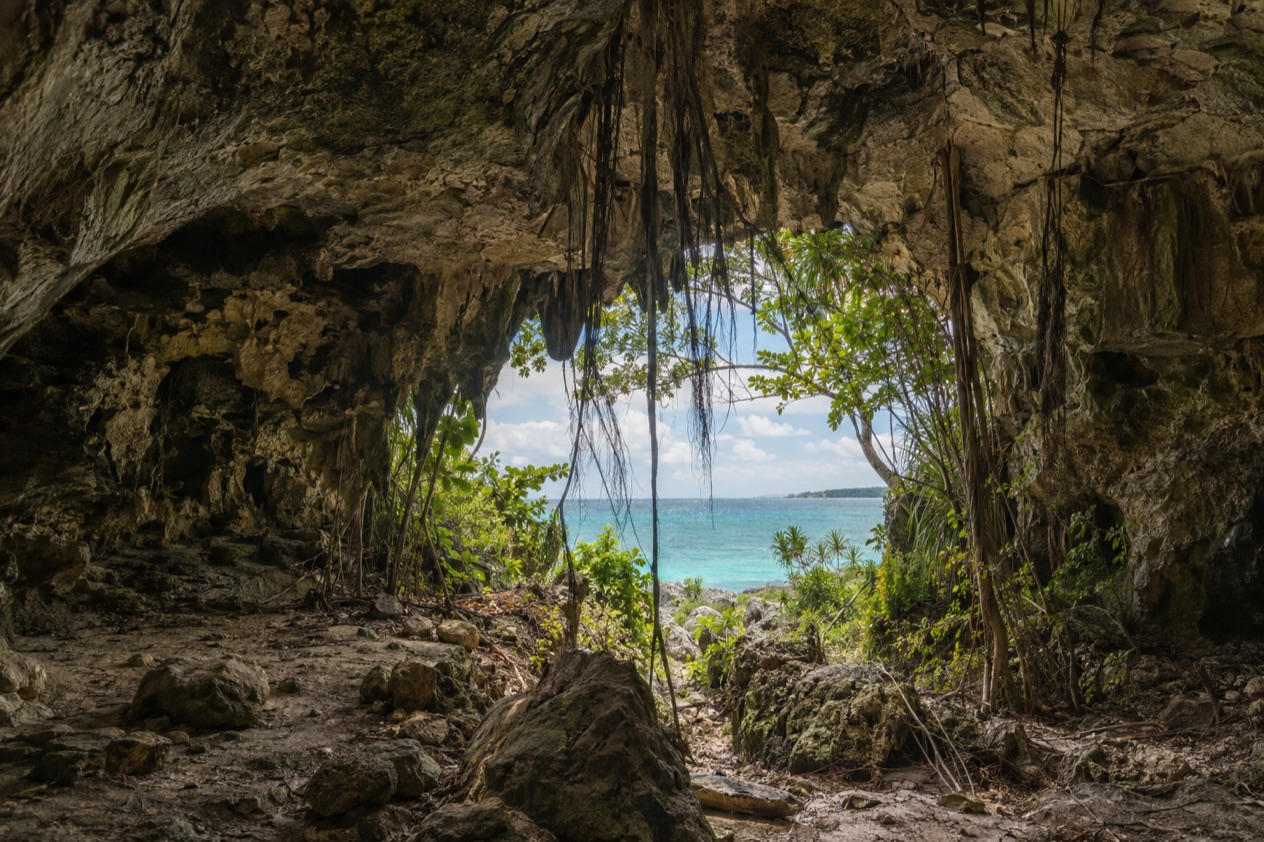
The road along Eleuthera’s Atlantic side runs through low scrub and sea-grape, and then the ground opens into a dark mouth in the limestone. Step inside and the air changes at once: cooler, still, smelling of damp stone, with the sound of the surf fading behind you. Hatchet Bay Cave sits just south of Surfer’s Beach, and it is a visit for people who like their sightseeing a little adventurous, led by a guide with a torch rather than by a boardwalk and a ticket booth.
Is visiting Hatchet Bay Cave worth it?
Yes, if you enjoy natural places that have not been turned into attractions, and especially if you are already exploring Eleuthera by road and want one stop that takes you underground. It suits curious adults, teenagers who like a bit of scrambling in the dark, and anyone who has spent several days on beaches and wants a change of scene. It is less suited to travelers who want a polished site with a visitor center, a gift shop and a fixed routine.
What sets it apart from the other things to do on Eleuthera is the scale and the feel. Most of the island’s famous sights are about water and light: pink sand, the cobalt color of the Atlantic, the narrow bridge where two seas almost touch. This is the opposite.
The cave runs for one mile beneath the surface, its formations look like cathedral vaults in torch light, and the walls carry old charcoal signatures left by people who came long before you. You come out blinking into the sun with a story rather than a photograph of a beach.
It also pairs naturally with its neighbor. Surfer’s Beach sits right beside it, so a visit can be a morning underground followed by a look at the waves from the sand. The two together give a good picture of this stretch of the island: rugged, windswept and quiet.
What to see at Hatchet Bay Cave
The stalactites and stalagmites
The main attraction is the rock itself. Over a very long time, water seeping through the limestone has left stalactites hanging from the ceiling and stalagmites rising from the floor, and in places they meet in columns. In torch light they look like the pillars and vaults of an underground cathedral, which is exactly how they are usually described.
Because the only light is whatever your guide carries, the formations appear one at a time, lit from the side, with deep shadows behind them. Slow down when the beam catches a curtain of rock or a glistening surface. The shapes change as you move, and the best views are often the ones you notice when you turn around and look back.
Centuries-old charcoal signatures
The second thing to look for is human. Parts of the walls carry signatures written in charcoal that are centuries old, a kind of graffiti that belongs to another era. Visitors, locals and passing sailors apparently felt the same urge you might: to leave a name in a place that felt remote and a little mysterious.
Look, do not touch. Charcoal marks on stone are fragile, and the point of seeing them is that they survived. They also give the cave a human dimension, a reminder that people have been walking into this darkness on Eleuthera for generations, holding a flame of their own.
The long dark passage and its small residents
A cave this long is as much a journey as a destination. The passage narrows and widens, the ceiling lifts into higher chambers and drops again, and the sounds change with it: dripping water, your footsteps, your guide’s voice echoing ahead. Caves of this kind in the islands are often home to bats, so you may notice them overhead, usually tucked into the high crevices.
Go with the mood of the place. Talk quietly, let your eyes adjust whenever the light is lowered, and listen for the drip of water. This is a place where the quiet is part of what you came for.
Hours, tickets and rules
Hatchet Bay Cave is not run like a museum with a posted schedule and a ticket window. The visit is arranged around a guide, and visitors are advised to tour with one. For questions about visiting, the Eleuthera Tourist Office is the local point of contact, and its details are in the table.
| Site | How to visit | Contact |
|---|---|---|
| Hatchet Bay Cave, Eleuthera | With a guide | Eleuthera Tourist Office: (242) 332-2142, [email protected] |
The one rule that applies to everyone is the guide recommendation: visitors to the cave should tour with a guide. That is sensible for a mile-long natural cave with no built paths or lighting, where the darkness, the uneven rock and the many twists make it easy to lose your bearings. Beyond that, treat the cave and its old marks with respect and leave the formations exactly as you found them.
How to get to Hatchet Bay Cave
The cave lies on Eleuthera, a long, narrow island that stretches east of Nassau by about 50 miles. Within the island, it sits just south of Surfer’s Beach, which is the landmark to look for when you are planning your day. That puts it on the island’s Atlantic side, in the middle stretch of Eleuthera rather than at either end.
The island is threaded by the Queens Highway, which runs for 110 miles along its length and links the settlements. Because the cave is a short step from a named beach on that road system, it works well as one stop on a drive along the island. Anyone staying elsewhere on Eleuthera would reach it by following the island’s main road toward Surfer’s Beach, then continuing just south.
Getting to Eleuthera itself is a separate step from reaching the cave, and the cave is not reached from Nassau in a single hop. Plan the island first, then the cave. Once you are on Eleuthera, the Eleuthera Tourist Office can help with questions about arranging a guided visit.
When to visit Hatchet Bay Cave
Inside the cave the light is always the same: dark, with torch beams doing the work. That means the time of day matters less than it does at a beach or a viewpoint. Choose the hour that fits the rest of your day, and keep in mind that the dim light and the cooler air underground make a welcome break from the sun on the island’s roads.
The calendar still matters for Eleuthera as a whole. The Atlantic hurricane season runs from June 1 to November 30, so any visit in that stretch should be planned with the forecast in mind and some flexibility in the schedule. A cave outing is easy to move around if the weather turns, since it is a single stop you can swap with another part of the island.
Events on the island can also shape your trip. An annual Pineapple Festival is held in Gregory Town, a good reason to plan around it if the timing suits you, because a festival day adds music, food and local life to a stay that already includes a morning underground. Whatever month you choose, think of the cave as part of a wider Eleuthera itinerary rather than the only reason to come.
Tips for your visit
Plan the cave as a half-day stop rather than a quick photo break. The passage is long, the guided experience is meant to be unhurried, and part of the pleasure is lingering over the formations and the old charcoal marks. Build the schedule around the visit instead of squeezing it between other plans, and leave room afterward to get your bearings in the daylight.
Because the site sits just south of Surfer’s Beach, the beach is the natural companion: a look at the surf before or after the dark. The island offers plenty more to fill a day or two.
The Leon Levy Native Plant Reserve covers 25 acres and has an environmental education center, a calm, green counterpart to the cave for travelers who like nature. Gregory Town, with its Pineapple Festival, adds a village stop and a sense of local culture.
Families should think about the cave as a real expedition: a guided walk in the dark through a mile of natural passage. Whether it suits children depends on their temperament and your own comfort with darkness and uneven ground, so decide as a group. The same applies to anyone with mobility concerns. The cave is a natural passage, not a built attraction, so speak to the Eleuthera Tourist Office before you plan around it.
Finally, keep the cave in its island context. Eleuthera is a place for slow travel, with long drives, small settlements and stretches of empty coast, and the cave rewards that pace. Treat the guide as a local host as well as a safety measure, and ask about the history of the marks on the walls and the stories that go with them.
Good to know before you go
The U.S. State Department rates the Bahamas Level 2, “Exercise increased caution”, and says most crime occurs in Nassau on New Providence and in Freeport on Grand Bahama.
Eleuthera is a quiet island, and the cave is the kind of stop where a little preparation goes a long way: sort out your guide first, keep your plans loose, and treat the visit as one chapter of a larger trip. The hurricane season is under way now, and it ends on November 30, so keep an eye on the forecast if your dates fall inside it. Bring your sense of curiosity, and the cave will do the rest.
Sources
- Bahamas Ministry of Tourism, Investments & Aviation (bahamas.com), Hatchet Bay Cave (https://www.bahamas.com/natural-wonders/hatchet-bay-cave), checked October 10, 2026
- Wikipedia, Eleuthera (https://en.wikipedia.org/wiki/Eleuthera), checked October 10, 2026
- U.S. Department of State, The Bahamas Travel Advisory, Level 2 (https://travel.state.gov/), checked October 10, 2026
- NOAA National Hurricane Center, Climatology (https://www.nhc.noaa.gov/climo/), checked October 10, 2026
To plan your stay
- Best Time to Visit the Bahamas: Weather, Hurricane Season, Sea Temperatures and Junkanoo
- Where to Stay in the Bahamas: Best Islands, Resorts, Boutique Stays and How to Choose
- Getting Around the Bahamas: Flights, Ferries, Mailboats and Taxis in Nassau
- Know Before You Go to the Bahamas: Entry Rules, Money, Getting Around and Local Customs