
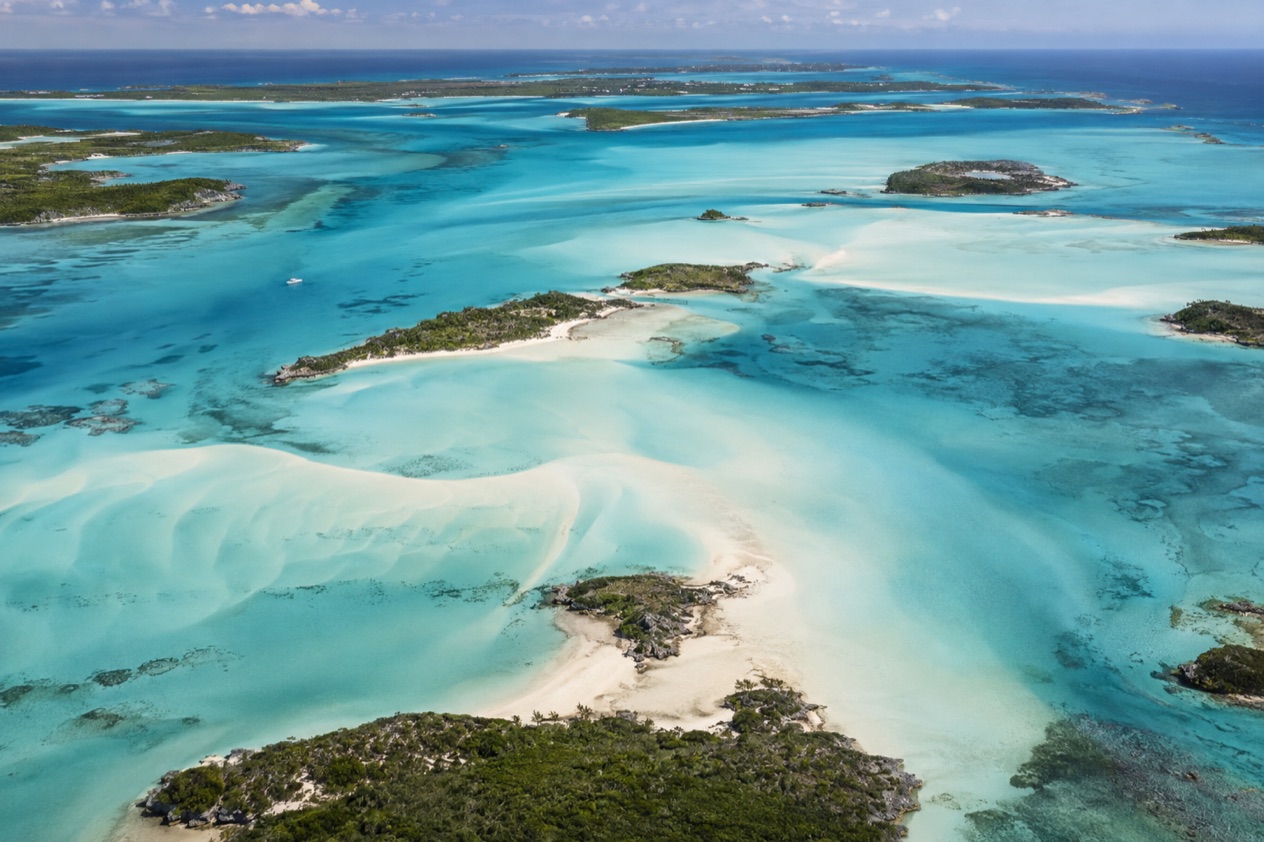
On a January morning in Elizabeth Harbour, sailboats swing on their anchors, conch salad is being chopped at a stand in George Town, and the water over the sandbars turns that pale, glassy green that makes people stop talking. By August the same harbor is hotter, heavier and nearly empty of visitors, with afternoon squalls rolling across the cays. The Exumas, a long chain of islands and cays strung south of Nassau, shine brightest from winter into spring, and each of the other seasons has its own reasons to come.
When is the best time to visit the Exumas?
The best time to visit the Exumas is late winter through April, when the days are warm without being heavy, the sea is pleasant, and the cays are most inviting for boating and beach days. April is the sweet spot for many travelers, because the water has started to warm and the busiest spring weeks have passed.
For beaches and the sea, April through June is a natural run. The water keeps warming, the days grow long, and there is time to see a good deal before the light fades.
Boat days to Stocking Island, Pig Beach or Thunderball Grotto suit these months, and so do the long sand stretches of Little Exuma, such as Tropic of Cancer Beach, also called Pelican Beach. Summer brings the warmest sea of the year, but also heat and a wetter, stormier sky.
For sightseeing on land, winter is the kinder season. George Town, with its Government Building inspired by the one in Nassau, is pleasant to wander in January and February, and the roadside lobster shacks on Little Exuma, like Santanna’s, feel right when the afternoon breeze is soft. Winter fronts can bring a gray, breezy day now and then, so keep a light layer handy.
For budget and quiet, the late-summer and fall months are the calm ones, with fewer visitors and more room on the sand. They sit squarely in hurricane season, though, and the rain is a real part of the picture. Families should know that March brings spring break, which is loud and lively around the harbor and the marinas. If your children prefer quiet beaches, April or early May suits them better.
The Exumas weather by month
The sea around George Town stays warm all year, and the length of the day changes more than most visitors expect.
| Month | Sea at the Exumas (°F) | Daylight on the 15th (hours and minutes) |
|---|---|---|
| January | 78.3 | 10 h 53 min |
| February | 77.2 | 11 h 25 min |
| March | 78.9 | 12 h 04 min |
| April | 80.0 | 12 h 45 min |
| May | 83.6 | 13 h 20 min |
| June | 85.6 | 13 h 37 min |
| July | 87.3 | 13 h 29 min |
| August | 87.3 | 12 h 59 min |
| September | 87.3 | 12 h 19 min |
| October | 85.5 | 11 h 39 min |
| November | 81.4 | 11 h 02 min |
| December | 78.9 | 10 h 44 min |
In Nassau, highs sit around 80°F in winter and climb into the low 90s by summer, when rainy days come about three times as often as in the cooler months. In the Exumas, the sea tells the same story at its own pace: coolest in February, then warming steadily until it plateaus at its warmest from July through September.
Daylight shapes the plan as much as the temperature. Winter days end early, so a boat outing has to start with the morning, while from late spring into summer the light lingers well into the evening. Those long June days are good for slow sandbar afternoons and dinner by the water. Late fall shortens the light again, and by December the days are at their briefest.
What is there to do in the Exumas in each season?
The Exumas are a place for boats, sandbars and beaches, and the seasons decide how long you want to stay on the water and how much you want to see in a day.
Winter and early spring: the classic Exumas months
From December to April, the days are mild enough for a full day out. George Town is the base for many trips: Stocking Island, reached by boat from Elizabeth Harbour, has white sand beaches that rank among the finest in the Bahamas. Sailing is part of local life here, and the Exuma Sailing Club trains local children in the same harbor.
Farther north, Staniel Cay is the hub for the two best-known outings. Pig Beach, on Big Major Cay, is reached only by boat, and visitors can swim with the pigs in the shallows. Thunderball Grotto, just west of Staniel Cay, is a cave system for snorkeling, diving and wading, with yellow-tail snappers, angelfish and sergeant majors around the reef. Winter mornings suit these stops because the air is cooler.
This is also the time for slow days on Little Exuma. Tropic of Cancer Beach is the longest on the island, and Santanna’s, at the southern end, is known for lobster caught and grilled on the spot. After a morning of salt and sun, a plate of grilled lobster in the shade feels like exactly the right ending.
Late spring and summer: warm sea, long days, stormier skies
May and June are the transition. The sea turns bathtub-warm, the days stretch, and the first showers arrive. Mornings are often clear and the stormy part tends to come later, so plan your boat time early and leave the afternoon for a shaded porch, a late lunch or a nap.
July and August are for people who love heat and want empty cays. The Exuma Cays Land and Sea Park, a no-take reserve where all fishing is prohibited, is a place of quiet water and birds, and the park office is a helpful stop for visitors to the cays. Anything outdoors takes patience in the summer sun, so leave the long walks for another time of year.
Fall and the shoulder months
September and October fall in the heart of the Atlantic hurricane season, and the rain is real. These months suit travelers who value quiet over certainty and who are flexible about changing plans. The sea is at its warmest, so the water itself is a pleasure when the sky cooperates.
November is the turn. The air eases, the sea cools, and the cays begin to wake for the winter. Boat days feel comfortable again, and the harbor starts to fill with sailboats arriving for the season. It is a good month for a first look at the Exumas, before the winter holiday rush.
When is the Exumas cheapest and least crowded?
The Exumas are quietest from late summer through fall, and busiest around the winter holidays and in the spring, when sailors, anglers and families arrive in numbers. With a chain of small islands, a crowd here means full marinas and busy harbor anchorages rather than packed beaches, and the effect is felt most on the small cays around Staniel Cay and in George Town.
The peak weeks are Christmas and New Year, the weeks of March when college spring break pulls in lively groups, and Easter week. These are the times when George Town is at its busiest and rooms are in greatest demand, and the harbor fills with boats. July and August bring a smaller wave of families on summer vacation, though the heat and the afternoon storms keep the numbers modest.
The quiet stretch runs from September through much of November, and again in the weeks just after New Year. In those weeks, rooms are easier to find, the beaches have space, and the pace slows down. The trade is clear: you get room and calm, and you accept a wetter sky and, in fall, the weather of hurricane season.
If you want a mix of good weather and thinner crowds, aim for the weeks between the holidays and spring break, or for April after Easter. May is another quiet-ish month, with the water warming and the long days already here. Staniel Cay, with fewer than a few hundred residents, stays small even at the busiest time.
Which months should you avoid in the Exumas?
The months to approach with care are August through October, when hurricane season is at its height and the heat and humidity are strongest. The Atlantic hurricane season runs from June 1 to November 30, and the most activity comes between mid-August and mid-October, with the peak on September 10.
A storm is a possibility, not a certainty, and most days in those months are simply hot, humid and showery. Still, the Bahamas Ministry of Tourism and Aviation monitors tropical storms in the Atlantic, and travelers are encouraged to check the Bahamas.com hurricane page for updates. If your dates fall in that stretch, stay flexible about what you do each day.
Summer heat is the other factor. From June to September the sea is at its warmest and the air feels heavy, and in Nassau rain days climb steeply compared with winter. Between boat trips, you will want shade, a breeze and long breaks. Anyone who wilts in the heat will enjoy the cays more in the cooler half of the year.
Winter is mostly gentle, but a passing cold front can bring a breezy, cloudy day that makes a boat outing less pleasant. These spells tend to be brief. No month rules out a good trip, and the real question is what kind of weather you want to trade for what kind of quiet.
When can you swim in the Exumas?
The sea around George Town is warm enough for swimming nearly all year, from a pleasantly cool plunge in February to bathwater-warm days in late summer.
From December through March the water is at its coolest, and it feels refreshing in the midday sun rather than cold. By April it begins to warm, May feels soft, and from June through October it is at its warmest. November cools again but stays comfortable, and many people find it the easiest of all months to stay in for a long time.
Where you go depends on the season. In winter and spring, the beaches of Stocking Island and Little Exuma feel bright and open, and the light on the shallows is best around midday.
In summer, the early morning is the time to be on the water, before heat and cloud build. At Staniel Cay Marina, visitors are allowed to swim with nurse sharks at their own risk, and the sharks can bite if hands go near their mouths.
The swimming pigs of Big Major Cay are part of the same seasonal rhythm. They are there all year, and the shallow water around the beach is where visitors meet them.
Festivals and events in the Exumas through the year
Winter holidays and Junkanoo
Christmas in the Exumas is small-island and warm: church services, family meals and boats strung with lights in the harbor. The big Bahamian tradition is Junkanoo, the festival of rushing, cowbells, goatskin drums and elaborate costumes, held in the early hours of December 26 and January 1. The largest parades take place in Nassau, and island settlements hold their own celebrations in their own style.
New Year’s Day is a good time to be in George Town, where the harbor is full and the mood is festive. Visitors who arrive in this stretch find the busiest weeks of the year, so it is a time for celebration rather than solitude.
Regatta season and spring on the water
The great event of the Exumas calendar is the National Family Island Regatta, held in George Town, usually in late April. Bahamian-built wooden sloops race across Elizabeth Harbour under big sails, and the shore fills with food stalls, music and crowds. It is a celebration of the sailing heritage of the islands, and a good reason to be in the harbor in spring.
Around the regatta, George Town has a festive feel, with live music in the evenings and cookouts on the beach. Spring is also the time when sailors fill the harbor, and the Exuma Sailing Club, which has trained local young people since 2013, is part of that story. If you have a taste for boats, this is the best month to see them at work.
Summer and fall celebrations
Independence Day on July 10 is a national holiday with music and family gatherings, and the first Monday of August brings Emancipation Day, with beach picnics and local events, though sea conditions change from day to day and from one stretch of shore to another. Both are good moments for a taste of Bahamian life beyond the tourist season, and they arrive just as the sea is at its warmest.
Fall is quiet, with the harbor slowly refilling as sailors come south. This is the time for conch salad at the stand, a plate of grilled lobster on Little Exuma, and long evenings on a porch with a rum punch, while the Atlantic sky turns pink over the cays.
Sources
- Open-Meteo Marine API, average 2015-2024, checked October 10, 2026
- sunrise-sunset.org, sunrise and sunset calculated for the 15th of the month, checked October 10, 2026
- NOAA NCEI, GHCN-Daily station BF000078073 (Nassau Airport), normals 1991-2020 computed from the daily record (https://www.ncei.noaa.gov/access/services/data/v1?dataset=daily-summaries&stations=BF000078073), checked October 10, 2026
- Bahamas Ministry of Tourism, Investments & Aviation (bahamas.com), The Exumas (https://www.bahamas.com/islands/the-exumas), checked October 10, 2026
- Wikipedia, Exuma (https://en.wikipedia.org/wiki/Exuma), checked October 10, 2026
- Wikivoyage, Exuma travel guide (https://en.wikivoyage.org/wiki/Exuma), checked October 10, 2026
- Wikipedia, George Town, Exuma (https://en.wikipedia.org/wiki/George_Town,_Bahamas), checked October 10, 2026
- Bahamas Ministry of Tourism, Investments & Aviation (bahamas.com), Exuma Sailing Club (https://www.bahamas.com/experiences/exuma-sailing-club), checked October 10, 2026
- Bahamas Ministry of Tourism, Investments & Aviation (bahamas.com), Protecting The Exumas (https://www.bahamas.com/experiences/protecting-the-exumas), checked October 10, 2026
- Bahamas Ministry of Tourism, Investments & Aviation (bahamas.com), Santannas Exuma (https://www.bahamas.com/experiences/santannas-exuma), checked October 10, 2026
- Bahamas Ministry of Tourism, Investments & Aviation (bahamas.com), Official Home Swimming Pigs (https://www.bahamas.com/experiences/official-home-swimming-pigs), checked October 10, 2026
- Wikipedia, Big Major Cay (https://en.wikipedia.org/wiki/Big_Major_Cay), checked October 10, 2026
- Bahamas Ministry of Tourism, Investments & Aviation (bahamas.com), Exuma Cays Land And Sea Park (https://www.bahamas.com/natural-wonders/exuma-cays-land-and-sea-park), checked October 10, 2026
- Bahamas National Trust, Exuma Cays Land and Sea Park (https://bnt.bs/explore/exuma/exuma-cays-land-sea-park/), checked October 10, 2026
- Bahamas Ministry of Tourism, Investments & Aviation (bahamas.com), Thunderball Grotto (https://www.bahamas.com/natural-wonders/thunderball-grotto), checked October 10, 2026
- Bahamas Ministry of Tourism, Investments & Aviation (bahamas.com), Highbourne Cay (https://www.bahamas.com/natural-wonders/highbourne-cay), checked October 10, 2026
- Bahamas Ministry of Tourism, Investments & Aviation (bahamas.com), Stocking Island (https://www.bahamas.com/natural-wonders/stocking-island), checked October 10, 2026
- Bahamas Ministry of Tourism, Investments & Aviation (bahamas.com), Tropic Of Cancer Beach (https://www.bahamas.com/natural-wonders/tropic-of-cancer-beach), checked October 10, 2026
- Bahamas Ministry of Tourism, Investments & Aviation (bahamas.com), travel blog, reasons to visit the Exumas (https://www.bahamas.com/blog/top-5-reasons-to-visit-the-exumas), checked October 10, 2026
- Wikipedia, Staniel Cay (https://en.wikipedia.org/wiki/Staniel_Cay), checked October 10, 2026
- Wikipedia, Geography of the Bahamas (https://en.wikipedia.org/wiki/Geography_of_the_Bahamas), checked October 10, 2026
- NOAA National Hurricane Center, Climatology (https://www.nhc.noaa.gov/climo/), checked October 10, 2026
- Bahamas Ministry of Tourism, Investments & Aviation (bahamas.com), Hurricane and storm information (https://www.bahamas.com/hurricane-storm-information), checked October 10, 2026
- Wikipedia, National Family Island Regatta (https://en.wikipedia.org/wiki/National_Family_Island_Regatta), checked October 10, 2026
- U.S. Department of State, The Bahamas Travel Advisory, Level 2 (https://travel.state.gov/), checked October 10, 2026
To plan your stay
- Things to Do in the Exumas: Swimming Pigs, Thunderball Grotto, Beaches and Fresh Lobster
- Where to Stay in the Exumas: George Town, Little Exuma, Staniel Cay and How to Choose
- The Exumas from Miami: Flights, Connections, Boats and Making a Day of It
- Know Before You Go to the Exumas: Entry Rules, Money, Getting Around and Sun