
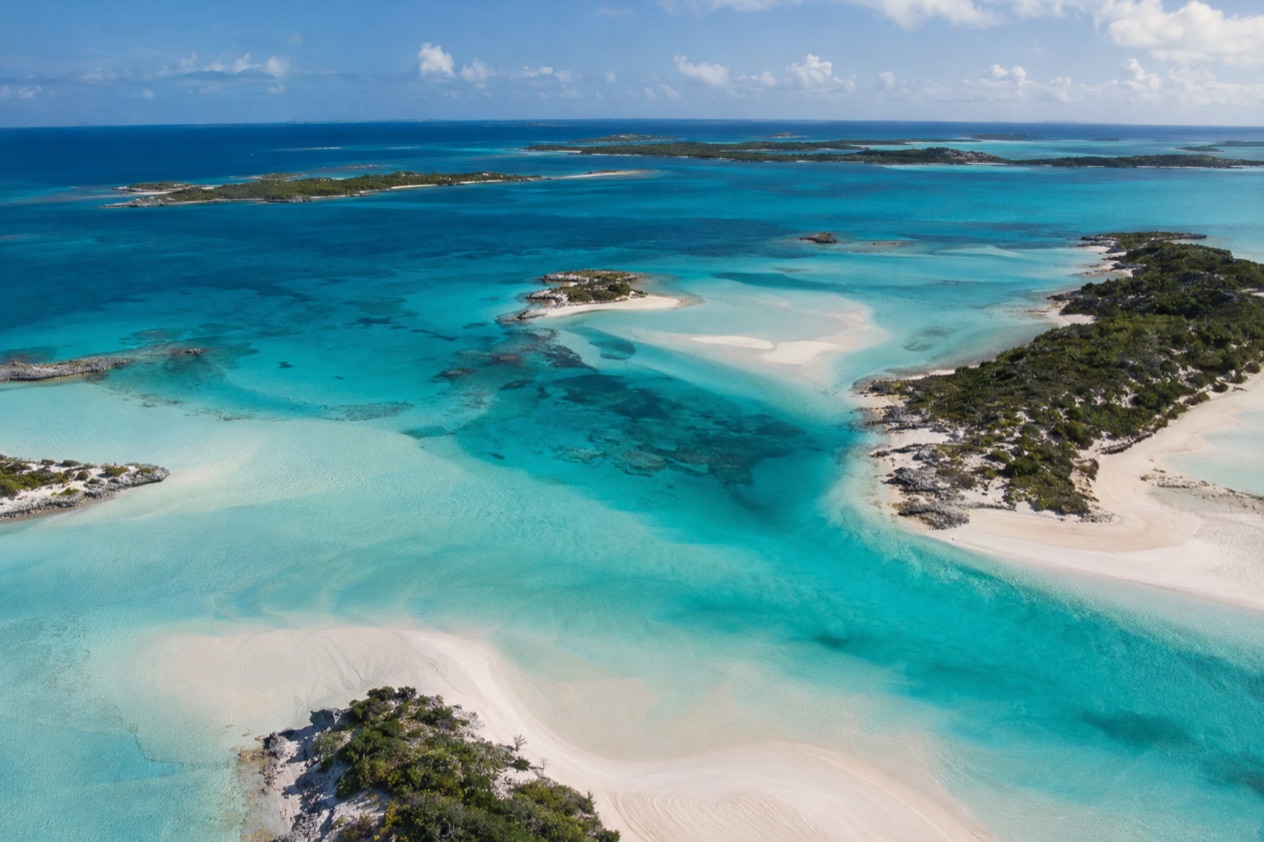
The first thing a boat crew sees on approach to Warderick Wells is a scatter of low, scrub-covered cays set in water that shifts from pale green to deep blue, with moorings bobbing in the cut where the park headquarters sits. Ashore, the trails climb to limestone ridges and the only sound is wind in the sea grape and the occasional call of a bird. Exuma Cays Land and Sea Park is a protected reserve in the Exumas, and a visit here is about boats, snorkel masks, quiet walks and wildlife rather than resorts or shopping.
Is visiting Exuma Cays Land and Sea Park worth it?
Yes, if you want clear water, protected reefs and a landscape that has been left alone on purpose, and it suits boaters, snorkelers, divers and walkers most of all. The park was established in 1958 and is the first marine reserve in the Bahamas and the wider Caribbean. Today it is the most visited national park in the Bahamas, which says something in an archipelago with 33 national parks.
What sets it apart from the other Exuma stops is the rule that governs it. This is a no-take reserve, so no fishing, shelling or conching of any kind is permitted within its boundaries. Elsewhere in the Exumas you find sandbars, swimming pigs and marinas with restaurants.
Here the draw is the water and the wildlife themselves, protected over a huge area of land and sea. In 2018 the park won the Platinum Global Ocean Refuge Award for meeting the highest science-based standards for biodiversity protection and management. It was also the first land and sea park in the world, and that long record of protection is what you are paying to see.
If you are hoping for a beach club, a snack bar or a lively town, this is not that place. It rewards people who like to slow down, look closely at fish and shoreline, and let the day unfold around a mooring ball.
What to see at Exuma Cays Land and Sea Park
The park’s size is the first thing to grasp. It covers 112,640 acres of land and sea, a chain of cays and the shallow banks and deeper channels around them. You do not see it all in one go, so most visitors build a visit around a few anchor points.
Warderick Wells and park headquarters
Warderick Wells is the heart of the park. The headquarters sits here, along with the moorings that boaters pick up, and the wardens and Bahamas Defence Force officers who patrol the reserve are stationed on the cay. It is where the park feels most organized, and where the story of conservation in the Exumas is easiest to follow.
From the headquarters area you can reach the hiking trails that cross the cay. They lead up through low, wind-bent vegetation to ridges with wide views over the water, and they are the best way to understand how the cays are laid out. Look for birds overhead and iguanas on the rocks, and take time to watch the shifting colors of the shallows.
Snorkeling and diving
Scuba diving and snorkeling are popular activities in the park, and the no-take rule is the reason. With fishing banned, the reefs and shallows are left to fish and turtles, and you often see them going about their business without much concern for you. Fish, turtles and iguanas are all part of the wildlife visitors observe across the park.
Bring your own mask and fins if you have them, and keep your hands to yourself. Shelling is not permitted either, so the shell on the seafloor stays on the seafloor, a small discipline that keeps the place looking the way it does.
Trails and the elusive hutia
Several hiking trails run through the park, and they are where the wildlife on land shows itself. Birds are the most visible, and iguanas sun themselves on the rocks. The hutia, a shy, rabbit-sized rodent native to these islands, is far harder to spot, and the park notes that visitors can catch a glimpse of it with the assistance of professional guides.
Go slowly and listen. The walks are about small things, a lizard on a limestone ledge, a turtle surfacing near the shore, the view opening up at the top of a rise.
Hours, tickets and rules
The park office keeps regular hours on weekdays and a short morning on Sunday, and daily admission at a Bahamas National Trust park is priced by age, with children, adults and seniors each paying a different amount.
| Site | Open | Admission |
|---|---|---|
| Park office, Exuma Cays Land and Sea Park | Monday to Friday 9am to 5pm, Sunday 9am to 12pm | Child (6-14) $8, adult (15-59) $15, senior (60+) $10 per day |
Within the park boundaries no fishing, shelling or conching of any kind is permitted, and the reserve is a no-take zone where all fishing is prohibited. Visiting boaters pay an anchorage or mooring fee, and moorings are available. Film crews need a permit from the Bahamas National Trust and pay a film crew fee, and researchers need a permit and pay a research fee.
Wardens and Royal Bahamas Defence Force officers stationed at Warderick Wells patrol constantly, and three Defence Force officers are posted at park headquarters to help staff with enforcement. Poaching or unusual activity can be reported anonymously by calling Exuma Park on VHF Channel 09 and giving your vessel name as Miss Molly or any made-up name.
How to get to Exuma Cays Land and Sea Park
The park lies in the Exuma Cays, and a boat is how you reach it. The headquarters is at Warderick Wells, and boaters who come to visit have moorings available there. Because the reserve is a chain of cays rather than a single island, arriving by private or chartered vessel is the natural way to see it.
Two airports serve the wider Exumas. Exuma International Airport is on Great Exuma, just a few miles from George Town, and has daily domestic and international flights. Staniel Cay Airport in the Exuma Cays serves as an official Port of Entry with Customs and Immigration. Either one puts you in the Exumas, from where the cays of the park are the next step by water.
Along the chain you pass other stops that boaters know well. Highbourne Cay is a privately owned island with a marina that yachtsmen describe as a favorite outpost, and it is described as a must-stop on journeys through the Exumas and points south.
Farmer’s Cay, with the Mile-Long Sandbar just south of the island, is another popular destination for yachters and boaters. Stocking Island, just off the coast of George Town, is a small barrier island with very few permanent residents that draws many visitors.
The park can be contacted before you go. The headquarters phone number is (242) 225-6791, and the email address is [email protected]. VHF Channel 16 is monitored 24 hours a day for emergencies.
When to visit Exuma Cays Land and Sea Park
The park office is open on weekday daytimes and on Sunday morning, so arrival plans that touch the office are best set within those hours. Since the visit is mostly about being on the water and on the trails, morning light is a good time to be out looking at the shallows, when the colors of the water are easiest to read.
The Atlantic hurricane season runs from June 1 to November 30, so a trip between those dates falls inside it. Outside those dates you are outside the official hurricane season. For a place reached by boat, weather and wind shape each day, so keep plans loose and let the sea set the pace.
There is no festival or special date that defines a visit here. The park is a place for ordinary days spent well: a mooring in the morning, a snorkel when the light is good, a walk up to a ridge before the day ends. The wildlife on the trails, the birds, fish, turtles and iguanas, is there whenever you come, though sightings are chances rather than promises.
Visitors who treat the park as a slow stop rather than a checklist tend to see more. Give yourself time at Warderick Wells, and let the quiet do some of the work.
Tips for your visit
Bring a mask and snorkel, since the water is the main attraction, and a camera for the views from the ridges. Leave fishing gear off the boat plan entirely, because fishing is prohibited, and do not plan to collect shells or conch. Keep your visit to looking and photographing.
If you want to see the hutia, plan on professional guides, who assist visitors in catching a glimpse of this elusive animal. Combine the park with other Exuma stops by water.
At Compass Cay, visitors can hang out at the dock and share a moment with gentle nurse sharks that live at the protected marina. At Big Major Cay, the uninhabited island known for its swimming pigs, the reminder is to look but not touch. Highbourne Cay, with eight beaches and a marina, is a natural pause along the way.
On Great Exuma, windsurfing and snorkeling are activities near the Land and Sea Park, and Little Exuma, connected to Great Exuma by bridge, is home to Tropic of Cancer Beach. These make a good counterpoint to the quiet of the park if you are basing yourself in George Town.
Highbourne Cay Marina is popular, and yachtsmen are urged to call in advance for reservations on (242) 355-1008. It has fuel, power, reverse-osmosis water, ice, wireless internet and a well-stocked store, plus showers and overnight laundry for guests.
Good to know before you go
The U.S. State Department rates the Bahamas Level 2, “Exercise increased caution”, and says most crime occurs in Nassau on New Providence and in Freeport on Grand Bahama.
The Bahamas is one of the places where the protection of the sea is treated as a duty. Deputy Prime Minister Chester Cooper, who grew up on Exuma running barefoot on sandbars, calls protecting the Exumas an obligation, not an option.
Treat the park the same way: take photographs, leave everything where it is, and follow the wardens. The Bahamas has over 30 national parks managed by the Bahamas National Trust, and this one asks the same respect as all of them. The money you pay at the park goes toward that work.
Sources
- Bahamas Ministry of Tourism, Investments & Aviation (bahamas.com), Exuma Cays Land And Sea Park (https://www.bahamas.com/natural-wonders/exuma-cays-land-and-sea-park), checked October 10, 2026
- Bahamas National Trust, Exuma Cays Land and Sea Park (https://bnt.bs/explore/exuma/exuma-cays-land-sea-park/), checked October 10, 2026
- Bahamas Ministry of Tourism, Investments & Aviation (bahamas.com), Protecting The Exumas (https://www.bahamas.com/experiences/protecting-the-exumas), checked October 10, 2026
- Bahamas Ministry of Tourism, Investments & Aviation (bahamas.com), Highbourne Cay (https://www.bahamas.com/natural-wonders/highbourne-cay), checked October 10, 2026
- Bahamas National Trust, Park admission fees (https://bnt.bs/park-admission-fees/), checked October 10, 2026
- Bahamas National Trust, National park info (https://bnt.bs/national-park-info/), checked October 10, 2026
- U.S. Department of State, The Bahamas Travel Advisory, Level 2 (https://travel.state.gov/), checked October 10, 2026
- NOAA National Hurricane Center, Climatology (https://www.nhc.noaa.gov/climo/), checked October 10, 2026
To plan your stay
- Best Time to Visit the Bahamas: Weather, Hurricane Season, Sea Temperatures and Junkanoo
- Where to Stay in the Bahamas: Best Islands, Resorts, Boutique Stays and How to Choose
- Getting Around the Bahamas: Flights, Ferries, Mailboats and Taxis in Nassau
- Know Before You Go to the Bahamas: Entry Rules, Money, Getting Around and Local Customs