
Late in the afternoon in Dunmore Town, the golf carts slow down along Bay Street, porches fill with people holding cold drinks, and the pastel clapboard houses take on the color of the light off the harbor. Nobody seems to be in a hurry. This is the only town on Harbour Island, a small settlement of old colonial houses just off the coast of Eleuthera, and it suits travelers who want a walkable village with a famous beach a short stroll away.
What is Dunmore Town like?
Dunmore Town is a quiet, pretty, unhurried village where the streets are lined with English Colonial-style houses, picket fences and flowering shrubs. It is the one town on Harbour Island, which locals call Briland, and it sits on the western, harbor side of the island, facing Eleuthera. The pink sand beaches run along the opposite, Atlantic side.
The town takes its name from the Earl of Dunmore, who governed the Bahamas in the late eighteenth century and kept a summer residence here. It is one of the few settlements in the Bahamas with a predominantly White population of European ancestry, a legacy of the loyalist and early settler families whose descendants still live here.
The island is a popular vacation destination for Americans, and the town has the polished-but-relaxed feel that follows: boutiques in old cottages, restaurants with candlelit porches, and a population that is small enough that people greet one another on the street. It rewards couples, friends on a long weekend and anyone who likes to wander without a plan.
If you want nightlife on a big scale or a high-rise resort, look elsewhere. Dunmore Town is about porches, paint colors and slow evenings.
Things to do in Dunmore Town
Most of what you do here happens on foot, in a few streets, with the beach as the long finale of the day.
Walking Bay Street and the harbor front
Bay Street follows the harbor, and it is the town’s living room. Boats tie up along the water, and pastel houses with deep porches face the view. Walk it in the morning when the light is soft and the town is just waking, then again near sunset, when the water turns gold and the dining porches begin to fill.
Take your time with the details: carved gingerbread trim, shuttered windows, hand-painted signs, and the occasional rooster crossing the road. A tip: let yourself drift from the waterfront up into the side streets, where the gardens are most photogenic and the traffic is mostly a golf cart or two.
The colonial streets behind the waterfront
One block back from the harbor, the town becomes a grid of lanes lined with English Colonial-style cottages, some restored to a candy-colored shine, others weathered and charming. Churches, small shops and private homes sit side by side, and the pace slows even further.
This is the best part of town for a wandering stroll in the cooler hours, when you can look at house after house and pick your favorite color scheme. It suits photographers and anyone who likes architecture. Keep in mind these are people’s homes, so admire from the lane.
Pink Sand Beach on the Atlantic side
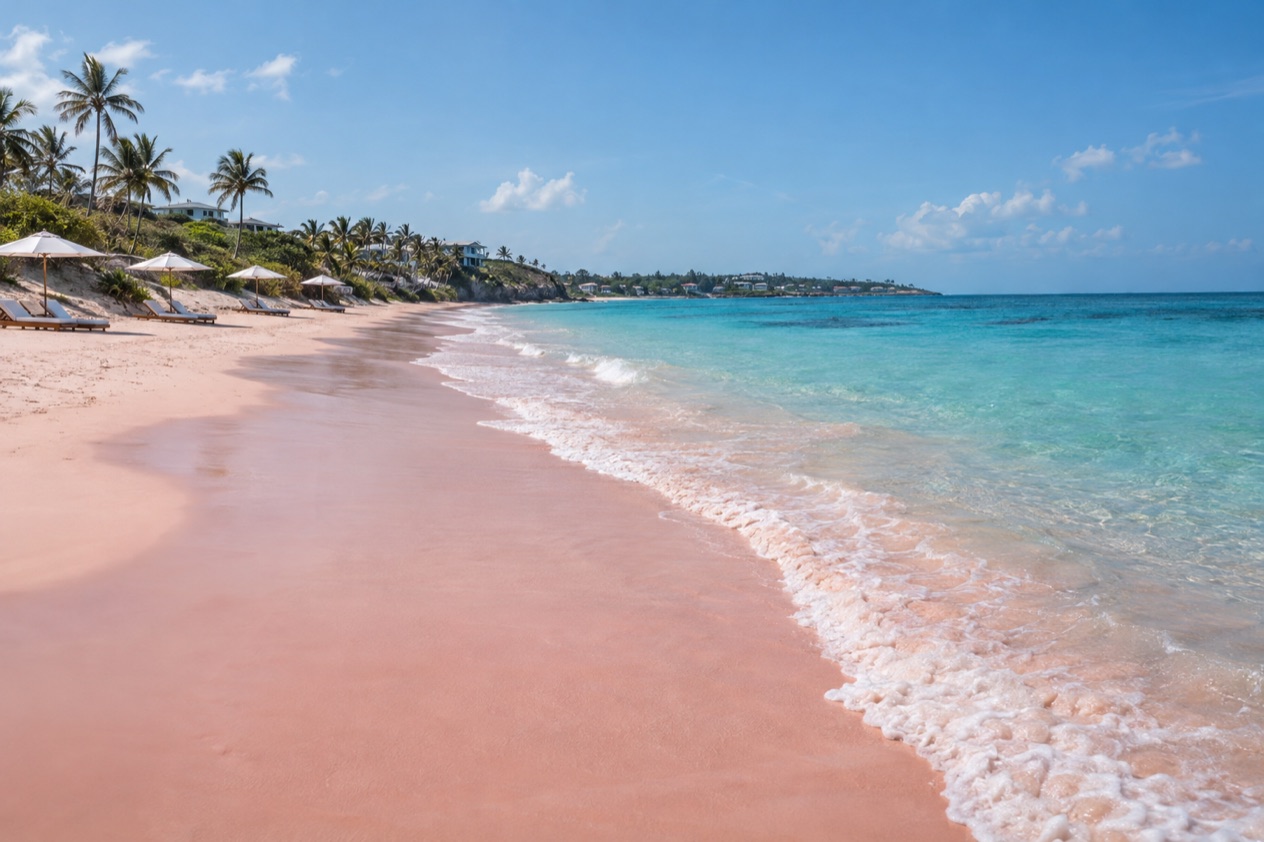
The island’s great draw lies along its eastern edge, where the Pink Sand Beach stretches for over three miles and is 50 to 100 feet wide. The color comes from foraminifera, tiny organisms with bright pink or red shells that live on reefs such as the nearby Devil’s Backbone, on the sea floor and in caves. The pink shows most strongly in the wet sand at the water’s edge, so look there first.
The sand stays cool underfoot, so walking barefoot is comfortable. The beach was featured on The Travel Channel’s World’s Best Beaches segment in March 2005 and named Best Sand Beach. Go early for a long, quiet walk along the shore, or late in the day when the low sun deepens the tint. It is on the Atlantic side of the island, so it faces open ocean.
Exploring by golf cart
Car rentals are unavailable on Harbour Island, but you can rent a golf cart, which is how many people reach the far end of the beach and the island’s quieter corners. Cruising the narrow roads with the breeze on your face is part of the experience, and the island is small enough that a loop covers a lot.
Use the cart to pair the town with the beach in a single day: lunch on a porch in Dunmore Town, an afternoon on the pink sand, then back for dinner as the lights come on along Bay Street.
Eating and drinking in Dunmore Town
Eating in Dunmore Town means porch tables, harborside decks and small restaurants tucked into old cottages. The setting is as much the point as the plate, and an evening usually stretches long.
Seafood is the natural order of the day. Conch turns up in the classic Bahamian ways: cracked and fried, in a fresh salad with lime and peppers, or in a chowder. Grilled fish, lobster when it is in season and a plate of peas and rice are the kind of things to look for. Bahamian bakeries and small kitchens sometimes sell fresh bread and coconut sweets, a good start to a morning walk.
For drinks, rum is the island’s spirit, and the Bahamian classics, like a rum punch or a Goombay Smash, suit a late afternoon on a porch. Casual beach bars along the Atlantic side serve cold drinks and simple lunches with your feet near the sand, while the town’s dinner rooms lean toward candlelight, a good wine list and fish done with care.
A reasonable plan: a light breakfast in town, lunch near the beach after a morning on the sand, and a slow dinner back in Dunmore Town. Walk between meals, and let the evening unfold. Most places keep a relaxed rhythm, so there is no need to rush a table.
Staying in Dunmore Town
Dunmore Town suits travelers who want to walk to dinner, step out to a cafe, and be within reach of the beach without planning around transport. Staying here puts you inside the village rather than out along the shore.
Lodging in town tends toward small inns, guesthouses and restored colonial cottages, many with porches, gardens and a few rooms rather than hundreds. That keeps the atmosphere intimate. Nights are quiet by nature: this is a village of about 1,800 people, and after dinner the main sounds are crickets, a bit of music from a bar and the occasional passing golf cart.
The trade-off is distance from the Atlantic beaches. Staying in town means you cross the island to reach the pink sand, whereas places along the east side put the beach at your doorstep but leave you farther from the restaurants and the harbor. Choose the town if you like to wander, shop and eat out. Choose the beach side if sand and surf are the point of the trip.
It is a good base for couples, small groups of friends and anyone who likes an old-fashioned village rhythm. If you want a large resort with every service on site, this is a different kind of stay.
Getting to Dunmore Town
Dunmore Town lies on Harbour Island, which sits just off the northeast coast of Eleuthera, so reaching it means getting to the island across the water. There is no bridge here: the island is its own small world, separated from North Eleuthera.
Once you are on Harbour Island, the town is compact and easy on foot, and its streets are the center of everything. Car rentals are unavailable on the island, but you can rent a golf cart, which is the usual way to reach the beach and the island’s far edges. Walking covers the town itself, from the harbor to the churches and shops.
The island’s location, east of North Eleuthera and facing the Atlantic on its far side, is what gives it both the sheltered harbor in town and the open-ocean beaches across the island. Dunmore Town sits on the harbor side, so arriving by water brings you right to its waterfront.
Good to know before you go
The U.S. State Department rates the Bahamas Level 2, “Exercise increased caution”, and says most crime occurs in Nassau on New Providence and in Freeport on Grand Bahama.
Dunmore Town keeps Eastern Time. The Atlantic hurricane season runs from June 1 to November 30, so plan with that window in mind when choosing your dates. The town is small and most of it can be covered on foot, with a golf cart for the beach. Bring a hat and sunscreen for the open Atlantic side, and wear comfortable shoes for wandering the lanes. Bahamian dollars are the local currency.
Sources
- Wikipedia, Dunmore Town (https://en.wikipedia.org/wiki/Dunmore_Town), checked October 10, 2026
- Wikipedia, Harbour Island, Bahamas (https://en.wikipedia.org/wiki/Harbour_Island,_Bahamas), checked October 10, 2026
- Wikivoyage, Harbour Island travel guide (https://en.wikivoyage.org/wiki/Harbour_Island), checked October 10, 2026
- Bahamas Ministry of Tourism, Investments & Aviation (bahamas.com), Harbour Island Pink Sand Beach (https://www.bahamas.com/natural-wonders/harbour-island-pink-sand-beach), checked October 10, 2026
- U.S. Department of State, The Bahamas Travel Advisory, Level 2 (https://travel.state.gov/), checked October 10, 2026
- NOAA National Hurricane Center, Climatology (https://www.nhc.noaa.gov/climo/), checked October 10, 2026
To plan your stay
- Best Time to Visit the Bahamas: Weather, Hurricane Season, Sea Temperatures and Junkanoo
- Where to Stay in the Bahamas: Best Islands, Resorts, Boutique Stays and How to Choose
- Getting Around the Bahamas: Flights, Ferries, Mailboats and Taxis in Nassau
- Know Before You Go to the Bahamas: Entry Rules, Money, Getting Around and Local Customs