
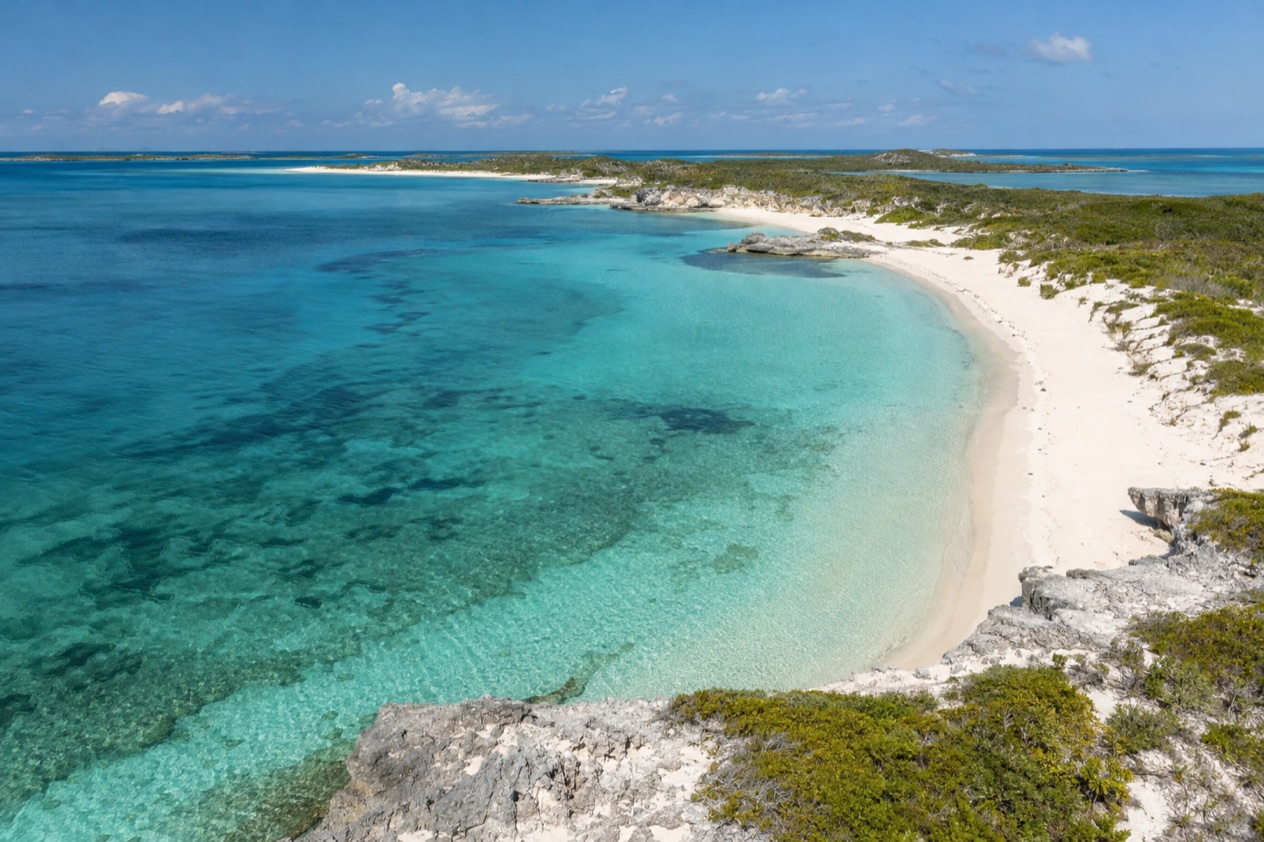
The first thing you notice at Conception Island is the color of the water in the cove, pale and glassy over the sand and darker where the coral begins. There are no docks, no beach bars and no rooftops, only low green scrub, the shoreline and the hush of a protected bay. It is a national park in the Bahamas, set near Rum Cay, and the visit is about slipping into the water and looking down.
Is visiting Conception Island worth it?
Yes, if you care more about what lies under the surface than what stands on the shore, and if the idea of an island with almost nothing built on it appeals to you. It suits snorkelers, divers and anyone who likes quiet, wild places. It is not the island for shopping streets, restaurants or a resort pool.
What sets it apart from the better-known islands is the cove. It is large, protected and shallow, and it holds groves of stag-horn coral that swimmers can pass through just below the surface.
Most of the Bahamas offers beaches, and many islands offer reefs, but a sheltered bay where you float over coral thickets is a particular pleasure. The Out Islands in general have a reputation for empty beaches and small populations, and Conception Island pushes that idea to its limit. You come for the water, the light and the feeling of being somewhere that has been left alone.
Because it is a national park, the visit has a different spirit from a day at a resort beach. You are a guest in a protected place, and the reward is a cove that looks far more like nature than like a vacation attraction. Travelers who need services close at hand will find it spare. Travelers who enjoy a day built around one natural wonder will find it a highlight of the southern islands.
What to see at Conception Island
The protected cove
The large cove is the heart of the island. Its shallow water lies sheltered from the open sea, which gives it the look of a natural lagoon: a wide, bright bowl with sand underfoot in places and darker patches where coral and grass take over. From a boat, the changes in color tell you where the bottom rises and falls.
Look along the edge of the bay as well. The shoreline is low and wild, with scrub behind the sand and nothing to interrupt the view. Early in the day the surface can be especially still and reflective, and the mood is closer to a nature reserve than a beach resort.
The stag-horn coral groves
The cove contains groves of stag-horn coral, and visitors can swim through them just below the water’s surface. This is the signature experience here. Stag-horn coral grows in branching, antler-like forms, and in a grove the branches rise in dense, tangled clusters with fish moving between them.
Float slowly and look at the details: the pale tips of the branches, the small fish that shelter in the gaps, the way sunlight ripples across the coral. Shallow water means the light reaches everything, so the colors are clear. Keep your movements gentle, since the coral is the whole reason this place is worth the trip.
Snorkeling and diving
Snorkeling and diving are both great activities at Conception Island. Snorkelers can explore the shallow coral close to the surface, while divers can go deeper to see more of the reef and the marine life around it. A mask and a quiet float are enough to make a memorable hour.
Beyond the coral itself, look for the usual reef residents of the Bahamas: small colorful fish, schools that drift in unison and the occasional larger visitor passing along the edge. Wildlife sightings are never guaranteed, but the setting makes them more likely than at a busy beach.
The national park setting
Conception Island is protected as a national park, and for the park the contact named is Ms. Tamika Rahming, Director of Parks and Science. That tells you what the island is for: preserving the cove, its coral and the wildlife that depend on them. Seabirds and sea turtles are the kind of animals that protected islands in the Bahamas often shelter, so keep your eyes open on the water and along the shore.
Hours, tickets and rules
Conception Island is not a museum or a fenced site with a ticket booth. It is a natural national park near Rum Cay, and the experience is the cove itself, which does not open or close like a building. The park’s contact for questions about it is Ms. Tamika Rahming, Director of Parks and Science.
The one rule that is clearly stated is a permission: visitors can swim through the groves of stag-horn coral in the cove, just below the water’s surface. That is the activity the island is known for, and it is the one to plan around. Snorkeling and diving are also named as great activities here.
Treat the coral as the delicate living thing it is. Swimming through the groves means moving slowly and watching where your hands and fins go, so you enjoy the coral without damaging it. A protected park depends on that kind of care from every visitor.
How to get to Conception Island
Conception Island lies near Rum Cay in the Bahamas, and that neighbor is the best way to place it on the map. It is an island in the Out Islands, the part of the archipelago that lies beyond New Providence and Freeport, where distances between islands are covered by water and where much of the shoreline is quiet.
Since it is an island park with no town on it, think of the journey as the first part of the experience. You travel across open water toward a low, green shape on the horizon, and the cove opens up as you approach. The sense of arriving somewhere remote is part of what makes the swim feel special once you are in the water.
Rum Cay is the reference point to build a plan around. Think of the trip as one outing within the southern Out Islands rather than a stop on a main route. The pace in this part of the Bahamas is unhurried, and the destination rewards that mood.
When to visit Conception Island
The best time of day is when you can spend unhurried hours in the water, and the shallow cove rewards a visit when the sun is high enough to light the coral clearly. Bright, overhead light brings out the shapes and colors of the stag-horn groves, which is exactly what you come to see.
Early in the day the cove often feels especially quiet, with a surface that can be smooth and still. A calm morning is lovely for floating over coral, though the sea is never something to promise, and conditions in any bay change with the wind.
As for the season, the Atlantic hurricane season runs from June 1 to November 30, and that is worth bearing in mind when planning a trip to any island in the Bahamas. Outside those months, the cove makes for a pleasant visit, and the appeal of its water and coral does not depend on a special date or festival. This is a place for a clear day and an open schedule.
Tips for your visit
Bring what a day in the water calls for: a mask and snorkel, fins if you like them and a swimsuit. The snorkeling is the point of the visit, so the equipment matters more than anything else you carry. Since the island has no town, bring what you need for the day with you.
Plan for a slow visit rather than a quick look. The coral groves reward patience, and the more time you spend floating, the more you see: small fish tucked into the branches, shifting light and the contours of the cove floor. Divers will want to extend that time further along the reef.
Combine the island with its neighbor. Rum Cay lies close by, and the two make a natural pair for travelers exploring this quiet corner of the Out Islands. On the Out Islands, local people are friendly and may invite visitors over for lunch and a cold beer, so allow time for the kind of unplanned conversation that makes these islands memorable.
For families and anyone who prefers calm conditions, the shallow cove is the draw, though swimmers of every age should stay within their comfort level. Keep your attention on the coral and on one another, and leave the place as you found it.
Good to know before you go
The U.S. State Department rates the Bahamas Level 2, “Exercise increased caution”, and says most crime occurs in Nassau on New Providence and in Freeport on Grand Bahama.
Conception Island is a protected national park with no town on it, so plan your day around the water and what you bring along. The Atlantic hurricane season runs from June 1 to November 30, and trips to the southern Out Islands are shaped by the weather like any other sea outing. The most useful habit is to treat the cove gently: swim slowly through the stag-horn coral, enjoy the wildlife from a respectful distance and let the island stay as quiet as you found it.
Sources
- Bahamas Ministry of Tourism, Investments & Aviation (bahamas.com), Conception Island (https://www.bahamas.com/natural-wonders/conception-island), checked October 10, 2026
- Wikipedia, Cat Island, Bahamas (https://en.wikipedia.org/wiki/Cat_Island,_Bahamas), checked October 10, 2026
- Bahamas Ministry of Tourism, Investments & Aviation (bahamas.com), travel blog, the Out Islands (https://www.bahamas.com/blog/bahamian-out-islands-our-best-kept-secret), checked October 10, 2026
- U.S. Department of State, The Bahamas Travel Advisory, Level 2 (https://travel.state.gov/), checked October 10, 2026
- NOAA National Hurricane Center, Climatology (https://www.nhc.noaa.gov/climo/), checked October 10, 2026
To plan your stay
- Best Time to Visit the Bahamas: Weather, Hurricane Season, Sea Temperatures and Junkanoo
- Where to Stay in the Bahamas: Best Islands, Resorts, Boutique Stays and How to Choose
- Getting Around the Bahamas: Flights, Ferries, Mailboats and Taxis in Nassau
- Know Before You Go to the Bahamas: Entry Rules, Money, Getting Around and Local Customs