
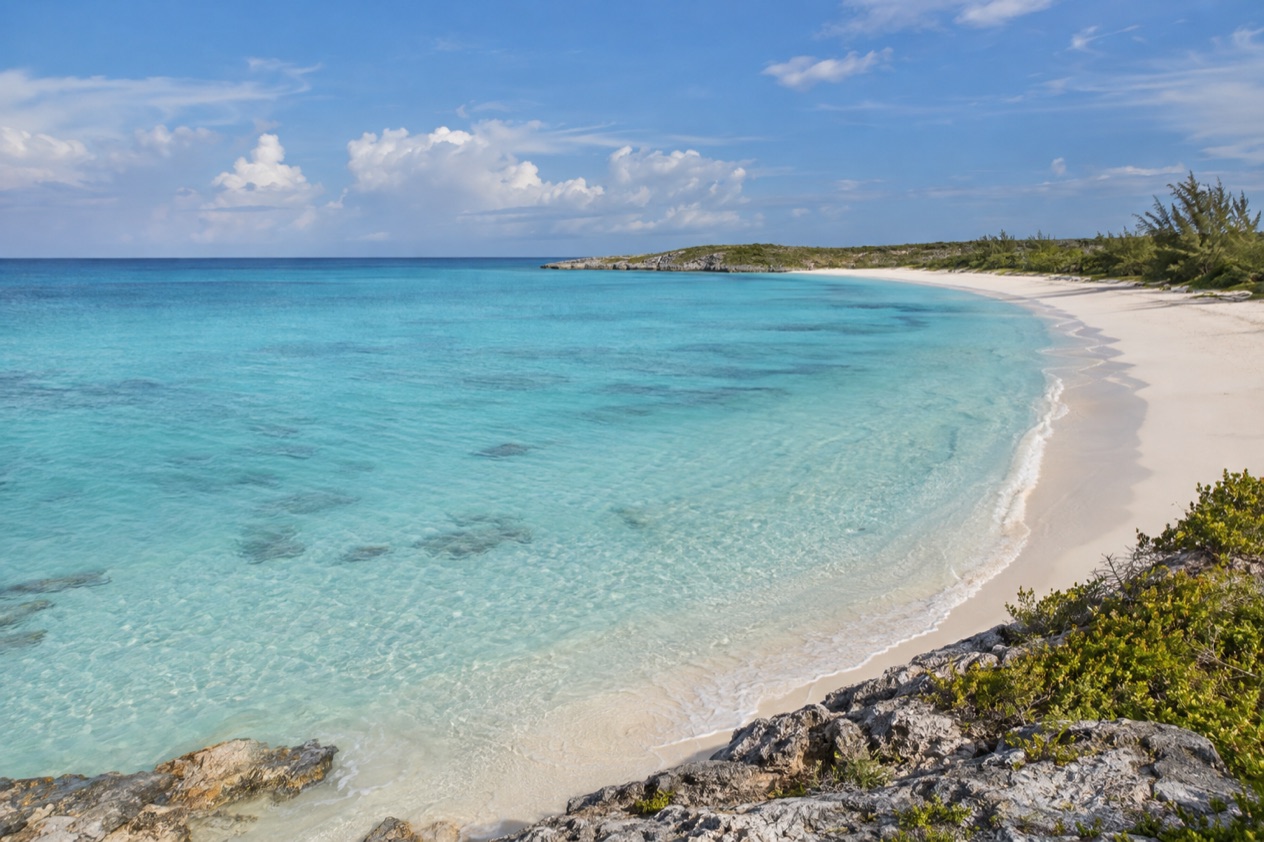
The sand at Cape Santa Maria feels like silk underfoot, and the trade winds move through the palms with a soft, steady rustle. The beach curves away in a long white line, the water shades from pale to deep turquoise, and for a moment nothing else seems to be there. Cape Santa Maria Beach on Long Island is a walking, swimming and sunset beach at the northern end of the island.
Is visiting Cape Santa Maria Beach worth it?
Yes, if what you want from a vacation is a long stretch of sand, clear water and quiet. Cape Santa Maria Beach, at Seymour’s on Long Island, is frequently ranked as one of the most beautiful beaches in the world, and the walk along it explains why. The beach runs for four miles, so even on a good day there is room to wander far from your towel.
What sets it apart from the more developed beaches of Nassau or Paradise Island is how little is going on. There is no strip of attractions behind the sand. You stroll down the bay and the beach grows more secluded as you go.
Long Island itself is long and narrow, with the Tropic of Cancer crossing its northern quarter, and that sense of a thin ribbon of land with sea on both sides is part of the charm. The reward here is the beach itself, plus the evenings, when picture postcard sunsets can be seen from any spot along the shore.
It also suits people who like to mix a beach day with the water. Swimming, snorkeling and scuba diving are all available at Cape Santa Maria, and the island has more to explore when you want a change from the sand, from deep blue holes to old plantation ruins.
What to see at Cape Santa Maria Beach
The four-mile white sand beach
The main event is the beach itself, four miles of white sand made for walking. The sand is fine and soft, the kind you want to feel with bare feet, and the water beside it is a clear turquoise. Walk slowly and look at how the color changes from the shallows out to the deeper blue.
Gentle trade winds whisper through the palm trees along the shore, which gives the beach its soundtrack. It is a place for long walks, for reading in the shade and for doing very little.
The quiet end of the bay
Take a stroll down the bay and the beach feels more secluded the farther you go. The crowd, such as it is, thins out, and the shoreline becomes a quiet place to sit and watch the water. This is the part of the visit for anyone who came to be away from people.
Bring the walk into the late afternoon and you are well placed for the evening light. The trade winds usually keep the air moving, and the palms frame the shore.
Sunset on the water
Picture postcard sunsets can be seen from any location here in the evening, so there is no single viewpoint to rush toward. Find a spot on the sand, settle in and watch the sky change over the turquoise water.
Many visitors time a walk along the beach to end with the sun going down. The light on the white sand is soft, and the wind stays gentle through the palms.
Swimming, snorkeling and diving
Swimming and snorkeling are both available in the turquoise waters at Cape Santa Maria, and scuba diving is available too. The clear water is the draw for anyone who wants to look at what lives beneath the surface rather than just lie on the sand.
Dean’s Blue Hole, west of Clarence Town, is a separate matter. It is the world’s second deepest underwater sinkhole and is not part of a beach day at the cape.
Hours, tickets and rules
Cape Santa Maria Beach is an open stretch of coast rather than a ticketed attraction, so there is no gate and no admission line to wait in. The beach can be enjoyed for walking, swimming and snorkeling, and the resort that shares the cape name can be reached by email at [email protected].
| Site | Open | Contact |
|---|---|---|
| Cape Santa Maria Beach, Long Island | Open shoreline, evening sunsets visible from any spot | [email protected] |
Swimming and snorkeling are available in the turquoise waters, and scuba diving is available at Cape Santa Maria. Elsewhere on the island, two rules stand out. Flats fishing for bonefish requires a license, though a local guide may take care of it for you. Visiting the plantation ruins, including Adderley Plantation and Taylor Plantation, requires a hike, so proper shoes are needed, and long pants can help if paths are overgrown.
How to get to Cape Santa Maria Beach
Cape Santa Maria is on Long Island, about 165 miles southeast of Nassau, which is on the island of New Providence. Most visitors arrive by air or by sea, and then continue by road on the island.
By air from Nassau
BahamasAir has daily scheduled flights from Nassau to Deadman’s Cay Airport on Long Island. Southern Air Charter has daily scheduled flights from Nassau to both Deadman’s Cay Airport and Stella Maris Airport.
Two airports means two ends of the island. Stella Maris is in the north and Deadman’s Cay is in the south, so it helps to think about which end suits your plans before choosing a flight.
By ferry from Exuma
In 2025, the Sheep Runner ferry operates between Long Island and Exuma on Monday, Wednesday and Friday during the peak season. It leaves Long Island early in the morning and returns from Exuma late in the afternoon.
That timing suits travelers linking the two islands as part of a longer trip through the Bahamas, rather than anyone planning a quick turnaround. It is a way to arrive by sea and see the water as you cross.
By private boat
International arrivals by private boat can clear customs at several official ports of entry on Long Island, some upon request. They include Clarence Town Public Dock, Flying Fish Marina at Clarence Town, Salt Pond Public Dock, Simms Public Dock, Stella Maris Marina and Stella Maris Airport. Boaters who arrive this way will want to plan their entry at one of these points before making their way up the island toward the cape.
On the island
Transport on Long Island is road-based, with limited taxi service, particularly from Stella Maris to Deadman’s Cay and Clarence Town. The island has one main road, the Queen’s Highway, running north to south, which makes navigation simple.
Car rental companies may provide pickup and drop-off only at the airport in their end of the island. Companies in the south may only provide cars at Deadman’s Cay Airport, and companies in the north may only provide cars at Stella Maris Airport.
When to visit Cape Santa Maria Beach
The best time of day is the evening, when picture postcard sunsets can be seen from any location along the beach. A walk timed to finish as the sun drops gives you the soft light on the white sand and the trade winds still moving through the palms.
During the day, the turquoise water invites swimming and snorkeling, and the long beach gives you room to walk. Mornings suit a long stroll down the bay toward the more secluded stretch, leaving the afternoon for the water.
As for the time of year, the Atlantic hurricane season runs from June 1 to November 30, so a trip in those months falls inside it. Outside those dates you are outside the official hurricane season. The Sheep Runner ferry from Exuma runs on Monday, Wednesday and Friday during the peak season, which matters if you are linking the islands by sea.
If you want something lively on the island, the Long Island Regatta at Salt Pond is an annual event that draws tourists from around the world. There is also a Saturday Nights Cave Party at the Stella Maris Resort.
Tips for your visit
Bring what suits a beach day: something for the sun, swimwear and a mask if you plan to snorkel. Plan on leaving yourself time for a long walk, since the beach is four miles long and the quiet end of the bay is the part many people want to reach.
Because the beach is a long, open stretch of sand, it works as a place to wander for a mix of ages. For guests with limited mobility, a spot near where you arrive on the sand will let you enjoy the view and the sunset without walking far.
Pair the beach with other parts of the island. Dean’s Blue Hole, west of Clarence Town, drops to about 660 feet and hosts the Vertical Blue freediving competition.
Many deaths have occurred there from people attempting free diving without proper training or pushing beyond their limits, so it is a place to look at with respect. Divers should know that the body becomes more dense with depth, making ascent more difficult, and should always surface with one hand over the head to avoid overhangs.
For a different kind of outing, the ruins of old stone plantation houses, including Adderley Plantation and Taylor Plantation, are reached on foot. Wear proper shoes, and long pants can help if paths are overgrown. Anglers can fish the flats for bonefish with a license, which a local guide may take care of.
Good to know before you go
The U.S. State Department rates the Bahamas Level 2, “Exercise increased caution”, and says most crime occurs in Nassau on New Providence and in Freeport on Grand Bahama.
Long Island is about 80 miles long and no more than a few miles wide, so the cape is one stop on a long, narrow island with a single main road. The Atlantic hurricane season runs from June 1 to November 30, which is worth remembering when choosing dates. Beyond that, keep your plans simple: a beach, clear water and an evening sky are what the cape does well.
Sources
- Bahamas Ministry of Tourism, Investments & Aviation (bahamas.com), Cape Santa Maria (https://www.bahamas.com/natural-wonders/cape-santa-maria), checked October 10, 2026
- Wikipedia, Long Island, Bahamas (https://en.wikipedia.org/wiki/Long_Island,_Bahamas), checked October 10, 2026
- Wikivoyage, Long Island (Bahamas) travel guide (https://en.wikivoyage.org/wiki/Long_Island_(Bahamas)), checked October 10, 2026
- U.S. Department of State, The Bahamas Travel Advisory, Level 2 (https://travel.state.gov/), checked October 10, 2026
- NOAA National Hurricane Center, Climatology (https://www.nhc.noaa.gov/climo/), checked October 10, 2026
To plan your stay
- Best Time to Visit the Bahamas: Weather, Hurricane Season, Sea Temperatures and Junkanoo
- Where to Stay in the Bahamas: Best Islands, Resorts, Boutique Stays and How to Choose
- Getting Around the Bahamas: Flights, Ferries, Mailboats and Taxis in Nassau
- Know Before You Go to the Bahamas: Entry Rules, Money, Getting Around and Local Customs