
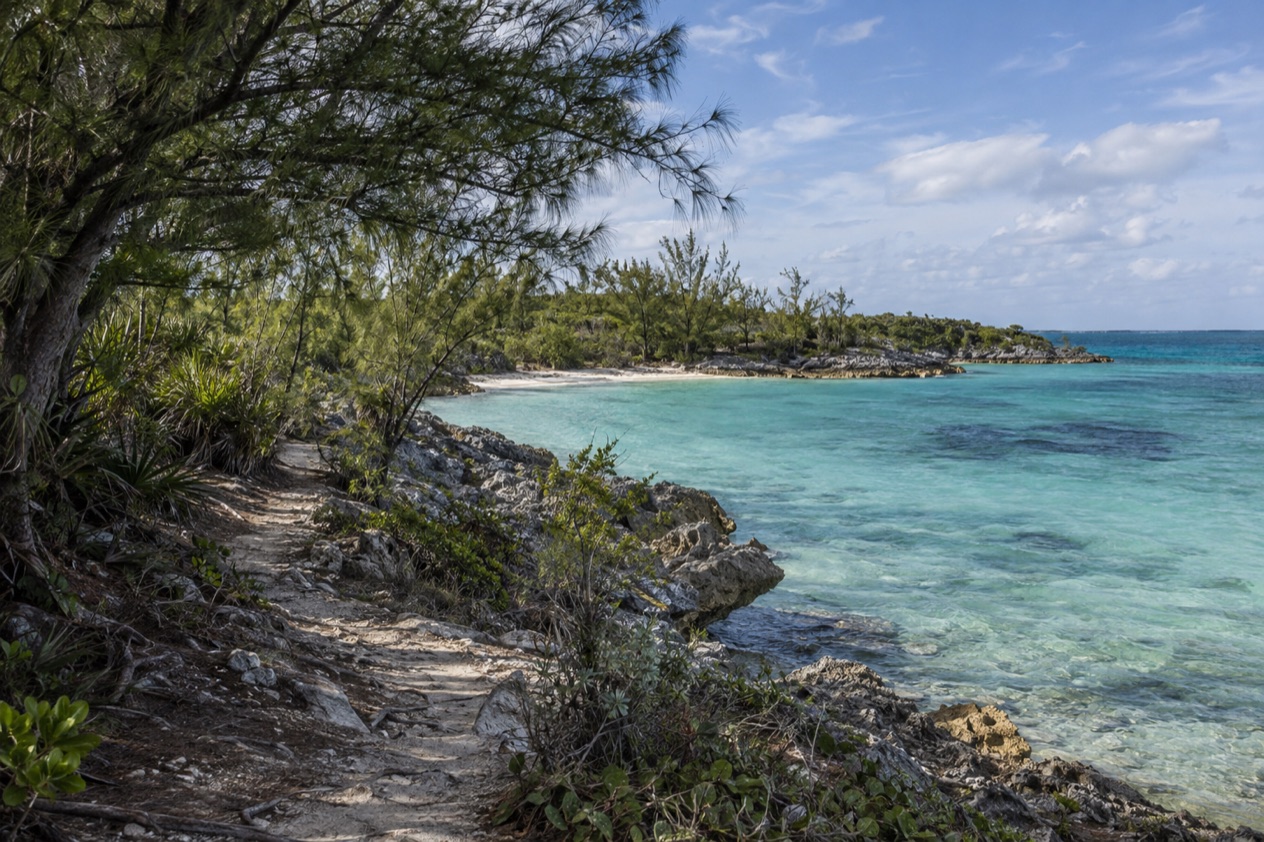
A park warden’s boat idles beside a mooring field in the Exumas, and below the hull the water runs from pale green to deep blue over seagrass and coral. Ashore, trails cross rocky ridges where iguanas sun themselves and birds call from the scrub. The Bahamas National Trust looks after protected land and sea across the islands, and a visit here means wild places, quiet walks and a close look at what the archipelago was before the resorts.
Is visiting the Bahamas National Trust parks worth it?
Yes, if you like your Bahamas with birds, reefs, mangroves and pine forest rather than a lounge chair, and it suits hikers, paddlers, snorkelers and anyone who enjoys watching wildlife. The Trust runs 33 national parks, spread over islands that sit far apart, so a visit is usually a single park chosen to fit where you are staying.
What sets these parks apart from the beach clubs and resort grounds nearby is that they exist to protect something. On Abaco, a pine forest shelters the Bahama Parrot, which nests underground. In the Exumas, a marine reserve established in 1958 guards the water that most visitors come to see.
On Andros, the third-largest barrier reef in the world lies offshore, with two marine parks covering its healthiest parts. Nobody has built a stage set here: you walk, paddle or float, and the place does the rest.
Families with school-age children will find the New Providence and Grand Bahama parks easy to fold into a stay, and birders will find reasons to travel to Abaco, Andros or Inagua. If what you want is a day of sunbathing with a cocktail, a park is the wrong choice. If you want to learn something about the islands while you are on them, it is among the best uses of a day.
What to see at the Bahamas National Trust parks
Exuma Cays Land and Sea Park
This is the first marine reserve in the Bahamas and in the wider Caribbean, and today it is the most visited national park in the country. It covers 112,640 acres of land and sea, and it won the Platinum Global Ocean Refuge Award in 2018 for its protection of biodiversity. Wardens and Defence Force officers stationed at Warderick Wells keep a constant watch over it.
Across the park you can follow several hiking trails and watch for birds, fish, turtles and iguanas. Moorings are available for boaters, which is how many people reach the park. Within its boundaries, no fishing, shelling or conching of any kind is permitted, so what you see stays where it is.
Abaco National Park
Set up in 1994 on a 99-year lease signed by the Bahamas Government, this park covers 20,500 acres of pine forest in South Abaco. It was created to protect the northern breeding grounds of the Bahama Parrot, a bird that nests in underground cavities, an unusual habit for a parrot.
Bring binoculars. Four endemic birds live here: the Bahama Yellowthroat, Bahama Warbler, Bahama Swallow and Bahama Woodstar. The West Indian Woodpecker is often found in the park, and the Atala Hairstreak butterfly can be seen in its natural habitat, which few places allow. Active patrol wardens look after the park.
Moriah Harbour Cay National Park, Exuma
Beaches, dunes, blue holes, reefs, mangroves and seagrass meadows make up 22,833 acres here, with both land and marine wilderness areas. It was established in 2002 and expanded in 2015, and it counts as a bird hotspot.
Visitors come for kayaking, snorkeling, kiteboarding, bonefishing, hiking and photography. Access boardwalks and trails lead into the park, and an active warden is on duty. The Trust is raising funds for a Welcome Centre at The Ferry on Little Exuma.
Andros and its Blue Holes
Andros has four parks: Blue Holes National Park, the Crab Replenishment Reserve, the North and South Marine Parks, and West Side National Park. Blue Holes National Park has hiking trails, and offshore runs the Andros Barrier Reef, over 124 miles long, with two marine parks protecting 8,500 acres of its healthiest parts. On Andros and Inagua, expert guides run half-day and full-day birdwatching tours.
Hours, tickets and rules
Entry is by daily fee, with lower rates for children and seniors, and a combined pass for the parks that sit close together on Grand Bahama and New Providence. Bahamas National Trust members receive free access to all parks.
| Site | Admission |
|---|---|
| Single Bahamas National Trust park | Adult (15-59) $15, senior (60+) $10, child (6-14) $8 per day |
| Rand Nature Centre and Lucayan National Park, Grand Bahama (multi-park pass) | Adult $25.50, senior $17, child $13.60 per day |
| The Retreat Garden, Primeval Forest National Park and Bonefish Pond National Park, New Providence (multi-park pass) | Adult $51, senior $34, child $27.20 per day |
The Exuma Cays Land and Sea Park office is open Monday to Friday from 9am to 5pm and on Sunday from 9am to 12pm.
In Exuma Cays Land and Sea Park, anchorage and mooring fees are paid on the PayExumaPark platform. No fishing, shelling or conching of any kind is permitted inside the park, and wardens patrol constantly. Poaching or unusual activity can be reported anonymously on VHF Channel 09 by calling Exuma Park and giving a fictitious vessel name such as Miss Molly. VHF Channel 16 is monitored around the clock for emergencies.
How to get to the Bahamas National Trust parks
There is no single gateway, because the parks lie on different islands. You choose a park, then travel to its island. The parks of Grand Bahama sit around Freeport, the New Providence parks lie on the island that holds Nassau, and Abaco National Park is in South Abaco.
In the Exumas, Exuma Cays Land and Sea Park has moorings for boaters, so arriving by boat is the way the park itself describes. Moriah Harbour Cay National Park is on Exuma, with its planned Welcome Centre at The Ferry on Little Exuma. Andros and Inagua offer guided birdwatching tours, and the guides lead the day once you are on the island.
Inagua, home to the largest remaining breeding colony of West Indian flamingos, and the Andros parks are separate islands in their own right. Plan each as its own stop rather than a side trip from another island.
When to visit the Bahamas National Trust parks
Go early or late in the day when you plan to walk or watch birds, since that is when birds are most active and the trails are more comfortable. Birdwatching tours on Andros and Inagua are offered as half-day and full-day outings, so a morning start leaves room for either.
The Atlantic hurricane season runs from June 1 to November 30, and a trip in those months should leave room for plans to change, especially for a boat-based visit to the Exumas. Outside those dates the weather is less of a planning question. The Exuma park office keeps Sunday morning hours, which helps if your stay lands on a weekend.
Many visitors time a park day around the rest of their trip rather than the season, because the parks exist all year. If you want parrots, think of Abaco’s pine forest. If you want reef and mangrove, think of the Exumas and Andros. If flamingos draw you, Inagua is the place.
Tips for your visit
Bring binoculars for the birds, a camera, and a snorkel if your park offers reef or blue hole water. Kayaking, snorkeling, kiteboarding and bonefishing are all part of the picture at Moriah Harbour Cay, so a day there can be built around whichever you prefer.
On Grand Bahama, a five-mile Heritage Trail in Freeport gives you a nature walk, and the multi-park pass covers Rand Nature Centre and Lucayan National Park together. On New Providence, one pass covers three parks, which suits a day of gardens, forest and pond. For a reef-focused experience, the Reef Rescue Network offers five coral restoration experiences for snorkelers and scuba divers, and Coral Vita, a land-based coral farm, cultivates 24 types of indigenous coral.
On Abaco, Abaco Neem Farm is a certified organic farm where visitors can take a tour or stay on a working vacation as a volunteer in exchange for accommodations and meals. It pairs well with a day in Abaco National Park. Respect each park’s rules: leave shells and sea life where they are, and report anything unusual to the wardens.
Good to know before you go
The U.S. State Department rates the Bahamas Level 2, “Exercise increased caution”, and says most crime occurs in Nassau on New Providence and in Freeport on Grand Bahama.
The Trust also does wetland conservation work on Andros, New Providence, Exuma, Freeport and Inagua, and fees help support that work. The hurricane season runs from June 1 to November 30, so travelers in those months should keep plans flexible, particularly for anything involving a boat. Moriah Harbour Cay National Park posted updated rules on its news page, and its general management plan is available on the park’s website.
Sources
- Bahamas National Trust, National park info (https://bnt.bs/national-park-info/), checked October 10, 2026
- Bahamas National Trust, Park admission fees (https://bnt.bs/park-admission-fees/), checked October 10, 2026
- Bahamas National Trust, Exuma Cays Land and Sea Park (https://bnt.bs/explore/exuma/exuma-cays-land-sea-park/), checked October 10, 2026
- Bahamas National Trust, Abaco National Park (https://bnt.bs/explore/abaco/abaco-national-park/), checked October 10, 2026
- Bahamas National Trust, Moriah Harbour Cay National Park (https://bnt.bs/explore/exuma/moriah-harbour-cay-national-park/), checked October 10, 2026
- Bahamas Ministry of Tourism, Investments & Aviation (bahamas.com), Ecotourism (https://www.bahamas.com/plan-your-trip/ecotourism), checked October 10, 2026
- U.S. Department of State, The Bahamas Travel Advisory, Level 2 (https://travel.state.gov/), checked October 10, 2026
- NOAA National Hurricane Center, Climatology (https://www.nhc.noaa.gov/climo/), checked October 10, 2026
To plan your stay
- Best Time to Visit the Bahamas: Weather, Hurricane Season, Sea Temperatures and Junkanoo
- Where to Stay in the Bahamas: Best Islands, Resorts, Boutique Stays and How to Choose
- Getting Around the Bahamas: Flights, Ferries, Mailboats and Taxis in Nassau
- Know Before You Go to the Bahamas: Entry Rules, Money, Getting Around and Local Customs