
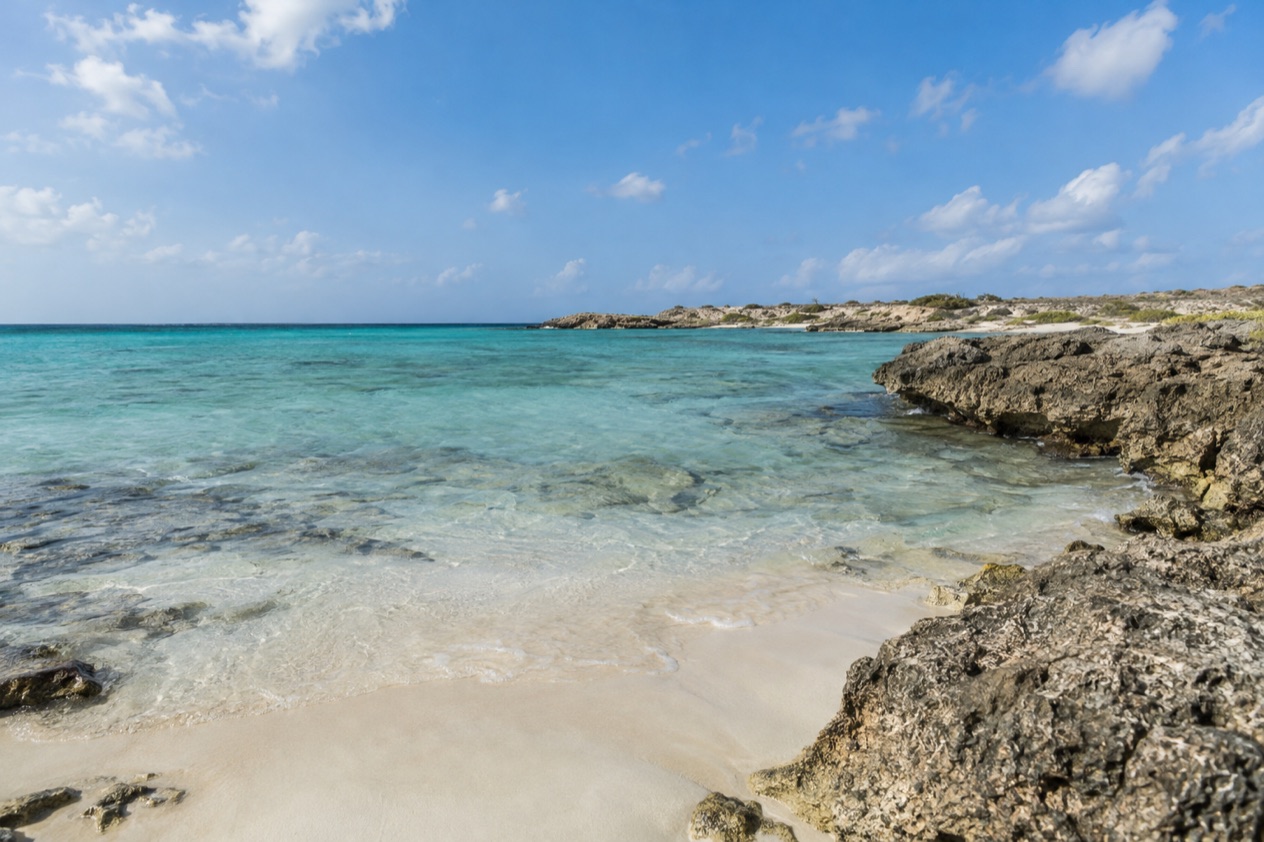
Down at the southern end of Aruba, a narrow ribbon of powder-white sand curves around a small bay where fishermen leave their painted boats at anchor. The water is clear, the mood is unhurried, and the only soundtrack is the lap of the bay and the occasional voice from the boats. Rodgers Beach is a modest, local-feeling cove for anyone who wants a quiet swim, a book and a bit of the island’s southern character.
Is visiting Rodgers Beach worth it?
Yes, if you like small, quiet beaches with a working-bay atmosphere and you are happy with a simple setting rather than a resort scene. It suits readers, swimmers, snorkelers and anyone who likes to watch boats rock at anchor while the afternoon slips by. It is less suited to travelers who want a long beach packed with lounge chairs, music and water sports.
What sets it apart from its famous neighbor is scale and feel. Baby Beach, a minute’s drive away, is the place built for families with small children, with a refreshment stand, rental beds and a lively crowd.
Rodgers Beach is the quieter alternative, a narrow strip of powdery sand where the bay is described as calm and protected for swimming and the swimming water is clear. The fishermen’s boats give it something the resort beaches on the other coast do not have: a sense that the bay belongs to the people who work on it.
The two beaches work well as a pair. You can spend a slow morning on one and move to the other for a different mood, since they lie so close together. Many travelers will enjoy Rodgers precisely because it asks so little of them: a towel, a mask and a few unplanned hours.
What to see at Rodgers Beach
The cove is small, so the visit is about a few distinct pleasures rather than a list of sights. Each one rewards a slow look.
The sand and the bay
The beach itself is a narrow strip of powdery white sand, fine enough to feel soft underfoot and bright enough to make you squint at midday. It does not stretch out into wide dunes, so the space feels intimate, with the bay filling most of the view. On a quiet day you can take in the whole curve at a glance.
The water is the draw. The bay offers calm waters, protected for swimming, and the swimming water is clear, so you can usually see the sand below as you wade in. Float for a while, look back at the shore, and notice how little there is between you and the horizon.
The fishermen’s boats
Fishermen anchor their colorful boats in the bay, and they are the beach’s signature image. Bright hulls in blues, yellows and reds sit against pale sand and turquoise water, and photographers tend to love the contrast. It is an authentic touch that tells you this is still a place tied to the sea’s daily work.
Southern Aruba has long had this link to fishing, and the area around San Nicolas, the island’s southeastern town often nicknamed the Sunrise City, has its own story of work, music and street art. Watching the boats gives you a small glimpse of that side of the island, away from the hotel strips of the leeward coast.
The dive shop next door
Right beside the beach sits a local dive shop that rents snorkel and dive gear. It also has a shower and a restaurant, which means you can rinse off the salt and sit down for a meal without leaving the cove. For many visitors this is the practical anchor of the visit.
If you arrive without a mask, you can pick one up here and slip straight into the water. The shop gives the beach a small-scale, no-frills infrastructure that suits its character: enough to be comfortable, not enough to change the mood.
Baby Beach, a minute away
Baby Beach is the natural companion stop. It lies in the southern part of the island, close to San Nicolas, and its shallow water lets swimmers wade out a long distance and still touch the sea bottom. The beach is ideal for families with small kids, and the contrast with quiet Rodgers is part of the fun.
There is a refreshment stand with hamburgers and hotdogs, and Big Mama’s Grill serves BBQ and seafood platters. Beach beds, windscreens and snorkel gear can be rented for a fee, and complimentary huts provide shade. For snorkeling, the spot is where the bay opens to the ocean, and visitors should stay inside the marked snorkel area.
Hours, tickets and rules
Rodgers Beach is a natural cove rather than a ticketed attraction, and you experience it as a stretch of sand and water beside a local dive shop. There is no gatehouse to pass through and no formal program to follow. What you do here is up to the day and your mood: swim, read, snorkel, eat at the restaurant next door or simply watch the boats.
One rule applies across the island and matters here, where the bay is small and the reef close. Aruba has banned sunscreens containing oxybenzone since 2019. Visitors should use mineral-based reef-safe sunscreens, which are more likely to be biodegradable and gentler on the marine environment.
If you forget to bring a suitable product, sunscreen can be bought on the island from local companies such as Aruba Aloe and Arubalife Organics. Putting it on before you reach the sand is a considerate habit in a bay this small.
How to get to Rodgers Beach
Rodgers Beach is in the southern part of Aruba, beside Baby Beach, and the easiest way to place it on the map is through that neighbor. Baby Beach is close to San Nicolas, and Rodgers Beach is only a minute’s drive from it. If you can find Baby Beach, you have found Rodgers.
From the Palm Beach hotels, Baby Beach is about a 45-minute drive. That makes the trip a real excursion rather than a quick hop, and it suits a morning or afternoon set aside for the south. The drive crosses the island from the resort coast to a part of Aruba that feels quieter and more local.
Baby Beach has public transport among its amenities, so the area is reachable without your own vehicle through the public network, though routes and timetables are not described. Once you arrive, the two beaches sit so close that the move between them is short.
A simple plan is to treat San Nicolas as your base for the day. Start with a look at the town, continue to the beaches and finish with a meal at the dive shop’s restaurant or at a grill by Baby Beach.
When to visit Rodgers Beach
The beach has two moods depending on the day of the week. During the week it is very quiet and suitable for reading or swimming, so a weekday is the choice for solitude. On weekends the beach is often populated by local families, which brings voices, picnics and a friendly, lived-in atmosphere.
Neither is better, they simply suit different travelers. If you want silence and an open stretch of sand, pick a weekday. If you enjoy seeing how Arubans spend their free time by the water, a weekend gives you a window into it.
As for the season, the best time to visit Aruba in general is from February to August. The peak season runs from December to April, so those months bring more visitors to the island overall. Visiting in the spring and summer stretch of the good months gives you the island at a gentler pace.
Time of day matters for light and comfort. Morning and late afternoon give the softest light on the boats and the white sand, which is when the colors in the bay look their richest. Midday is bright and open, so a hat and shade-seeking breaks are welcome.
Tips for your visit
Bring a mask and snorkel if you own them, but know that the dive shop beside the beach rents snorkel and dive gear, so leaving them behind is not a problem. Pack reef-safe mineral sunscreen, a towel and a book, since the quiet weekday atmosphere invites long reading stretches.
The same shop has a shower and a restaurant, which makes it simple to turn the visit into a half day. Swim, rinse off, eat and swim again without moving far. That rhythm suits the small scale of the cove and keeps the day relaxed.
Families with small children will find Baby Beach a good partner. Its shallow water allows swimmers to wade out a long distance and still touch the sea bottom, and it has a public bathroom and places to eat and drink. Rodgers offers calmer, quieter moments, and the two together give a varied day.
If you want to snorkel at Baby Beach, stay within the marked snorkel area where the bay opens to the ocean. Combining a stop at Rodgers for a quiet swim with a visit to Baby Beach for the facilities and a meal is a natural way to spend the day.
A last idea is to add a stop in San Nicolas on the same trip. The town sits close to Baby Beach, and walking its streets after the beach gives the outing a cultural side that balances the sand and sea.
Good to know before you go
The U.S. State Department rates Aruba Level 1, ‘Exercise normal precautions,’ and says Aruba is generally a safe destination for travelers, with petty crime the main concern in popular tourist areas.
Rodgers Beach is a simple place, and a little preparation goes a long way. Bring what you need for the day, including reef-safe sunscreen, and use the dive shop’s shower and restaurant when you want a break. Petty crime is the main concern in popular tourist areas across Aruba, so keep your belongings with you when you swim.
Sources
- Aruba Tourism Authority, Rodgers Beach (https://www.aruba.com/us/explore/rodgers-beach), checked October 9, 2026
- Aruba Tourism Authority, Baby Beach (https://www.aruba.com/us/explore/baby-beach), checked October 9, 2026
- Aruba Tourism Authority, Best time to visit (https://www.aruba.com/us/our-island/one-happy-island/when-is-the-best-time-to-visit-aruba), checked October 9, 2026
- Aruba Tourism Authority blog, Responsible guest (https://www.aruba.com/us/blog/how-to-be-a-responsible-guest-protecting-arubas-beaches-and-marine-life), checked October 9, 2026
- U.S. Department of State, Aruba Travel Advisory, Level 1, issued August 19, 2026 (https://travel.state.gov/content/tsg_aem/us/en/home/international-travel/travel-advisories/destination.abw.html), checked October 9, 2026
To plan your stay
- Best Time to Visit Aruba: Weather by Month, Peak Season and Festivals
- Where to Stay in Aruba: Palm Beach, Eagle Beach, Oranjestad and All-Inclusives
- Aruba Airport (AUA): Arrival, Getting to Your Hotel, U.S. Preclearance and Departure
- Know Before You Go to Aruba: Entry Forms, Money, Water and Local Customs