
A small boat pulls away from the dock at the Renaissance Wind Creek resort, and within minutes a low green island comes into view, with pale sand and a few palm-shaded cabanas. Then, on the beach, a flamingo stalks past the sun loungers as if it had a reservation. Renaissance Island gives resort guests their own beaches, bars and birds, and it deserves a day of your Aruba vacation.
Is visiting Renaissance Island and Flamingo Beach worth it?
Yes, if you are staying at Renaissance Wind Creek Aruba Resort, because the island is set aside for guests of the Renaissance Hotel and the Renaissance Suites, and the boat ride over is complimentary. If you are not staying there, you cannot simply buy your way in, so the question becomes whether the resort itself fits your plans.
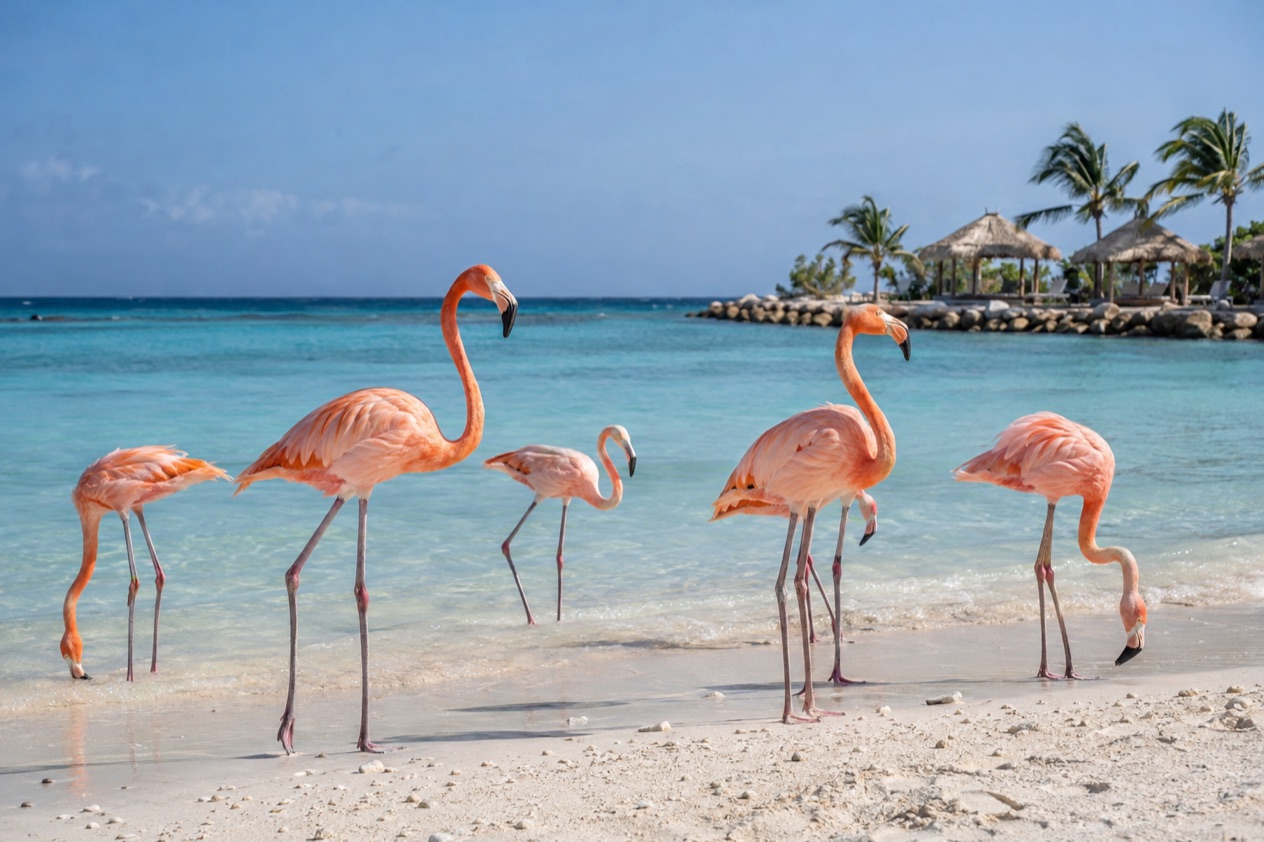
What sets it apart from other beach days on Aruba is the mix of privacy and wildlife. The island holds the only private beaches on Aruba, and its famous pink flamingos roam the sand, which turns an ordinary beach afternoon into something people photograph and talk about for the rest of the trip. Flamingo Beach is the stretch where those birds tend to wander, so the beach is as much a small show as it is a place to lie down.
The island is also built for a full day rather than a quick dip. There is a spa cove, beach tennis, volleyball, hammocks and water sports, plus two bars and a grill, so couples, families and friends can each find a corner of their own. The island covers 40 acres, enough room to spread out and wander.
The other private island, De Palm Island, works very differently. It is an all-inclusive attraction with snorkeling, snuba, sea trek adventures, banana boat rides, a playground and the Blue Parrotfish Water Park, and it is open to day-pass buyers. Renaissance Island is the quieter, resort-only choice, while De Palm is the busier, activity-packed one.
What to see at Renaissance Island and Flamingo Beach
Flamingo Beach and the pink flamingos
The flamingos are the reason most guests head here first. They roam the island freely, wading and strutting near the water’s edge, and their pink feathers stand out sharply against the white sand and turquoise sea. Many visitors arrive with a camera in hand and spend the first half hour just watching them go about their business.
Look for them in the early part of the day, when the island is just opening and the beach is still quiet. Give the birds room and let them come to you. They are wild enough to wander off when crowded, and the best pictures come from patience rather than chasing.
The private beaches and cabanas
Renaissance Island has the only private beaches on Aruba, and that privacy shapes the whole mood. Sun loungers face the water, hammocks sway between palms, and luxury private cabanas are available for those who want shade and a base for the day. The feel is unhurried, closer to a hotel pool deck that happens to sit on a sandbar than to a public beach.
Coral Beach is the one to know if you are thinking about a celebration, since it can be reserved for weddings. The island as a whole is available for wedding celebrations, so you may see a setup of white chairs and flowers on the sand on any given day.
Papagayo Bar & Grill and the Mangrove Beach Bar
Two places keep you fed and watered without leaving the island. The Papagayo Bar & Grill is the place for a sit-down lunch, and the Mangrove Beach Bar is where you settle in with a drink and watch the water. Between them, a long afternoon on the sand does not need to end early.
Plan the meal around the rest of your day. A late lunch after a morning on the beach, followed by a drink at the beach bar as the light softens, makes a natural rhythm for the visit.
Spa Cove, beach tennis and other activities
For a change of pace, the Spa Cove offers a tucked-away spot for treatments, and beach tennis gives active guests a game on the sand. The island also offers volleyball, water sports and hammocks, so the day can swing from lazy to lively and back again.
These activities suit groups with different energy levels. One person can head for the spa while another plays a match, and everyone meets again at the bar.
Hours, tickets and rules
The island is open every day from morning until early evening, and the boat ride from the resort costs nothing. The real gate is where you sleep: access is available only to guests of Renaissance Wind Creek Aruba Resort.
| Site | Open |
|---|---|
| Renaissance Island | Daily, 7 a.m. to 7 p.m. |
Aruba has banned sunscreens containing oxybenzone since 2019, and visitors are asked to use mineral-based reef-safe sunscreens, which are more likely to be biodegradable and gentler on the environment. Sunscreen can be bought on the island from local companies such as Aruba Aloe and Arubalife Organics, so a forgotten bottle is easy to replace.
How to get to Renaissance Island and Flamingo Beach
You reach the island by boat from the Renaissance Wind Creek resort, and nowhere else. Scheduled ferries carry hotel guests directly to the island, and the complimentary water taxis leave every 15 minutes, so you never have to plan around a single departure.
That frequency means you can go over for a morning swim, come back for lunch at the hotel, and return in the afternoon if you like. Nothing locks you into one long stay, and the island’s hours of 7 a.m. to 7 p.m. set the window for your trips.
Guests of the Renaissance Hotel and the Renaissance Suites are the ones set up for this crossing. If you are staying elsewhere on Aruba, the island is not part of your itinerary, and the alternative among Aruba’s private islands is De Palm Island, a 5-minute ferry ride from the mainland that is open through day passes. More information about Renaissance Island is available at arubaprivateisland.com.
When to visit Renaissance Island and Flamingo Beach
The best time of day is the start. The island opens at 7 a.m., and the first hours are when the beach feels most like your own, the flamingos are easiest to watch, and the sun has not yet climbed high. Late in the afternoon, as the day winds toward closing at 7 p.m., the light turns soft and the mood settles again.
The best time to visit Aruba in general runs from February to August, and that window suits the island well. The peak season runs from December to April, which means the resort itself is at its busiest through those months, so the beach days at the start of the year are the ones most likely to be shared with a full house of guests.
Outside peak season, from May through August, you are in the part of the favorable window that falls after the winter rush. Those months are a natural choice if you would like the island at a gentler pace and still want to be in the best part of the year.
If you are planning a wedding on Coral Beach or elsewhere on the island, think about the same calendar. The island is available for celebrations, and choosing a month in the favorable window gives your guests the best of the island’s setting.
Tips for your visit
Bring reef-safe sunscreen, since oxybenzone products are banned on Aruba. Mineral-based formulas are the kind visitors are asked to use, and if you arrive without one, local brands sell it on the island. Beyond that, a swimsuit, a towel from your room and a camera cover most of what you need.
Plan on a half day at least. With a spa cove, beach tennis, volleyball, hammocks, water sports and two places to eat and drink, the island rewards a longer stay, and the water taxis every 15 minutes make it simple to come and go. A morning on the sand, lunch at the Papagayo Bar & Grill and an afternoon in a hammock make a good shape for the day.
Families and groups with mixed interests do well here because the island offers so many different things to do in one place. Some people can play beach tennis or try water sports while others book time at the spa or settle into a cabana.
If you want something more active and open to anyone, pair your stay with a separate outing to De Palm Island. It is a different kind of day, with snorkeling among colorful tropical fish, snuba, sea trek adventures, banana boat rides, a playground and the Blue Parrotfish Water Park with its twisting slides, all in an all-inclusive format. More information is available at depalmisland.com.
Good to know before you go
The U.S. State Department rates Aruba Level 1, ‘Exercise normal precautions,’ and says Aruba is generally a safe destination for travelers, with petty crime the main concern in popular tourist areas.
Petty crime is the main concern in popular tourist areas of Aruba, so keep your belongings together when you leave the beach for a swim. Aruba is in its hurricane season from June to November, though the island sits on the southern fringes of the belt where damaging storms are rare. Reef-safe sunscreen is the one habit the island asks of every visitor.
Sources
- Aruba Tourism Authority, Renaissance Island (https://www.aruba.com/us/explore/renaissance-island), checked October 9, 2026
- Aruba Tourism Authority, Private islands (https://www.aruba.com/us/things-to-do/on-the-water/private-islands), checked October 9, 2026
- Aruba Tourism Authority, Best time to visit (https://www.aruba.com/us/our-island/one-happy-island/when-is-the-best-time-to-visit-aruba), checked October 9, 2026
- Aruba Tourism Authority blog, Responsible guest (https://www.aruba.com/us/blog/how-to-be-a-responsible-guest-protecting-arubas-beaches-and-marine-life), checked October 9, 2026
- U.S. Department of State, Aruba Travel Advisory, Level 1, issued August 19, 2026 (https://travel.state.gov/content/tsg_aem/us/en/home/international-travel/travel-advisories/destination.abw.html), checked October 9, 2026
To plan your stay
- Best Time to Visit Aruba: Weather by Month, Peak Season and Festivals
- Where to Stay in Aruba: Palm Beach, Eagle Beach, Oranjestad and All-Inclusives
- Aruba Airport (AUA): Arrival, Getting to Your Hotel, U.S. Preclearance and Departure
- Know Before You Go to Aruba: Entry Forms, Money, Water and Local Customs