
On a morning along Eagle Beach, the fofoti trees lean in the trade wind, sunbathers spread towels on pale sand, and nobody gives a second glance to the swimsuits, the paddleboards or the vendors of cold coconut water. Visitors who arrive picturing a European-style clothing-free stretch find something quieter. Aruba allows topless sunbathing on its beaches, offers a few quieter spots for more privacy, and asks visitors to keep things easy by respecting local customs.
Are there nude beaches in Aruba?
No, Aruba has no designated nude beaches, and nudity is not allowed on any of its public beaches. The island is a family destination first, with a long strip of resort sand on the leeward coast, and the rules and the mood on the beach follow from that. You will see swimwear everywhere, from the busy shoreline in front of the Palm Beach hotels to the wider, more relaxed sands of Eagle Beach.
There is no full-scale nude resort on the island either, so a trip built around clothing-free vacationing does not fit Aruba. What the island does offer is a handful of private corners where a bit less fabric is quietly tolerated, and those spots stay low-key and out of the main beach scene. Anything beyond that is simply not part of the island’s beach culture.
Why public beaches stay fully clothed
Public beaches in Aruba are shared spaces. On a typical day a single stretch of sand holds local families setting up for a Sunday picnic, couples reading under a palapa, kids digging in the sand and tour groups walking down from a nearby hotel. The law is clear that nudity does not belong in that mix, and the atmosphere reflects it.
If you want to feel the beach when it is most open, go early. Before the day fills in, the sea is bright, the wind is just waking up and the sand has a washed, empty look. It is a lovely time for a long walk along the water in an ordinary swimsuit, with only a few joggers and shell-hunters for company.
Resort areas and secluded spots
Several resorts offer clothing-optional areas or secluded spots where guests can go topless. These exclusive areas are tucked away from the main beaches, which is exactly what makes them work: privacy comes from the layout of the property, not from a change in the island’s rules. Think of a screened corner of a pool deck or a sheltered bit of garden rather than an open stretch of sand.
This is something to ask about when you choose where to stay, because only a few select resorts have such an area and they handle it discreetly. Expect a calm, adult-leaning corner where people read, nap and sunbathe without fuss. Nothing about it is advertised loudly, and the point is to keep it that way.
Remote wild beaches
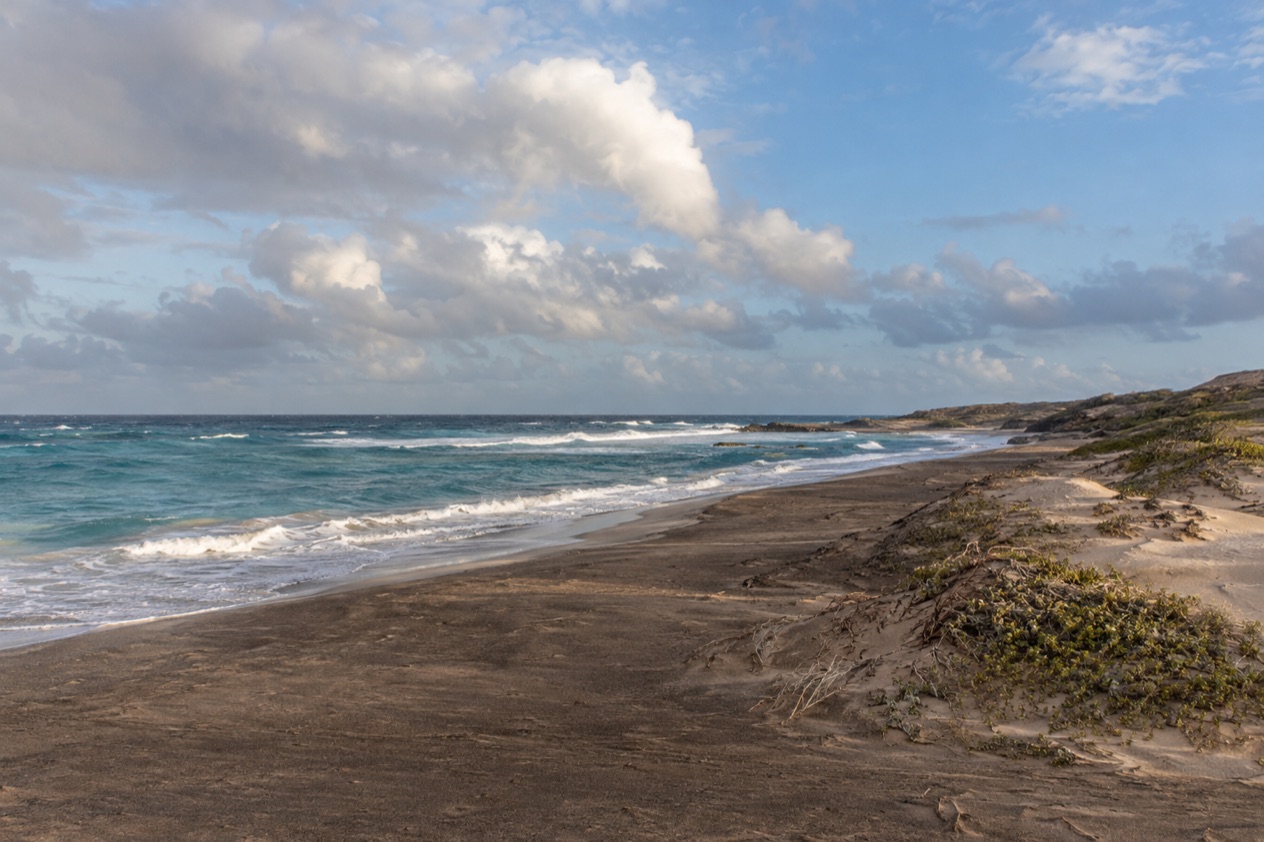
Some remote wild beaches can occasionally offer the privacy needed for topless sunbathing. Aruba’s windward coast, on the north and east, is rough and wild, with rocky shores, wind-sculpted limestone and long empty views, and its few sandy pockets feel a world away from the resort strip. Occasionally is the key word: privacy there depends on who else happens to be around, and public-beach rules do not disappear because the crowd does.
If you go exploring in that direction, go for the scenery first. The coast is a place for photographs, a picnic and a long look at the surf, and a topless moment, if it happens, is a side note rather than the plan. Keep towels, sunscreen and water close, and treat the place with care, since that coast is fragile as well as wild.
Is topless sunbathing allowed in Aruba?
Not on public beaches, but it is quietly accepted in private resort areas. A few select resorts have tucked-away spots where guests can sunbathe topless, and that is where the practice lives on the island. On the open sand in front of a hotel strip, keep your top on.
The distinction matters because it shapes how you plan. If topless sunbathing is important to you, it should be part of choosing a hotel rather than something you try once you are on the sand. A private corner of a resort gives you the sun, the shade of a palm and the sound of the trade wind without the sense of being on display.
What a private resort area feels like
These areas are small and calm. Picture a few loungers set apart from the main pool, a hedge or a wall for screening, a waiter who arrives with a cold drink and a mood that stays low-key. People come for quiet, not for a scene, and the unspoken etiquette is to keep voices down, keep phones away from other guests and leave everyone to their own sun.
The setting suits couples and solo travelers who value privacy, and it suits anyone who simply dislikes tan lines. It is less suited to families with children, who will do better at the lively main beach in front of the resort, where the water-sports huts, the snack bars and the sandcastles are.
A day split between two beaches
A good rhythm is to divide the day. Spend the morning in your resort’s private corner while the sun is soft, then walk out to the public beach for lunch and a swim, with your top back on. By afternoon the wind is steady, the fofoti trees on Eagle Beach throw a little shade, and a plate of fresh fish tastes better after a salty swim.
Whatever the setting, the sun on this dry, windy island is strong and the breeze can hide how much you are burning. Mineral-based reef-safe sunscreen is the right kind to carry, and it matters even more when skin that rarely sees daylight is suddenly exposed.
Sunscreen that respects the reef
Aruba has banned sunscreens containing oxybenzone since 2019, and visitors are encouraged to choose mineral-based reef-safe products because they are more likely to be biodegradable and gentler on the environment. Sunscreen can be bought on the island from local companies such as Aruba Aloe and Arubalife Organics, so a forgotten bottle is not a problem.
Apply it before you head to the water and reapply after swimming. The extra care protects both you and the reefs just offshore, which are part of why the island’s snorkeling is so rewarding.
What should you know about local customs?
The main custom is to be mindful of local ways and to respect the law, because as a visitor you are subject to local laws and breaking them, even unknowingly, can lead to expulsion, arrest or imprisonment. In practice that means dressing and behaving the way the beach around you does, and treating the island with the courtesy you would want in your own hometown.
Aruba is relaxed and welcoming, and the Papiamento greeting of a smile and a friendly hello goes a long way. Papiamento is the island’s own language, a blend that locals speak every day alongside Dutch. A little warmth toward the people who work the beach bars, the water-sports huts and the snack stands makes a day in the sun even better.
Laws that surprise visitors
Aruba’s enforcement policy on drugs differs significantly from the Netherlands. Laws against possession of controlled substances are enforced rigorously, including against tourists in possession of marijuana for personal use. People detained in Aruba do not have the option of posting bond for their release, and anyone who is arrested or detained should ask the police or prison officials to notify the U.S. Consulate immediately.
Counterfeit and pirated goods are illegal under local law, and you may pay fines or have to give them up if you bring them back to the United States. A bargain from an unlicensed seller is not worth the trouble.
Caring for the beach and the sea
Taking sea shells, corals, white sand, or sea life such as sand dollars and dried sea stars from Aruba is against the law and could result in a fine at the airport. The reasoning is simple: if every visitor took one shell home, it would add up to over a million shells a year. Take photographs instead, and leave the beach as you found it.
In the water, avoid stepping on seagrass, corals or mangroves. If you meet a sea turtle while swimming, keep your distance and do not chase it. Turtles surface for air about every 10 minutes, and being chased or crowded can leave them struggling to breathe.
Resist touching turtles, sea stars or manta rays, since contact can damage their protective layer and leave them open to infection. Sea stars depend on water to move and breathe, so lifting one out for a photo can seriously harm or kill it. Skip feeding bread or other human food to fish and turtles too, because it upsets their health and can let algae smother the coral.
Respect for everyone on the sand
There are no legal restrictions on same-sex sexual relations or the organization of LGB events in Aruba, and the law prohibits discrimination against people with disabilities and is enforced. Sidewalks and crossings in many areas are not wheelchair accessible, and many buildings lack ramps, which is worth knowing when you plan a beach day with someone who uses a wheelchair.
Good to know before you go
The U.S. State Department rates Aruba Level 1, ‘Exercise normal precautions,’ and says Aruba is generally a safe destination for travelers, with petty crime the main concern in popular tourist areas.
Pack a mineral-based reef-safe sunscreen, a light cover-up for the walk between your resort’s private corner and the public beach, and a bag for your trash. Petty crime is the main concern in popular tourist areas, so keep valuables out of sight when you head into the water. Late in the year the island sits within the hurricane season, which runs through November, although damaging storms are rare on these southern fringes of the hurricane belt.
Sources
- Aruba Tourism Authority blog, Nude beaches (https://www.aruba.com/us/blog/aruba-nude-beaches), checked October 9, 2026
- U.S. Department of State, Aruba Travel Information, Local laws and special circumstances (https://travel.state.gov/content/travel/en/international-travel/International-Travel-Country-Information-Pages/Aruba.html), checked October 9, 2026
- Aruba Tourism Authority blog, Responsible guest (https://www.aruba.com/us/blog/how-to-be-a-responsible-guest-protecting-arubas-beaches-and-marine-life), checked October 9, 2026
- U.S. Department of State, Aruba Travel Advisory, Level 1, issued August 19, 2026 (https://travel.state.gov/content/tsg_aem/us/en/home/international-travel/travel-advisories/destination.abw.html), checked October 9, 2026
To plan your stay
- Best Time to Visit Aruba: Weather by Month, Peak Season and Festivals
- Where to Stay in Aruba: Palm Beach, Eagle Beach, Oranjestad and All-Inclusives
- Aruba Airport (AUA): Arrival, Getting to Your Hotel, U.S. Preclearance and Departure
- Know Before You Go to Aruba: Entry Forms, Money, Water and Local Customs