
On a September afternoon in Oranjestad, a traveler scrolling through a storm tracker over a cold drink sees swirls forming far out in the Atlantic and wonders whether the trip is about to go sideways. Aruba does have an official hurricane season, but the island sits on the southern fringes of the hurricane belt, and most days in those months look like any other Aruba day: sunny and breezy. Hurricane season rarely disrupts a vacation here, since most days stay sunny and breezy.
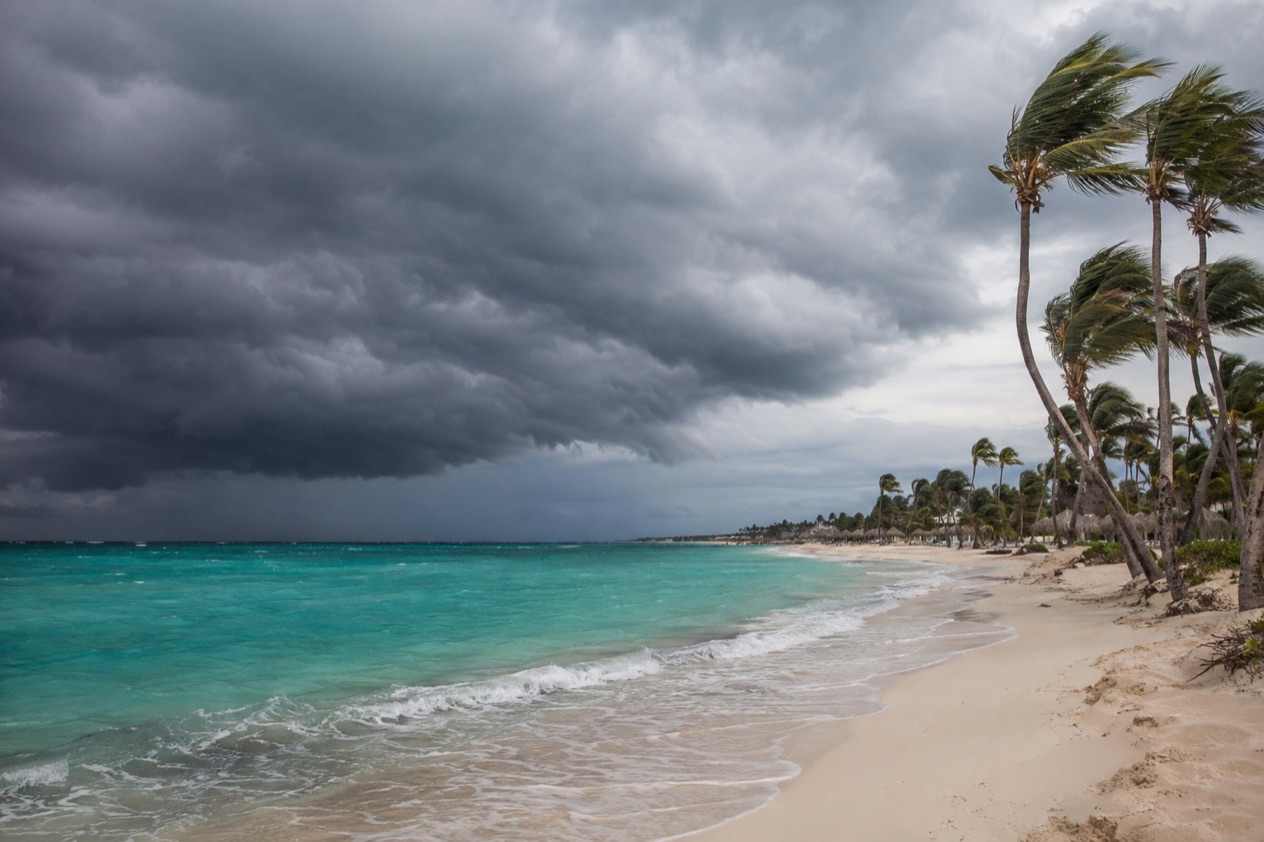
Does Aruba get hurricanes?
Aruba is rarely hit, because the island lies on the southern fringes of the hurricane belt, on the South American continental shelf. Damaging tropical cyclones are the exception rather than the rule: considerable damage from a cyclone passing just south of the island happens only about once every hundred years. That is a very different picture from the islands farther north in the Caribbean, where storm tracks run much closer.
Rarely does not mean never feel anything. Storms passing far away in the Caribbean can still touch the island’s weather, bringing more rain, gusty winds, or, oddly, a total lack of wind that makes the heat feel heavier than the thermometer says. Those are the effects a visitor is most likely to notice, and they usually amount to a grayer day or a muggy evening rather than a real threat.
What past storms did here
Two names come up when people talk about Aruba and hurricanes. Hurricane Ivan passed north of the island in 2004 and sent in high waves, some flooding inland and lasting changes to parts of the coastline. It never struck Aruba directly, which tells you something about how a storm at a distance can still reshape a beach.
Hurricane Felix, in 2007, was the first tropical cyclone in more than a hundred years whose center came near the island, passing at about 50 miles. Even that close approach is remembered as a near miss rather than a catastrophe, and it is the closest reference point locals have for a direct threat.
Storms that pass to the north
The more realistic worry is not a direct hit but a system passing north of Aruba. Tropical cyclones or large storm systems in that position can cause some damage through beach erosion and coastal flooding. For a traveler this tends to mean rough seas along the shore and a few days when the water is less inviting, while the interior and the town carry on as usual.
If a disturbance does develop, the guidance is simple: follow tropical storm warnings and the messages that arrive on your cell phone, and keep an eye on the official weather platforms. Between those alerts and the island’s position, most trips pass without any of this coming up.
When is hurricane season in Aruba?
Hurricane season in Aruba runs from June 1 to November 30, the same dates as the Atlantic season, which covers the Atlantic Ocean, the Caribbean Sea and the Gulf of America. Roughly half the year falls inside it, so a large share of summer and fall vacations are booked within the window. Activity sometimes shows up before June 1 or after November 30, but the official dates are the ones to plan around.
Inside the season the activity is far from even. In an average year the first named storm forms in mid to late June, the first hurricane in early to mid-August, and the first major hurricane in late August or early September.
The peak falls on September 10, with most of the action between mid-August and mid-October. An average season brings 14 named storms across the whole basin, of which 7 become hurricanes and 3 major ones. Those are basin-wide totals, and the great majority never come near Aruba.
How the months feel on the ground
June is the start of the window and also a windy, mostly dry month, with the trade wind blowing from the east and only a few days of measurable rain. September, the peak of the Atlantic season, is still short on rain days, with the breeze easing a little. Highs stay around the low 90s, so the days are hot and bright.
October and November are where the island’s own rainy season begins to show. Showers arrive more often, and the wind softens, which is why the air can feel stickier. The table gives the numbers for each month.
| Month | Average high (°F) | Average low (°F) | Rain (inches) | Rain days | Wind (mph) |
|---|---|---|---|---|---|
| June | 90.5 | 80.4 | 0.69 | 2.8 | 20 |
| September | 91.8 | 81.1 | 1.69 | 3.3 | 15 |
| October | 90.3 | 80.1 | 3.01 | 7.3 | 13 |
| November | 88.7 | 78.8 | 3.43 | 9.6 | 13 |
Showers here tend to come in the early morning, and in the rainy months they can also arrive in the evening. That leaves most of the day for the beach, a drive out to the wild windward coast, or a long lunch in town. The sun does not disappear for long, and a wet morning often clears by the time you are ready for the water.
Is it worth traveling to Aruba during hurricane season?
Yes, for many travelers it is, because weather in Aruba generally stays the same through the season, with sunny days and breezy trade winds. The island is dry, with only about 18 inches of rain in a year, and it is often described as having more sunny days than any other Caribbean island. The season is a real consideration for flights and for the odd rough-sea day, but not a reason to write off the months.
What you gain by going
The off-season runs from September to November, and it is the stretch to choose if you want fewer visitors, along with July and August. The beaches along the leeward coast have more room, and restaurants feel less hurried. Summer also sits inside the shoulder season, from May to August, which is part of the best general window for the island, February to August.
Wind is a bonus for some. The windy season runs from May to October, which suits anyone who likes kiteboarding and windsurfing, and the Hi-Winds competition takes place in May. Temperatures stay in the same warm band all year, between 80°F and 90°F, so there is no cool season to dodge.
What to weigh before booking
Some businesses and restaurants may close during the off-season for renovations or vacations, so a favorite dinner spot may be dark when you arrive. October and November are also the rainiest stretch, with showers on a good number of days, so pack for a few gray mornings and an evening downpour.
The other risk is indirect. A big storm elsewhere in the Caribbean can disrupt the weather for a few days, with heavier rain, gusts or a spell of dead calm and sticky heat. If you read forecasts a week out and keep an eye on warnings, you will know early enough to adjust plans such as a boat outing or a beach day.
Peak season runs from December to April, with the dry months bringing abundant sunshine. That is the busy stretch, when restaurants, rental cars and tours call for reservations in advance. Choosing the hurricane season trades some of that bustle for quieter beaches and a bit more unpredictability in the sky.
Good to know before you go
The U.S. State Department rates Aruba Level 1, ‘Exercise normal precautions,’ and says Aruba is generally a safe destination for travelers, with petty crime the main concern in popular tourist areas.
The currency is the Aruban florin, and the official languages are Papiamento and Dutch. During hurricane season, keep your phone set to receive weather messages and follow the official weather platforms if a system forms in the Caribbean. Weather on the island itself usually stays sunny and breezy, so a flexible mindset covers most surprises.
Sources
- Departamento Meteorologico Aruba, Climate Data (https://www.meteo.aw/climate.php), checked October 9, 2026
- Aruba Tourism Authority, Aruba hurricane season (https://www.aruba.com/us/blog/aruba-hurricane-season), checked October 9, 2026
- NOAA National Hurricane Center, Climatology (https://www.nhc.noaa.gov/climo/), checked October 9, 2026
- Aruba Tourism Authority, Weather and climate (https://www.aruba.com/us/our-island/island-facts/weather-and-climate), checked October 9, 2026
- Aruba Tourism Authority, Best time to visit (https://www.aruba.com/us/our-island/one-happy-island/when-is-the-best-time-to-visit-aruba), checked October 9, 2026
- Wikipedia, Aruba (https://en.wikipedia.org/wiki/Aruba), checked October 9, 2026
- Meteorological Department Aruba (meteo.aw), Summary Climatological Normals 1991-2020, Queen Beatrix Airport station (http://www.meteo.aw/files/Download/climatnormals19912020.pdf), checked October 9, 2026
- U.S. Department of State, Aruba Travel Advisory, Level 1, issued August 19, 2026 (https://travel.state.gov/content/tsg_aem/us/en/home/international-travel/travel-advisories/destination.abw.html), checked October 9, 2026
To plan your stay
- Things to Do in Aruba: Beaches, Arikok National Park, Island Tours and Food
- Where to Stay in Aruba: Palm Beach, Eagle Beach, Oranjestad and All-Inclusives
- Aruba Airport (AUA): Arrival, Getting to Your Hotel, U.S. Preclearance and Departure
- Know Before You Go to Aruba: Entry Forms, Money, Water and Local Customs