
At the rental counter near the airport, with the keys in hand and the trade wind already tugging at the door, most visitors ask the same thing: are you really allowed to drive here? The answer is yes, with the license in your wallet. What changes is the rhythm of the roads, from the roundabouts to the way a goat may step out of the scrub.
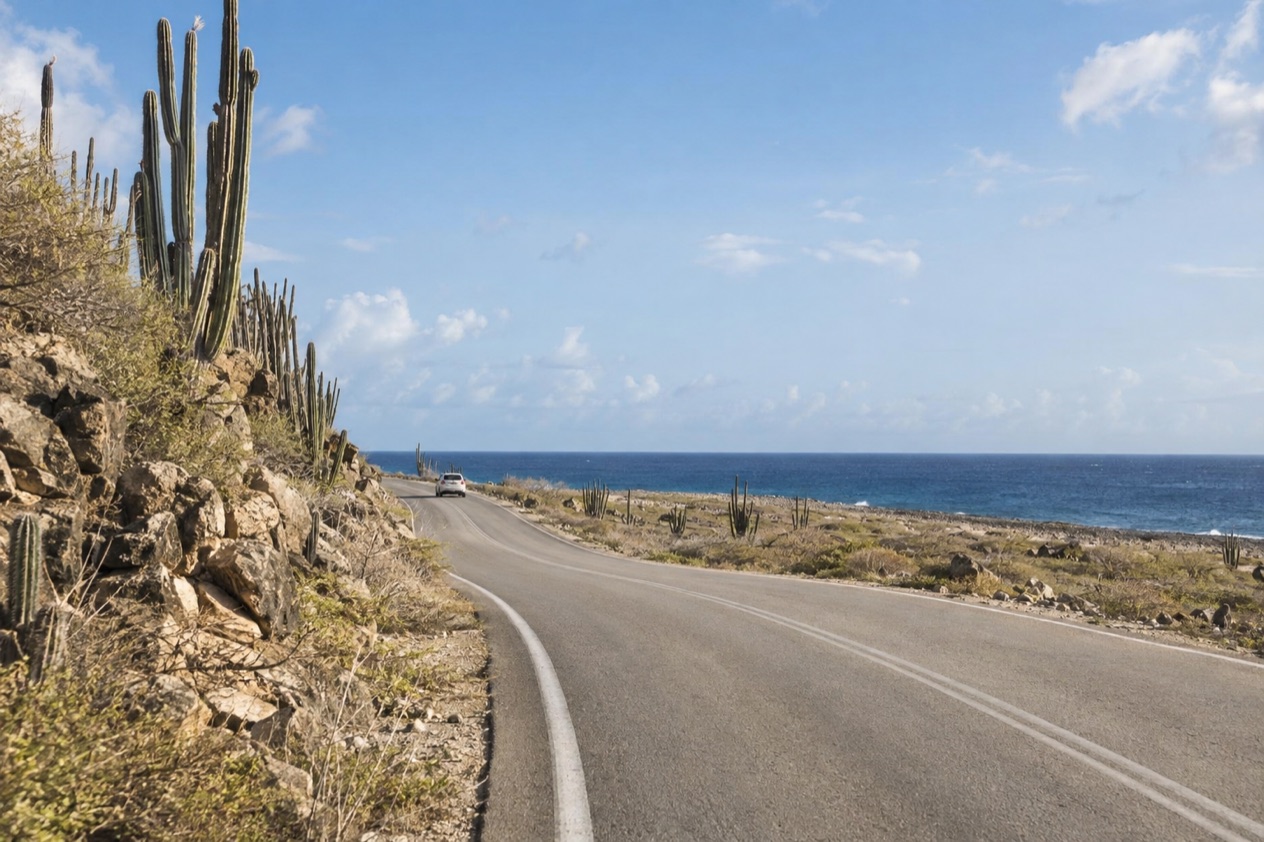
Can you drive in Aruba with a U.S. license?
Yes, a valid U.S. driver’s license is enough to drive in Aruba. You do not need to hunt for a special document before the trip, which makes the island easy to fold into a vacation that starts with a rental car and a loose plan.
Renting a car gives you freedom and flexibility to explore the island at your own pace. You can reach a beach early, stay for a late lunch in a roadside spot and head back when the light turns orange, without watching a bus schedule.
What rental companies ask for
Rental companies generally want drivers to be at least 21 years old, though requirements vary by company. They also usually look for either an international driving permit or a valid license held for two full years. For most U.S. drivers, the license you already carry is the document that counts.
At pickup, expect a deposit, typically US $500, or a credit card pre-authorization instead. It is worth asking at the counter which of the two your company prefers, so the hold on your card does not surprise you.
Insurance and extras
Insurance is advised. Keep in mind that it is not valid if the driver is intoxicated during an accident, so a sunset cocktail and a drive back to the hotel do not mix, however short the road looks on the map.
You can also ask about additional services such as towing, windsurf roof racks and child car seats. The roof racks hint at what the island is known for, since the wind keeps the water on the windward side busy with sails and boards, and families with small children will want to settle the car seat question when they book.
Scooters, motorcycles and ATVs
If four wheels feel like too much, you can rent a scooter or a motorcycle for just a day, and a valid regular driving license is all you need. Helmets are supplied with every scooter rental. The island has well-paved roads and relatively flat terrain, which makes for smooth riding along the coast.
ATVs are available for rent too, suitable for on and off-road adventures, and they suit travelers who want to leave the asphalt behind and head into the dry, rocky country. Each year, Aruba International Bike Week brings bikers from various countries cruising around the island, so you may share the road with a lot of chrome in season.
What are the road rules?
The rules are close to what you know, with a few differences that matter: you drive on the right-hand side of the road, as at home, and overtaking is done on the left. Where Aruba feels different is in the signs, the roundabouts and the speed numbers.
Speed and signs
Aruba’s road signs list speed in kilometers per hour, so those numbers will not match the mph on your dashboard. Limits are lower in towns and higher on the open road, unless a sign says otherwise. Take a first stretch slowly and match your speedometer to the signs before you settle in.
The signs themselves are different than in the United States, so it is worth familiarizing yourself with them before you drive. A few minutes with the rental map and a look at the shapes and symbols around the airport exit will save you hesitation at your first junction.
Roundabouts, crossroads and red lights
On roundabouts, vehicles already on the roundabout have the right of way, so you wait at the entrance and join when there is a gap. At a crossroad without traffic signs, traffic coming from the right has the right of way. That second rule is the one U.S. drivers forget, because at home the habit is to look left first.
At traffic lights, remember that there are no turns on red. Sitting at an empty junction waiting for green feels odd at first, but it is the rule, and the driver behind you will expect it.
Who and what shares the road
Watch for scooters, motorcycles and ATVs, because their drivers may not strictly follow traffic rules. Give them room at junctions and when changing lanes, and do not count on them to stop where you would expect.
In less developed areas, goats and other animals may cross the road unexpectedly. This is most likely once you leave the resort strips for the rocky interior and the wilder coast.
Driving after dark
Night driving is reasonably safe if you are familiar with the route and the road conditions, but most roads are not as well-lit as roads in the United States. Plan to drive the unfamiliar stretches in daylight, and keep the dinner drive for roads you have already seen once. Dark road edges and a wandering goat are a poor combination.
What should you do after an accident?
The first thing to lean on after an accident is your rental insurance, which is why it is advised to take it. A rental car is where most visitors meet the question, and the arrangement you made at the counter decides what comes next.
Insurance is the starting point
Insurance is not valid if the driver is intoxicated during an accident. That is the one condition worth remembering before you pour a second drink at a beachfront table with the car parked outside. If you have taken cover, read what it includes before you leave the lot, and keep the paperwork where you can reach it.
The deposit you left at pickup, typically US $500 or a credit card pre-authorization, is the other piece of the arrangement. It stays tied to the car until it comes back, so the way you handle any damage is part of the same conversation with the rental company.
Towing and help with the car
Towing is one of the additional services you can ask about when you rent, along with roof racks and child seats. If you plan to drive far from the main resort areas, it is a good question to put to the company before you leave with the keys.
Many of the situations that lead to a bump come from things the island shows you plainly. These include a scooter that cuts across a lane, an ATV at a junction, a goat on the road in the less developed areas, and a dark stretch where the lighting is thinner than at home. Slowing down for those is the easiest form of protection.
Without a car
If a mishap leaves you wary of the wheel, the island has other ways to move. A roundtrip bus card costs $5 and allows 2 trips, and a day pass for the Arubus system costs $10 for unlimited travel all day. Bus line 10 runs through the main hotel area every 15 minutes from 5:45 am until 6 pm, then every 40 minutes until 11:30 pm.
In Oranjestad, the free trolley operates Monday to Saturday from 10:00 am to 4:30 pm. Until 1:30 pm it takes the full route of about 45 minutes, and after that it covers only part of town and back in about 25 minutes. Buses L2 and L3A pass outside the airport but do not accept passengers with suitcases, only backpacks and carry-on luggage.
Where can you park?
Paid parking in Oranjestad is concentrated around Caya Betico Croes (Main Street) and L.G. Smith Boulevard. These are the streets where shops, cafés and the waterfront come together, so they are where you will most likely park for a morning of wandering.
Reading the spaces
Regular parking spaces are marked with white lines and include registration numbers. Those are the ones meant for visitors. Yellow lined spaces are for employees and permit-holders only, not for regular parking, so skip them even when they sit empty right in front of the shop you want.
What it costs and how to pay
After the first 120 minutes, every additional 15 minutes costs 0.50 AWG or $0.30, so a long lunch on Main Street adds up in small steps. A rechargeable Aruba parking SmartCard can be purchased and keeps the whole thing simple, with no coins to find.
| Item | Amount |
|---|---|
| Aruba parking SmartCard | AWG 15 |
| Starting balance on the card | AWG 10 |
| Each extra 15 minutes after 120 minutes | 0.50 AWG or $0.30 |
The SmartCard and its credit do not expire. A balance left at the end of the trip is still there for the next visit, which is a small reason to buy one if you plan to come back to Aruba.
Good to know before you go
The U.S. State Department rates Aruba Level 1, ‘Exercise normal precautions,’ and says Aruba is generally a safe destination for travelers, with petty crime the main concern in popular tourist areas.
Parking amounts are given in both Aruban florins (AWG) and U.S. dollars, so you can think in whichever currency feels natural. The running water in Aruba is absolutely safe to drink and is called sweet water, meaning fresh water, so a bottle can be refilled before a long drive. Petty crime is the main concern in popular tourist areas, which is a good reason to keep valuables out of sight when you park for a beach stop or a stroll through Oranjestad.
Sources
- Aruba Tourism Authority, Driving in Aruba (https://www.aruba.com/us/plan-your-visit/getting-around-aruba/driving-in-aruba), checked October 9, 2026
- U.S. Department of State, Aruba Travel Information, Traveling and transportation (https://travel.state.gov/content/travel/en/international-travel/International-Travel-Country-Information-Pages/Aruba.html), checked October 9, 2026
- Aruba Tourism Authority, Car rental (https://www.aruba.com/us/plan-your-visit/getting-around-aruba/car-rental), checked October 9, 2026
- Aruba Tourism Authority, Parking (https://www.aruba.com/us/plan-your-visit/tips-for-visitors/aruparking), checked October 9, 2026
- Wikivoyage, Aruba (travel guide) (https://en.wikivoyage.org/wiki/Aruba), checked October 9, 2026
- Aruba Tourism Authority, Motorcycles and scooters (https://www.aruba.com/us/plan-your-visit/getting-around-aruba/motorcycles-scooters), checked October 9, 2026
- Aruba Tourism Authority blog, Transportation guide (https://www.aruba.com/us/blog/guide-to-aruba-transportation-and-getting-around-the-island), checked October 9, 2026
- U.S. Department of State, Aruba Travel Advisory, Level 1, issued August 19, 2026 (https://travel.state.gov/content/tsg_aem/us/en/home/international-travel/travel-advisories/destination.abw.html), checked October 9, 2026
To plan your stay
- Best Time to Visit Aruba: Weather by Month, Peak Season and Festivals
- Where to Stay in Aruba: Palm Beach, Eagle Beach, Oranjestad and All-Inclusives
- Aruba Airport (AUA): Arrival, Getting to Your Hotel, U.S. Preclearance and Departure
- Know Before You Go to Aruba: Entry Forms, Money, Water and Local Customs