
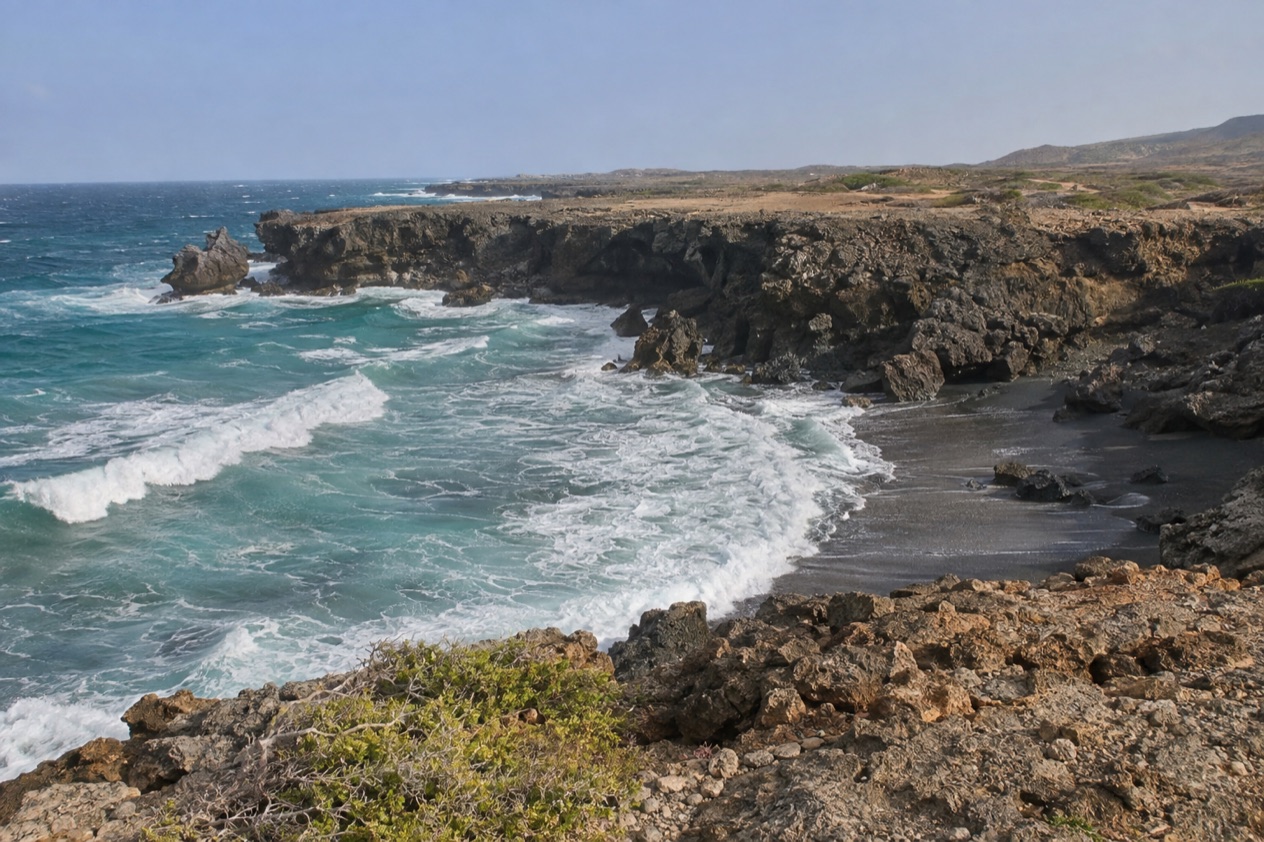
Out on the northern coast of Aruba, the sea arrives in long, heavy rollers that slam into black rock and throw spray high above the shoreline. Dos Playa sits in the middle of that wild scenery, one of the secluded bays tucked inside Arikok National Park. It is a visit for people who like their beaches dramatic and their afternoons unhurried, far from the resort strip.
Is visiting Dos Playa worth it?
Yes, if you are drawn to rugged coastline, big views and a little effort, and probably not if your idea of a beach day is a lounge chair and a cocktail within reach. Dos Playa belongs to the wild side of Aruba, the side where cactus, limestone and lava rock set the tone and the sea is something to watch rather than lounge beside.
What sets it apart from the leeward beaches along the western shore is the setting. Those beaches face a sheltered coast lined with resorts.
Here, inside the park, you are among caves, old rock drawings, lava formations and bays such as Moro and Boca Prins, with the open northern sea in front of you. The park is described as a great place to spend an entire day, and Dos Playa fits that rhythm well: you come for the landscape, and the bay is one chapter of it.
It also suits people who want to feel the island’s geology. The park holds quartz diorite, limestone and volcanic stone, a mix you can read in the colors of the cliffs. Photographers, hikers and anyone who has had enough of crowded sand will find it rewarding. Travelers who need services at every turn will find it plain.
What to see at Dos Playa
The bay and the northern sea
The first thing that strikes you is the sound. Surf on this coast is rough, and it booms against the rocks long before you see the water clearly. Dos Playa is one of the secluded bays the park names among its attractions, and its character comes from that exposure: pale and dark stone, scrubby vegetation behind, and the endless trade wind pushing the swells in.
Take your time at the edge and simply watch. Waves arrive in sets, pull back through gaps in the rock and return with force. It is a place for photographs, for sitting a while, and for appreciating how different this shore is from the calm western side of the island.
The coastal trail toward Conchi
The park’s hiking route from the Arikok Visitor Center to Conchi Natural Pool is the clearest way to experience this stretch of coast on foot. It is an out-and-back route, rated moderately challenging, and it follows the shoreline with views of the rough seas on the northern coast. The ground is rugged, so the walk is about steady attention to your footing as much as the scenery.
Along the way the landscape keeps changing. Open, sun-baked terrain gives way to rock and sea views, and the surf is a constant companion. The trail begins at the park’s Visitor Center, which makes it a natural starting point for a day in Arikok.
Conchi Natural Pool
At the end of that route waits Conchi, also known as Aruba’s natural pool. It is formed in ancient lava stone and surrounded by some of the most rugged terrain on the island. The contrast is the charm: a sheltered basin of water set against rock that looks shaped by fire and wave.
Visitors are encouraged to take a refreshing dip in the pool to cool off after the walk, and that reward is a large part of why people make the trip. Treat it as the goal of the day, a place to rest, eat something and look back along the coast before heading out again.
Caves, rock drawings and lava formations nearby
Dos Playa is only one corner of a park that also holds caves, Indian rock drawings and striking lava formations. These give the visit a deeper layer: the island was inhabited long before resorts arrived, and the drawings are a reminder of that earlier story.
Organized tours led by park rangers are highly recommended to take in the flora, fauna and viewpoints, and a private guided hike is also available for exploring birds, flowers and geology at your own pace. A guide turns scrub and stone into something readable, pointing out plants and rock types you might walk past alone.
Hours, tickets and rules
Dos Playa lies inside Arikok National Park, so you need a ticket to enter the park. The entrance fee is small, and it supports preservation, educational programs and the animals. The park is protected by the Aruba Tourism Authority, and every visitor who pays contributes to keeping it as it is.
| Route | Type | Length (km) | Average time |
|---|---|---|---|
| Arikok Visitor Center to Conchi Natural Pool | Out and back | 7.7 | 2 hours 40 minutes |
Swimming is encouraged in Conchi Natural Pool, to cool off after the hike. Aruba has banned sunscreens containing oxybenzone since 2019, so choose a mineral-based reef-safe product. Such sunscreens are more likely to be biodegradable and have less impact on the environment, and you can buy them on the island from local companies such as Aruba Aloe and Arubalife Organics.
How to get to Dos Playa
The base for this part of the park is the Arikok National Park Visitor’s Centre, where the hiking trail toward Conchi Natural Pool begins. Think of it as the gateway: you arrive there, buy your ticket and set out along the coast from that point.
The trail is an out-and-back route, so you return the way you came, and the average hiker needs about two hours and forty minutes for the whole thing. That is the time for the walk itself. Add what you want for the pool, photographs and a rest, and the outing fills a good part of the day.
Because the park is large and its bays are scattered, it helps to decide beforehand what you want from the day. If the coast and the pool are your goal, the Visitor Center trail is the route to follow. If you prefer explanations, the ranger-led tours cover the flora, fauna and viewpoints, and the private guided hike lets you go at your own pace.
When to visit Dos Playa
The best time to visit Aruba in general runs from February to August, and that holds for a day in the park. Peak season falls from December to April, the months when the island is busiest overall, so a hike in those weeks shares the island with more travelers.
Within a day, the sun is the thing to plan around. This is open, exposed country with little cover, and the trail follows the coast where the wind blows hard but shade is scarce. Setting out early, while the light is soft and the air is cooler, makes the walk more pleasant, and it gives you the reward of the pool before the strongest heat arrives.
Light is also a reason to go early or late for photography. Low sun rakes across the rock and turns the spray gold, and the northern sea looks its most dramatic when the shadows are long. Whatever the month, the surf on this coast stays rough, which is part of its character.
Tips for your visit
- Wear comfortable hiking shoes, since the terrain is rugged and the route is rated moderately challenging.
- Carry at least one liter of drinking water, more if you plan to linger.
- Pack reef-safe sunscreen and a cap for the open stretches.
- Bring something to eat and a swimsuit for the natural pool, where a dip is encouraged.
Plan the walk as a half-day or more. The hike alone averages around two hours and forty minutes, and the park is a place to spend an entire day, so there is no reason to rush. Slow stops at the shoreline and a long rest at the pool are what make the outing memorable.
Combine the coast with the rest of Arikok. Caves, rock drawings and lava formations are all part of the park, and bays such as Moro and Boca Prins sit alongside Dos Playa. A guided tour with a ranger adds context, and the private guided hike suits people who want to watch birds, look at wildflowers and learn about the geology without keeping to a group schedule.
Families and anyone with limited mobility should weigh the terrain honestly. The route is out and back over rugged ground and is considered moderately challenging, so it suits those comfortable with a real walk. Others can still enjoy the park through a guided tour and its viewpoints.
Good to know before you go
The U.S. State Department rates Aruba Level 1, ‘Exercise normal precautions,’ and says Aruba is generally a safe destination for travelers, with petty crime the main concern in popular tourist areas.
Dos Playa is a slow, scenic outing, not a stop for services, so bring what you need with you, especially water and sun protection. Take only photographs, leave the rock and plants as you found them, and remember that your entrance fee helps protect the park for the next visitor.
Sources
- Aruba Tourism Authority, Hiking trail Arikok visitor center to Dos Playa (https://www.aruba.com/us/explore/hiking-trail—arikok-visitor-center-to-dos-playa), checked October 9, 2026
- Aruba Tourism Authority, Arikok National Park (https://www.aruba.com/us/explore/arikok-national-park), checked October 9, 2026
- Aruba Tourism Authority, Best time to visit (https://www.aruba.com/us/our-island/one-happy-island/when-is-the-best-time-to-visit-aruba), checked October 9, 2026
- Aruba Tourism Authority blog, Responsible guest (https://www.aruba.com/us/blog/how-to-be-a-responsible-guest-protecting-arubas-beaches-and-marine-life), checked October 9, 2026
- U.S. Department of State, Aruba Travel Advisory, Level 1, issued August 19, 2026 (https://travel.state.gov/content/tsg_aem/us/en/home/international-travel/travel-advisories/destination.abw.html), checked October 9, 2026
To plan your stay
- Best Time to Visit Aruba: Weather by Month, Peak Season and Festivals
- Where to Stay in Aruba: Palm Beach, Eagle Beach, Oranjestad and All-Inclusives
- Aruba Airport (AUA): Arrival, Getting to Your Hotel, U.S. Preclearance and Departure
- Know Before You Go to Aruba: Entry Forms, Money, Water and Local Customs