
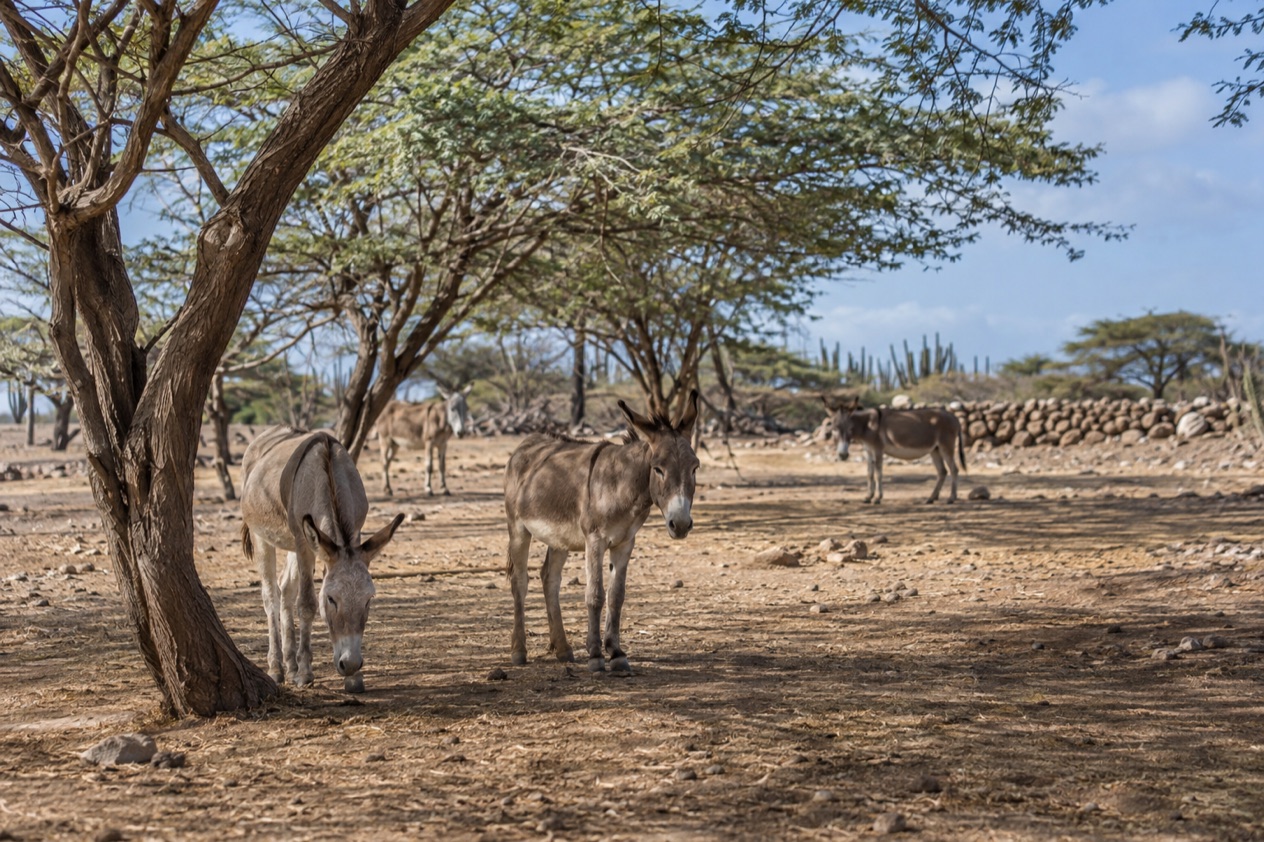
The first thing you hear at the Donkey Sanctuary is the call: a long, rusty, wheezing bray that rises from the paddocks as soon as a visitor appears, then gets answered from the other side of the grounds. Gray muzzles lean over the fence, long ears swivel toward you, and a few of the braver animals walk straight over to check your hands. This is a quiet, slow-paced stop in Bringamosa for anyone who wants to spend time with animals that have shaped Aruba’s story.
Is visiting the Donkey Sanctuary worth it?
Yes, especially for families with children, animal lovers, and anyone who wants a gentle break from beach days and boat trips. It suits people who like to go slowly, stand still and let the animals set the pace. The sanctuary is a place of care, not a show, and that shapes the whole visit.
What sets it apart from other animal stops on the island is the focus: donkeys, and only donkeys, with the room to get to know them. The sanctuary houses 130 of them, so you meet individuals rather than a handful of animals posed for photos.
The donkeys are described as extremely affectionate, with a gentle nature, and that is exactly how the visit feels. You are not watching from a rail or riding anything. You are standing among animals that come to you.
There is history behind the affection too. Donkeys have been part of Aruba’s culture for 500 years, and they were once the major mode of transportation on the island, carrying people and loads across dry, rocky country long before paved roads. Spending an hour with them gives you a different view of Aruba from the resort strip: a working island of farms, dusty paths and animals that did the heavy lifting.
It will not suit travelers who want a packed, high-energy outing. The pleasure here is in small things, a nuzzle, a bray, a donkey leaning against your side. If that sounds like your kind of afternoon, it is one of the most memorable stops on the island.
What to see at the Donkey Sanctuary
The donkeys and their greeting
The herd is the reason to come. Donkeys greet visitors with their distinctive call, and you will probably hear it before you have taken many steps from the entrance. Each animal has its own character: some are curious and push forward, others hang back in the shade and watch, and a few seem to enjoy being the center of attention.
Look at the faces and the ears, which are expressive and tell you a lot about mood. Many of the animals at a sanctuary like this one arrived because they were orphaned, injured or no longer wanted, and the staff know them by name and history. Listen when they tell you a story, because it is usually the best part of the visit.
The visitor center, covered porch and gift shop
The visitor center is where the visit begins and where you learn how the place works. It has a covered porch, a welcome stretch of shade on a day when the sun is strong, and a gift shop. The porch is a good place to sit for a few minutes, look out over the animals and take in the sounds of the paddocks.
The gift shop is more than an afterthought, since what visitors buy supports the care of the herd. Expect donkey-themed keepsakes, a natural souvenir of an outing that is about the animals rather than about shopping.
Information and tours of the grounds
The sanctuary offers information and tours of the grounds, and this is where the place comes alive. You learn how the donkeys came to Aruba, how they were used on farms and as transport, and how the sanctuary came to look after them. The story begins with the founding in 1997 and continues through a move from Santa Lucia to Bringamosa after almost 20 years.
Walking the grounds, notice how the land is laid out for the animals: open areas, shade, places to rest. It is a working home before it is an attraction, and you can feel that in the calm of the place.
The private hugging and petting session
For a closer encounter, visitors can book a private session of 30 minutes or more for hugging and petting friendly donkeys. This is the part many people remember most. With time and no crowd around you, the animals relax, and you can stroke a muzzle, scratch a neck and watch a donkey settle against you.
It suits children who like animals, couples, and anyone who wants more than a quick photo. Move slowly, let the donkey come to you, and the encounter tends to go well.
Hours, tickets and rules
The visit is built around a few simple experiences: walking the grounds with information and a tour, spending time on the covered porch and in the visitor center, browsing the gift shop, and booking a private session with the donkeys. Each one gives you a different angle on the sanctuary, and you can mix them as the day unfolds.
| Experience | What it offers |
|---|---|
| Information and tours | A walk around the grounds with the story of the sanctuary and its donkeys |
| Visitor center and covered porch | A shaded place to start and rest |
| Gift shop | Keepsakes on site |
| Private hugging and petting session | A session of 30+ minutes with friendly donkeys, booked in advance |
The private session is the one part you book. It lasts at least half an hour, and the donkeys chosen for it are the friendly ones, so the contact is gentle on both sides. Treat every animal with the patience their nature calls for, and the visit will be a good one for you and for them.
How to get to the Donkey Sanctuary
The Donkey Sanctuary is in Bringamosa, a spot away from the beach strips, and the trip there is part of the pleasure. Whether you set out from Palm Beach, Eagle Beach or Oranjestad, you leave the hotel zone behind and head into the more rural side of the island, where cactus, dry scrub and low houses replace the resort towers.
The sanctuary used to be in Santa Lucia and moved to Bringamosa after almost 20 years, so older guidebooks and maps may still point to the former site. Make sure the destination you follow says Bringamosa, because that is where the donkeys live now.
Aruba is a small, flat island, and the landscape on the way is a good reminder of why donkeys mattered here. They once carried goods and people across this dry terrain, long before cars. The simple scenery, with its wind-bent trees and open sky, makes a fitting prelude to meeting the animals.
If you are building a day around the visit, think of it as one calm stop in a broader loop of the island rather than a destination that needs a whole day. Pair it with something else on the same side of your plans, and let the rest of the day follow from there.
When to visit the Donkey Sanctuary
Go early in the day if you can, when the air is cooler and the animals tend to be livelier. Aruba is hot and sunny most of the year, and the trade wind helps, but the covered porch at the visitor center is welcome shade whenever you need it. Late in the day the light turns softer and golden, which makes for good photographs of the herd.
As for the season, the best time to visit Aruba in general is from February to August, and the sanctuary fits that pattern well. The peak season runs from December to April, so those months are when the island as a whole is at its busiest. Visiting in the stretch from May to August places you in the good part of the year with less of the winter rush.
There is no special festival or date tied to the sanctuary, which means it works on any day you have free. It is a good choice when a beach day does not appeal, whether the wind is up, the sun is strong or you simply want a change from the water.
If you plan to book the private hugging session, set the time of day first and build the rest around it. Morning sessions leave the afternoon free for the coast, while a late-day session makes a gentle end to a busy day.
Tips for your visit
Bring a camera, a hat and a relaxed mood. Wear shoes that can handle dusty ground, and clothes you do not mind getting a little dirty, because donkeys lean, nuzzle and sometimes leave a trace of dust behind. Children usually do best when they have been told beforehand to move slowly and speak softly.
Plan on a visit that is unhurried. A tour of the grounds, time on the covered porch, a stop at the gift shop and, if you book it, a private session of 30 minutes or more can easily fill a leisurely stretch of the day. Do not squeeze it between two other appointments, because the donkeys reward patience.
For families, the sanctuary is a gentle outing: the animals are described as extremely affectionate, and the setting is simple and open. It is a good place to talk with children about animals that once worked for a living, and about why a place like this exists. Visitors who prefer a seat can rest on the covered porch while others walk the grounds.
Combine the visit with a quiet afternoon elsewhere on the island, a beach, a drive through the countryside or a meal in Oranjestad. The contrast between the donkeys’ slow world and the busy coast is part of what makes the outing stay with you. Before you leave, take a last moment at the fence, and let the herd see you off with that unmistakable call.
Good to know before you go
The U.S. State Department rates Aruba Level 1, ‘Exercise normal precautions,’ and says Aruba is generally a safe destination for travelers, with petty crime the main concern in popular tourist areas.
The Donkey Sanctuary is a place where the animals come first, so the best habit is to follow the lead of the staff and the donkeys themselves. Keep belongings close, as you would anywhere you travel, and keep your attention on the animals around you. Because the sanctuary asks you to slow down, it makes a good counterweight to the faster pace of the island’s resort areas.
Whatever you buy in the gift shop or book for a session goes toward looking after a herd that has been part of the island’s life for centuries. Leave with a story to tell and perhaps a favorite donkey you can describe by name.
Sources
- Aruba Tourism Authority, Donkey Sanctuary (https://www.aruba.com/us/explore/donkey-sanctuary), checked October 9, 2026
- Aruba Tourism Authority, Best time to visit (https://www.aruba.com/us/our-island/one-happy-island/when-is-the-best-time-to-visit-aruba), checked October 9, 2026
- U.S. Department of State, Aruba Travel Advisory, Level 1, issued August 19, 2026 (https://travel.state.gov/content/tsg_aem/us/en/home/international-travel/travel-advisories/destination.abw.html), checked October 9, 2026
To plan your stay
- Best Time to Visit Aruba: Weather by Month, Peak Season and Festivals
- Where to Stay in Aruba: Palm Beach, Eagle Beach, Oranjestad and All-Inclusives
- Aruba Airport (AUA): Arrival, Getting to Your Hotel, U.S. Preclearance and Departure
- Know Before You Go to Aruba: Entry Forms, Money, Water and Local Customs