
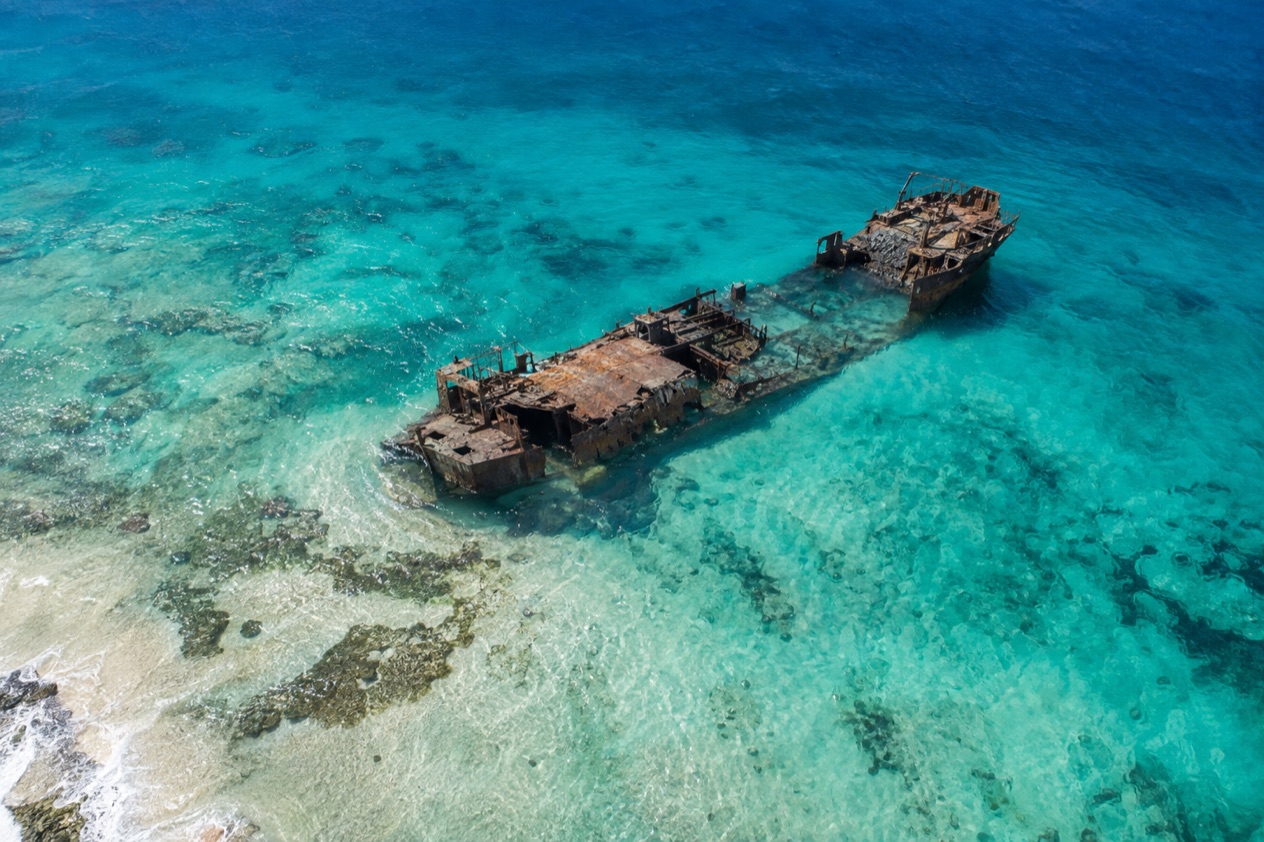
A rusted ribbon of steel breaks the surface of the Caribbean, and gulls perch on a hull that once carried cargo under a German flag. Below it, the water is clear enough that the ribs of the ship show up before you have even put your face in. The Antilla is a wreck you explore by snorkeling over a piece of World War II history, and it earns a spot in any traveler’s time on Aruba.
Is visiting the Antilla Shipwreck worth it?
Yes, if you like the idea of snorkeling over something with a story, and it suits curious travelers more than anyone chasing a perfect beach day. The Antilla is the famous WWII shipwreck that popular snorkel tours stop at, and that fame is earned: you float above a real ship, not a reef that merely resembles one.
What sets it apart from the other water stops on the island is the mix of history and marine life. The beaches usually named for snorkeling, Malmok Beach, Boca Catalina, Mangel Halto and Baby Beach, are about reef, fish and a swim from the sand. The Antilla is about a ship that was scuttled in 1940, a year after it was built, and that has been collecting coral and fish ever since.
Aruba also has other wrecks. The S.S. California, which gave its name to the lighthouse on the northwestern tip, went down in 1891 and rests at a maximum depth of 46 feet. That one is a story of a storm-era steamship. The Antilla is a story of war, and of a crew that chose to destroy its own vessel instead of surrendering it.
If you want a long, sandy afternoon with a book, this is not that. If you want one memorable hour that you will talk about at dinner, it is one of the better ways to spend it. Aruba is considered one of the best islands for snorkeling in the entire Caribbean, thanks to its weather, clear waters and sea life, and the Antilla is where that reputation meets history.
What to see at the Antilla Shipwreck
The hull and its wartime story
The SS Antilla was a German freighter dating from 1939. When war reached the Dutch Caribbean in 1940, the ship was scuttled off Aruba rather than handed over, and it has lain there since. That is the story every guide tells at the stop, and it adds weight to what you see below you: a working ship, not a monument built for visitors.
Look for the long line of the hull, the twisted plates and the open spaces where decks once stood. The metal has softened with decades of salt water, and its edges are now furred with growth. Seen from the surface, the shape of a ship is still easy to make out, which is rarer than you might expect from a wreck of this age.
Fish, coral and turtles on the steel
A wreck becomes a reef in slow motion, and the Antilla shows the process well. Corals and sponges have taken hold on the plates, small fish shelter in the gaps and bigger ones drift around the edges. Colors against the dark metal are sharper than on a plain sandy bottom.
Aruba has four species of sea turtle, and snorkelers might encounter them around the island. Treat a turtle as a bonus, never a promise. Even without one, the movement of fish through the hull is enough to keep you looking for a long time.
The snorkel stop as an experience
You reach the Antilla on a snorkel tour, one of the popular ones that stop at the wreck. The rhythm is a pause in the middle of a longer outing: you slip into the water, circle the ship, and climb back out with salt on your lips. It is less a destination than a highlight inside a day on the sea.
Expect to share the water with other swimmers from other tours. Float quietly, keep your eyes down on the hull, and let the shapes come to you. The moment when the whole outline of the ship appears under you is the one most people remember.
Hours, tickets and rules
You see it as part of a snorkel tour that stops there, and what you pay is the price of the outing, not an entry fee for the wreck.
There is one rule that touches every swimmer on the island, and it matters here. Aruba has banned sunscreens containing oxybenzone since 2019, because the chemical harms coral. The wreck is covered with living coral, so this rule applies in a very direct way to anyone getting in the water.
Visitors are asked to use mineral-based reef-safe sunscreens, which are more likely to be biodegradable and have less impact on the environment. You can buy sunscreen on the island from local companies such as Aruba Aloe and Arubalife Organics, so there is no need to pack a whole supply from home.
How to get to the Antilla Shipwreck
The way to the Antilla is by water, on one of the snorkel tours that stop at the wreck. That is the route the famous stop is known for, and it is the one to plan around. You are not walking to a viewpoint or driving to a parking area, because the ship lies out in the sea.
Your starting point is therefore the place where your tour begins, wherever you are staying on the island. The tour takes you out, stops over the wreck, and brings you back, so the ride becomes part of the day rather than a transfer to endure. Think of the Antilla as one chapter in a half-day on the sea.
If you prefer to enter the water from land, Aruba has several beaches named for snorkeling right from the sand: Malmok Beach, Boca Catalina, Mangel Halto and Baby Beach. They are a separate kind of outing and a good pairing, because entering the underwater world from shore takes only a mask and a snorkel. They do not replace the wreck, which is a different sight altogether.
When to visit the Antilla Shipwreck
Aruba suits snorkeling across much of the year, and the general best time to visit the island runs from February to August. That window works well for a wreck stop, since a sea day depends on the same things as the rest of a trip: sun overhead, comfortable days and good visibility under the surface.
The peak season runs from December to April. In those months the island is at its busiest, and tours are part of the rhythm of a full resort calendar. February to April therefore falls in both lists, which makes it a lively time for a wreck outing. May to August gives you the best-time window without the peak-season crowd.
As for the time of day, pick the tour slot that suits your own pace. A morning outing leaves the afternoon free for a beach, and an afternoon one lets you start the day slowly. In either case the light on the water is what makes the wreck show up, so a bright, sunny stretch is the one to aim for.
Beyond the calendar, think about energy. Snorkeling is more tiring than it looks, since you spend time kicking against the water. Plan the Antilla for a day when nothing heavy follows, and keep dinner for a leisurely hour back on land.
Tips for your visit
Bring reef-safe sunscreen, a towel and a dry change of clothes, and leave anything fragile at your hotel. The sunscreen is the one item with a clear rule behind it, so check the label before you leave your room. If you forget it, you can buy a local brand on the island.
Plan the wreck as a half-day with room around it. A snorkel tour is the focus, and the rest of the day can go to one of the beaches known for snorkeling, such as Malmok Beach or Boca Catalina, or to a slow lunch. Mangel Halto and Baby Beach, the latter in the south near San Nicolas, are good additions to another day.
SNUBA lets you breathe underwater without heavy diving gear, with the tank staying in a boat on the surface, and it needs no prior diving or snorkeling experience. The minimum age is 8 years old. It is a different kind of outing from the wreck stop, but it suits older children who want to go a little deeper.
If the Antilla sparks an interest, Aruba has more. Scuba diving here suits expert and new divers, with a variety of classes, and the dive sites include various shipwrecks, the Spanish Lagoon and the Barcadera Reef. The SEABOB, a powerful underwater scooter, is another way to see the sea. Treat the Antilla as the start of a longer curiosity about what lies under the island’s water.
Good to know before you go
The U.S. State Department rates Aruba Level 1, ‘Exercise normal precautions,’ and says Aruba is generally a safe destination for travelers, with petty crime the main concern in popular tourist areas.
The Antilla is a shipwreck covered with living coral, so the way you behave in the water matters more than anything you carry. Keep your sunscreen reef-safe, keep your hands to yourself, and leave the steel and the sponges as you found them. Do that, and a ship that was sunk in 1940 will still be there, a little more alive each year, for the next person who floats above it.
Sources
- Wikipedia, SS Antilla (https://en.wikipedia.org/wiki/SS_Antilla), checked October 9, 2026
- Aruba Tourism Authority, Scuba and snorkel (https://www.aruba.com/us/things-to-do/on-the-water/scuba-snorkel), checked October 9, 2026
- Wikipedia, California Lighthouse (https://en.wikipedia.org/wiki/California_Lighthouse), checked October 9, 2026
- Aruba Tourism Authority, Best time to visit (https://www.aruba.com/us/our-island/one-happy-island/when-is-the-best-time-to-visit-aruba), checked October 9, 2026
- Aruba Tourism Authority blog, Responsible guest (https://www.aruba.com/us/blog/how-to-be-a-responsible-guest-protecting-arubas-beaches-and-marine-life), checked October 9, 2026
- U.S. Department of State, Aruba Travel Advisory, Level 1, issued August 19, 2026 (https://travel.state.gov/content/tsg_aem/us/en/home/international-travel/travel-advisories/destination.abw.html), checked October 9, 2026
To plan your stay
- Best Time to Visit Aruba: Weather by Month, Peak Season and Festivals
- Where to Stay in Aruba: Palm Beach, Eagle Beach, Oranjestad and All-Inclusives
- Aruba Airport (AUA): Arrival, Getting to Your Hotel, U.S. Preclearance and Departure
- Know Before You Go to Aruba: Entry Forms, Money, Water and Local Customs