
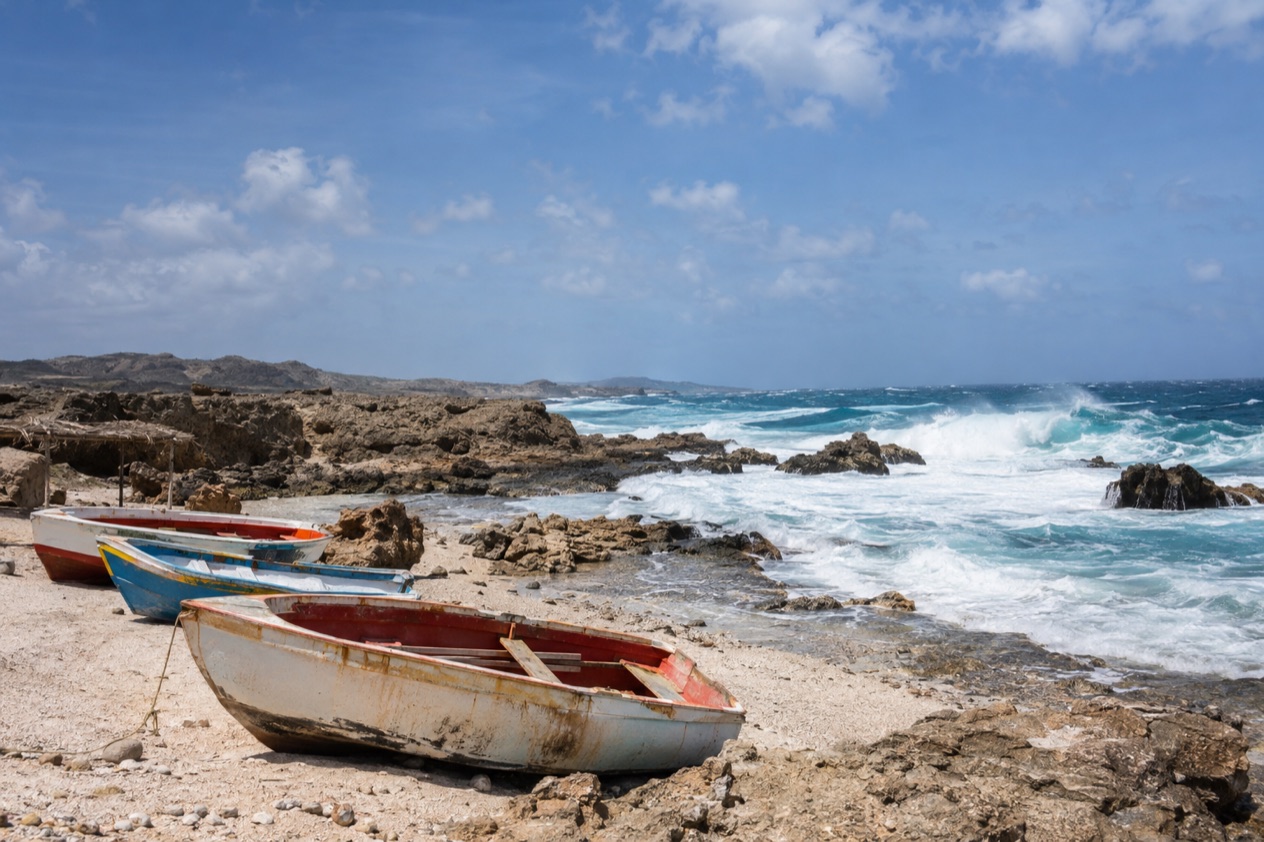
The first thing you notice at Andicuri Beach is the sound: surf thudding into a cove, with the trade wind pushing across the sand. Pale coral-stone cliffs wrap around the bay, and the sea in front of them is the restless kind that belongs to Aruba’s windward coast. This is a beach for watching waves, spreading out a picnic and enjoying a stretch of shore that feels far from the resort strips.
Is visiting Andicuri Beach worth it?
Yes, if you like your beaches wild, quiet and a little rough around the edges, and especially if you bodyboard or simply enjoy watching people who do. It suits travelers who are happy to bring their own lunch, forget about beach bars and let the scenery do the work. It is less suited to anyone picturing a lounge chair, a cocktail and a gentle lap of water.
What sets Andicuri apart from the better-known beaches is its character. Eagle Beach and Palm Beach sit on the sheltered western side of the island, where the sea is the main show and the services are close at hand.
Andicuri faces the open Atlantic side instead, and locals love it for its peace and quiet compared with those two. The surf is stronger here, the cliffs are taller, and the setting feels like a piece of the island that has been left alone.
It also sits next to one of the island’s most talked-about sights. Andicuri lies just south of the collapsed Natural Bridge, so a visit can slot into an outing along the rugged coast, with a dirt road continuing on toward Black Stone Beach and a limestone bridge with triple arches. If your Aruba trip so far has been palm trees and calm turquoise water, Andicuri shows you the other face of the island: dry, windblown, sculpted by the sea.
Expect to spend your time looking, wandering the sand and photographing the bluffs, rather than ticking off activities. For many visitors that is exactly the appeal. The beach rewards patience, a good hat and a packed cooler more than any itinerary.
What to see at Andicuri Beach
The cove and its dramatic bluffs
The beach is a sandy cove flanked by bluffs, and the bluffs are the real architecture here. The wide bay is enclosed by coral-stone cliffs, rough-textured and pitted by wind and spray, their pale surfaces glowing against a sea that turns deep blue as it gets farther out. Stand at the back of the sand and you get a natural amphitheater, with the waves as the performance.
Take time to look at the cliffs up close. The stone is made of ancient coral, so you can often pick out ridges, holes and layered patterns shaped over a very long time by salt water. Some of the cliffs throw a little shade, which is a rare gift on an island this open and sunny, though it is only a little and should not replace a hat.
The light changes the scene through the day. Early on, the east-facing coast catches soft, low sun that warms the stone. Later the glare grows harder, the sea turns a more intense blue and the foam on the breakers looks almost white against the darker water.
The surf and the bodyboarders
Andicuri is known for stronger surf, and body-boarders love it for exactly that. Waves arrive here with real weight, which is why various local body-boarding competitions are held on this beach. Even if you never touch the water, watching riders time a set, paddle hard and drop into a wave is an absorbing way to spend an hour.
The same energy that makes the beach exciting also makes it demanding. Experienced swimmers can enter the water, but they must be aware of currents. For everyone else, the sand and the cliffs are the better vantage point, and the show is just as good from dry ground.
Bring a camera with a decent zoom if you have one. Wave sets, spray and the silhouettes of riders against the bluffs make strong pictures, and the trade wind keeps the air moving while you wait for the right shot.
Along the dirt road to Black Stone Beach
Andicuri does not have to be the only stop. Traveling a little farther along the dirt road leads to Black Stone Beach and a triple-arch limestone natural bridge. The contrast is the point: after the pale cove at Andicuri, the dark, rounded stones of Black Stone Beach feel like a different planet.
The natural bridge with its three arches gives you a stand-in for the famous Natural Bridge nearby, which has collapsed. You can see how the sea carves rock from below, opening holes, widening them and leaving thin spans standing for as long as they last. It is a quiet lesson in how this coast is built and unbuilt by the waves.
The collapsed Natural Bridge next door
Just to the north of Andicuri lies the collapsed Natural Bridge, once the island’s best-known rock arch. What remains is a reminder that the whole shoreline here is in motion. Seeing the area gives context to the cliffs around Andicuri and explains why the coast looks so sculpted and fragile.
Linking the two spots turns a beach stop into a small story about the windward coast: the bridge that fell, the cove that remains, and the road that leads on to more rock formations. It makes the day feel like an exploration rather than just a visit to a beach.
Hours, tickets and rules
Andicuri is a natural cove on the open coast, not a ticketed site with a gate, so there is no opening schedule and no admission price to list. You come, you look, you settle on the sand. What you will not find is a cluster of services, and that is part of its character.
There are no food and beverage facilities at Andicuri Beach, so visitors should bring their own picnic. Think of it as a day when you carry in everything you need, from snacks and drinks to sun protection, and carry out whatever you brought. The reward is a beach with none of the bustle of the resort strips.
A few rules are clear. Driving on the sand is forbidden, and so is barbecuing on the sand. Aruba has also banned sunscreens containing oxybenzone since 2019, and mineral-based reef-safe sunscreens are the ones visitors are encouraged to use because they are more likely to be biodegradable and to limit harm to the environment. Experienced swimmers may enter the water, but they must be aware of currents.
How to get to Andicuri Beach
Andicuri Beach is on the island’s windward coast, just south of the collapsed Natural Bridge. That places it on the rugged Atlantic side, well away from the western shore where the resort beaches line up. Think of it as part of a stretch of wild coastline, not as an extension of the hotel areas.
Reaching the beach means leaving the smooth, built-up side of Aruba for the rougher edge. The dirt road that runs along this part of the coast continues beyond Andicuri to Black Stone Beach and the triple-arch limestone bridge, so the same route serves all three stops. Because the road beyond is unpaved, the trip feels more like an outing than a quick hop to the sand.
Once you arrive, you will notice how open the landscape is. There are no resort towers, no lines of umbrellas, just rock, sand and the Atlantic. Driving on the sand itself is forbidden, so the beach is something you walk onto and enjoy on foot.
Other wild beaches on the island share this feeling of remoteness. Dos Playa lies on the northeastern coast with limestone cliffs and sea caves, Boca Grandi is tucked away on the southeastern coast, and Westpunt sits on the northwestern tip. Andicuri belongs to the same family of windswept shores, and it is the one that pairs most naturally with the Natural Bridge area.
When to visit Andicuri Beach
Aruba as a whole is best from February to August, and that holds for a trip to Andicuri. The trade wind blows from the east all year, and it hits this coast head-on, so the surf is lively whatever the month. If you want the beach to feel like a quiet refuge, remember that the peak season runs from December to April, when the island as a whole is busier.
The time of day shapes the experience more than the month. Mornings give you softer light on the cliffs and a gentler feel on the sand, which suits photographers and anyone who likes to wander before the sun gets strong. By midday the coral-stone cliffs offer only a little shade, so the open beach asks for a hat, plenty of water and good sun protection.
If you come to watch the bodyboarders, the stronger surf is the draw, and local competitions are held here because of the waves. Those events are a good reason to plan around the sea rather than around the sun. Without a schedule to consult, simply enjoy whatever the waves are doing when you arrive.
Late afternoon is a pleasant time to linger. The wind keeps cooling the air, the cliffs take on a warmer tone, and the beach has the peaceful atmosphere that locals value. It is a good moment for a last walk along the sand before heading back along the dirt road.
Tips for your visit
Pack as if you were heading into the countryside. Since there are no food and beverage facilities, bring a picnic with plenty to drink, and plan to take your trash with you. A hat, sunglasses and a mineral-based reef-safe sunscreen are the other essentials, and you can buy sunscreen on the island from local companies such as Aruba Aloe and Arubalife Organics.
Plan to spend your time on the sand rather than in the water. The surf is strong, and only experienced swimmers should consider going in, with an eye on the currents. Everyone else can enjoy the view, walk the cove and watch the bodyboarders from the beach, which is entertainment enough.
Combine Andicuri with its neighbors. The collapsed Natural Bridge is right next door, and the dirt road leads on to Black Stone Beach and the triple-arch limestone bridge. Together they make a half-day of rugged coastline, with different rock, different colors and the same sound of the sea.
If you like this kind of scenery, think about adding another of Aruba’s wild beaches on a different day. Westpunt is known for its rocky shoreline and sunsets, and is not a sunbathing or snorkeling beach. Each has its own mood, and Andicuri is the one for surf, bluffs and quiet.
Do not plan a barbecue. Barbecuing on the sand is forbidden, which is another reason a packed picnic is the right choice. Bring foods that keep well in the heat, and enjoy them in whatever shade the cliffs offer.
Good to know before you go
The U.S. State Department rates Aruba Level 1, ‘Exercise normal precautions,’ and says Aruba is generally a safe destination for travelers, with petty crime the main concern in popular tourist areas.
Andicuri is a place to keep simple: carry what you need, take away what you bring, and respect the sea. The water is for experienced swimmers who understand currents, and the beach itself is happily enjoyed from dry land. Keep your sun protection mineral-based, in line with the island’s ban on sunscreens containing oxybenzone.
Pace yourself and come ready for wind, sun and a lot of open space. That is what makes Andicuri feel so different from the west-coast beaches, and it is why it is such a rewarding stop on Aruba’s windward side.
Sources
- Aruba Tourism Authority, Andicuri Beach (https://www.aruba.com/us/explore/andicuri-beach), checked October 9, 2026
- Aruba Tourism Authority blog, Aruba wild beach (https://www.aruba.com/us/blog/aruba-wild-beach), checked October 9, 2026
- Aruba Tourism Authority, Best time to visit (https://www.aruba.com/us/our-island/one-happy-island/when-is-the-best-time-to-visit-aruba), checked October 9, 2026
- Aruba Tourism Authority blog, Responsible guest (https://www.aruba.com/us/blog/how-to-be-a-responsible-guest-protecting-arubas-beaches-and-marine-life), checked October 9, 2026
- U.S. Department of State, Aruba Travel Advisory, Level 1, issued August 19, 2026 (https://travel.state.gov/content/tsg_aem/us/en/home/international-travel/travel-advisories/destination.abw.html), checked October 9, 2026
To plan your stay
- Best Time to Visit Aruba: Weather by Month, Peak Season and Festivals
- Where to Stay in Aruba: Palm Beach, Eagle Beach, Oranjestad and All-Inclusives
- Aruba Airport (AUA): Arrival, Getting to Your Hotel, U.S. Preclearance and Departure
- Know Before You Go to Aruba: Entry Forms, Money, Water and Local Customs