
On a January morning in Isla Mujeres, the fishing boats rock at their moorings while pelicans work the shallows and the first golf carts rattle past the bakery with warm bolillos. The Christmas lights are still up around the main square, the air has a softer edge than in summer, and the Caribbean turns from turquoise to pewter whenever a cold front passes. It is a month of long beach days broken by the odd gray afternoon, with an island that has settled back into its own rhythm after the holidays.
What is the weather like in Isla Mujeres in January?
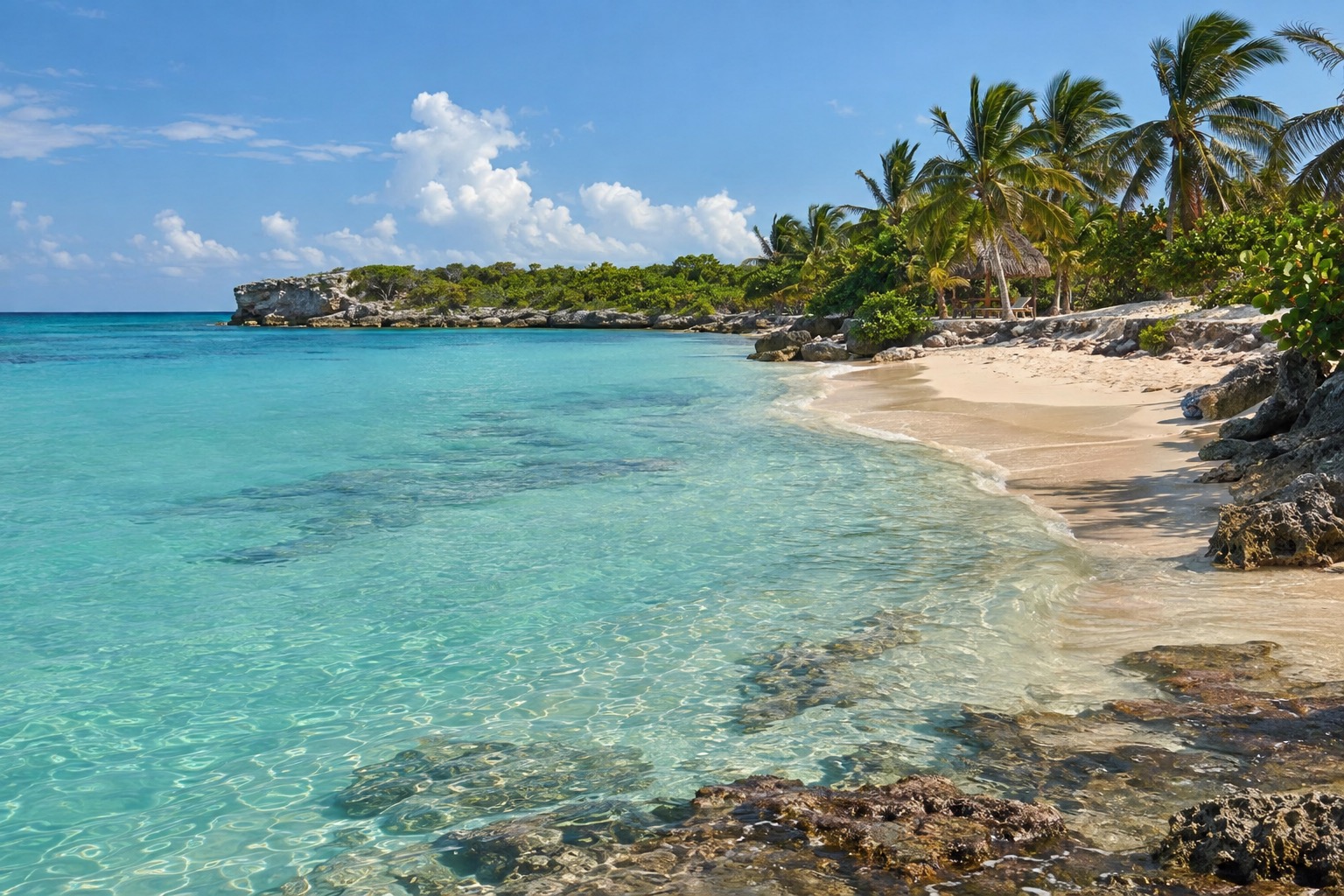
January is warm and pleasant, with sunny stretches broken by cooler, cloudier spells whenever a winter cold front rolls in.
| Month | Average high (°F) | Average low (°F) | Rain (in) | Rain days | Sea (°F) | Daylight on the 15th |
|---|---|---|---|---|---|---|
| December | 84.9 | 69.8 | 3.80 | 11.7 | 82.2 | 10 hours 53 minutes |
| January | 83.7 | 68.0 | 4.09 | 10.9 | 81.4 | 11 hours 1 minutes |
| February | 86.2 | 69.1 | 2.33 | 6.8 | 80.7 | 11 hours 30 minutes |
Rain here rarely means a washout. It comes as short showers, and when a norte arrives you get a gray day with a brisk north wind, a choppy sea and a sweater in the evening. Between fronts, the days are bright, and afternoons are warm enough for the beach without any sense of oppression.
The water is still comfortable for swimming, though it feels a little fresher than in the fall, especially on windy mornings. Days are short compared with summer, so the light fades early and dinner tends to be outdoors under string lights.
What to do in Isla Mujeres in January
Beach days between the fronts
January beach time is a game of reading the sky. On calm, sunny days, Playa Norte is the place to be, with its shallow, glassy water and beach bars that set out loungers right in the sand. Wind-free mornings are the best for wading out far across the pale sandbar.
When a norte pushes in, the north shore gets rough and the sand can blow. That is the moment to switch to a sheltered stretch on the lagoon side of the island, or to trade the beach for a long lunch of ceviche and grilled fish. The fronts usually pass within a day or two, and the next morning often comes up crystal clear.
Exploring the island on wheels
Winter is the comfortable season for circling the island at your own pace, since the midday heat that wears people down in summer is gone. Golf carts are the island’s favorite way to get around, and the coastal road toward the south is lined with small shrines, lookout points and roadside seafood shacks.
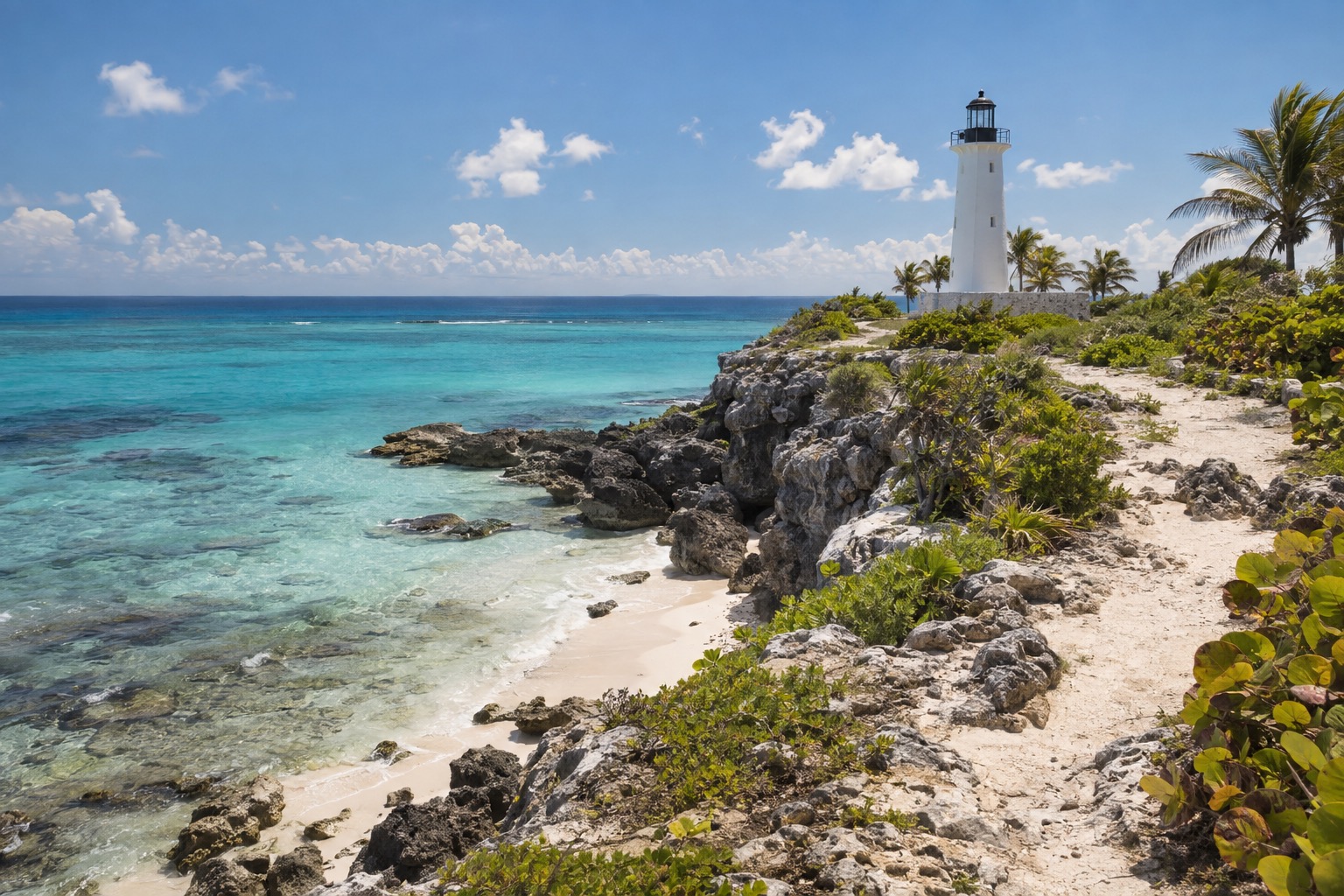
Point your cart south in the morning for the cliffs and the lighthouse at Punta Sur, then come back along the quieter Caribbean side. Evenings suit a slow loop of the town, where the plaza fills with families and the taco and fresh-fish stands send up smoke. A windbreaker is handy for the ride when the breeze picks up.
Winter flavors: lobster, fish and the Three Kings
January begins with Día de Reyes on January 6, when bakeries across Mexico fill with rosca de reyes, the ring-shaped sweet bread studded with candied fruit and hiding a tiny figure of the baby Jesus. Whoever finds it is traditionally expected to host a tamale party in early February. Cafés in town serve slices alongside hot chocolate or coffee, which feels just right on a cool morning.
The island’s cooking leans on the day’s catch. Look for tikin xic, fish rubbed in achiote and grilled in banana leaf, fresh ceviche, shrimp and the island’s famous lobster dishes. A cool, breezy evening is also a good time for a bowl of sopa de lima, the warm lime-and-chicken soup of the Yucatán.
Beyond the table, the island has its simple pleasures: snorkeling on calm days, a sunset drink at the water’s edge, and watching fishing boats come in late in the day. Other year-round sights, like the Maya shrine at the southern tip and the sculpture garden, fit easily into a relaxed winter itinerary.
Is Isla Mujeres busy in January?
It is busy in the first days of the month and then settles into a steadier winter pace, with the island never quite empty.
The stretch around New Year’s brings holiday travelers from Mexico and the U.S., and rooms near the beach and the town center go first. Once school breaks end and families head home, the mood loosens, restaurants have tables more easily, and the beach clubs lose their crowds. Snowbirds and long-stay visitors keep the island lively all month, and day-trippers from Cancún arrive on sunny days.
Early in the month, booking ahead for rooms makes sense, and restaurants with sunset views can fill by evening. In the second half, plans can be looser.
What to pack for Isla Mujeres in January
Pack for warm days and breezy nights, with something light to throw on when a cold front sweeps through.
- A light jacket or windbreaker for golf cart rides and cool evenings
- Swimsuits and a quick-dry cover-up for beach days
- Reef-safe sunscreen and a hat, since the winter sun is still strong
- Sandals for the sand and closed shoes for walking at the southern cliffs
- A light rain layer for short showers
Good to know before you go
The U.S. State Department rates Quintana Roo Level 2, ‘Exercise increased caution’.
January sits well outside the Atlantic hurricane season, so the main weather wild card is the occasional norte, which can roughen the sea and cancel a boat outing for a day. Visitors pay a few charges, summarized here.
| Fee | Amount | Who pays |
|---|---|---|
| Visitax (state visitor fee) | 2.50 UMA, about 293 pesos | Every foreign visitor entering Quintana Roo |
| Lodging tax (Impuesto Sobre Hospedaje) | 5% of the billed accommodation value, or 6% when a host or booking platform collects payment for a short-term rental | Guests staying in paid accommodation |
Is January a good time to visit Isla Mujeres?
Yes, January suits travelers who want warm days, a relaxed island and a cooler edge in the evening, and who can accept a gray day now and then.
Compared with December, the holiday crush fades after the first week and the sea stays about as inviting. February tends to be drier and a little warmer, with fewer rainy days, but January keeps a quieter, more local feel once the New Year crowds leave. What stays with you from January here is a particular kind of island winter: a slice of rosca on Three Kings Day, a norte that turns the sea to steel for an afternoon, and then a morning so clear the whole coast seems freshly washed.
Sources
- Servicio Meteorologico Nacional (CONAGUA), normales climatologicas 1991-2020, estacion 23155 (Cancun, Benito Juárez), checked September 29, 2026
- Open-Meteo Marine API, average 2015-2024, checked September 8, 2026
- sunrise-sunset.org, sunrise and sunset on the 15th of the month, checked September 8, 2026
- Congreso del Estado de Quintana Roo, Ley del Impuesto al Hospedaje del Estado de Quintana Roo, art. 8, congresoqroo.gob.mx, checked September 29, 2026
- Ley de Derechos del Estado de Quintana Roo, art. 51-Octies, congresoqroo.gob.mx, checked September 29, 2026
- U.S. Department of State, travel.state.gov, checked September 29, 2026
- NOAA National Hurricane Center, nhc.noaa.gov, checked September 29, 2026
To plan your stay
- Things to Do in Isla Mujeres: Beaches, Snorkeling, Punta Sur and Where to Eat
- Where to Stay in Isla Mujeres: Playa Norte, Centro, Sac Bajo and Quiet Corners
- Best Time to Visit Isla Mujeres: Dry-Season Months, Hurricane Risk, Sea Temperatures and Festivals
- Isla Mujeres in February: Carnaval Season, Winter Sun and Island Days