
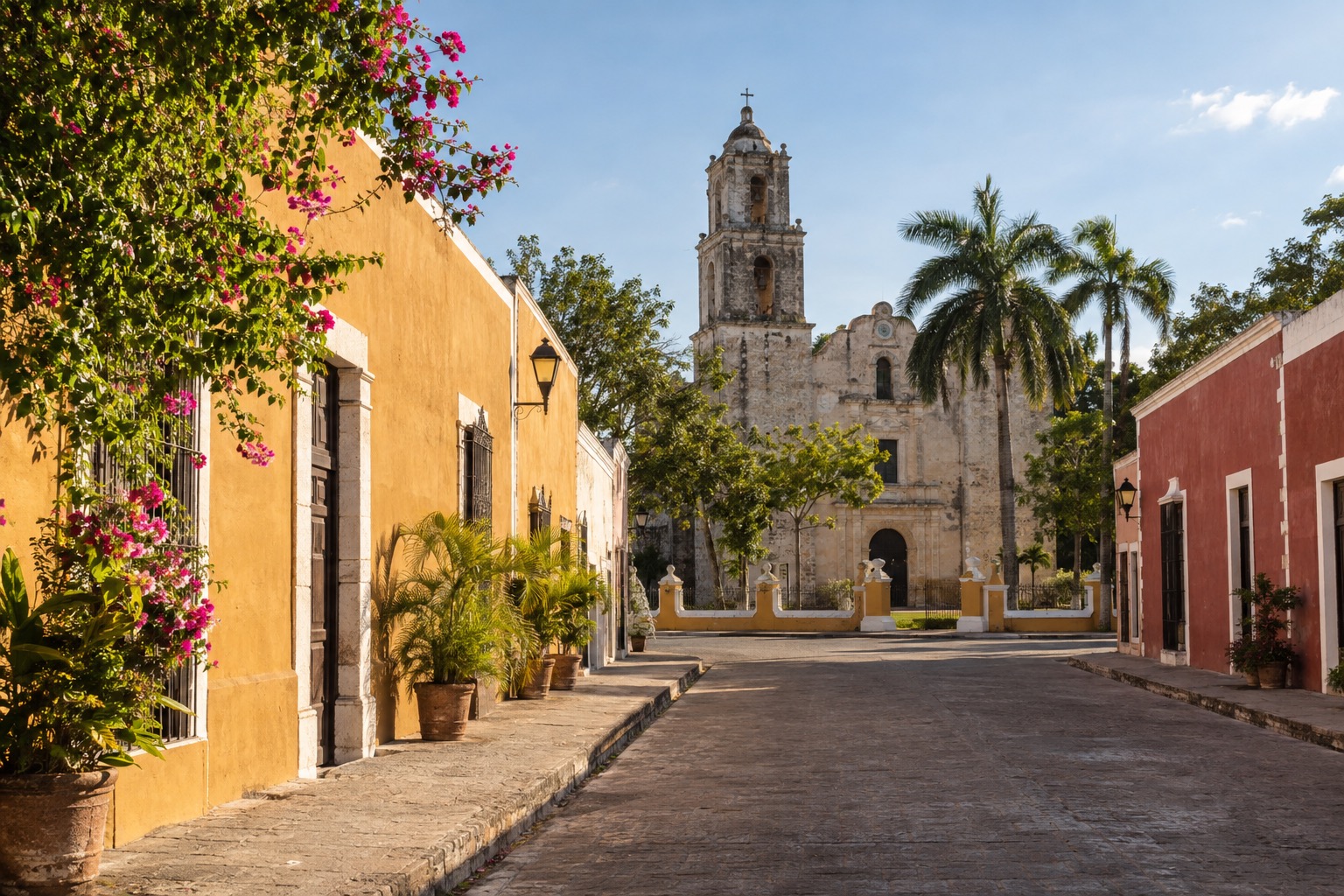
Late in the afternoon the pastel facades around the main square turn honey-colored, and the smell of lime, grilled pork and fresh tortillas drifts out of the doorways. Families settle on the benches, and the church bells carry over the rooftops. Valladolid is a small colonial city in the heart of the Yucatán Peninsula, made for slow walks, cool swims in a sinkhole and easy trips to Maya ruins.
Where is Valladolid and what is it like?
Valladolid sits inland in eastern Yucatán state, roughly midway between the colonial capital of Mérida and the Caribbean resorts, about 105 miles east of Mérida. It is the state’s third-largest city by population, yet it feels like a market town. It carries the Pueblo Mágico label, given in 2012.
The streets are low, flat and easy to wander. Colonial houses in yellow, ochre and rose line the grid around the plaza, and the pace is unhurried. Locals still gather on the square in the evening, which says a lot about the rhythm of the place.
It suits travelers who like to walk, eat well and use the town as a base for ruins and cenotes. If you want a beach, nightlife or a long list of big attractions in one spot, Valladolid will feel quiet. It is also far from the sea, so the heat is a dry-land heat, softened by shade and a swim.
What is there to do in Valladolid?
The reasons to come are a sinkhole swim, a Franciscan convent, a jungle-ringed Maya city and the table. Together they give Valladolid something its neighbors lack: real colonial streets with ancient sites close by, without the resort crowds of the coast.
Cenote Zací, a swim near the center
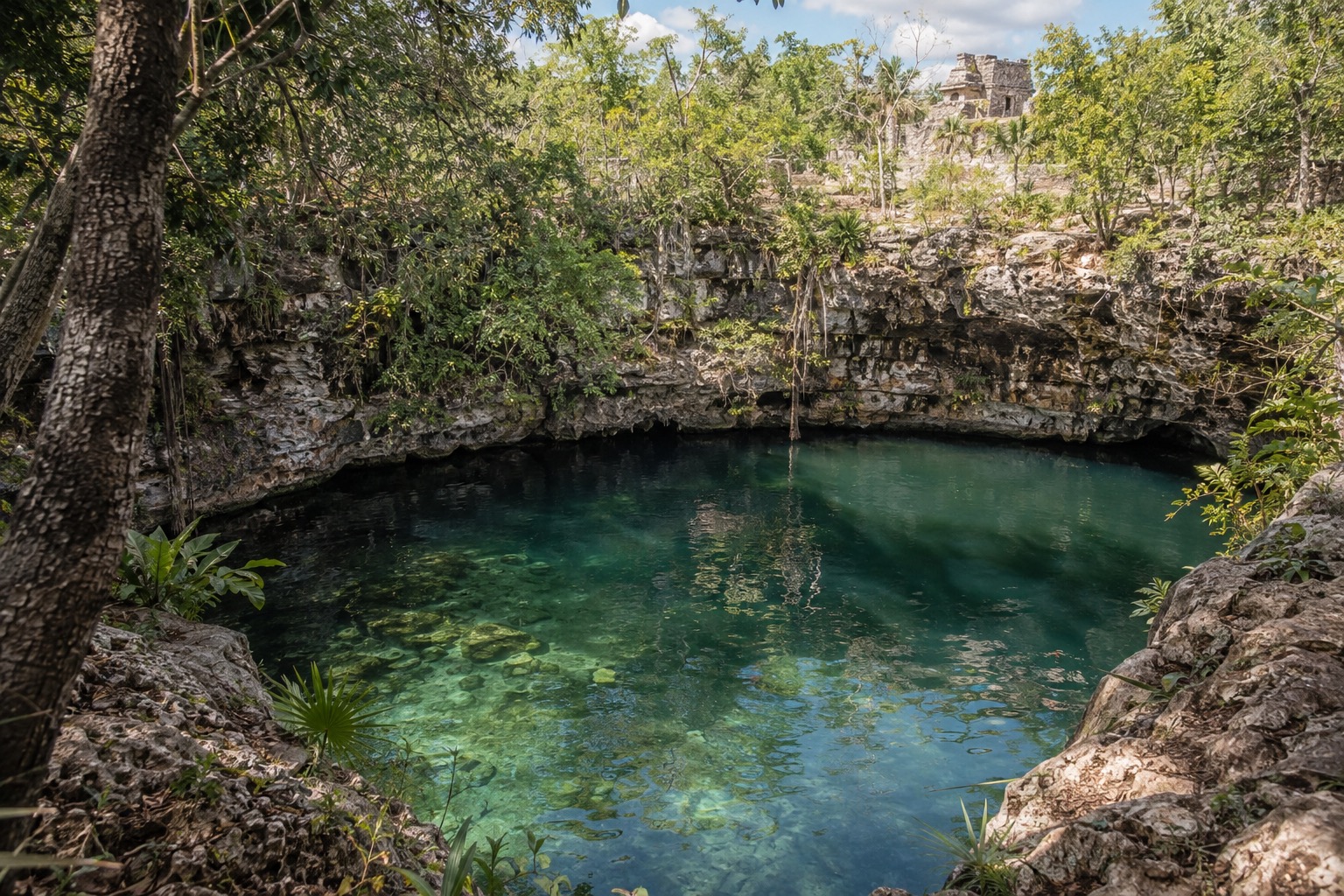
Cenote Zací is a landscaped freshwater sinkhole close to the heart of town, and it is open for swimming. You step down into a big open cavern with stone walls, hanging roots and cool green water, with a restaurant and artisan vendors on site. It is an easy stop to make on foot or by short taxi ride from the square.
The best moment is a hot afternoon, when the water feels like a reward after the streets. It suits almost everyone, from families to couples looking for a break from sightseeing. Bring a swimsuit and a towel, and plan a snack at the restaurant afterward.
The Sisal neighborhood and its convent
The Convento de San Bernardino de Siena was built by Franciscan missionaries between 1552 and 1560 in the Sisal neighborhood. Its thick walls and wide courtyard give a sense of how the Spanish settled the peninsula. The Calzada de los Frailes, a preserved colonial avenue, links it to downtown.
Walking the Calzada is the pleasure here, past small shops, cafés and old houses with iron-barred windows. Go in the softer light of morning or late afternoon, when the stone is warm and the heat has eased. It is a gentle outing for anyone who likes architecture and history.
Ek Balam, the Maya city nearby
Ek Balam lies between Valladolid and Tizimín, a short trip north from town. The site rises out of the forest, with large stone structures and carved details, and it often feels calmer than the better-known ruins. Many visitors pair it with a swim at a cenote the same day.
Arrive early, before the heat builds, and wear shoes you can walk in comfortably. It suits curious travelers of any age who like open-air history. Hours and admission are here:
| Site | Open | Admission |
|---|---|---|
| Ek Balam archaeological site | Daily, 8:00 a.m. to 4:30 p.m. (last entry 4:00 p.m.) | $210.00 pesos; $105.00 pesos for Mexican nationals and foreign residents of Mexico |
Chichén Itzá and the table
Chichén Itzá lies about 25 miles west of town, which makes Valladolid a handier base than most for the famous ruins. You can visit and still return to a quiet evening in a colonial square rather than a resort strip.
Back in town, eat Yucatecan classics such as cochinita pibil, lime soup and the local smoked sausages. A table under the arcades of the plaza at dusk is half the reason people stay an extra night.
How many days do you need in Valladolid?
A long weekend is enough to enjoy Valladolid, and a few more nights let you slow down and see the surroundings.
In a short stay you can walk the plaza, visit the convent along the Calzada de los Frailes, swim at Cenote Zací and still have an evening for dinner. With more time, add Ek Balam and Chichén Itzá on separate mornings, and leave an afternoon free to do nothing in the shade.
Where to stay in Valladolid
The streets around the main plaza suit first-time visitors, since restaurants, shops and the evening scene are all a few steps away. Small guesthouses in restored colonial houses, often built around a courtyard, give the most local feel.
The Sisal neighborhood, along the Calzada de los Frailes, is quieter and more residential, a good choice if you prefer calm mornings and a short stroll to cafés. Staying near Cenote Zací puts a swim close at hand, while the center keeps you close to the evening life.
How do you get to Valladolid and get around?
Most visitors arrive by road, either from Mérida to the west or from the Caribbean coast to the east, since Valladolid sits on the route between them. The city has no airport of its own that visitors rely on, so you will usually come in by bus, shuttle or car.
Once there, the center is made for walking. Taxis cover the short hops to places like the cenote, and for Ek Balam or Chichén Itzá you can take a taxi, a tour, or a rental car if you want to move at your own pace.
When is the best time to visit Valladolid?
The cooler, drier months of winter are the most comfortable for walking town and climbing around ruins, and they are also when more travelers arrive. Mornings are fresh, afternoons are warm, and evenings on the square are pleasant.
Summer is hot and humid, with showers building in the afternoon. This is when a cenote swim matters most, and sightseeing works best early in the day. The Atlantic hurricane season runs through the second half of the year, so late summer and fall can bring unsettled weather.
Holiday weeks, Holy Week and the year-end season fill the hotels, so book early if your dates fall then. Outside those weeks, the town is easygoing, and rooms are easier to find.
Good to know before you go
The U.S. State Department rates the state of Yucatan Level 1, ‘Exercise normal precautions’.
Pesos are the currency for most things, from market stalls to the entry gate at Ek Balam, so carry some. Sun is strong year-round, so a hat, water and reef-safe sunscreen for cenote swims are worth having. The small scale of the town makes it easy to get your bearings, and a few ordinary habits, such as keeping valuables out of sight, are all you need.
Sources
- Wikipedia, "Valladolid, Yucatan", en.wikipedia.org, checked September 29, 2026 (source secondaire)
- INAH, official for the Ek Balam archaeological zone, inah.gob.mx/zonas/21-zona-arqueologica-ek-balam, checked September 29, 2026
- U.S. Department of State, Bureau of Consular Affairs, Mexico Travel Advisory, travel.state.gov, checked September 29, 2026 (date issued May 29, 2026) (date issued May 29, 2026)