
NEGRIL · SAFETY · WHAT HAPPENS ON SEVEN MILE AND THE WEST END
Negril’s safety questions are local and mostly ordinary. Sales pressure on Seven Mile Beach. A phone that walks off a towel during a swim. A stretch of West End Road with no sidewalk, no streetlight and cars taking the bend wide. The national frame, the advisory level and the areas named in it live on the Jamaica safety guide, and none of those named areas are in this town. Negril’s own list is shorter, more physical, and easier to act on.
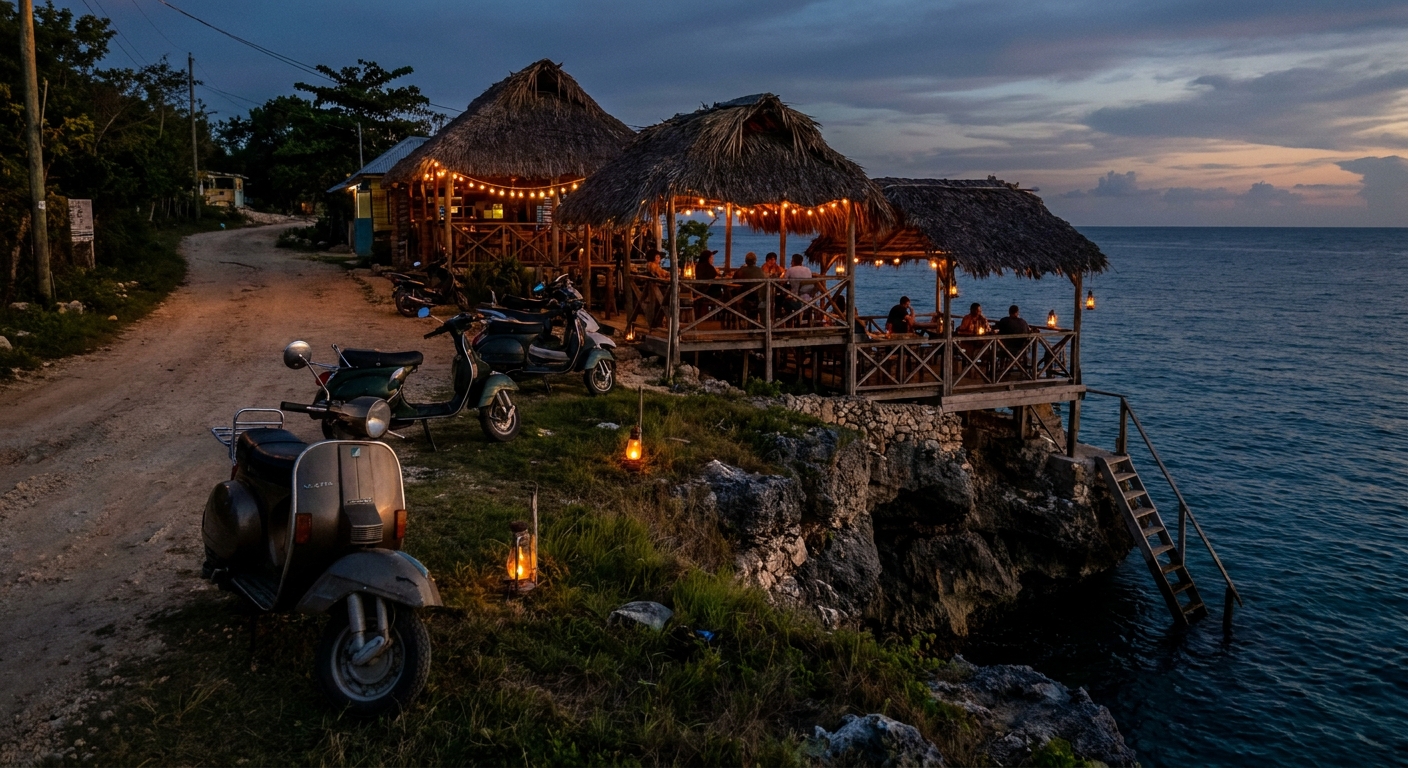
NEGRIL · SAFETY IN TOWN
Negril’s real risks are the plain ones: vending you can end politely, belongings left on the sand, two roads without sidewalks after dark, and a sea that behaves one way on Seven Mile and another under the cliffs.
VISITOR NEGRIL = TWO ROADS · NO CONTINUOUS SIDEWALK · POLICE 119 · NATIONAL ADVISORY ON THE COUNTRY PAGE
Perspective: the advisory’s named areas sit elsewhere on the island, and the two roads that carry visitor Negril are worked all day by people whose income arrives on a flight.
Think twice before: walking the unlit shoulder of West End Road at night, renting a scooter for the strip, or jumping from a cliff ledge you have not seen anyone else enter and exit.
Advisory level and named areas: the country safety page · full sources at the end of this guide
On this page
- Is Negril safe for tourists?Vending, opportunistic theft, night roads
- Which parts of Negril do visitors use?Seven Mile, the West End, the town behind
- Swimming and walking in NegrilCurrents, ladders, scooters, rum
- How to answer the ganja offer in NegrilWhat to say on the sand
- Emergency numbers in Negril119, 110 and the front desk
Is Negril safe for tourists? Vending, opportunistic theft and night roads
The friction visitors meet here is commercial before it is criminal. A walk along Seven Mile Beach or Norman Manley Boulevard brings offers of hair braiding, aloe massage, wood carvings, boat trips and whatever else a passing entrepreneur can arrange. Most of it is warm. Some of it is more persistent than Americans are used to, because a lot of people work the same sand in the same short season.
Theft in the visitor strips is opportunistic rather than confrontational. Something left on a towel during a swim, a bag hung on the back of a bar stool, a room door propped open while the luggage comes in. Most properties on both coasts have a safe, and asking at check-in takes ten seconds. The beach needs a towel, a key and enough cash for lunch.
Then there is the road after dark. Norman Manley Boulevard runs flat and straight past hotel driveways. The cliff road south of the roundabout bends, narrows and loses its shoulder, and pedestrians, cyclists and dogs share the asphalt with cars. The national rules for driving sit in our driving guide, and a late flight into Montego Bay is a private-transfer question handled in the airport-to-Negril guide.
| The situation | What usually happens | What keeps it small |
|---|---|---|
| Walking Seven Mile in the afternoon | A steady sequence of offers: braids, aloe, carvings, boat trips | One clear no, delivered warmly, and you keep walking. Do not open a negotiation you have no intention of finishing. |
| Swimming while the bag sits on the sand | Phone or wallet gone from an unattended towel | Carry the key and small cash only. Everything that needs a police report stays in the safe. |
| Getting back along West End Road at night | No sidewalk, unlit stretches, cars cutting the bends | Let the bar or the hotel call a taxi, even for a hop that looks walkable by day. |
| Renting a scooter for the strip | Blown sand on the tarmac, potholes at the edge, no helmet offered | Skip it, or ride in daylight only, with a helmet you have checked yourself. |
| An offer of ganja on the beach | The same offer repeats every few hundred paces | No thanks, respect, and a step onward. Buying from a stranger on the sand is not legal. |
| A rum-heavy sunset on the cliffs | Ledge jumping at dusk, after the third drink | Jump in daylight, sober, and only where you have watched someone enter and climb out. |
Where visitors go in Negril: Seven Mile Beach, the West End and the town behind them
Visitor Negril is two roads. Norman Manley Boulevard runs behind Seven Mile Beach with the hotels, the beach bars and the sand access points. West End Road climbs south from the roundabout toward the lighthouse, with the cliff bars, the ladders and the smaller guesthouses. Both stay busy into the evening. Which of the two you sleep on is a comfort decision, weighed in where to stay in Negril.
Behind them is the working town: the craft market, the cook shops around the roundabout, the school run, the residential lanes. Daylight walking there is unremarkable, and the food serves the town rather than the strip. No lane in Negril appears on the advisory’s named list, and the areas that do are elsewhere on the island, on the country page. After dark what changes inland is lighting and traffic. Eastward the geometry differs again: Ocho Rios packs its visitors into a compact centre with cruise-ship days, while Negril spreads them thin along two roads.
Swimming, walking and scooters in Negril
The two coasts swim differently. Seven Mile shelves gently and stays shallow a long way out, and the town guide makes the case for it with small swimmers. Under the West End cliffs the bottom drops away at once, entry and exit are by ladder or a cut in the rock, and both go slick. A windy afternoon puts swell against the wall and turns an easy exit into a scrape. Watch how other swimmers climb out before you climb in.
Neither strip has a continuous sidewalk. Pedestrians share the asphalt with route taxis, delivery vans and scooters, and the verge is sand, drainage or nothing at all. Walk facing traffic, keep the long stretches for daylight, and treat the bends south of the lighthouse as blind. Getting around Jamaica explains how route taxis operate, and the southbound outings in the day-trip guide run on the same daylight logic.
Scooter rental in town is informal, and a helmet is not always part of the deal. Blown sand, edge potholes and unfamiliar left-hand driving make it the one rental worth a second thought. Alcohol multiplies everything else on this list: sun since ten in the morning, rum since noon, then a limestone ledge at dusk. The local divers who make the drop look weightless know the depth and the exact entry point.
Ganja offers in Negril: how to decline on the beach
The offer is constant along both roads: on the beach, from a bicycle, from the stool next to yours. It is rarely menacing and often perfunctory, part of the same commerce as the aloe and the boat trips.
A refusal that closes the exchange is short and warm. Look up, say no thanks, add respect if the word sits comfortably in your mouth, keep moving. What extends the conversation is a maybe later, a question about price, or a laugh that reads as interest.
Jamaica’s legal position on small amounts and on licensed dispensaries is set out on the country safety page. The Negril-specific part is simpler: a purchase from a stranger on a public beach is neither legal nor regulated, and it hands the terms of the conversation to the person selling.
Negril at night: cliff bars, the strip and getting back to your room
Evenings are the town’s best hours. Cliff terraces fill from late afternoon, the beach bars run music long after the sun has gone, and the sunset sets the whole timetable. Moving between the two coasts is the part worth arranging in advance.
Let the bar or your hotel call a taxi, and agree the fare before the doors close. That is ordinary island practice rather than a tourist precaution. Route taxis in Negril are a daylight tool, as the town guide notes, so the evening ride is a called car.
The sand itself goes properly dark between properties, and the road has unlit stretches with nowhere to step aside. Keep the phone in a pocket rather than in a lit hand. A lone walker with a bag draws more approaches than a group of four leaving a bar together, and a called car removes the question entirely.
Emergency numbers in Negril and what to do after a theft
119 reaches the police and 110 the fire and ambulance service, island-wide, from any phone. Front desks in Negril place the call themselves and know which clinic sees visitors outside office hours. The embassy contact and the national picture stay on the Jamaica safety guide.
After a theft the sequence is dull and worth following anyway. Tell the property first, because staff know the local station and usually make the call for you. Ask for a police report: insurers want one, and recovery is a separate matter from the claim. Cancel the cards from the room rather than from the bar stool where you noticed.
The last word
The West End at dusk does the thing Negril is famous for. The sun goes, a diver drops off the high ledge, the terrace claps, somebody buys him a Red Stripe. The entire safety content of that evening comes down to one wet ladder rung and a ride home along a black road.
First evening, out loud: one clear no on the sand, a hand on the ladder before the fourth drink, a called taxi instead of the dark shoulder of West End Road. None of it makes a story worth telling at home. The applause on the cliff does.
Sources & data for this guide
- Emergency numbers 119 (police) and 110 (fire and ambulance), island-wide · held and re-checked on our Jamaica safety guide · checked Sep 6, 2026
- US advisory level, the named areas and the legal framework around ganja · country safety page, refreshed monthly · checked Sep 6, 2026
- Route-taxi practice, transfer options and night arrivals · getting around and airport to Negril · checked Sep 6, 2026
- Town geography, ladders and road conditions on Norman Manley Boulevard and West End Road · ground reporting, filed with the Jamaica hub
- We hold no incident statistics for Negril specifically. The patterns described here are editorial judgment from reporting and reader correspondence, not measured frequencies, and nothing on this page should be read as a ranking.