
On a March morning along the Maui shoreline, a humpback tail slaps the surface far out, and people on the sea wall at Lahaina stop mid-coffee to point. Up on the Kona coast the lava rock is already warm by nine, while in Hilo a fine rain polishes the banyan trees and the waterfalls run full. March is the late stretch of the whale season and of the wetter half of the year, a month when the islands are green, lively and still easy to enjoy on every side.
What is the weather like in Hawaii in March?
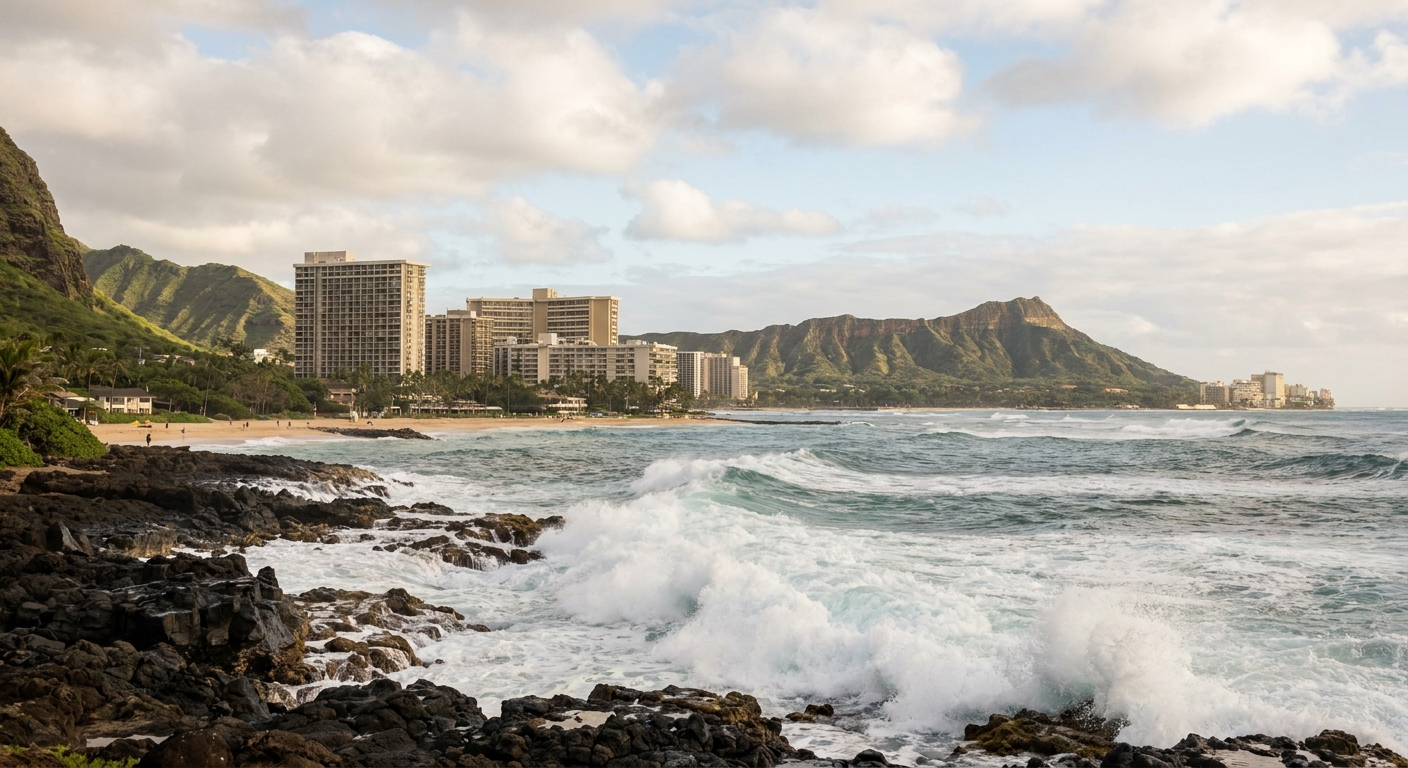
March is warm and changeable, sunny and dry on the leeward coasts, showery on Kauai’s north shore and truly wet around Hilo on the Big Island. The islands are still in their winter season, so the trade winds can pause for a few days when a front or a Kona storm passes, and then the air turns muggier and the clouds settle in.
| Place | Region | Average high (°F) | Average low (°F) | Rain (in) | Rain days | Sea (°F) |
|---|---|---|---|---|---|---|
| Honolulu | Oahu, south shore | 81.2 | 68.1 | 2.36 | 3.1 | 76.0 |
| Maui | Maui | 82.9 | 65.1 | 2.64 | 4.5 | 75.5 |
| Kauai | Kauai | 78.5 | 67.3 | 5.61 | 6.3 | 75.7 |
| Kona | Big Island, leeward coast | 82.2 | 69.7 | 0.97 | 1.9 | 77.6 |
| Hilo | Big Island, windward coast | 78.5 | 65.2 | 12.68 | 14.9 | 75.7 |
The great divide is the side of the island. In March, Kona receives less than an inch of rain, while Honolulu gets slightly more than two, so beach days are the norm there, with the occasional passing shower. Hilo, on the windward side, collects more than twelve inches and sees rain on about half the days, which keeps its gardens and falls lush but means you plan around the clouds.
Kauai sits in between, with its wetter north shore and sunnier south. Days are comfortable everywhere, with highs from the upper 70s to low 80s and nights that feel mild at sea level. The ocean is in the mid-70s on every island, a little cool for some swimmers, fine for most once they are in. Daylight lasts a bit over twelve hours, enough for a full day out and a sunset dinner.
Where to go in Hawaii in March
Maui and the leeward resort coasts
Maui is the classic March choice because the humpbacks are close to shore and the dry side keeps its promise of sun. Kaanapali and Wailea are the resort beaches, and from the sand you can often spot spouts and breaches beyond the swimmers. Morning boat trips tend to find the most activity before the afternoon winds rise.
In March, the Road to Hana, which winds along the damp windward shore, offers more greenery and more waterfalls, yet rain may still show up around any curve. Haleakala’s summit sunrise draws people before dawn, and it is cold up there, so dress for it. It suits couples, whale watchers and families who want beach time with a scenic day or two.
Oahu: Honolulu, Waikiki and the North Shore
Oahu is the busiest island and the one with the most city life, which makes it good for a trip that mixes food, history and beaches. Waikiki stays sunny and relaxed, with the sea warm enough for lessons on the gentle south-shore waves. Pearl Harbor and the museums of Honolulu give you something to do on the rare gray day.
The North Shore is at the tail end of its big winter surf. Waves can still be large, so watch from the beach and let the lifeguards and posted signs guide you. Diamond Head is a favorite morning hike, and it needs an entry reservation for non-residents.
The Big Island: Kona, Hilo and the volcano
The Big Island splits into two moods. On the Kona side, you get the dry, sun-drenched stretch, where coffee farms climb the hills above the water and mornings stay calm enough for snorkeling. Hilo and its waterfalls get the rain, so treat them as a green, misty day trip with a rain jacket.
At the rim of Hawaii Volcanoes National Park’s crater, expect cool, frequently wet weather, while Mauna Kea’s summit stays chilly. Pack layers and keep your day flexible. It suits travelers who like landscapes more than lounging.
Kauai: green cliffs and quieter beaches
Kauai is the green island, with the Na Pali Coast cliffs and Waimea Canyon. March is wetter here than on the other islands, especially around Princeville and Hanalei on the north, where showers can come in bands. Poipu, on the south shore, is the safer bet for sun.
Winter swells can make north-shore beaches rough this time of year, so wading and swimming there depend on the flags and the lifeguard. The island suits hikers, photographers and anyone happy with a slower pace and a flexible plan.
What to do in Hawaii in March
Watch humpback whales
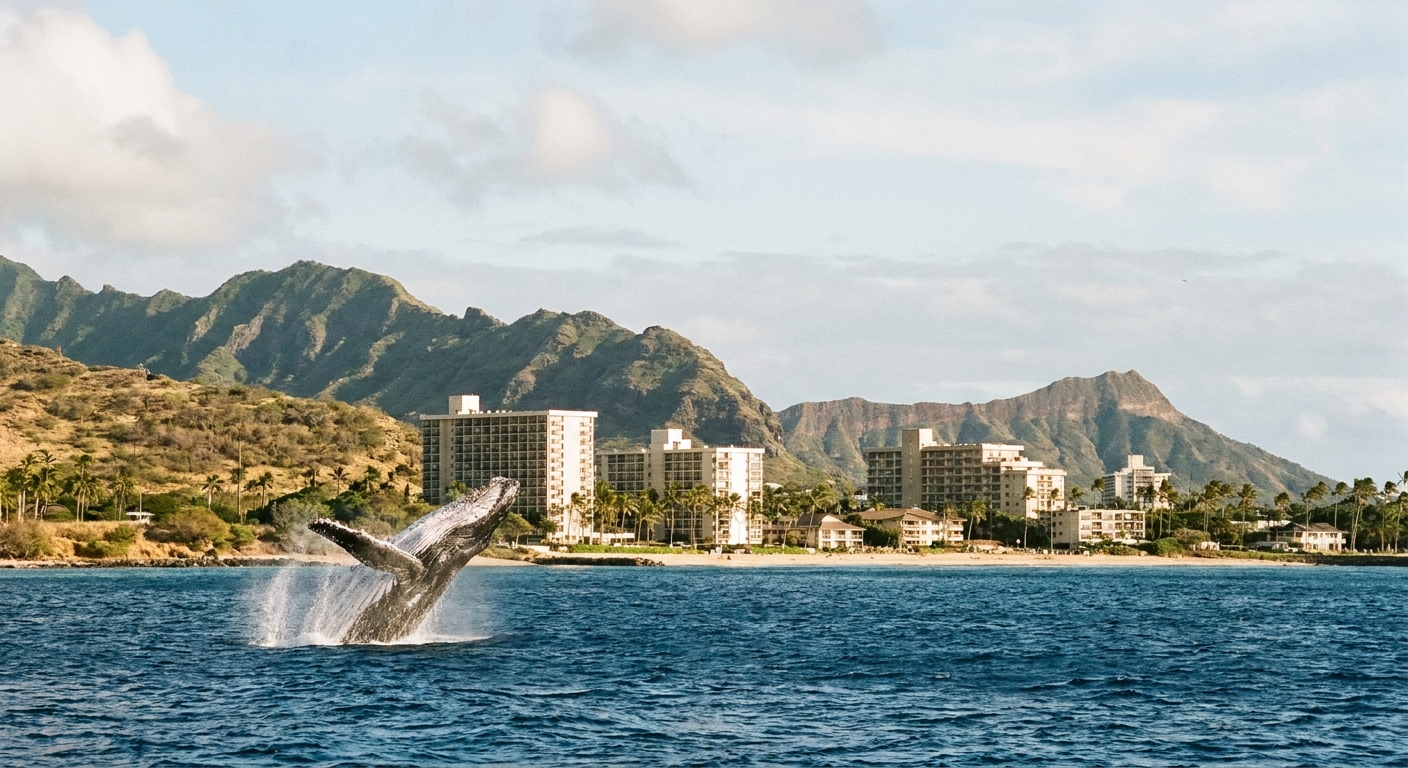
Humpback season usually stretches from November to May, with the largest numbers appearing between January and March, which means March remains an excellent time to visit. You may see spouts, tail slaps and mothers with calves from the shore on Maui, the Kona coast, Kauai and Oahu, and from morning boat trips. Sightings are a chance, never a promise, but patience at a lookout often pays off.
Keep your distance. Getting closer than 100 yards to a humpback whale breaks the law, and during whale season boaters should ease off the throttle. The Sanctuary Ocean Count, held on March’s final Saturday, gives residents and tourists the chance to help tally whales from the coasts of Oahu, the Big Island and Kauai (sign up at oceancount.org).
Hikes, beaches and volcano days
Diamond Head is the easy-to-reach morning hike on Oahu, with a steady climb to a view over Waikiki and the coast. Non-residents need a reservation, and the details are in the table.
| Site | Open | Admission |
|---|---|---|
| Diamond Head State Monument | 6:00 a.m. to 6:00 p.m., last entry 4:30 p.m. | $5 entry and $10 per vehicle for parking (non-residents, reservation required) |
Beyond that, March suits snorkeling on calm leeward mornings, waterfall chasing around Hilo and Hana, and an evening at Hawaii Volcanoes National Park, where the crater rim is cool and the sky can turn dramatic. Lei Day arrives on May 1 and Kamehameha Day on June 11, so March is quieter on the festival front, a month for the outdoors rather than parades.
If the Kona coast is sunny, add a coffee farm visit and a plate of poke at a local counter. On a wet day in Hilo, the farmers market and a few hours at the waterfalls make a good plan. The merrie monarch hula festival in Hilo falls the week after Easter, so it lands in March or April depending on the year.
Is Hawaii busy in March?
March is moderately busy, with a real rush around mainland spring break and Easter, and quieter stretches in between. The winter holiday crowds are gone, but families on school break and couples chasing the whales keep Waikiki, Lahaina and Kona lively, especially on weekends.
Oahu is the busiest island and the one with the most city life, so Waikiki beaches and the Diamond Head trail fill early. Maui’s resort coasts, Kaanapali and Wailea, are popular with whale watchers. Rooms and rental cars can be harder to find when spring break and Easter overlap, so book early if your dates fall around them.
For calmer days, look to Lanai and Molokai, the small, quiet islands with few hotels and little traffic, or to the Kauai south shore outside the school-break weeks. Early mornings are quiet anywhere. You will want a rental car on every island because no car ferry connects them, and brief flights between the islands tie them together.
What to pack for Hawaii in March
Packing changes with the side of the island. A beach day in Kona or Wailea asks for a swimsuit and sun protection, while Hilo, Hana and the volcano ask for a rain layer and something warm. Summits like Haleakala and Mauna Kea are cold, especially before dawn.
- For Hilo, the Road to Hana and Kauai’s north shore, pack a light rain jacket.
- A warm layer, such as a fleece, for the Haleakala sunrise and the volcano rim.
- Sturdy shoes with grip for waterfall trails and the Diamond Head climb.
- For the beach, bring a swimsuit, a rash guard and mineral sunscreen.
- Binoculars and a hat for whale watching from the shore.
- Sandals and light cotton clothes for evenings by the sea.
Good to know before you go
March falls outside the official Central Pacific hurricane season, which runs from June 1 to November 30. The real planning concern is winter conditions, because northern fronts and Kona storms may cut off the trade winds for days, delivering rain and heavy surf.
On north and west shores, the beach flags and lifeguards decide whether the water is open for swimming. Reserve Diamond Head ahead, and check the posted notices at state parks before heading out.
Is March a good time to visit Hawaii?
Yes, March is a very good time, especially for whale watching and for sunny days on the leeward coasts of Maui, Oahu and the Big Island. The best bet for dry weather is the Kona coast or Maui’s resort side, and for a mix of city and beach, Oahu’s south shore. Kauai and Hilo reward you with green landscapes if you accept some rain.
Compared with February, March is a touch warmer and about as showery, with Honolulu a degree or so warmer and the sea nearly unchanged. Hilo is a little wetter than in February, so it is still the rainiest corner. Kona stays pleasantly dry in both months.
April is warmer again, with Honolulu’s highs in the low 80s and noticeably less rain, and Hilo’s showers staying frequent. The whale season is winding down by then, with the peak behind it, so March is the last month to count on the best chances of sightings. Spring break crowds come and go, but the weather rarely turns against you for long. What is special about March is the overlap: whales still close to shore, waterfalls running full, waves on the North Shore fading, and the beaches of the dry coasts warm and uncrowded in the early mornings.
Sources
- NOAA NCEI, monthly normals 1991-2020, station USW00022521, checked September 8, 2026
- Open-Meteo Marine API, average 2015-2024, checked September 8, 2026
- sunrise-sunset.org, sunrise and sunset calculated for the 15th of the month, checked September 8, 2026
- NOAA NCEI, monthly normals 1991-2020, station USW00022516, checked September 8, 2026
- NOAA NCEI, monthly normals 1991-2020, station USW00022536, checked September 8, 2026
- NOAA NCEI, monthly normals 1991-2020, station USW00021510, checked September 8, 2026
- NOAA NCEI, monthly normals 1991-2020, station USW00021504, checked September 8, 2026
- NWS Honolulu (HFO), « Climate of Hawaii » summary, weather.gov/hfo/climate_summary, checked September 24, 2026
- NWS Honolulu / Central Pacific Hurricane Center, « 2026 Central Pacific Hurricane Season Outlook », weather.gov/hfo/hurricaneOutlook2026, checked September 24, 2026
- Hawaiian Islands Humpback Whale National Marine Sanctuary (NOAA), pages « Boating Guide » and « About the Sanctuary », hawaiihumpbackwhale.noaa.gov, checked September 24, 2026
- Hawaiian Islands Humpback Whale NMS (NOAA), « Boating Guide », checked September 24, 2026
- Hawaiian Islands Humpback Whale NMS (NOAA), « Sanctuary Ocean Count », checked September 24, 2026
- Hawaii DLNR Division of State Parks, « Diamond Head State Monument », dlnr.hawaii.gov/dsp, checked September 24, 2026
- DBEDT, press releases monthly July (blog/25-34), September (blog/25-42) and December 2025 (blog/26-04), checked September 24, 2026
To plan your stay
- Things to Do in Hawaii: Volcano Sunrises, Snorkeling Bays, Pearl Harbor and What to Eat
- Where to Stay in Hawaii: Choosing an Island, Oahu to Kauai Bases and the Hotel Tax
- Getting Around Hawaii: Interisland Flights, TheBus and Skyline, Rental Cars and Taxi Fares
- Know Before You Go to Hawaii: Agriculture Form, Sunscreen Law, Reservations and Taxes