
On the Kona coast in October, triathletes in swim caps wade into the bay at dawn while the lava fields glow gold behind them, and the whole town hums with bikes, banners and sunburned shoulders. Across the islands the summer crowds have thinned, the ocean is still bathwater, and the first hints of winter appear on the north shores. This is Hawaii at a slower, easier moment, good for beach days, volcano visits and unhurried drives.
What is the weather like in Hawaii in October?
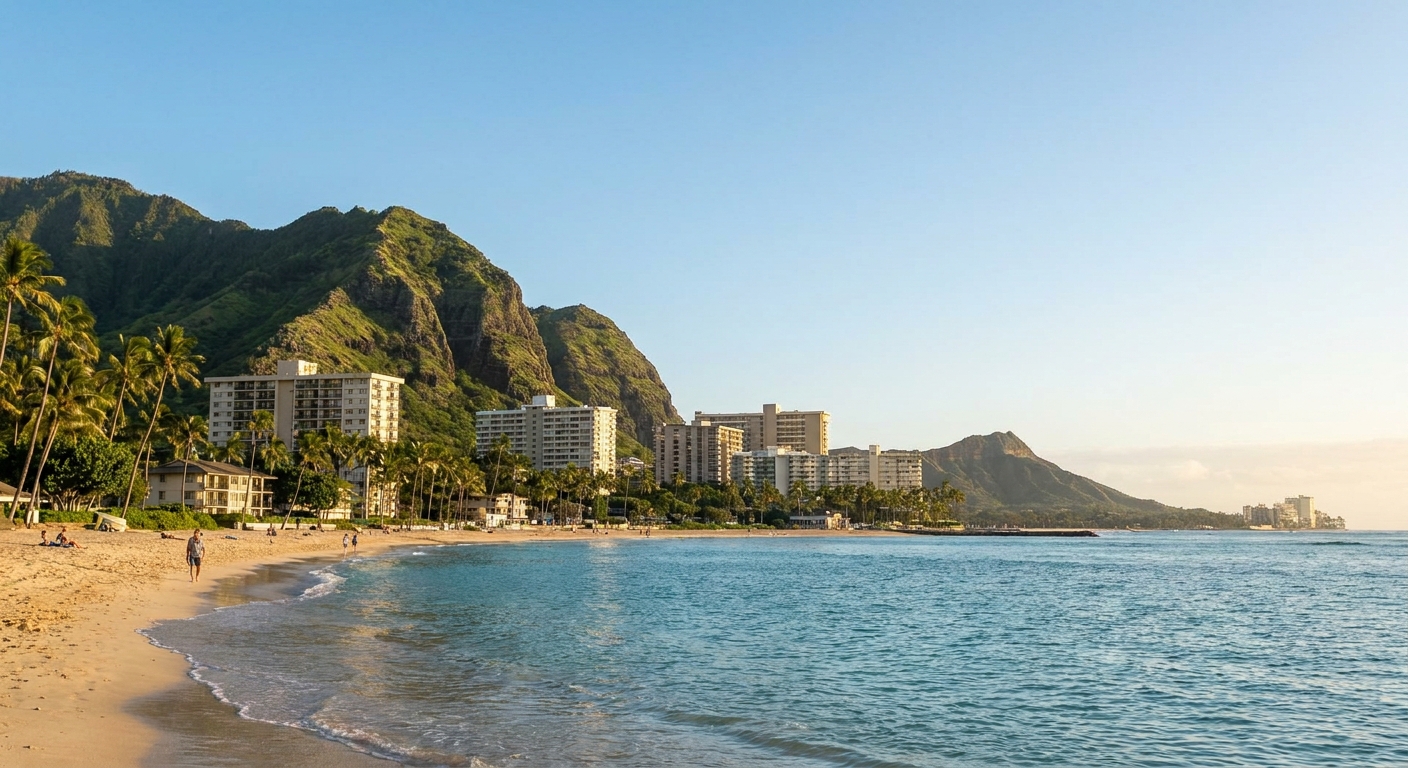
On the islands’ leeward sides, October brings warmth and sunshine, while the windward sides get rain, and among the places below, Hilo stands out as the wet exception, Maui as the driest and hottest. Most of Hawaii really has only two seasons, and October is the hinge where the long dry summer starts to give way to the wetter winter.
| Place | Region | Average high (°F) | Average low (°F) | Rain (in) | Rain days | Sea (°F) |
|---|---|---|---|---|---|---|
| Honolulu | Oahu, south shore (leeward) | 86.9 | 73.9 | 1.51 | 2.6 | 80.7 |
| Maui | Maui, dry side | 88.7 | 70.1 | 0.83 | 1.6 | 79.5 |
| Kauai | Kauai | 83.9 | 73.6 | 3.27 | 5.4 | 81.2 |
| Kona | Big Island, west coast (leeward) | 86.2 | 74.5 | 0.89 | 1.7 | 81.4 |
| Hilo | Big Island, east coast (windward) | 82.4 | 69.0 | 10.24 | 16.7 | 80.5 |
What truly matters is how much one side of an island differs from the other. Hilo gets more than ten inches of rain across more than two weeks of the month, so showers there are a daily habit and the waterfalls run full. Kona, only a short flight or a long drive away, sees showers on barely two days, which is why the coffee farms and the beach resorts feel like a different island.
Honolulu and Maui sit in the mid-to-upper 80s by day, hot enough that midday is for the shade or the water. Kauai is a little cooler and greener, with passing showers on about five days, most of them short. Nights stay mild at sea level, and the sea hovers around 80 degrees nearly everywhere, comfortable for long swims and snorkeling sessions.
Where to go in Hawaii in October
Oahu: Honolulu, Waikiki and the North Shore
No Hawaiian island packs in more city energy than Oahu, and October is a fine time for it. Waikiki mornings are bright, the surf on the south shore is usually gentle compared with winter, and a walk up Diamond Head or a visit to Pearl Harbor fits easily around beach time. Honolulu sees only a few short showers this month, so plans rarely get washed out.
The North Shore is waking up. The giant winter waves have not arrived in full, but the first swells can show up late in the month, so beaches like Waimea Bay change from one week to the next. Watch the lifeguard flags and signs, which decide where you swim. Between visits, stop at the shrimp trucks and shave ice stands along the coast road.
Maui: Wailea, Kaanapali and Haleakala
Maui is the hottest and driest of these places in October, which makes the resort beaches of Wailea and Kaanapali the natural base. Days are for snorkeling, paddleboarding and long lunches with the ocean in view, and the sea is warm enough that you rarely feel the need to get out.
For a change of scene, go up Haleakala. The summit is far colder than the coast, and sunrise there draws a line of cars in the dark.
A sunrise reservation is required for each vehicle entering between 3:00 a.m. and 7:00 a.m., and it comes on top of the park entrance fee. On the damp windward side, the Road to Hana turns greener and more leisurely, offering waterfalls and banana bread stands around every bend.
The Big Island: Kona, Hilo and the volcanoes
Kona is the sunny side, with calm mornings, coffee farms on the slopes and a bay that fills for Ironman week in October. Snorkeling and boat trips go out from the harbor, and in the evening the town square smells of grilled fish and fresh pineapple.
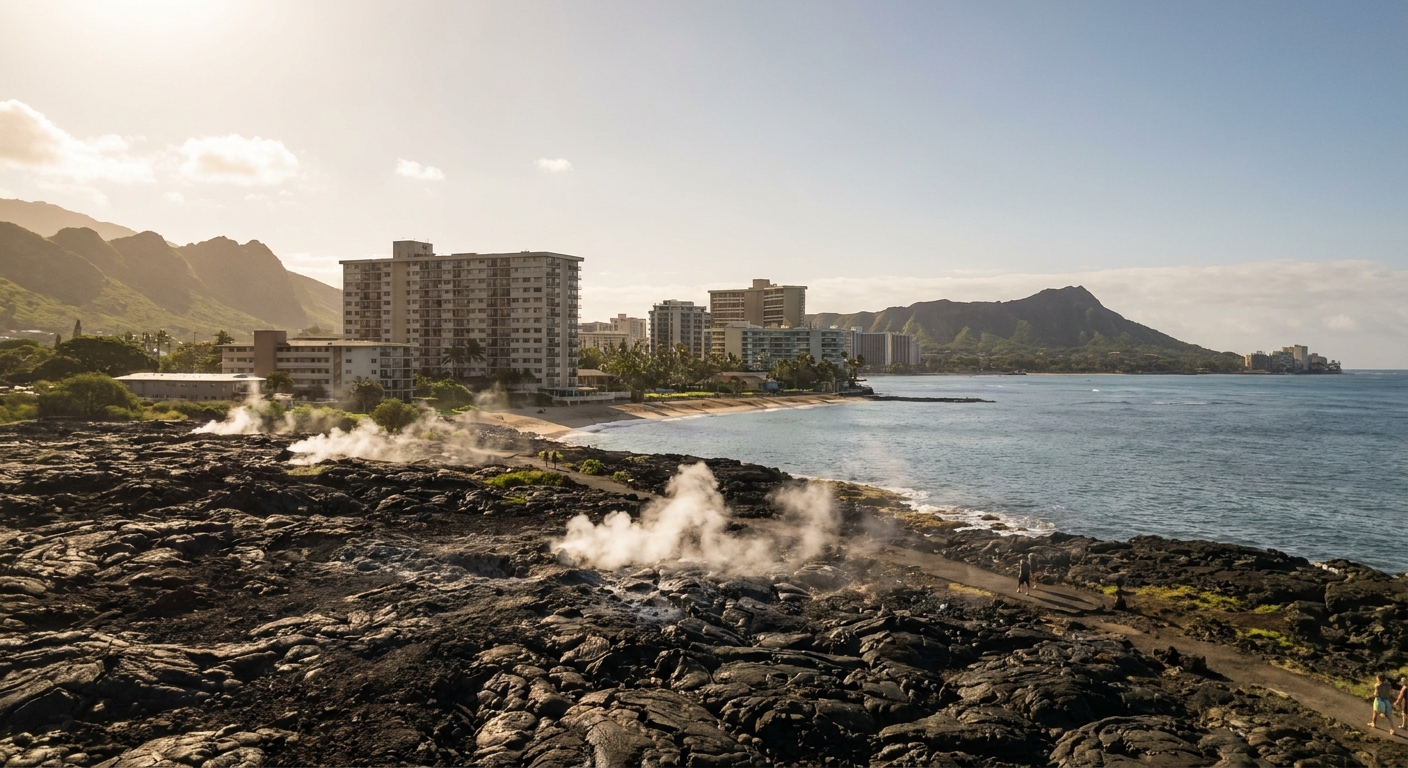
Hilo is the opposite, wet and lush, with a farmers market, black sand shores and waterfalls like Rainbow Falls. Hawaii Volcanoes National Park sits in the middle, and its crater rim runs cool with frequent drizzle, so bring a layer. If the clouds clear at night, the glow from Kilauea may be visible, though it is never guaranteed.
Kauai: Poipu, Hanalei and Waimea Canyon
Kauai is the green, quiet island, and October rains tend to arrive as passing showers rather than all-day gray. For beach days, the handiest place to stay is Poipu, on the south shore where the sun shines more, and monk seals occasionally nap on the sand (keep your distance). The north shore around Hanalei is wetter and lusher, with taro fields and mountains streaked with waterfalls.
The scenic stars here are Waimea Canyon plus the cliffs of the Na Pali Coast. Mornings are usually the clearest in the canyon, and an overlook stop is worth timing before the clouds roll in. Plan on a rental car, since there is no ferry between islands and each island is its own driving world.
What to do in Hawaii in October
Ironman World Championship in Kona
The big event of the month is the Ironman World Championship, held in Kona in October. Athletes swim in the bay, ride bikes across the lava fields of the Queen Kaahumanu Highway and finish with a marathon along Alii Drive. Even if you do not race, the town is a festival of lean bodies, cheering crowds and late-night finish-line celebrations.
Spectators line the pier and the finish area, and the energy is contagious. Expect busier restaurants and harder-to-find rooms around the race, and keep a little patience on the road.
Beaches, snorkeling and the first winter surf
October is a fine month for the water. The sea sits near 80 degrees, summer swells are fading on south shores, and winter swells have not fully reached the north. Snorkel in the morning when the water is clearest, and ask a lifeguard about the day’s conditions before you wade in.
Watch the north-facing beaches carefully. The big surf season begins to build, and a beach that was flat last week can be dangerous this week. Surf-watching from the sand is a pleasure in its own right.
Volcanoes, hikes and history
Cooler hiking weather makes October good for trails. Diamond Head on Oahu is a short but steep climb with a city and ocean view at the top, and it requires a reservation for non-residents. Pearl Harbor National Memorial is a quiet, moving stop, and Hawaii Volcanoes National Park rewards a full day with steam vents, lava tubes and crater walks.
Humpback whales are not here yet. Their season generally begins in November, so October boat trips focus on dolphins, turtles and the coastline instead.
Is Hawaii busy in October?
October is on the quieter side, sitting after the summer family rush and before the winter holiday crowds. Arrivals in September were the lowest of the busy-season comparison months, and October carries much of that calm, so beaches have room and rooms are easier to find on most islands.
The exception is Kona during Ironman week, when hotels and restaurants fill with athletes and families. Hilo and Hana stay laid-back, and the small islands of Lanai and Molokai remain quiet all year, with few hotels and little traffic.
Waikiki is always the busiest corner of the state, but in October it feels less packed than in July. Popular spots like the Haleakala sunrise and Diamond Head still reward early planning, since their reservation systems apply whatever the month.
Mainland school vacations are mostly over, so the visitors you meet are often couples, honeymooners and travelers with flexible schedules. Halloween brings costumes to Lahaina-style street scenes and Waikiki bars at the very end of the month, a lively note without a major crowd surge.
What to pack for Hawaii in October
Packing depends on which side of the island you will be on. On the leeward side, beaches mean swimwear and light clothes, but on windward coasts and in the mountains you will want a rain layer plus something warmer for the summit and the volcano rim.
- Swimsuits, a rash guard and a hat for sunny days on the dry coasts.
- A light rain jacket for Hilo, Hana, Hanalei and any windward drive.
- For the top of Haleakala and the crater rim in Hawaii Volcanoes, bring a warm layer or a fleece.
- Sturdy sneakers or trail shoes for Diamond Head, waterfalls and muddy paths.
- Mineral sunscreen and a reusable water bottle for long beach and hiking days.
- Water shoes for rocky entries and lava-rock shorelines.
Good to know before you go
The Central Pacific hurricane season runs from June 1 to November 30, so October falls inside it. Hurricanes appear somewhere in the central Pacific each year, but Hawaii usually escapes them, and NOAA’s 1993 Hurricane Iniki survey reports that only four had hit the state between 1950 and the time of that study. Keep an eye on forecasts, and be flexible with outdoor plans. No passport or visa is needed for U.S. travelers.
Is October a good time to visit Hawaii?
Yes, October is a very good time, especially for beach lovers on the dry sides of Maui, Oahu and the Kona coast, where sun is plentiful and the sea is warm. Travelers who dislike rain should skip a Hilo-based stay, while those who like green scenery and waterfalls will find it lush and dramatic.
Compared with September, October is a touch cooler and a little wetter, especially around Hilo, but the sea remains almost as warm. Compared with November, it is still sunnier and drier, with a lower chance of long rainy spells, and the humpback whales have not yet arrived. In Hilo, rainfall rises from September into October and jumps again in November, so the contrast is clear there.
October suits travelers who want a balance, with summer warmth, lighter crowds, quiet trails and the first hints of winter swell. Kauai and Maui feel relaxed, Oahu has its full city energy without the peak crush, and the Big Island offers the widest range from sun to rain to volcano.
What makes October special is the turn of the season. Triathletes take over Kona, the water is still warm enough for long swims, and the first big swells begin to rumble toward the north shores, a sign that winter is on its way.
Sources
- NOAA NCEI, monthly normals 1991-2020, station USW00022521, checked September 8, 2026
- Open-Meteo Marine API, average 2015-2024, checked September 8, 2026
- sunrise-sunset.org, sunrise and sunset calculated for the 15th of the month, checked September 8, 2026
- NOAA NCEI, monthly normals 1991-2020, station USW00022516, checked September 8, 2026
- NOAA NCEI, monthly normals 1991-2020, station USW00022536, checked September 8, 2026
- NOAA NCEI, monthly normals 1991-2020, station USW00021510, checked September 8, 2026
- NOAA NCEI, monthly normals 1991-2020, station USW00021504, checked September 8, 2026
- NWS Honolulu (HFO), « Climate of Hawaii » summary, weather.gov/hfo/climate_summary, checked September 24, 2026
- NWS Honolulu / Central Pacific Hurricane Center, « 2026 Central Pacific Hurricane Season Outlook », weather.gov/hfo/hurricaneOutlook2026, checked September 24, 2026
- NOAA/NWS, Natural Disaster Survey Report « Hurricane Iniki, September 6-13, 1992 », April 1993, weather.gov/media/publications/assessments/iniki1.pdf, checked September 24, 2026
- Hawaiian Islands Humpback Whale National Marine Sanctuary (NOAA), pages « Boating Guide » and « About the Sanctuary », hawaiihumpbackwhale.noaa.gov, checked September 24, 2026
- Hawaiian Islands Humpback Whale NMS (NOAA), « Boating Guide », checked September 24, 2026
- National Park Service, Haleakala « Fees & Passes », nps.gov/hale/planyourvisit/fees.htm, checked September 24, 2026
- National Park Service, Hawaii Volcanoes « Fees & Passes », nps.gov/havo/planyourvisit/fees.htm, checked September 24, 2026
- National Park Service, Pearl Harbor « Fees & Passes », nps.gov/perl/planyourvisit/fees.htm, checked September 24, 2026
- Hawaii DLNR Division of State Parks, « Diamond Head State Monument », dlnr.hawaii.gov/dsp, checked September 24, 2026
- DBEDT, press releases monthly July (blog/25-34), September (blog/25-42) and December 2025 (blog/26-04), checked September 24, 2026
To plan your stay
- Things to Do in Hawaii: Volcano Sunrises, Snorkeling Bays, Pearl Harbor and What to Eat
- Where to Stay in Hawaii: Choosing an Island, Oahu to Kauai Bases and the Hotel Tax
- Getting Around Hawaii: Interisland Flights, TheBus and Skyline, Rental Cars and Taxi Fares
- Know Before You Go to Hawaii: Agriculture Form, Sunscreen Law, Reservations and Taxes