
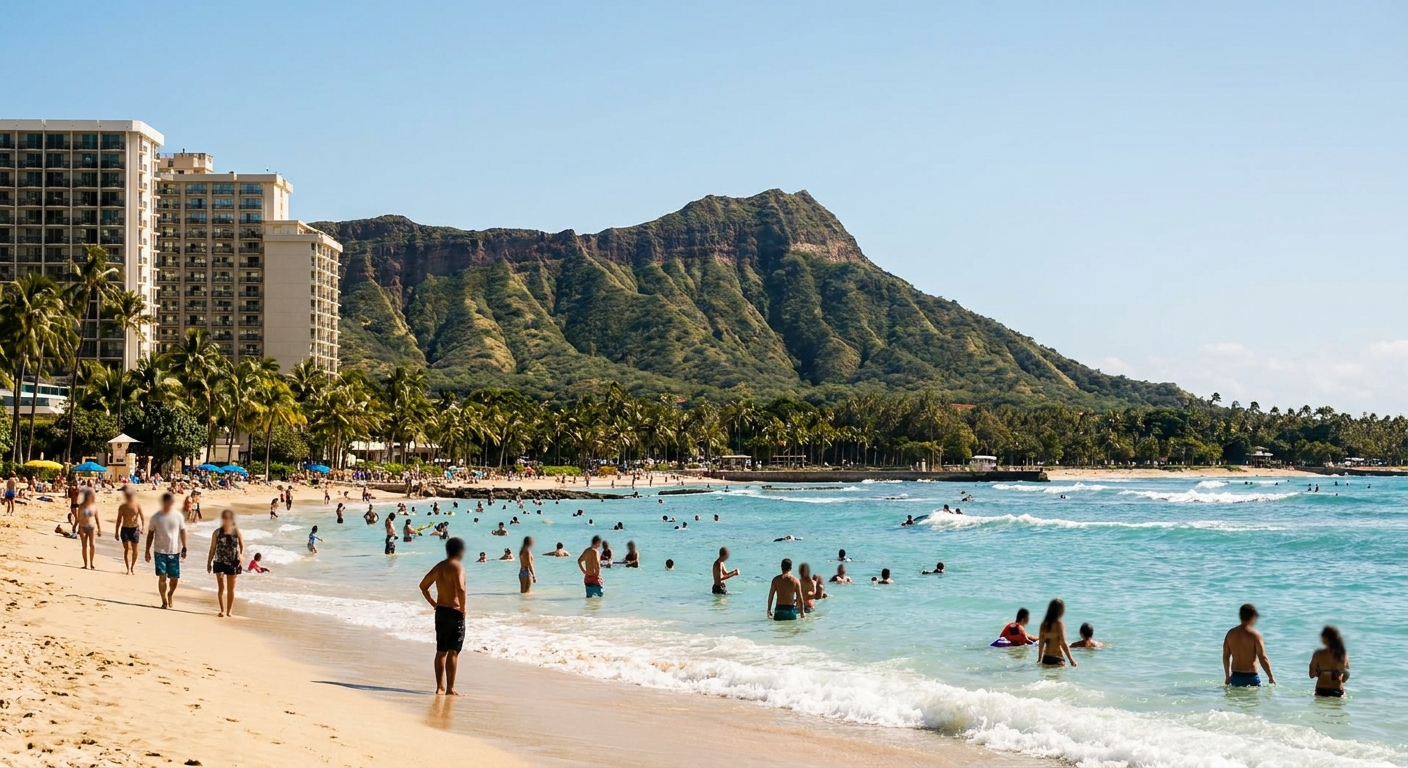
On a July afternoon in Waikiki, surfboards ride the gentle south-shore swells while outrigger canoes slide out past the breakwater and families spread towels across the sand until the light turns gold behind Diamond Head. A few islands over, Kona’s coffee country sits warm and green above a dry coast, and Hilo’s waterfalls keep running under their usual clouds. July is the heart of Hawaii’s summer, a month of warm seas, steady trade winds and long days, and each island offers something different.
What is the weather like in Hawaii in July?
Across every island, July brings warmth, breezes and little rain to leeward shores, though the windward side of the Big Island is wet, since Hilo remains rainy the whole month.
| Place | Region | Average high (°F) | Average low (°F) | Rain (in) | Rain days | Sea (°F) |
|---|---|---|---|---|---|---|
| Honolulu | Oahu, south shore | 88.1 | 75.1 | 0.52 | 1.3 | 79.3 |
| Maui | Maui | 89.2 | 71.8 | 0.53 | 1.5 | 79.1 |
| Kauai | Kauai | 84.6 | 74.6 | 1.75 | 5.0 | 79.6 |
| Kona | Big Island, leeward coast | 86.1 | 74.9 | 0.49 | 1.3 | 80.9 |
| Hilo | Big Island, windward coast | 82.8 | 69.9 | 9.24 | 18.8 | 79.3 |
The big divide is between the two sides of an island. Honolulu, Maui and Kona get well under an inch of rain in the whole month, with a shower on one or two days at most, so beach days are easy to plan. Kona is the warmest water of the group, a bit above Honolulu and Maui.
Hilo is the opposite case. Rain falls on most days of July, usually as passing showers between bright spells, and the total is many times what the leeward coasts receive.
Kauai sits in between, with a few wetter days, mostly on the north shore, and a south shore around Poipu that stays sunnier. The trade winds take the edge off the heat, and the days last more than thirteen hours at mid-month, which leaves long evenings for the beach.
Where to go in Hawaii in July
Oahu: Honolulu and the south shore
Summer swells reach the south shores, so Waikiki is the place for learning to surf, riding an outrigger canoe or paddling a board on long, rolling waves. Mornings are the quiet hour on the sand, and the afternoon trades make the heat comfortable. Pearl Harbor and the city’s museums and food counters fill the hours when you want shade.
Diamond Head makes a good early walk before the sun climbs. Non-residents must book entry and parking, and the trail may be short but it climbs sharply. The North Shore is in its calm season, with flat water and a slow, rural feel, quite unlike the big-wave winter. The sea there still deserves a look at the lifeguard flags before you get in.
Maui: dry resort coasts and the volcano
Maui is the hottest of the group by day, and the dry side suits July well. Kaanapali and Wailea have long stretches of sand, calm mornings and sunsets that bring people out to the shore. The cooler nights come from the elevation inland, which is a good moment for a trip up Haleakala.
The Haleakala summit sunrise draws visitors before dawn and the summit is cold, so bring layers even in summer. The Road to Hana, on the damp windward coast, offers a leisurely day of waterfalls, banana bread stands and hairpin turns, with rain that may come and go along the way.
Kauai: green cliffs and quiet beaches
Kauai is the greenest and quietest of the main islands, and July is a good time for it. Poipu on the south shore is the sunniest base, with beaches and a relaxed resort feel. Princeville and Hanalei on the north are wetter, though summer is gentler there than in winter, and the sea is calmer than in the big-swell months.
Waimea Canyon is a day for the lookouts, with red cliffs and deep valleys, and the Na Pali Coast is a spectacle from the air or the water. Here you can count on slightly more rain than Maui or Oahu gets, and those showers usually pass quickly, leaving rainbows behind.
The Big Island: Kona, Hilo and the volcano
On the sunny, dry side of the island, the Kona coast offers warm water and coffee farms on the rising slopes. Mornings are for snorkeling and afternoons for the cafes of the upland villages. Hilo and its waterfalls are the wet half of the island, so plan for rain there and make the most of the green.
Bring a spare layer for the crater rim at Hawaii Volcanoes National Park, since conditions there are chilly and often wet. Mauna Kea’s summit is cold at any time of year. You will need a rental car on every island, as no car ferry links them.
What to do in Hawaii in July
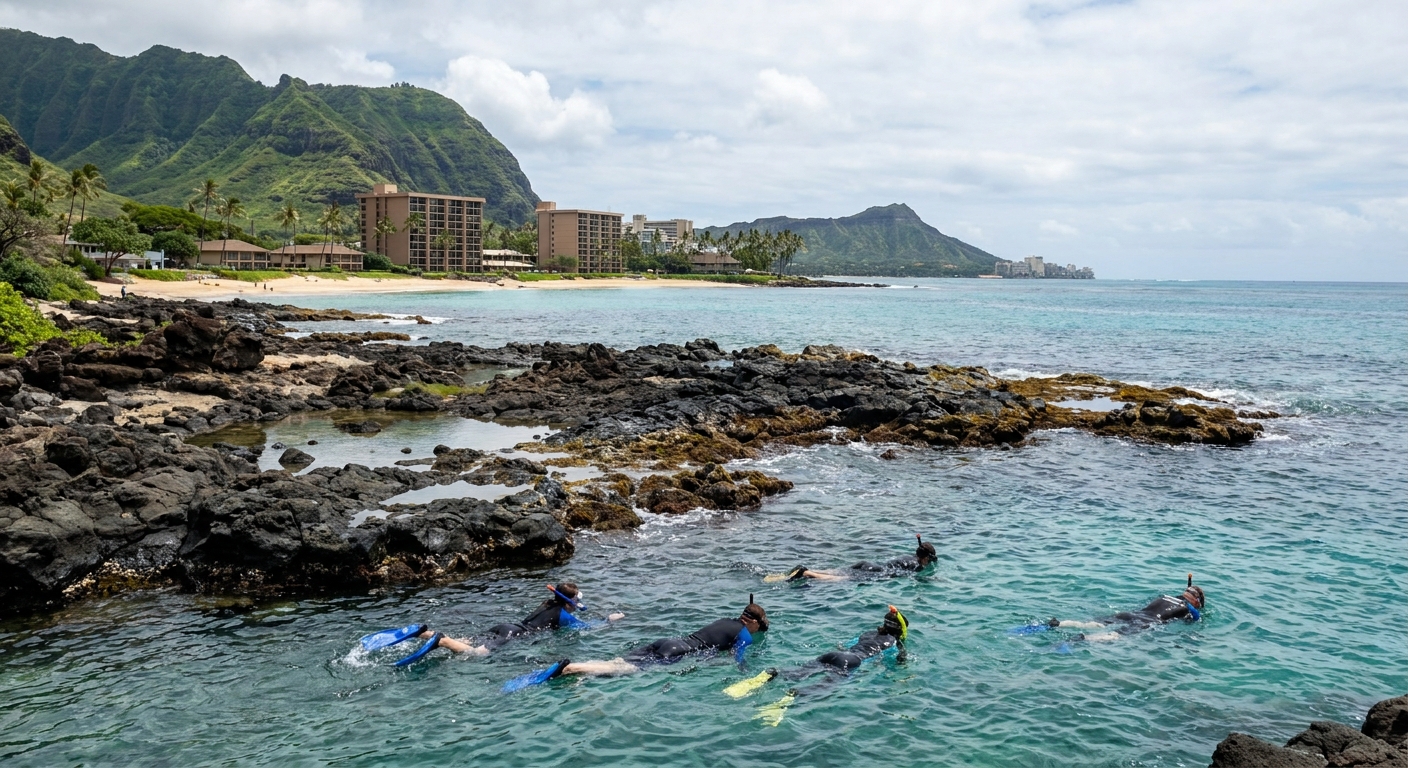
July is a month for the water: swimming, snorkeling, paddling and surfing, with long, light evenings for dinner outside. Fireworks on the Fourth of July light up harbors and beaches, and Honolulu’s waterfront is among the places where families gather to watch.
The Fourth of July and local summer festivals
The Fourth is a big evening in the islands, with fireworks over the water, picnics on the sand and parades in some towns. Summer also brings community festivals, canoe regattas and hula events, many linked to the long school break. Dates move from year to year, so look at local listings once you know your island. Kamehameha Day on June 11 is just before the month begins, and some of its parades and lei ceremonies linger in the memory of the islands, though the day itself falls in June.
Ocean days: surf, snorkel and paddle
South-facing shores get the summer swells, which makes Waikiki a famous place for first-time surfers on long, forgiving waves. Elsewhere, snorkeling is a morning habit, when the water is clearest, and paddleboarding fits the calm hours before the trades pick up. Keep off the reef and watch for turtles, which are protected.
Surf can still be strong on the south shore after a big swell, so the lifeguard and the beach signs decide whether to go in. Mineral sunscreen is the habit to adopt, and the sun is strong by mid-morning.
Food, markets and slow evenings
A July dinner in Hawaii often starts with poke from a counter, a plate lunch on a beach picnic table or shave ice after a hot walk. Farmers markets sell fruit stands’ best, and the evenings suit a long meal outside. A luau, with its imu-cooked pork, poi and hula, is a classic summer night out.
Is Hawaii busy in July?
Yes, July is one of the busiest months in Hawaii, since summer family vacation fills the islands, and arrivals in July of the latest full year were among the highest of the year, at 873,430.
Of all the islands, Oahu draws the most visitors and offers the liveliest city scene, which keeps Waikiki buzzing all day and into the night. Maui’s resort beaches and the Road to Hana draw crowds, and Kauai, though quieter, still fills up around Poipu and Hanalei. Rental cars and rooms tend to go early, so book ahead.
Calmer corners exist. Anyone craving a slow week will find a fit in Lanai and Molokai, two tiny, hushed islands that have no city, scant traffic and only a handful of hotels. On any island, early mornings are the quiet hour at beaches and trailheads, and the crowds thin out away from the best-known viewpoints. September, with fewer arrivals, is the calmer month if your dates are flexible.
What to pack for Hawaii in July
Packing is simple on the dry coasts, with light summer clothes and swimwear, and a bit more on the wet side and in the mountains, where rain and cool air call for layers. Evenings stay warm at sea level, and the high summits are a different climate altogether.
- For intense sunshine and the reef, bring mineral sunscreen, a rash guard and swimsuits.
- Pack a thin rain shell for the Road to Hana, Hilo and the north shore of Kauai.
- A warm layer for the Haleakala and Mauna Kea summits, and for the crater rim at Hawaii Volcanoes.
- Sturdy sandals and closed shoes for trails, wet rocks and the Diamond Head climb.
- A hat, sunglasses and a reusable water bottle for long days in the sun.
Good to know before you go
The Central Pacific hurricane season runs from June 1 to November 30, so July falls inside it. Each year hurricanes show up in areas of the central Pacific, yet they do not regularly reach Hawaii, and according to NOAA’s 1993 survey of Hurricane Iniki, just four had struck the state from 1950 up to that report.
Visitors need no passport or visa, since Hawaii is a U.S. state. For ocean conditions, the lifeguard and the beach signs are the guide.
Is July a good time to visit Hawaii?
Yes, July is a very good time for beach-focused trips, especially on the dry, leeward sides of Oahu, Maui and the Big Island, where rain is scarce and the sea is warm.
Compared with June, July is a touch warmer, and the sea is a degree or so warmer too. Hilo’s rain is heavier in July than in June, and August is wetter again there, so the Big Island’s windward side gets no drier as summer goes on. Leeward Kona and Honolulu stay nearly as dry in August as in July, with slightly warmer air and water.
The trade-off is crowds. Summer is a busy time, so the pleasure of July comes with fuller beaches and earlier bookings than in the calmer months. In return you get the longest days, the south-shore swells that make Waikiki a classroom for beginners, and an ocean that invites you in for hours. July in Hawaii is the month of the south-shore wave and the Fourth of July fireworks over the water.
Sources
- NOAA NCEI, monthly normals 1991-2020, station USW00022521, checked September 8, 2026
- Open-Meteo Marine API, average 2015-2024, checked September 8, 2026
- sunrise-sunset.org, sunrise and sunset calculated for the 15th of the month, checked September 8, 2026
- NOAA NCEI, monthly normals 1991-2020, station USW00022516, checked September 8, 2026
- NOAA NCEI, monthly normals 1991-2020, station USW00022536, checked September 8, 2026
- NOAA NCEI, monthly normals 1991-2020, station USW00021510, checked September 8, 2026
- NOAA NCEI, monthly normals 1991-2020, station USW00021504, checked September 8, 2026
- NWS Honolulu (HFO), « Climate of Hawaii » summary, weather.gov/hfo/climate_summary, checked September 24, 2026
- NWS Honolulu / Central Pacific Hurricane Center, « 2026 Central Pacific Hurricane Season Outlook », weather.gov/hfo/hurricaneOutlook2026, checked September 24, 2026
- NOAA/NWS, Natural Disaster Survey Report « Hurricane Iniki, September 6-13, 1992 », April 1993, weather.gov/media/publications/assessments/iniki1.pdf, checked September 24, 2026
- Hawaii DLNR Division of State Parks, « Diamond Head State Monument », dlnr.hawaii.gov/dsp, checked September 24, 2026
- DBEDT, press releases monthly July (blog/25-34), September (blog/25-42) and December 2025 (blog/26-04), checked September 24, 2026
To plan your stay
- Things to Do in Hawaii: Volcano Sunrises, Snorkeling Bays, Pearl Harbor and What to Eat
- Where to Stay in Hawaii: Choosing an Island, Oahu to Kauai Bases and the Hotel Tax
- Getting Around Hawaii: Interisland Flights, TheBus and Skyline, Rental Cars and Taxi Fares
- Know Before You Go to Hawaii: Agriculture Form, Sunscreen Law, Reservations and Taxes