
On a January morning at a lookout above Maui’s Lahaina coast, a tail slaps the water far offshore and everyone on the pullout goes quiet, then cheers. Surfers study the swells rolling onto Oahu’s North Shore, while on the Big Island the Kona sun warms the lava-black shoreline by breakfast. January in Hawaii is whale season and big-wave season, with the dry coasts at their sunniest and the wet ones doing what they always do.
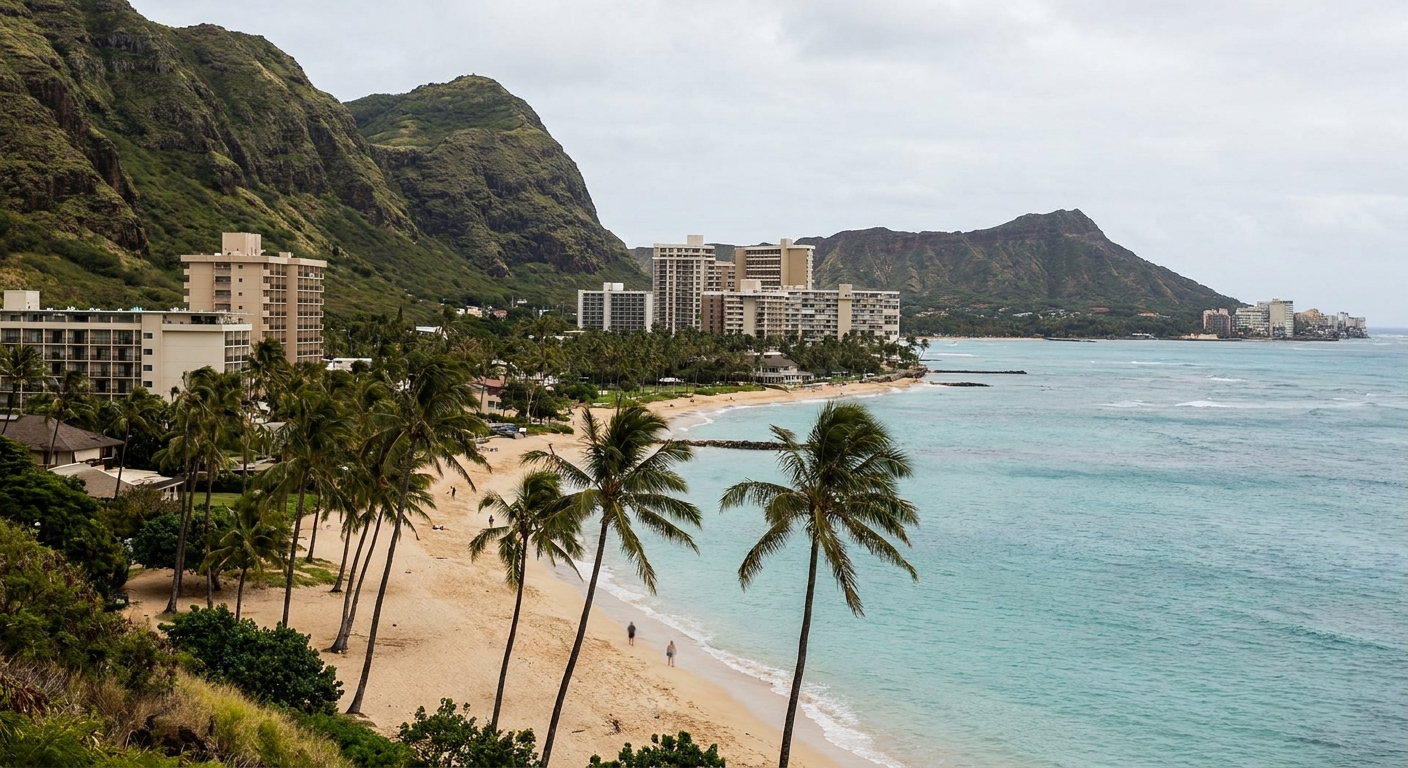
What is the weather like in Hawaii in January?
January is warm and mostly pleasant on every island, with sunny leeward coasts, showery windward ones and a sea that stays comfortable for swimming. Mornings and evenings feel mild rather than cool, and the days are short of daylight compared with summer.
| Place | Region | Average high (°F) | Average low (°F) | Rain (in) | Rain days | Sea (°F) |
|---|---|---|---|---|---|---|
| Honolulu | Oahu, south shore | 80.5 | 66.8 | 1.84 | 3.3 | 77.3 |
| Maui | Maui | 82.2 | 63.6 | 2.42 | 4.0 | 77.6 |
| Kauai | Kauai | 78.6 | 66.0 | 2.78 | 4.4 | 76.9 |
| Kona | Big Island, leeward coast | 81.4 | 68.6 | 1.35 | 1.8 | 78.1 |
| Hilo | Big Island, windward coast | 78.7 | 64.1 | 7.86 | 9.6 | 77.4 |
The big contrast is Hilo against Kona. Hilo sees rain on nearly ten days this month, usually in passing showers that keep the waterfalls full, while Kona gets rain on fewer than two days and stays bright and dry. Honolulu sits between the two, with only a few showery days.
In winter, too, the trade winds can shut off for days or weeks, cut off by northern fronts and Kona storms that form around the islands. Those spells bring cloudier, muggier weather and can reach even the dry coasts. Maui and Kauai have cooler nights than Honolulu or Kona, so evenings feel a bit fresher there.
Where to go in Hawaii in January
Oahu: Honolulu, Waikiki and the North Shore
Honolulu and Waikiki are mostly sunny this month, with only a few showery days. Waikiki’s south-facing beaches usually have gentler water during winter, yet before you go in, look at the posted warnings and that day’s surf and currents, and swim only where a lifeguard is on duty. It is a good base for people who want city life, restaurants and the sights of Pearl Harbor.
The North Shore is the other face of the island. Winter swells build big surf on north-facing beaches, and watching the waves from the sand is a January ritual. Swimming there is a different matter, so most visitors treat those beaches as a show rather than a swim spot.
Diamond Head makes a good morning outing, since the early hours are cooler and clearer. Non-residents need an entry-and-parking reservation, and the hours and fees are in the table.
| Site | Open | Admission |
|---|---|---|
| Diamond Head State Monument | 6:00 a.m. to 6:00 p.m., last entry 4:30 p.m. | $5 per person, $10 per vehicle for parking (non-residents) |
Maui: Wailea, Kaanapali and Haleakala
Maui’s resort beaches of Kaanapali and Wailea sit on the dry side, and January is whale time there. Humpbacks often show up close to shore, so a balcony, a beach chair or a coastal walk becomes a viewing spot. Days are warm, and nights are a little cooler than on Oahu.
The Road to Hana runs along the wet windward coast, so expect showers and green, dripping scenery. Before dawn, people make their way to Haleakala’s summit for sunrise, and since the top is far colder than the beach, it feels like an entirely different climate.
Kauai: Poipu, Hanalei and Na Pali
Kauai is the greenest island, and January’s rain is part of the reason. For beach days, Poipu, on the south shore where the sun shines more, is the wiser choice, but on the wetter north, Princeville and Hanalei get more rain and the same large winter swells that reach other north shores.
Waimea Canyon and the Na Pali Coast cliffs are the island’s great sights. On a showery day, the mist and waterfalls make the scenery even more dramatic, and the island stays quieter than Oahu or Maui.
The Big Island: Kona, Hilo and the volcanoes
The Kona coast is the sunniest and driest place in the islands this month, with warm water and long dry afternoons. Coffee farms in the hills above town make a good half-day outing, and the shoreline is a fine spot for snorkeling when the sea is quiet.
Hilo is the opposite, with the heaviest rain of any place here, along with its waterfalls and lush gardens. Hawaii Volcanoes National Park, home to Kilauea, is cool and often rainy at the crater rim, and the summit of Mauna Kea is cold. Bring layers for both.
The islands of Lanai and Molokai are compact and tranquil, with just a handful of hotels, minimal traffic, and no city. They suit travelers who want to slow down, and each island is reached by a short inter-island flight.
What to do in Hawaii in January
Whale watching
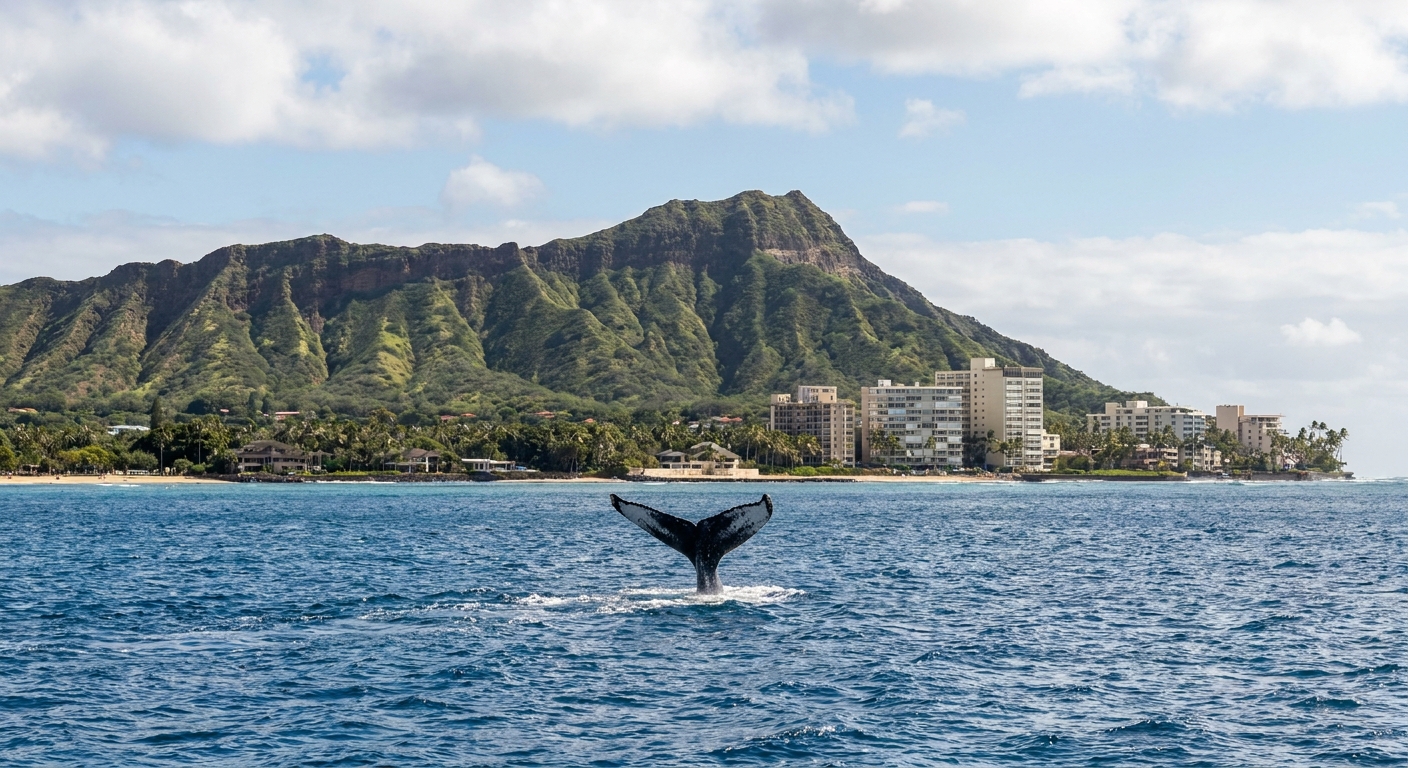
Humpback whales are the headline of the month. The season generally runs from November through May, and the peak in abundance falls from January through March, so January is right in the thick of it. Tail slaps, breaches and mothers with calves can be seen from shore on every island, and from boats leaving harbors on Maui, Oahu, Kauai and the Big Island.
By law, you cannot come within 100 yards of a humpback whale. Boats are asked to keep to a modest speed in whale season, and to slow down further near the animals. From land, a pair of binoculars and a quiet hour on a cliff or beach is often all it takes.
The Sanctuary Ocean Count gives residents and travelers a chance to help tally whales from the shoreline on the month’s final Saturday, across Oahu, the Big Island and Kauai. It runs in the morning, and registration is through oceancount.org.
Surf, hikes and volcano days
January is the big-wave month on the North Shore of Oahu. Even if you never touch a board, sitting on the beach at Waimea Bay or Sunset Beach to watch the swells is one of the great winter shows in the islands. Competitions are held when the waves are right, so dates move.
The cooler, showery weather also suits hiking, especially on leeward trails that stay dry. On the Big Island, a day at Hawaii Volcanoes National Park fits the season, as long as you are ready for rain and a chill at the crater rim. The Honolulu Marathon is behind you in December, and the mood in town is relaxed.
Is Hawaii busy in January?
The first days of January are busy, because the year-end holidays keep the islands full, and then things settle into a steadier winter pace. December is one of the busiest months of the year, and the early part of January carries some of that crowd before it thins.
Waikiki, the Maui resort coasts and Poipu stay popular all month, in part because winter visitors from the mainland come for the whales and the warmth. Kona is a favorite for sun seekers. Lanai, Molokai and the quieter corners of Kauai and the Big Island stay calmer, and rooms and rental cars are easier to find once the holiday weeks are over.
What to pack for Hawaii in January
Beach clothes cover most days, but the islands differ: a rain layer matters for Hilo, Hana and the north shores, while a warm layer matters for Haleakala, Mauna Kea and the volcano rim.
- A light rain jacket for showers on the windward sides.
- A fleece or warm sweater for summit sunrises and the crater rim.
- Swimsuits and reef-safe sunscreen, since the sun is strong even on cloudy days.
- Binoculars for watching whales from shore.
- Shoes with a good grip for muddy trails and wet rocks.
Good to know before you go
January falls outside the official Central Pacific hurricane season, which runs from June 1 to November 30. Winter has its own weather, though, with northern fronts and Kona storms that can interrupt the trade winds for days and bring heavy surf to north-facing shores. On the beach, the lifeguard and the posted signs decide where you can swim. Each island needs its own rental car, since there is no car ferry between them, and short inter-island flights link the islands.
Is January a good time to visit Hawaii?
Yes, especially for whale watchers, surf fans and anyone who wants warm weather in midwinter, with Kona and the south and west coasts the best bets for dry sunny days. Hilo and the windward coasts are wetter, and the North Shore is for watching waves rather than swimming.
Compared with December, the air is a touch cooler and the crowds ease after the holidays, while the Hilo rain drops noticeably. February is much like January, with the sea a little cooler and the whales still around. January’s own signature is the humpback season at its peak, with the swells of the North Shore rolling in alongside it.
Sources
- NOAA NCEI, monthly normals 1991-2020, station USW00022521, checked September 8, 2026
- Open-Meteo Marine API, average 2015-2024, checked September 8, 2026
- sunrise-sunset.org, sunrise and sunset calculated for the 15th of the month, checked September 8, 2026
- NOAA NCEI, monthly normals 1991-2020, station USW00022516, checked September 8, 2026
- NOAA NCEI, monthly normals 1991-2020, station USW00022536, checked September 8, 2026
- NOAA NCEI, monthly normals 1991-2020, station USW00021510, checked September 8, 2026
- NOAA NCEI, monthly normals 1991-2020, station USW00021504, checked September 8, 2026
- NWS Honolulu (HFO), « Climate of Hawaii » summary, weather.gov/hfo/climate_summary, checked September 24, 2026
- NWS Honolulu / Central Pacific Hurricane Center, « 2026 Central Pacific Hurricane Season Outlook », weather.gov/hfo/hurricaneOutlook2026, checked September 24, 2026
- Hawaiian Islands Humpback Whale National Marine Sanctuary (NOAA), pages « Boating Guide » and « About the Sanctuary », hawaiihumpbackwhale.noaa.gov, checked September 24, 2026
- Hawaiian Islands Humpback Whale NMS (NOAA), « Boating Guide », checked September 24, 2026
- Hawaiian Islands Humpback Whale NMS (NOAA), « Sanctuary Ocean Count », checked September 24, 2026
- Hawaii DLNR Division of State Parks, « Diamond Head State Monument », dlnr.hawaii.gov/dsp, checked September 24, 2026
- DBEDT, press releases monthly July (blog/25-34), September (blog/25-42) and December 2025 (blog/26-04), checked September 24, 2026
To plan your stay
- Things to Do in Hawaii: Volcano Sunrises, Snorkeling Bays, Pearl Harbor and What to Eat
- Where to Stay in Hawaii: Choosing an Island, Oahu to Kauai Bases and the Hotel Tax
- Getting Around Hawaii: Interisland Flights, TheBus and Skyline, Rental Cars and Taxi Fares
- Know Before You Go to Hawaii: Agriculture Form, Sunscreen Law, Reservations and Taxes